



Best Valorant Aim Training Routines 2026 (Range + Drills)
Best Aim Training Routines in Valorant 2026: Range Drills, Flick Shots, and Tracking Exercises
If your gunfights feel “coin-flippy,” your aim doesn’t need magic—it needs a system. The best aim training in Valorant isn’t one secret drill; it’s a repeatable routine that builds three things: mechanics (mouse control), decision speed (how quickly you choose a shot), and consistency (how often you reproduce your best aim). This guide gives you timeless aim routines built around the Valorant Range, plus optional tracking/flick work you can do in Deathmatch or external aim trainers—without relying on patch-specific tricks.
You’ll get warm-ups, 30/60-minute training blocks, weekly plans, benchmarks, and the “why” behind each drill so you can adapt it to any agent, role, or meta.
The 7 Principles of Aim Training That Actually Work
1) Train the skill, not the feeling
Feeling “snappy” is nice, but progress comes from skill acquisition: the brain learns by repeating the correct pattern at a difficulty where you fail sometimes—but not constantly. If a drill is too easy, you won’t adapt. If it’s too hard, you’ll groove mistakes. Your goal is a “productive struggle”: focused reps with clear intention.
2) Separate speed work from accuracy work
Most players aim in one gear. Better players have multiple gears: slow-perfect (accuracy), game-speed (execution), and over-speed (speed training). You should deliberately train each gear. This guide gives you drills that isolate them so you can upgrade all three.
3) Use constraints to force improvement
Constraints like “one-tap only,” “two-burst only,” or “no spraying” create clean learning. You’re not trying to top frag your warm-up—you’re teaching your hands the correct solution.
4) Measure something simple
If you can’t measure it, you can’t manage it. The best measurement is boring and consistent: a few repeatable benchmarks you record weekly. You’ll learn what to track in the Benchmarks section.
5) Prioritize first-bullet quality
Valorant fights often end in the first 3–6 bullets. Clean crosshair placement + decisive first shot beats “hero spray” more often than people admit. Even tracking routines should reinforce stable head-level aim and recoil discipline.
6) Aim is half mouse, half timing
Many “aim issues” are movement timing issues: shooting while still sliding, micro-strafing inconsistently, or peeking too wide for your stop-shot skill. That’s why this guide includes movement-linked drills—not just static target work.
7) Consistency beats intensity
Two weeks of perfect training won’t beat three months of “good enough” training done consistently. Build a routine you can keep even on busy days. The 10/30/60-minute schedules are designed for exactly that.
Setup: Sensitivity, Crosshair, FPS, and the One Setting You Must Stop Changing
Lock your sensitivity for at least 2–4 weeks
Tiny sensitivity changes feel powerful, but constant tweaking prevents motor learning. Pick a reasonable sensitivity, then stop touching it long enough to adapt. If you truly have no baseline, start with a “middle” sens that allows comfortable 180° turns without lifting constantly, while still letting you micro-adjust at head level. Once chosen: lock it.
Crosshair: clarity over style
Your crosshair is a tool, not fashion. Keep it readable against varied backgrounds. Avoid designs that hide the head at typical duel distances. If you want official references for settings and updates, use Riot’s official Valorant site: playvalorant.com.
Performance matters (but don’t obsess)
Aim feels inconsistent when your frames and input latency are inconsistent. Prioritize stable FPS and a stable refresh rate. If you need troubleshooting, Riot’s support pages can help: support-valorant.riotgames.com.
Grip and posture: pick “repeatable”
The best grip is the one you can reproduce under stress. A slightly worse grip that is consistent beats a “perfect” grip you only hold when relaxed. Your checklist:
- Forearm supported enough to avoid tension spikes
- Wrist neutral (not sharply bent)
- Shoulders relaxed (no creeping upward)
- Mousepad space allows full swipes
If you’re also looking to convert training into faster rank gains with structured coaching support, check Boosteria’s Valorant pricing here: https://boosteria.org/valorant-boosting/prices. (Even if you don’t use a service, the page helps you think in terms of measurable outcomes and rank goals.)
Warm-Up vs Training vs Practice (Most People Mix These Up)
Warm-up (5–12 minutes)
Purpose: wake up coordination and timing. It should feel easy-to-medium and leave you confident, not drained. Warm-up does not need variety. It needs reliability.
Training (15–60 minutes)
Purpose: improve a specific skill. This is where you accept discomfort and make mistakes. Training is where you get better. Training is structured. You track at least one metric. You repeat it weekly.
Practice (Ranked, Scrims, VOD review)
Purpose: apply skills to real decisions. Practice is where you learn when to take fights, how to peek, and how to manage pressure. You can have perfect aim training and still lose because your fights are bad. This guide focuses on mechanics, but it will also show how to apply them in ranked.
The “two-loop” model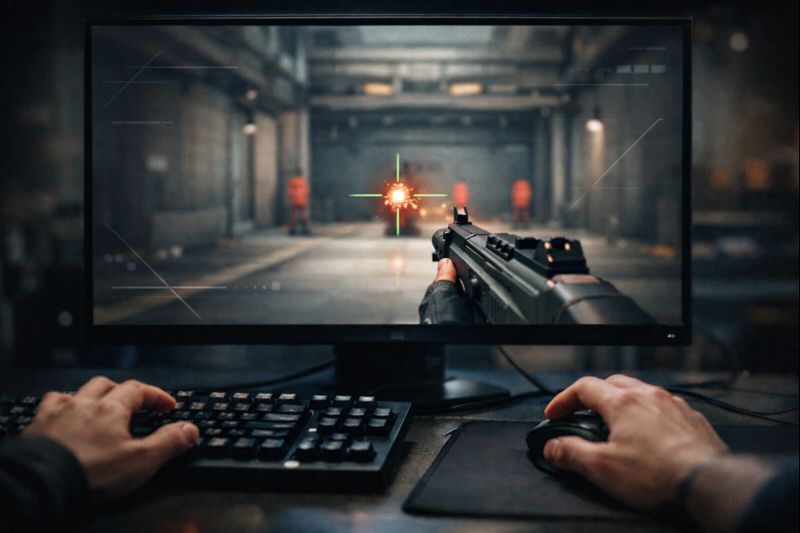
To improve fast without burning out:
- Loop A: short daily warm-up + a small training block
- Loop B: ranked sessions where you apply one focus (example: “hold angles tighter,” “one-tap discipline,” “burst only at mid range”)
Valorant Range: The Complete Drill Library
The Range is underrated because players use it randomly. Used correctly, it’s one of the best places to build first-bullet accuracy, flick control, and micro-adjust stability. Below is a library of drills you can mix into your routine depending on what you need.
Range Drill Rules (so the drills work)
- Short sets: 30–90 seconds per set, then reset.
- One objective per set: speed OR accuracy OR timing. Not all at once.
- Record something: either hits, time, or consistency notes.
- Use the same weapons weekly: so you can compare apples to apples.
Drill 1: “Head-Level Rail” (Crosshair Placement Warm-up)
Stand at a consistent distance from the bots. Without shooting, drag your crosshair from head to head at a steady pace, always staying at head height. Then repeat with one-taps only. This teaches your hands what “head level” actually feels like.
- Goal: stable head height across targets
- Common mistake: dipping below the head on transitions
- Upgrade: add small strafes between shots while keeping head level
Drill 2: “One-Tap Ladder” (Accuracy Gear)
Set bots. One-tap only. Your priority is perfect, centered hits. If you miss, pause for a beat, reset your posture, and continue. Do not rush misses.
- Goal: clean first-shot accuracy under calm pacing
- Metric: hits / total attempts in a fixed time
- Upgrade: do it with 2-bullet bursts only
Drill 3: “Burst Rhythm” (First 6 Bullets Control)
Choose Vandal or Phantom. Fire controlled bursts: 2–3 bullets at mid range, 4–6 bullets at slightly closer range. The goal is to keep your burst pattern consistent and prevent panic spray.
- Goal: predictable burst timing
- Metric: how many bots you kill without over-spraying
- Upgrade: add a micro-strafe reset between bursts
Drill 4: “Micro-Adjust Pop” (Tiny Corrections)
Aim slightly off the bot head (left/right/up/down). Then “pop” the crosshair into the head with a tiny movement and shoot. This directly trains the micro-correction that decides most duels.
- Goal: fast, controlled micro-corrections
- Metric: success rate across 20 reps
- Common mistake: over-flicking because you rush the shot
Drill 5: “Stop-Shot Timing” (Movement + Aim)
Strafe left-right and take a shot only when fully stopped. You’re training the timing window between movement and accuracy. Keep it slow at first. Speed comes later.
- Goal: consistent stop-shot rhythm
- Metric: clean hits without “sliding shots”
- Upgrade: shorten the stop duration gradually
Drill 6: “Angle Entry Snap” (Entry Flick Pattern)
Imagine clearing an angle: start your crosshair at a realistic pre-aim point, then snap to the bot head as if it’s the first enemy you see. This is about structured flicks, not random spinning.
- Goal: repeatable snap from pre-aim to head
- Metric: time-to-hit on first bullet
- Upgrade: add a second snap to another bot (two-target routine)
Drill 7: “Recoil Anchor” (Anti-Panic Spray)
Pick a wall, spray 12–15 bullets, and learn the initial recoil shape. Then return to bots and apply: short burst + reset. You’re not memorizing a perfect spray; you’re learning to avoid uncontrolled recoil.
- Goal: reduce “spray and pray” deaths
- Metric: how often you keep bursts disciplined in training
Drill 8: “Sheriff Discipline” (Precision + Confidence)
Sheriff one-taps force clean aim. Use it to sharpen first-bullet focus. If you tense up, slow down. The point is precision, not speed.
- Goal: confident, calm one-taps
- Metric: 20-rep accuracy rate
Flick Shots: Routines for First-Bullet Accuracy and Burst Control
“Flicking” in Valorant should be purposeful. Most fights aren’t 90° highlight flicks; they’re small-to-medium corrections after good crosshair placement. Your flick training should improve: target acquisition speed, stop control (not overshooting), and first-bullet confidence.
Flick Concept: fast movement, calm shot
The biggest flick error is shooting while your hand is still “arriving.” Train a habit: arrive, then click—very quickly, but in that order.
Routine A: “Two-Target Snap” (10 minutes)
- Pick two bots at a consistent distance.
- Snap: bot A head → one-tap → bot B head → one-tap.
- Repeat for 30–60 seconds.
- Rest 15 seconds, repeat 5–8 sets.
Focus: stop control (no over-flick), clean clicks, minimal hesitation.
Routine B: “Burst Flicks” (mid-range duels)
Use Vandal/Phantom. Flick to head and fire a 2–3 bullet burst. This trains realistic duel behavior when you’re not 100% confident in the one-tap.
- Focus: burst discipline and recoil reset
- Common mistake: turning every miss into a spray
Routine C: “Over-Speed Flicks” (speed gear)
For 30 seconds, intentionally flick faster than comfortable while staying accurate enough to learn. Expect misses. Then immediately do 30 seconds in accuracy gear (slower, perfect). This contrast trains your nervous system to move fast while keeping control.
Tracking: Routines for Strafers, Close Fights, and Spray Transfers
Tracking is often ignored in Valorant because “first bullet matters.” But tracking matters in:
- close-range fights where enemies strafe hard
- SMG and pistol rounds
- multi-target spray transfers
- agents who take many close duels (entry roles)
Tracking Concept: smoothness over speed
Tracking is about staying glued to the target with minimal jitter. If your crosshair “buzzes,” your muscles are too tense or your motion is too wrist-only. Train smoothness first, then increase pace.
Range Tracking Drill: “Strafe Mirror”
Pick a target. Without shooting, move your crosshair smoothly across the head line as if the target is strafing. Then add controlled bursts while keeping the crosshair stable at head height.
Deathmatch Tracking Drill: “Commit to the Target”
In Deathmatch, pick one opponent and commit to tracking their movement rather than panic-flicking multiple times. Your goal is to reduce over-corrections. Track, then shoot in a controlled burst.
Spray Transfer Drill: “Two-Head Transfer”
Use a close-to-mid distance. Burst first target (3–6 bullets), then transfer to second target and burst again. This teaches controlled transfers, not wild sweeping sprays.
Micro-Adjustments and Headshot Stability
Micro-adjustment is the hidden rank separator. If your crosshair is “almost” on the head but you can’t finish the correction under pressure, you’ll lose to players who can. The solution is targeted reps that teach your hands to correct just enough.
Micro Drill 1: “1 cm Corrections”
Start your crosshair barely off the head (tiny distance). Correct into the center and one-tap. Repeat 20 reps in each direction: left, right, up, down.
Micro Drill 2: “Hold, then Confirm”
Place crosshair at head height on an empty space. Quickly snap to a target, then hold for a fraction of a second before shooting. This trains stability and reduces “early clicks” that miss.
Micro Drill 3: “Tension Check”
Between sets, release your grip and reset your shoulders. If your hand is white-knuckling the mouse, your micro aim will jitter. Micro aim is a relaxation skill as much as a precision skill.
Movement + Aim: Counter-strafing, Stop-Shot Timing, and Peeker Control
Aiming while moving is where training becomes game-real. Many aim routines fail because they ignore movement. Here’s how to integrate movement without turning drills into chaos.
Movement Drill 1: “Strafe → Stop → Tap”
- Strafe left for a beat.
- Stop fully.
- One-tap a bot.
- Repeat right side.
Progression: shorten the stop time gradually while keeping shot accuracy high.
Movement Drill 2: “Micro-strafe reset”
After a burst, micro-strafe to reset accuracy and re-center. This is how strong rifle players avoid getting stuck spraying. Train it slowly: burst → micro-strafe → burst.
Movement Drill 3: “Peek size discipline”
Wide peeks demand better stop-shot control. Tight peeks demand better crosshair placement. Train both intentionally in Deathmatch: do 5 minutes of tight peeks only, then 5 minutes of wider swings only. Don’t mix them randomly.
Daily Schedules: 10 / 30 / 60 Minutes
10-Minute “Busy Day” Routine (Warm-up + Maintenance)
- 2 min: Head-Level Rail (no shooting) + posture reset
- 4 min: One-Tap Ladder (calm accuracy gear)
- 4 min: Strafe → Stop → Tap (movement timing)
This keeps your mechanics alive even when you can’t grind.
30-Minute “Most Effective” Routine (Improvement + Application)
- 6 min: Warm-up (Head-Level Rail + easy one-taps)
- 10 min: Two-Target Snap (flick routine)
- 8 min: Micro-Adjust Pop (tiny corrections)
- 6 min: Burst Rhythm + micro-strafe reset
60-Minute “Full Training Block” (Skill Build)
- 10 min: Warm-up + easy confidence sets
- 15 min: Flick block (Two-Target Snap + Burst Flicks)
- 15 min: Tracking block (Strafe Mirror + controlled bursts)
- 10 min: Movement-linked aim (Strafe → Stop → Tap)
- 10 min: Benchmark run (same drill weekly; record)
Important: if you do 60 minutes of training, don’t add another hour of chaotic Deathmatch “for fun” unless you’re still mentally sharp. Quality drops fast when you’re fatigued—and fatigue grooves bad habits.
Weekly Plans: Climb-Focused, Improvement-Focused, and “Busy Week”
Plan 1: Climb-Focused (ranked performance first)
- Mon/Wed/Fri: 10–20 min routine + ranked (focus: crosshair placement)
- Tue/Thu: 30 min routine + 1–2 Deathmatch (focus: stop-shot timing)
- Sat: 60 min full block + benchmark recording
- Sun: rest or light warm-up only
Plan 2: Improvement-Focused (mechanics rebuild)
- 4 days/week: 60 min training block
- 2 days/week: short warm-up + ranked application
- 1 day/week: full rest
Plan 3: Busy Week (minimum viable progress)
- Daily: 10-min routine
- Twice/week: add 10 min flick + micro work (total 20)
- Weekend: 30–60 min block + a benchmark
Benchmarks: How to Track Progress Without Lying to Yourself
Benchmarks keep training honest. You don’t need ten metrics—pick 2–4 that reflect the skills you want: flick control, micro accuracy, stop-shot timing, and (optionally) tracking.
Benchmark rules
- Run the same benchmark at the same time of day if possible.
- Use the same weapon and distance.
- Record weekly, not hourly. Daily tracking makes you obsessive and inconsistent.
- Track trends (4–6 weeks), not single-day spikes.
Suggested benchmarks
- Benchmark 1: One-tap accuracy set (fixed reps: 50 attempts; record hit count)
- Benchmark 2: Two-Target Snap (fixed time: 60 seconds; record clean hits)
- Benchmark 3: Strafe → Stop → Tap (fixed reps: 30; record clean stop-shot hits)
- Optional Benchmark 4: Burst discipline (how many bots you kill without spraying)
If your benchmark improves but your ranked doesn’t, your issue is likely decision-making: poor fights, bad peeks, or over-aggression. Use that as a cue to tighten your ranked focus rather than adding more drills.
Deathmatch and TDM: How to Use Them Without Building Bad Habits
Deathmatch is a tool. Used wrong, it teaches you to take low-quality fights and rely on reactive flicks. Used right, it teaches composure and stop-shot timing under pressure.
Rules for “good” Deathmatch practice
- Pick one focus per match: “burst only,” “tight peeks,” “head-level only.”
- Ignore scoreboard: your goal is cleaner fights, not top frag.
- Stop when quality drops: if you’re tilting or rushing, leave.
- Keep it short: 1–3 matches is enough after a training block.
Two DM templates
Template A (rifle discipline): Vandal/Phantom, 2–3 bullet bursts only, no crouch spray.
Template B (movement timing): take only fights where you fully stop before shooting.
Optional Aim Trainers: When They Help (and When They Don’t)
External aim trainers can accelerate mouse control—especially tracking smoothness and flick stop control—because they provide high repetition. But they don’t automatically translate to Valorant unless you keep the drills relevant and your in-game routine consistent.
When aim trainers help
- You lack basic smoothness (tracking looks jittery)
- You over-flick constantly and can’t stop the mouse cleanly
- You want measurable benchmarks with clean repetition
When aim trainers don’t help (or can hurt)
- You use random playlists with no purpose
- You grind speed-only and lose control
- You skip in-game application (Range/DM) and wonder why ranked feels the same
If you want a reputable starting point, explore Aim Lab’s official training environment: aimlab.gg. Use it for short, purposeful blocks (10–20 minutes), then apply in Valorant.
For deeper benchmark culture and structured progression, communities like Voltaic offer frameworks: voltaic.gg. Keep it simple: pick a small set of scenarios that match Valorant’s needs (micro-corrections, mid-range flicks, smooth tracking).
How Aim Training Converts Into Ranked Wins
Aim training converts when you deliberately apply one skill per ranked session. Without a focus, you revert to habits. Here are “conversion focuses” that link directly to the drills in this guide:
Conversion Focus 1: Head-level defaults
Every round, consciously reset your crosshair to head height after rotating, using utility, or checking the map. Most missed headshots are “starting position” errors, not flick errors.
Conversion Focus 2: Burst discipline at mid range
Decide in advance: at mid range you burst, you don’t spray. You will lose some fights at first. Then you will start winning more consistently because your bullets stay controlled.
Conversion Focus 3: Stop-shot timing
Commit to fully stopping before you shoot in your first duel each round. This single rule fixes countless “why did my bullets go nowhere?” moments.
Conversion Focus 4: Cleaner peeks
Use smaller peeks when holding and wider peeks only when you have intent (swinging with teammates, clearing a known angle, or isolating a duel). This keeps your aim demands aligned with your actual skill.
If you want faster rank conversion with structured help, you can compare options here: https://boosteria.org/valorant-boosting/prices. Even if your path is pure self-improvement, having clear rank targets and timelines makes your training plan sharper.
FAQ: Sens, Grip, Hardware, and Common Plateaus
Should I lower my sensitivity to aim better?
Lower sensitivity can improve stability, but only if you can still turn and clear angles comfortably. The bigger factor is consistency: pick a sens you can control and keep it stable long enough to adapt.
Why do I aim great in the Range but bad in ranked?
Usually it’s one of these:
- your peeks are too wide for your stop-shot timing
- you take fights when your crosshair is not set (poor “ready” timing)
- you panic shoot early instead of arriving then clicking
- you don’t apply your training focus in ranked
How long until aim training shows results?
You’ll feel better in days, but measurable improvement often appears in 2–6 weeks depending on consistency. Focus on trend lines, not daily mood.
Do I need an aim trainer to hit higher ranks?
No. Many players improve using only the Range + Deathmatch + disciplined ranked application. Aim trainers are optional accelerators, not requirements.
What if my wrist hurts?
Stop training through pain. Adjust posture, reduce tension, and consider taking rest days. Pain is not a “grind” badge—it’s a warning sign.
Quick Summary + Printable Routine
The core idea
Train aim like a system: warm up reliably, train one skill at a time, measure weekly, and apply one focus in ranked. That’s how you turn “random good days” into consistent performance.
Printable 30-minute routine
- 6 min: Head-Level Rail + easy one-taps
- 10 min: Two-Target Snap (arrive, then click)
- 8 min: Micro-Adjust Pop (tiny corrections)
- 6 min: Strafe → Stop → Tap (timing)
Weekly benchmark
Once per week: run your One-tap set + Two-target snap and record the numbers. Compare month-to-month, not hour-to-hour.