



CoD Mobile Gunfight Fundamentals: Peek, Pre-Aim, Recoil
CoD Mobile — Gunfight Fundamentals: Peeking, Pre-Aim, Recoil Routine
In Call of Duty: Mobile, flashy clips get attention, but fundamentals win games. The players who climb consistently are rarely the ones relying on random hero moments. They are usually the ones taking cleaner fights, exposing less of their body, aiming where enemies are likely to appear, and controlling their weapon well enough to finish fights without panic. That is what this guide is about.
If you want lasting improvement in CoD Mobile, you need skills that survive balance changes, new weapons, fresh maps, and shifting ranked preferences. Peeking, pre-aim, and recoil control are exactly those kinds of skills. They are universal. Whether you prefer aggressive SMG routes, flexible assault rifle play, or slower anchor roles, these three fundamentals shape nearly every duel you take.
This guide is written to stay useful over time. Instead of obsessing over one patch, one attachment setup, or one seasonal trend, we will focus on principles that matter in almost every version of CoD Mobile. You can always check the official Call of Duty: Mobile site for general game updates, browse Activision Support for account and setup help, and review the official esports settings or esports rules to understand how serious competitive play values structure and consistency. But when it comes to individual improvement, the biggest gains almost always come from mastering your gunfight basics.
By the end of this guide, you should understand how to peek more safely, how to pre-aim with purpose instead of fear, how to build a reliable recoil routine, how to practice these mechanics in short repeatable sessions, and how to convert these habits into better ranked performance. If you care about winning more duels rather than just looking busy on the map, this is where your improvement starts.
Table of Contents
- Why Gunfight Fundamentals Matter More Than Meta Picks
- The Anatomy of a Clean CoD Mobile Duel
- Peeking Fundamentals in CoD Mobile
- How Pre-Aim Really Works
- Building a Reliable Recoil Routine
- How Movement and Aim Work Together
- Settings and HUD Habits That Support Better Gunfights
- Practical Drills for Peeking, Pre-Aim, and Recoil
- Applying Fundamentals in Ranked and Objective Modes
- Common Gunfight Mistakes That Keep Players Stuck
- A Simple Weekly Improvement Plan
- Loadout Principles That Help Your Mechanics
- The Mental Side of Consistent Gunfights
- FAQ
- Final Thoughts
Why Gunfight Fundamentals Matter More Than Meta Picks
A lot of players search for instant results through the wrong doorway. They ask for the strongest weapon, the fastest way to rank up, the best sensitivity, or the most broken build. Those things can help a little, but they usually do not solve the real issue. A player with poor peeking habits will lose fights with strong weapons. A player with weak pre-aim will constantly react late. A player with shaky recoil control will turn good openings into missed kills.
Strong fundamentals do three important things for you. First, they increase your floor. Even on an off day, you still win a decent number of fights because your habits are solid. Second, they raise your ceiling. When your focus is good, clean mechanics let you dominate. Third, they make your performance stable across different maps, roles, and lobbies. That stability is what ranked improvement is built on.
Another reason fundamentals matter is that CoD Mobile punishes hesitation. Fights often resolve quickly. If you expose too much while peeking, start aiming too late, or drag your reticle wildly after the first few bullets, your opponent does not need to do anything special to beat you. They simply need to be ready. In other words, many lost duels are not caused by enemy brilliance. They are caused by avoidable mechanical mistakes.
When you improve your gunfight fundamentals, you reduce the number of “unfair” deaths that were actually preventable. You stop giving away free openings. You stop entering lanes with lazy crosshair placement. You stop spraying without a plan. That alone can change how ranked feels. Matches become less chaotic because you are no longer relying on improvisation in every engagement.
The Anatomy of a Clean CoD Mobile Duel
Before diving into specific mechanics, it helps to understand what a clean duel looks like from start to finish. Most winning fights in CoD Mobile follow a similar sequence. You expect where the enemy could be. You move into the angle with your crosshair already close to the likely target line. You expose yourself in a controlled way. You fire accurately as soon as the opponent appears. You manage recoil instead of dragging randomly. Then you either reset behind cover, reposition, or continue only if the situation stays favorable.
A bad duel is the opposite. You sprint carelessly into an exposed lane. You aim at the floor or at empty space. You notice the enemy late. You snap upward in panic. Your bullets climb off target. You keep holding the angle while overexposed. You lose, then blame latency, matchmaking, or weapon balance.
The goal of this guide is not to make every fight look slow. Good gunfighting can be very fast. The point is to make your speed organized. Great players are not merely quick. They are prepared. Their reticle arrives early. Their peek is intentional. Their recoil pattern is familiar. That makes them look effortless.
Whenever you review your own fights, ask yourself four questions. Did I expect the duel? Did I expose myself correctly? Was my crosshair already close? Did I control my weapon after the first bullets? Those four questions alone can explain a huge percentage of wins and losses.
Peeking Fundamentals in CoD Mobile
Peeking is the art of gathering information or taking a duel while exposing as little risk as possible. In CoD Mobile, this matters even more because mobile gunfights are often compressed into very short time windows. If your first frame of exposure is messy, the enemy gets an easier shot. If your first frame is clean, you are already ahead.
What Good Peeking Actually Means
Many players think peeking just means “looking around a corner.” In reality, good peeking has three layers: your timing, your path, and your exposure. Timing is whether you challenge at the right moment. Path is the way your character moves into the line of sight. Exposure is how much of you becomes visible before you can shoot accurately.
A clean peek is not overly dramatic. It is often small, efficient, and tied to a specific purpose. Sometimes that purpose is to collect information. Sometimes it is to bait a shot. Sometimes it is to take a duel with pre-aim advantage. Problems begin when players peek without knowing which one they are trying to do.
Different Types of Peeks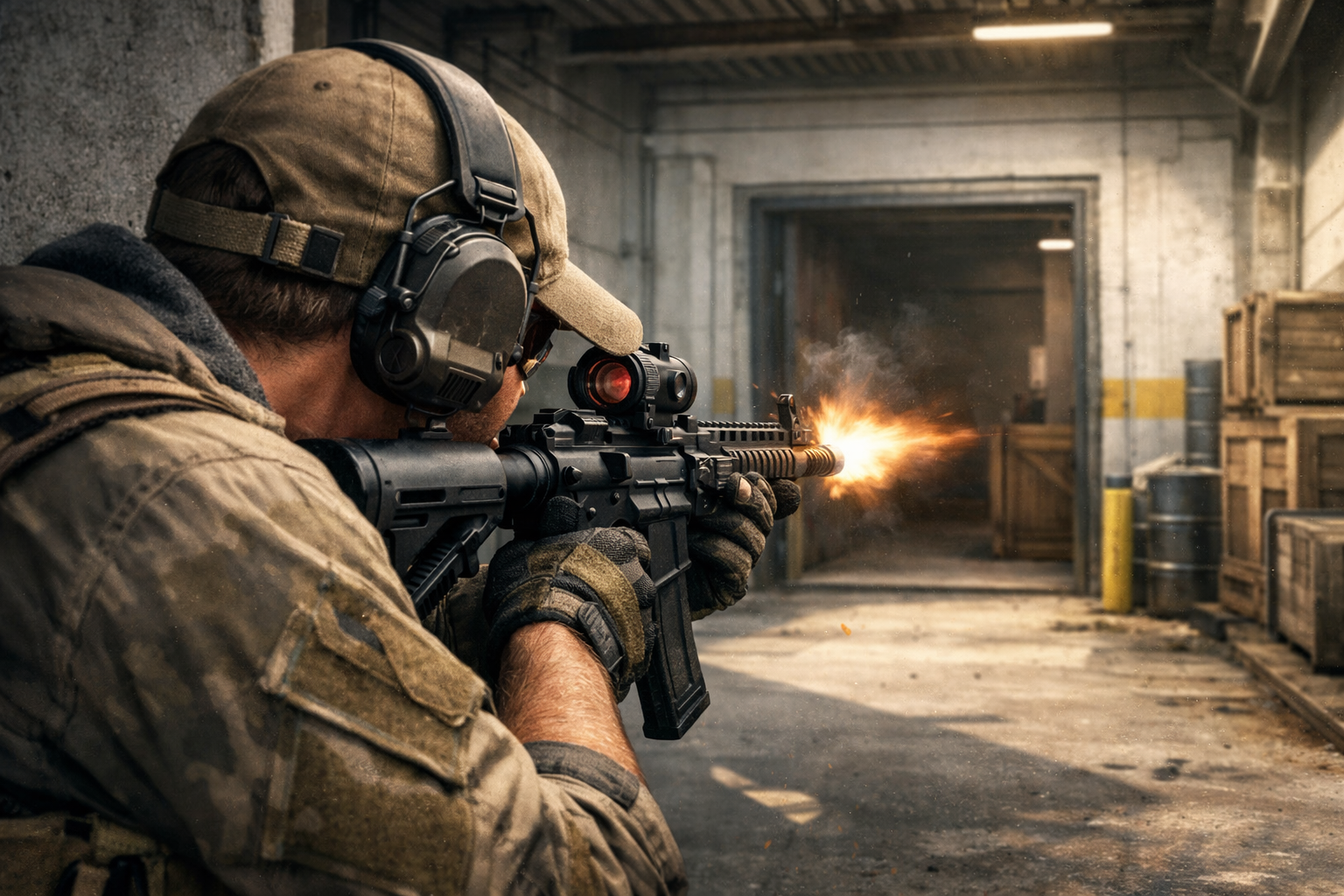
Info peek: Used to gather vision with minimal commitment. You are not always trying to kill immediately. You want to confirm whether someone is holding the angle, whether a route is clear, or whether a lane is stacked. This is valuable before entering high-risk spaces.
Commit peek: Used when you are ready to shoot and likely expect a duel. This should usually be paired with pre-aim. If you swing without being ready to fire, you are turning a commit peek into a donation.
Re-peek: Used after briefly breaking line of sight. This is dangerous when predictable, but strong when timed well and done from a slightly altered position. Re-peeking the same angle in the same rhythm is one of the most common ranked mistakes.
Bait peek: Used to provoke shots, reveal enemy location, or force them to give away their presence. This is especially useful when an enemy is holding a power angle and you do not want to donate a full-body challenge.
Peek With a Reason, Not Out of Habit
A huge part of improvement is stopping unnecessary peeks. Many players repeatedly shoulder lanes, walk into open sightlines, or challenge while weak simply because they feel the need to “do something.” But every peek gives your opponent information. Every unnecessary challenge is a chance to lose control of the fight.
Before peeking, ask: what am I trying to gain? If the answer is unclear, do not peek yet. A smarter option may be to hold, reposition, wait for audio, coordinate with a teammate, or use equipment before exposing yourself.
Use Cover Like a Tool, Not Decoration
Cover is not just something you stand near. It is something you work around. The best peeks begin from positions that allow instant disengage. If you take a duel from an angle with no easy retreat, you are essentially gambling that your first burst must win. Good players prefer angles that let them shoot, reset, and shoot again.
One useful habit is to imagine a safety line before every duel. If you take damage or miss your opening shots, can you break line of sight in one short movement? If not, your peek is probably too committed for the amount of information you have.
Do Not Drift Into Angles
One of the quietest bad habits in CoD Mobile is drifting into danger. This happens when players move toward a corner or doorway without a defined stop point. They are not quite sprinting, not quite holding, not quite ready to fire. They simply slide into vision. That kind of exposure is easy to punish.
Instead, define your challenge point before you reach it. Know where your movement slows, where your crosshair should sit, and how far you are willing to expose. This makes your peek feel sharper and more controlled.
Break Predictable Rhythm
If you keep peeking with the same tempo, same lane, and same body path, better opponents will farm you. Rhythm is part of gunfighting. Even when your raw aim is decent, predictable timing makes you easy to pre-aim. Change your delay, change your route, or stop peeking altogether and rotate. The best way to avoid losing a predictable duel is not to give it.
Peeking and Objective Play
In objective modes, peeking becomes even more important because many duels happen around known entrances, headglitches, and anchor points. When defending or retaking, smart peeks let you isolate one threat at a time. Bad peeks expose you to multiple lines of fire at once. That is often the difference between breaking a setup and feeding it.
How Pre-Aim Really Works
Pre-aim is one of the most misunderstood skills in CoD Mobile. Some players think it means ADSing every corner and moving slowly forever. Others think it is only for passive play. Neither view is correct. Real pre-aim is simply the skill of having your reticle already close to where the enemy is most likely to appear before the fight begins.
That sounds simple, but it changes everything. Good pre-aim shortens reaction time, reduces panic correction, improves first-shot accuracy, and makes recoil easier to control because your first bullets begin from a better starting point.
Pre-Aim Is Prediction Plus Discipline
Pre-aim is not just mechanical. It is also about prediction. Where do enemies usually appear from this route? What head level makes sense here? If I were in their position, which cover would I use? Which side of the doorway would I hug? The better your map understanding becomes, the better your pre-aim becomes.
Discipline matters too. It takes discipline to keep your crosshair useful while rotating. Many players let it wander because they are mentally “between fights.” Then the fight begins before their crosshair is ready. Strong players keep their aim live even while moving through the map.
Crosshair Placement on Mobile
The easiest way to improve pre-aim is to fix crosshair placement. Keep your reticle at likely chest-to-head level for the next threat, not at the floor, sky, or random wall texture. In a mobile shooter where milliseconds matter, lifting your aim after the enemy appears wastes too much time.
Think of crosshair placement as future-facing. Your reticle should point where a fight could happen next, not where nothing is happening now. As you round corners, shift your aim along the line where an enemy body would appear. As you clear lanes, let your reticle move with purpose from one likely contact point to the next.
Do Not Over-Hold Empty Space
There is a trap here. Some players hear “pre-aim” and start aiming every angle for too long. That slows their rotations and makes them late to the real fight. Good pre-aim is efficient. You check the right places with the right amount of respect. You do not freeze at every doorway for no reason.
Ask yourself whether the angle is actually dangerous, likely, and important. If the answer is yes, pre-aim it with intent. If not, move on without wasting tempo.
Route-Based Pre-Aim
One of the best habits you can build is route-based pre-aim. Instead of thinking “I need to react faster,” think “I need to know the next two threats on this path.” On familiar maps, every route has common contact zones: doorways, boxes, headglitches, tight corners, long sightlines, and objective chokes. If you mentally map those zones, your reticle naturally arrives early.
This is one reason experienced players look so composed. They are not surprised by common angles. Their crosshair reaches the fight before their eyes fully process it. That is the real power of good pre-aim.
Pre-Aim for Your Weapon Class
Different weapons encourage slightly different pre-aim habits. A close-range aggressive weapon may want pre-aim closer to common snap-fight distances and entry points. A more stable mid-range rifle often rewards cleaner lane preparation and controlled early bullets. But the principle stays the same: prepare the most likely fight before it starts.
The mistake is trying to force the same tempo regardless of weapon and distance. Let your pre-aim reflect the kind of fight you are actually entering.
Pre-Aim While Repositioning
Many players only think about pre-aim when entering combat. The better habit is to carry it through your repositioning. After each duel, ask where the next enemy is most likely to swing from. Move your reticle there as you relocate. That way your second fight starts cleaner than your first.
Building a Reliable Recoil Routine
Recoil control is often treated like a mystical skill, but it becomes much easier once you stop thinking of it as random correction and start treating it as a repeatable routine. Your goal is not to memorize every exact pattern in the game. Your goal is to build stable habits that keep your first burst on target and prevent your spray from turning into chaos.
The First Bullets Matter Most
Most CoD Mobile duels are decided early. That means the first several bullets matter far more than the last half of a panic spray. If your opening bullets land cleanly, the fight often becomes easy. If your opening bullets climb off target, you start chasing the recoil instead of controlling the duel.
This is why recoil routine should begin before you even fire. Your reticle placement, your peek discipline, and your readiness all shape how manageable the recoil feels. Many players say they have bad recoil control when the real problem is that they started the fight with poor crosshair placement and had to yank their aim too hard after seeing the enemy.
Think Pull, Settle, Reset
A simple recoil framework is pull, settle, reset.
- Pull: Apply the initial counter-movement needed to keep the first bullets from climbing too high.
- Settle: Smooth the spray instead of overcorrecting left and right in panic.
- Reset: If the fight drags or the target breaks line of sight, stop forcing bad bullets and re-center for the next burst.
This routine helps you avoid the classic mistake of dragging too hard. Overcorrection is often worse than modest recoil. The goal is not violent compensation. It is smooth stability.
Control Does Not Mean Full Spray Every Time
Good recoil control also means knowing when not to spray. At certain ranges, especially with less stable builds or awkward sightlines, short controlled bursts are more reliable than committing your whole magazine. Many players lose fights because they confuse aggression with commitment. Calm bursts can still be aggressive if they are accurate and timely.
Resetting your aim between bursts also improves visual clarity. On mobile, where screen space and finger input matter, clear micro-resets often help more than blind spraying.
Recoil Practice Should Match Real Distances
One reason practice sometimes fails is that players test recoil in unrealistic ways. They stand still, shoot one wall for two minutes, then wonder why ranked still feels messy. Real recoil practice should reflect the ranges you actually fight at. Work on close, close-mid, and mid-range control. Practice entering ADS smoothly, starting your burst on target, and stopping before the pattern becomes unmanageable.
Do not just learn how the gun climbs on a wall. Learn how it behaves when you transition into a target after movement, when you peek from cover, and when you need to track a target moving laterally. Those situations are what decide matches.
Separate Aim Error From Recoil Error
Not every missed shot is recoil. Sometimes your tracking is late. Sometimes your pre-aim is off. Sometimes you fired while your reticle was still catching up to the enemy. If you call every miss “bad recoil,” you will practice the wrong thing.
When reviewing fights, ask: was the gun climbing off target, or was my aim never fully on target in the first place? That distinction matters. It tells you whether you need more recoil routine, more pre-aim discipline, or both.
How Movement and Aim Work Together
In CoD Mobile, gunfights are not just aim tests. They are movement-and-aim tests. Your movement decides how prepared your aim can be. Your aim decides whether your movement creates an advantage or just looks active.
The key is balance. If you move too recklessly, your crosshair becomes late and unstable. If you move too cautiously, you lose tempo and become predictable. The strongest players move with intention: fast enough to gain position, controlled enough to fight immediately.
Think of movement as a way to improve the quality of the duel before shots begin. Use it to arrive at better cover, better spacing, better timing, and better angles. Once the duel starts, movement should support your accuracy, not sabotage it.
A helpful principle is this: enter the fight ready. Do not spend the first half-second of the duel converting from travel mode into combat mode. Your peeking, pre-aim, and recoil all become more reliable when your movement is leading you toward a fight-ready state rather than dragging you out of one.
Settings and HUD Habits That Support Better Gunfights
There is no perfect universal settings package in CoD Mobile, but there are smart principles. The best settings are the ones that allow you to repeat good mechanics under pressure. If your setup makes consistent peeking, pre-aim, or recoil harder, it is not helping you.
Choose Stability Over Novelty
Do not keep changing sensitivity because one bad match made you doubt yourself. Frequent changes interrupt skill development. Pick a range that feels controllable, test it with purpose, and give yourself enough time to adapt. Stable settings build stable muscle memory.
Your HUD Should Reduce Friction
Your controls should let you aim, move, shoot, and manage utility without finger conflict. If your thumb blocks crucial vision, if your fire button placement makes micro-adjustments awkward, or if your ADS behavior feels clumsy while peeking, your HUD may be holding you back.
The goal is not to copy a pro layout exactly. The goal is to make core actions easy and repeatable. You should be able to challenge an angle, pre-aim a common lane, and manage a short controlled burst without your hands feeling crowded.
Use Competitive Logic in Practice
Even if you are not playing tournaments, there is value in reviewing the official CoD Mobile esports page and the esports settings. Competitive environments reward repeatability. That should be your mindset too. Your goal is not to find a gimmick. Your goal is to find mechanics you can trust.
Practical Drills for Peeking, Pre-Aim, and Recoil
You do not need endless hours to improve. What you need is deliberate repetition. Fifteen to twenty focused minutes can be more valuable than an hour of distracted public matches.
Drill 1: Corner Entry Pre-Aim
Pick a map lane or training environment and repeatedly approach common angles. Each repetition should include: movement into position, reticle placement at likely enemy level, controlled peek, immediate correction if needed, then reset. The point is not speed at first. The point is clean approach and clean first-frame aim.
Drill 2: Peek and Burst
Start behind cover. Peek with intent, fire a short accurate burst, then return to safety. Repeat from both sides and from different distances. This drill teaches you not to stay exposed longer than necessary and helps connect your peek timing to your opening shots.
Drill 3: Recoil Ladder
Practice at three distances: close, close-mid, and mid-range. At each distance, fire short bursts, then slightly longer bursts, always focusing on a smooth pull and visual stability. If your control breaks down, shorten the burst and rebuild cleanly. Do not practice sloppy full sprays and call it improvement.
Drill 4: Route-Based Crosshair Placement
Walk a familiar route and keep your reticle glued to the next likely enemy position. No random wandering. No floor aim. No sightseeing. This drill is simple, but it dramatically improves pre-aim discipline in real matches.
Drill 5: Two-Fight Recovery
Simulate one duel, then immediately transition your reticle to the next likely threat point. This builds the habit of not mentally relaxing after the first kill. Many players win the first duel and lose the second because their crosshair falls asleep during the reset.
A Sample 20-Minute Routine
- 5 minutes of route-based crosshair placement and angle clearing.
- 5 minutes of peek and burst reps from cover.
- 5 minutes of recoil control at practical fighting distances.
- 5 minutes of two-fight recovery and quick repositioning.
Do this consistently and your ranked fights will begin to feel slower, cleaner, and more predictable in a good way.
Applying Fundamentals in Ranked and Objective Modes
Mechanics matter most when tied to decision-making. Peeking, pre-aim, and recoil should not live only in practice. They should directly shape how you approach ranked matches.
Team Deathmatch and Frontline
These modes reward route awareness and repeated duel quality. Because engagements happen often, sloppy habits are punished quickly. Focus on entering common lanes with live crosshair placement and avoid re-peeking the same predictable angle after taking damage.
Search and Destroy
This is where disciplined peeking becomes especially valuable. One bad challenge can cost the round. Use information peeks, avoid drift, and clear likely positions with purposeful pre-aim. Do not treat every corner like a sprint challenge. In slower modes, the player who is ready first often wins.
Hardpoint and Other Objective Modes
Objective play creates repeated chokepoints and retake situations. Pre-aim becomes essential because enemy positions are more structured. When breaking a setup, isolate one angle at a time. Use cover to take layered peeks instead of giving multiple defenders a free line. On defense, be careful not to over-peek just because you feel protected by the hill or point timer.
In all modes, remember that good fundamentals create more consistent value than chasing every fight. Ranked improvement is often less about increasing your total engagements and more about improving the quality of the engagements you already take.
Common Gunfight Mistakes That Keep Players Stuck
1. Aiming at the Floor While Rotating
This is one of the easiest habits to fix and one of the most damaging when ignored. If your reticle is low during travel, every sudden duel starts with a delay.
2. Peeking Without a Plan
Random shoulder checks, lazy corner walks, and full-body swings without pre-aim all create avoidable losses. Every peek should have a purpose.
3. Spraying Past Control Range
Not every duel needs a full spray. If your weapon starts bouncing beyond control, shorten the burst or reset instead of forcing bad bullets.
4. Re-Peeking the Same Way
Predictable rhythm gets punished. If an enemy already knows where and when you will appear, you are turning the duel into a coin flip at best.
5. Treating Settings as a Magic Fix
Sensitivity matters, but it does not replace crosshair discipline, peek quality, or recoil routine. Mechanics improve through reps, not constant menu changes.
6. Forgetting the Next Fight
Many players win one duel, then mentally reset too hard. Good players are already pre-aiming the next likely threat before the first body hits the ground.
A Simple Weekly Improvement Plan
If you want real progress, keep the plan simple enough to repeat.
Day 1-2: Peeking Focus
Spend extra reps on approach, angle discipline, and safe disengage. In matches, pay attention to how often you die while overexposed.
Day 3-4: Pre-Aim Focus
Concentrate on route-based crosshair placement. Review whether your reticle was already near the target before each duel.
Day 5-6: Recoil Focus
Practice smooth early-bullet control and burst resets at practical distances. Notice whether misses come from recoil or poor starting aim.
Day 7: Combined Review
Play ranked with one goal: every duel must start with purpose. After each death, identify the main issue. Was it peek quality, pre-aim, or recoil? Improvement accelerates when you label your mistakes accurately.
Loadout Principles That Help Your Mechanics
Because this guide is meant to stay evergreen, we will avoid locking the advice to one exact build. Instead, focus on loadout principles that support better mechanics.
- Use weapons you can control consistently, not just weapons that look strong in highlight clips.
- Do not overload a build with trade-offs that make your first shot feel awkward.
- Favor setups that match your real fighting distances and role.
- Test whether your weapon feels stable when peeking, not just while dumping a magazine into a wall.
- Prioritize confidence and repeatability over theory-crafted perfection.
If you want help accelerating your climb while still learning the game’s deeper systems, you can also explore Boostersia’s CoD Mobile boost pricing page for service options. Even if your goal is self-improvement, it helps to understand what high-level ranked progression looks like and how serious players approach consistent advancement.
The Mental Side of Consistent Gunfights
Mechanics are not only physical. They are mental. Panic is one of the biggest recoil problems in CoD Mobile. Impatience is one of the biggest peeking problems. Laziness is one of the biggest pre-aim problems. That means your mindset shapes your mechanics more than you may realize.
The right mentality is calm readiness. Not passive, not timid, not reckless. Calm readiness means expecting contact, trusting your reps, and staying composed even when the fight begins fast. Players who panic try to correct everything at once. Players who stay calm let their routine do the work.
Another useful mindset shift is this: stop trying to win every duel with pure speed. Try to win with preparation. When you think that way, you naturally improve your angles, your pre-aim, and your opening bullets. You stop relying on miracle snaps and start building repeatable advantages.
Also remember that not every lost duel means you played badly. Sometimes the enemy had the better angle, timing, or support. The goal is not perfection. The goal is to eliminate the losses that came from weak fundamentals. Over time, that is what changes your results.
FAQ
What is the fastest way to improve gunfights in CoD Mobile?
The fastest path is improving crosshair placement and peeking discipline. These two habits immediately make your fights cleaner and easier to control.
Should I focus on recoil first or pre-aim first?
Start with pre-aim and crosshair placement. Good starting aim makes recoil much easier to manage. Then build a smooth recoil routine around that foundation.
Do I need to copy pro settings?
No. You need settings that let you repeat good mechanics consistently. Use competitive logic, but do not assume another player’s layout is automatically right for your hands.
Is peeking important even for aggressive players?
Yes. Aggressive players need peeking even more because they enter more fights. Smart aggression is built on efficient exposure and good first-frame readiness.
Why do I lose fights even when my aim feels decent?
Often because the fight was already weak before you fired. Bad peek path, late pre-aim, and poor angle discipline make your aim work much harder than it should.
How often should I practice mechanics?
Short daily practice is usually better than rare marathon sessions. Even 15 to 20 focused minutes can create noticeable improvement over time.
Final Thoughts
CoD Mobile rewards players who make gunfights simple. That is the real lesson behind peeking, pre-aim, and recoil routine. You are not trying to become flashy. You are trying to make every duel more prepared, more efficient, and more repeatable. When you do that, the game starts to open up. You read fights earlier. You expose less. You hit cleaner first bullets. You stop losing fights that were yours to win.
If you take only one thing from this guide, let it be this: strong gunfights begin before the first shot. They begin with angle discipline, crosshair placement, and intent. Recoil control matters, but it works best when built on a good start. And good starts come from smart peeking and real pre-aim.
Build those habits patiently. Practice them in short focused routines. Review your losses honestly. Keep your settings stable enough to learn. Over time, these fundamentals will do more for your CoD Mobile rank than chasing every trend ever could.
That is how real improvement lasts.