



LoL Mechanics Drills 2026: Flash Dodges, Skillshots, Combos
Best Drills for Improving Mechanics in LoL (2026): Flash Dodges, Skillshot Accuracy, and Combo Practice
Mechanics in LoL are not “talent.” They are repeatable micro-actions—cursor placement, spacing, timing, and inputs—that you can train like a sport. This guide gives you a timeless, practice-first system to build three high-impact mechanical pillars:
- Flash dodges: reacting, predicting, and repositioning with intent—not panic.
- Skillshot accuracy: landing more casts through geometry, timing, and information control.
- Combo practice: executing clean, reliable sequences under pressure with correct buffering and auto-weaves.
You’ll also get benchmarks, warm-ups, and weekly plans you can keep using across seasons, metas, and champion pools.
1) The Mechanics Training Principles That Actually Work
Most players “practice” by simply playing more games. That improves general experience, but it is a slow way to upgrade mechanics—because real games contain too many variables. A good mechanics program does the opposite: it reduces chaos and repeats the same core actions until your hands perform them automatically.
Principle A: Train one variable at a time
If you are training flash dodges, do not also train wave management, roam paths, and jungle tracking in the same session. You can add those later. For now, isolate the mechanical action you want: see threat → decide direction → input flash → re-aim → continue the trade.
Principle B: Repetitions must be measurable
“I practiced for 30 minutes” is not a metric. “I completed 40 correct flash-angle reps without misclicking” is measurable. Your goal is to track accuracy, speed, and consistency.
Principle C: Add pressure gradually
Start with slow, perfect reps. Then increase difficulty with one of these stressors:
- Time pressure: shorter reaction windows or a metronome cadence.
- Information pressure: less vision, more fog-of-war, more angles.
- Movement pressure: target moving unpredictably, minion wave collisions, terrain constraints.
- Decision pressure: multiple threats so you must choose, not autopilot.
Principle D: You don’t “rise” to the moment—you fall to your habits
In fights, you default to the inputs you have repeated the most. If your habit is panic-flashing straight back with no plan, that is what you will do under stress. If your habit is diagonal flash into a safe angle while re-aiming instantly, that becomes your default.
Principle E: Mechanics are about information + geometry + timing
Players often treat mechanics as raw speed. In LoL, speed helps, but the biggest gains come from better decisions that reduce the required speed:
- Information: do you see the cast animation? Do you know cooldowns? Do you control vision?
- Geometry: are you positioned so the enemy must shoot through minions, around terrain, or at max range?
- Timing: are you moving during their “cast commitment” window? Are you acting when they cannot react?
2) Your Training Setup (Practice Tool, Keybinds, Camera, Cursor)
Before drills, make sure your setup is stable. Tiny inconsistencies (camera habits, wrong keybinds, inconsistent mouse space) quietly sabotage mechanical improvement.
Practice environments you’ll use
- Practice Tool: for repetition, combos, wall flashes, and cursor discipline.
- Custom 1v1 / 2v2 with a partner: for real flash-dodge and skillshot pressure.
- Normal games with one micro-goal: for transferring practice into real fights.
Keybind and control checks (keep them consistent)
- Flash key: keep it consistent across accounts and PCs.
- Self-cast and smart-cast rules: decide what you use and keep it stable.
- Attack-move click: bind it and use it for consistent kiting patterns.
- Camera settings: avoid changing lock/unlock behavior every week—pick a standard.
Camera discipline (a hidden mechanics multiplier)
Many missed skillshots and late flashes are camera problems, not hand speed problems. Train these habits:
- Center the action: keep your champion and the threat in the same screen space.
- Pre-pan early: move the camera before the fight starts, not during the reaction moment.
- Fight where your camera can see: avoid taking duels at the edge of your screen.
Cursor fundamentals
Your cursor is your “crosshair.” Mechanics improve when your cursor spends more time in useful positions:
- Near your champion during dodging: shorter travel distance for movement changes and flash angles.
- Near the predicted cast line during aiming: less correction needed at release.
- Not on the UI: eliminate accidental clicks on minimap or HUD.
Latency reality check
High ping does not prevent improvement, but it changes how you should train. With higher ping, you rely more on anticipation and positioning than pure reaction. Flash dodges become more predictive (reading the setup) than reactive (seeing the projectile first).
3) Flash Dodges: Drills, Benchmarks, and Mistakes
Flash is the most powerful “mechanics lever” in LoL because it breaks normal movement rules. But most players waste it in two ways:
- Panic flash: flashing late, straight back, with no plan to re-aim or reset spacing.
- Habit flash: always flashing the same direction, making you predictable.
Your goal is to build a repeatable process: recognize the threat → choose a flash angle → instantly reorient cursor and follow-up.
Flash dodge types (train them separately)
- Defensive flash: avoid the hit and escape into safety.
- Diagonal reset flash: avoid the hit and reposition to a safer angle while staying in range.
- Offensive dodge flash: dodge and immediately punish (often the highest value).
- Wall flash: use terrain to deny follow-up and break target access.
- Flash buffer / flash-cast: combine flash with an ability input so your punish is instant.
Drill 1: Flash Range Mapping (Solo, 8 minutes)
Goal: remove misjudgment. If you do not know exactly how far flash goes, your dodges will be inconsistent.
- Open Practice Tool and go to a lane with clear ground markings (mid works well).
- Pick 3 landmarks (e.g., edge of a texture line, corner of terrain, minion meeting point).
- Flash to each landmark from multiple starting positions.
- After each flash, immediately move your cursor to a “follow-up” spot (as if you are re-aiming).
Benchmark: 30 flashes in a row without an “oops, too short” or “overshot into danger” mistake.
Drill 2: Wall Flash Routes (Solo, 10 minutes)
Goal: build escape routes you can execute under stress. In real fights you do not have time to “search” for the wall angle.
- Choose 5 common walls you flash in your role (mid river walls, tri-brush walls, jungle corners).
- For each wall: do 10 reps from both sides.
- After the flash: immediately path to the next safe zone (do not stop moving).
Benchmark: 50 wall flashes with zero “stuck on wall” inputs.
Drill 3: Diagonal Reset Flash (Solo, 8 minutes)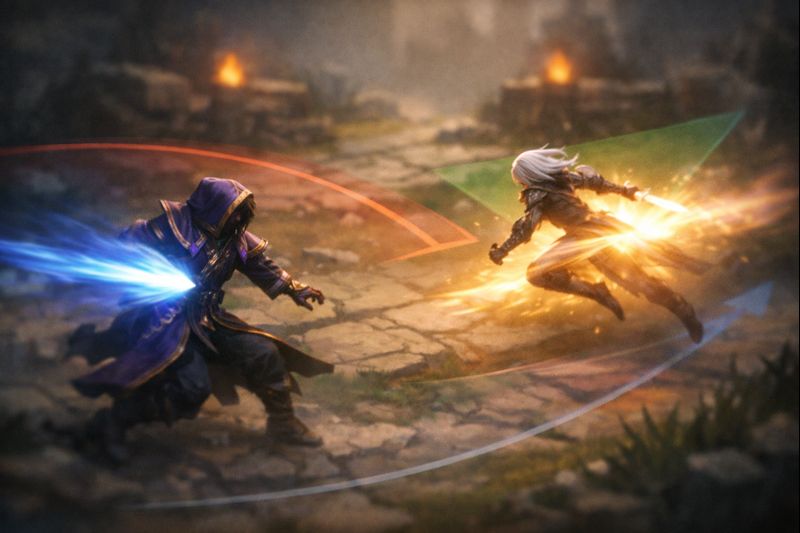
Goal: train a non-linear flash that preserves your threat while avoiding the skillshot line.
Most players flash backward. Better players often flash diagonally to a safe “angle” where the opponent must re-aim, giving you a tempo advantage.
- Stand in lane as if trading at max spell range.
- Imagine a threat line from the enemy to you.
- Flash diagonally (30–60 degrees off the line), not straight back.
- Immediately re-aim your cursor toward the enemy and simulate the punish: auto, ability, or reposition.
Benchmark: 40 reps where your cursor ends in a “punish-ready” spot within 0.5 seconds after flash.
Drill 4: Flash + Re-Aim Snap (Solo, 6 minutes)
Goal: remove the dead time after flash where you “look lost.”
- Place two target dummies: one as the enemy, one as a safety marker behind you.
- Start with cursor on the enemy dummy.
- Flash to a side angle and instantly snap cursor back to the enemy dummy.
- Repeat from multiple starting cursor positions (enemy, near-self, empty ground).
Benchmark: 25 clean reps without overshooting cursor or clicking UI.
Drill 5: Flash Buffer / Flash-Cast (Solo, 12 minutes)
Goal: make your post-flash punish immediate. Many champions can “buffer” a cast so it comes out instantly after the reposition.
Even if your exact buffering differs by champion, the training idea is universal: flash and act with zero hesitation.
- Choose a champion you actually play.
- Identify one simple post-flash punish sequence (e.g., flash → primary damage spell; flash → crowd control; flash → auto reset).
- Do 10 slow reps for perfect inputs.
- Do 20 reps at full speed.
- Finish with 10 “random start” reps where you reposition camera first, then execute on a sudden cue (timer or mental trigger).
Benchmark: 30 consecutive reps where the punish happens instantly after flash (no extra step, no pause).
Partner Drill 6: Flash Dodge Reaction (Custom with a friend, 15 minutes)
Goal: train real threat recognition. A partner gives you actual cast animations and uncertainty.
- Your partner picks a reliable skillshot champion they can repeat consistently (hook/bind/line skillshot).
- You stand at a fixed distance (start easy: closer range so the projectile reaches faster and you must decide early).
- Partner alternates between: (a) casting immediately, (b) holding cast, (c) fake step-up then cast.
- Your job is to flash dodge with an angle (not straight back) and then instantly punish or disengage based on spacing.
Progression: shorten the distance, add minions, then add terrain angles.
Partner Drill 7: Two-Threat Flash (Custom, 12 minutes)
Goal: avoid flashing the first thing you see when a bigger threat is coming next.
Set up two threats (for example, a line skillshot plus a follow-up gap-close). Your partner tries to “force” your flash early. You train patience: flashing when it matters, not when it is merely scary.
Benchmark: In 20 reps, you flash only when the high-value threat commits, not on every fake.
Common flash dodge mistakes (and quick fixes)
- Flashing too late: you are reacting to the projectile, not the cast. Fix by training to react to the animation or positioning cue.
- Flashing straight back: predictable and often still in follow-up range. Fix by training diagonal reset angles.
- Not re-aiming: you dodge but lose the fight anyway. Fix with re-aim snap reps.
- Flashing into fog: you survive the skillshot but die to unseen follow-up. Fix by prioritizing “known safe” angles in your wall flash routes.
- Using flash as a crutch: you rely on flash instead of spacing. Fix by pairing flash drills with positioning constraints (max-range trading, minion shielding).
4) Skillshot Accuracy: Drills, Benchmarks, and Mistakes
Skillshot accuracy is not only “aim.” In LoL it is a blend of setup (information + positioning) and execution (cursor placement + timing). If you only train raw aim, you will still miss in real games because the target behaves differently when minions, terrain, and fog-of-war matter.
The Skillshot Accuracy Model (timeless and practical)
- Information: do you see the target clearly? Do you know their escape path?
- Constraint: can you force them into fewer movement options (minions, walls, brush, chokepoints)?
- Timing: are they last-hitting, mid-animation, or pathing predictably?
- Release: cursor placement and cast timing must match the predicted movement.
Drill 1: “Three Distances” Accuracy Ladder (Solo, 12 minutes)
Goal: eliminate distance-specific misses. Many players can hit at one range but fail at max range or point-blank.
- Place a target dummy.
- Mark three ranges: close, medium, max range (use ground cues).
- At each range, cast your key skillshot 20 times.
- Track hits vs misses (write it down).
Benchmark: 85%+ at close/medium, 70%+ at max range (then push higher).
Drill 2: Cursor Discipline Box (Solo, 8 minutes)
Goal: reduce cursor travel and over-correction.
- Imagine a small “box” around the target dummy (you can use terrain textures as boundaries).
- Keep your cursor inside that box for 60 seconds while you orbwalk and reposition.
- Every time you leave the box, reset and start again.
- Then cast your skillshot while keeping cursor movement minimal.
Benchmark: 3 clean 60-second rounds with minimal cursor drift.
Drill 3: Minion-Wave Geometry Shots (Solo or Partner, 15 minutes)
Goal: train “real lane” shots. Most missed skillshots happen because minions change movement options and block lines.
- Spawn a minion wave and let it meet.
- Stand so minions partially block a direct line to the target.
- Practice casting through gaps or around the wave, changing your angle first.
- If you have a partner: have them last-hit and move naturally, then you shoot during predictable last-hit windows.
Benchmark: 30 successful “gap” shots without clipping minions.
Drill 4: “Last-Hit Timer” Punish Shots (Partner recommended, 12 minutes)
Goal: land skillshots when the opponent is most predictable: during last-hit commitment.
- Partner stands in lane and focuses on last-hitting.
- You do not throw randomly. You only throw when the last-hit is about to happen.
- After each cast, immediately reposition (don’t stand still admiring the shot).
Benchmark: 20 attempts with 12+ hits while maintaining safe spacing.
Drill 5: Fog-of-War Release Windows (Custom, 15 minutes)
Goal: stop telegraphing. Many players aim too long before casting, giving the enemy time to dodge.
- Use brush or terrain to hide part of your approach.
- Partner tries to react as late as possible.
- You train a short “release window”: show yourself, cast quickly, then reposition.
Benchmark: Reduce your visible “aiming time” before cast while maintaining accuracy.
Drill 6: Two-Step Aim (Solo, 10 minutes)
Goal: make your casts less readable and more accurate by separating setup and release.
- Step 1 (setup): move cursor to the predicted path, not the current position.
- Step 2 (release): cast during the moment the target commits (last-hit, turn, animation).
- Repeat 30 times with a consistent rhythm (use a metronome if helpful).
Role-based skillshot emphasis (timeless guidance)
- Mages: prioritize hitting from angles where the enemy must choose between dodging and losing farm.
- Hook supports: prioritize patience and brush geometry—one high-quality attempt beats three low-quality throws.
- Junglers with skillshots: prioritize casting from fog and syncing with ally crowd control.
- ADCs: prioritize consistent cursor discipline and movement so your aim doesn’t collapse under threat.
Common skillshot mistakes (and quick fixes)
- Throwing on cooldown: predictable and easy to dodge. Fix: only throw with an information or timing advantage.
- Aiming at where they are: good players are never “there.” Fix: aim at where they must go (path constraints).
- Over-aiming: long aim time telegraphs. Fix: reduce release window; cast sooner with a prepared prediction.
- Ignoring minion geometry: you lose value in lane. Fix: train gap shots and angle changes.
- No follow-up plan: even a hit can be wasted. Fix: pair casts with spacing and immediate next action (auto, step, ward, disengage).
5) Combo Practice: Drills, Benchmarks, and Mistakes
Clean combos win fights because they reduce time-to-kill, minimize counterplay windows, and keep your inputs consistent under stress. The objective is not to learn “fancy” combos—it is to execute the highest-percentage sequence reliably in real games.
Combo building blocks (train the fundamentals, not just the sequence)
- Input order: correct spell sequence for reliability and damage timing.
- Buffering: queuing actions so they fire instantly after movement or another cast.
- Auto-weaving: inserting autos between spells where it increases DPS without slowing the sequence.
- Animation discipline: moving at correct moments to avoid “rooting” yourself unnecessarily.
- Decision branches: knowing when to stop the combo and disengage.
Drill 1: Slow-Perfect Reps (Solo, 10 minutes)
Goal: build correct muscle memory. Speed comes later.
- Pick one core combo you actually use in real games.
- Do 10 reps at slow speed, narrating the steps mentally.
- After each rep, reset your position and camera as you would in a real lane.
- Do 10 more reps slightly faster while keeping the same clean rhythm.
Benchmark: 20 reps with zero mis-ordered inputs.
Drill 2: Metronome Combo Ladder (Solo, 12 minutes)
Goal: remove “rushed” or “hesitation” timing. Combos break because your tempo changes under pressure.
- Set a steady rhythm (you can use any metronome app).
- Assign beats: beat 1 = first input, beat 2 = next input, beat 3 = movement or auto, etc.
- Start slow. After 10 clean reps, increase tempo slightly.
- Stop increasing tempo when accuracy drops.
Benchmark: Find your “clean tempo ceiling,” then train just below it.
Drill 3: Auto-Weave Consistency (Solo, 10 minutes)
Goal: many players lose damage by either skipping autos or forcing autos that slow the combo. This drill teaches correct weaving windows.
- On a dummy, execute your combo with autos included.
- Repeat the same combo without autos.
- Compare the time and damage feel. Your objective is to weave autos only where they do not break the combo timing.
- Now do 20 reps with the “optimal weave version.”
Drill 4: “Random Start” Combo Execution (Solo, 12 minutes)
Goal: execute when your hands are not “ready.” Real fights start unexpectedly. This drill trains readiness.
- Move around, last-hit minions, or clear a small camp in Practice Tool.
- At random moments (use a timer beep or a mental trigger), snap to the dummy and execute the combo instantly.
- After each combo, reset spacing with one movement pattern (backstep, sidestep, or angle change).
Benchmark: 15 reps where the combo starts within 0.3–0.5 seconds of the cue.
Drill 5: Branching Combos (Solo or Partner, 15 minutes)
Goal: avoid autopiloting into bad outcomes. Many deaths come from continuing a combo when you should stop.
Create two branches:
- Commit branch: full combo into kill pressure.
- Exit branch: short trade then disengage (movement + spacing reset).
On each rep, decide the branch based on a simple cue (cooldown available, dummy “health threshold,” partner response, or imagined jungler threat).
Archetype guidance (so drills stay timeless)
- Assassins: train burst + exit patterns; your combo is incomplete if you cannot leave safely.
- Bruisers: train sustained sequences and target switching; combos often include repositioning and re-engage windows.
- Mages: train “spell layering” and spacing; you win by sequencing casts while staying out of threat range.
- ADCs: train kiting plus “micro-combos” (auto-weave patterns) rather than flashy sequences.
- Supports: train engage timing, peel sequencing, and quick follow-up to allied crowd control.
Common combo mistakes (and quick fixes)
- Combo is correct but slow: you hesitate between inputs. Fix: metronome ladder and random-start reps.
- Combo is fast but messy: mis-ordered inputs under stress. Fix: slow-perfect reps until order is automatic.
- Combo ignores spacing: you execute but die. Fix: add an exit branch and reset movement after every rep.
- Combo is too situational: only works in ideal conditions. Fix: prioritize your highest-percentage core combo first.
A simple tracking table (copy into notes)
| Skill | Drill | Target | My Result | Next Step |
|---|---|---|---|---|
| Flash Dodges | Diagonal Reset Flash | 40 clean reps | Increase speed / add partner | |
| Skillshots | Three Distances Ladder | 85% / 85% / 70% | Add minions and fog drills | |
| Combos | Random Start Execution | 15 reps, fast start | Add branching decisions |
6) Turning Drills Into Ranked Wins
Drills build the skill. Ranked builds the habit under pressure. The most common failure is doing drills but never transferring them into real games. You fix that with micro-goals and a short warm-up.
The 12-minute pre-ranked warm-up
- 3 minutes: cursor discipline + basic movement (no spells, just clean spacing).
- 4 minutes: 20 reps of your main combo (slow-perfect for 5 reps, then full speed).
- 3 minutes: 15 skillshot casts with a release-window focus (fast, not telegraphed).
- 2 minutes: 10 diagonal reset flashes + re-aim snap.
This is short enough to be sustainable. Consistency beats marathon sessions.
One micro-goal per match (examples)
- Flash discipline goal: “If I flash, I must either (a) wall flash to safety or (b) flash diagonally and punish—no straight-back panic flash.”
- Skillshot goal: “I only throw my key skillshot when I have a timing advantage (last-hit, animation, fog).”
- Combo goal: “In every all-in, I execute my core combo with an exit branch—commit or disengage, no autopilot.”
Replay review: a 6-question mechanical checklist
- Was my camera positioned so I could see the threat early?
- Did I react to the cast (good) or the projectile (late)?
- Did I flash with an angle and a plan?
- Were my skillshots thrown with a setup advantage?
- Did my combo start immediately or did I hesitate?
- After my combo, did I reset spacing or stand still?
When you want faster progress
If you want structured feedback on your mechanics (combo order, spacing errors, and decision timing), consider coaching or guided improvement. Many players combine a short drills routine with external review to accelerate progress. If you’re exploring support options, you can check Boosteria’s pricing here: https://boosteria.org/elo-boost/prices.
7) 7-Day and 30-Day Training Plans
Below are two practical plans. The 7-day plan builds the habit. The 30-day plan builds real mechanical confidence and consistency.
7-Day Plan (25–35 minutes per day)
- Day 1: Flash range mapping + diagonal reset flash + re-aim snap
- Day 2: Three distances ladder + cursor discipline box
- Day 3: Slow-perfect combo reps + metronome ladder
- Day 4: Wall flash routes + random start combo execution
- Day 5: Minion-wave geometry shots + last-hit timer punish shots
- Day 6: Branching combos + fog-of-war release windows
- Day 7: Mixed test day (benchmarks): 20 flash reps, 30 skillshots, 20 combo reps
30-Day Plan (4-week structure)
Week 1 (Foundation): accuracy and clean reps. No rushing. Focus on correct angles, correct cursor placement, correct combo order.
Week 2 (Speed): introduce metronome ladders and random-start drills. You will feel “sloppy” at first—slow down until clean, then speed up again.
Week 3 (Pressure): add partner customs and fog/minion constraints. Mechanics must survive uncertainty.
Week 4 (Integration): pre-ranked warm-up every session, one micro-goal per game, replay review twice a week.
Benchmarks to aim for by the end of 30 days
- Flash: diagonal reset flash with instant re-aim feels automatic; wall flashes are consistent without misinputs.
- Skillshots: higher accuracy at max range; fewer “panic throws” with no setup.
- Combos: your core combo starts quickly on cue and includes an exit plan.
8) Troubleshooting (Lag, Fatigue, Tilt, Plateaus)
If you have high ping
- Prioritize prediction: react to cast cues and positioning, not projectile travel.
- Stand at better ranges: max range buys time; chokepoints reduce dodge options.
- Use simpler mechanics: high-percentage combos and safer angles outperform “tight” reaction plays.
If your hands feel inconsistent day-to-day
- Shorten sessions: 12–20 minutes daily beats 2 hours once a week.
- Do a warm-up: mechanics are temperature-sensitive—cold hands and cold brain reduce precision.
- Standardize conditions: same sensitivity, same chair height, same posture.
If you tilt and panic-flash
Tilting is often a “speed problem.” Your mind rushes, and your hands follow. Use a simple rule:
- Rule: If flash is available, you must have a flash plan before you walk into threat range.
That plan can be as simple as: “If the hook animation starts, I flash diagonally toward the wall route.”
If you plateau
Plateaus usually mean you stopped increasing difficulty. Upgrade one variable at a time:
- Add minions.
- Add fog-of-war.
- Add a partner with fakes and delays.
- Add branching decisions.
- Add time constraints.
9) Useful Resources and Tools
These links help you stay current on fundamentals and reference details without locking your training to any short-lived meta.
- LoL official site
- Official patch notes
- Riot support
- OP.GG (match history & stats)
- Lolalytics (pick/ban and performance trends)
For service options related to LoL rank progress, you can also review Boosteria pricing here: https://boosteria.org/elo-boost/prices.
10) FAQ
How long should a mechanics session be?
For most players, 20–35 minutes is ideal. You want high-quality reps, not exhaustion. Consistency over weeks matters more than one long session.
Should I train mechanics in Practice Tool or real games?
Both. Use Practice Tool to build clean inputs. Use real games to build habits under pressure. The best approach is a short warm-up plus one micro-goal per match.
What if I can’t find a partner to practice skillshots and flash dodges?
Focus on solo foundations (flash angles, re-aim snaps, combo ladders) and then transfer into normals with a strict rule: only take trades that match your drill goal.
How do I stop panic-flashing?
Create a default flash plan for common threats (diagonal reset or wall route) and train it until it becomes your automatic response. Panic is often just untrained habit.
How do I know if I’m improving?
Track benchmarks weekly: accuracy at different ranges, clean combo reps under a timer, and whether your flash usage has a consistent angle and follow-up plan.