



Valorant Movement Guide 2026: Counter-Strafe & Bunny Hop
Valorant Movement Fundamentals Guide 2026: Counter-Strafe, Bunny Hop, and Silent Walking Basics
Table of Contents
- Introduction: Why Movement Wins Games
- How Movement Mechanics Work in Valorant
- The Science of Accuracy and Velocity
- Counter-Strafing Explained Step-by-Step
- Common Counter-Strafe Mistakes
- Drills to Master Counter-Strafing
- Bunny Hopping: Myth vs Reality
- Advanced Bunny Hop Techniques
- Silent Walking and Sound Control
- Movement in Different Scenarios (Entry, Clutch, Retake)
- Peeking Fundamentals and Angle Discipline
- Movement + Crosshair Placement Synergy
- Agent-Specific Movement Considerations
- Movement Warm-Up Routine (10-Min System)
- How Pros Train Movement
- Mental Discipline and Movement Control
- When to Improve Yourself vs. When to Get Help
- Final Thoughts
1. Introduction: Why Movement Wins Games
In tactical shooters like Valorant, aim often gets the spotlight. Players grind aim trainers, study recoil patterns, and obsess over headshot percentages. But high-ranked players understand something deeper: movement creates the opportunity for aim to matter.
In 2026 and beyond, the fundamentals remain the same. Meta changes, agents evolve, maps rotate — but movement physics and accuracy rules stay consistent. If you master counter-strafing, bunny hopping, and silent walking, you unlock consistent duel control across every rank.
Movement decides:
- Who sees who first
- Who stops first
- Who shoots accurately first
- Who makes sound and who stays hidden
And in a game built around milliseconds, that difference is everything.
2. How Movement Mechanics Work in Valorant
Valorant uses a movement model inspired by classic tactical shooters. While it is not identical to Counter-Strike 2, the fundamental rule remains:
Your accuracy depends on your velocity.
When your character is moving, your weapon spread increases dramatically. Even small amounts of movement reduce accuracy. To shoot accurately, you must reduce velocity to near zero.
This creates the foundation for counter-strafing.
Movement types include:
- Walking (Shift)
- Running
- Air movement
- Crouch movement
- Agent-based mobility
Understanding these states allows you to manipulate timing in duels.
3. The Science of Accuracy and Velocity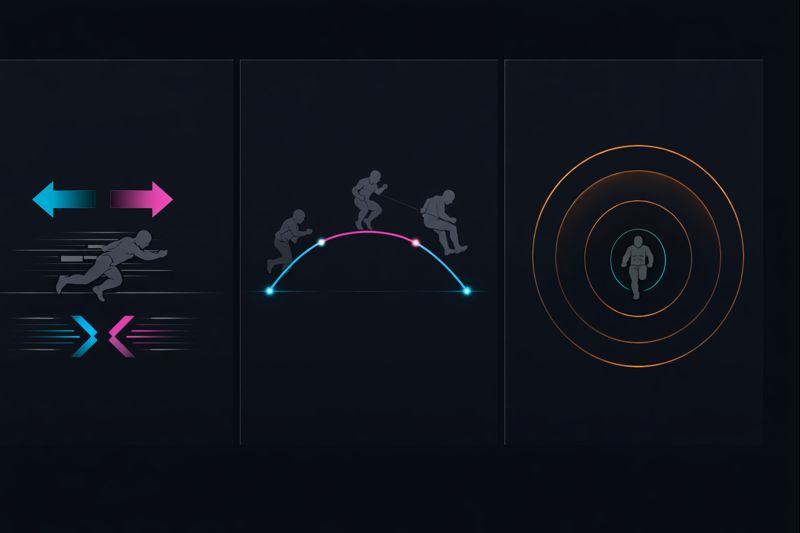
When you press A or D, your character accelerates. When you release the key, your character decelerates gradually. That deceleration takes time — even if it feels instant.
Counter-strafing cancels that deceleration delay.
Instead of letting your character slow naturally, you press the opposite movement key to force an instant stop.
Example:
- Moving left (A)
- Tap right (D)
- Velocity resets to zero faster
- You shoot accurately sooner
This mechanic reduces time-to-first-accurate-bullet, which is critical at high ranks.
4. Counter-Strafing Explained Step-by-Step
Basic Execution
- Hold A to strafe left.
- Release A.
- Tap D quickly.
- Shoot at the exact moment velocity reaches zero.
Timing is everything. Too early and you’re inaccurate. Too late and you waste reaction time.
Why It Works
The game engine applies opposing velocity when pressing the opposite key. This forces your movement speed to zero almost instantly.
Practical Duel Example
You peek an angle:
- Strafe out
- See enemy
- Tap opposite key
- Instant headshot
At higher ranks, everyone pre-aims. The difference becomes who stops and shoots first.
5. Common Counter-Strafe Mistakes
- Holding opposite key too long (causes over-movement)
- Shooting before full stop
- Crouching immediately (panic crouch)
- Over-peeking wide angles
Precision matters more than speed. Clean movement beats frantic input.
6. Drills to Master Counter-Strafing
Practice Range Drill
- Strafe left
- Counter-strafe
- One-tap bot
- Repeat both directions
Wall Bullet Pattern Drill
Shoot while moving to observe spread. Then counter-strafe and compare tight grouping.
Deathmatch Focus
Play only with Sheriff or Guardian. Force clean one-tap discipline.
For structured coaching approaches, reviewing pro VODs via platforms like VLR.gg helps identify movement timing differences.
7. Bunny Hopping: Myth vs Reality
Unlike some shooters, bunny hopping in Valorant does not massively increase speed. However, it has situational advantages:
- Harder to track target
- Preserves momentum
- Useful for ability timing
It is not a replacement for clean strafing. It is a situational tool.
8. Advanced Bunny Hop Techniques
- Scroll wheel jump for consistency
- Rhythm-based hop timing
- Air-strafe direction control
Remember: you are inaccurate while airborne. Use it for repositioning, not dueling.
9. Silent Walking and Sound Control
Sound wins rounds. Running gives away your position. Walking preserves surprise.
Key silent walking uses:
- Clutch situations
- Late lurks
- Fake rotates
- Post-plant repositioning
Learning map sound ranges is essential. Riot’s official developer insights on playvalorant.com occasionally explain sound propagation principles.
10. Movement in Different Scenarios
Entry Fragging
Wide swing + counter-strafe.
Clutch
Minimal noise, tight jiggle peeks.
Retake
Coordinated swings with teammates.
11. Peeking Fundamentals
- Jiggle peek
- Shoulder bait
- Wide swing
- Slice the pie
Proper peeking combined with counter-strafe defines mechanical skill.
12. Movement + Crosshair Placement
Movement without crosshair discipline is wasted.
Your crosshair should already be at head height when you counter-strafe.
This reduces required correction and increases duel win percentage.
13. Agent-Specific Movement Considerations
- Jett dash resets positioning
- Raze satchel creates vertical angles
- Neon speed changes timing
But fundamentals still apply. Accuracy requires stopping.
14. 10-Minute Movement Warm-Up
- 2 min counter-strafe bots
- 3 min Sheriff only
- 2 min jiggle peek practice
- 3 min Deathmatch movement focus
Consistency beats intensity.
15. How Pros Train Movement
Professional players combine:
- Deathmatch repetition
- VOD review
- Structured routines
If you’re serious about climbing efficiently, structured assistance from high-elo players can accelerate improvement. Explore pricing and structured rank progression services at Boosteria Valorant Boosting Prices.
16. Mental Discipline and Movement
Movement mistakes often come from tilt.
- Over-swinging
- Running when anxious
- Panic crouching
Control inputs, control outcome.
17. Timeless Improvement Strategy
Movement fundamentals never expire. Even as patches adjust weapons or agents, velocity and accuracy interaction remains constant.
Master:
- Stopping cleanly
- Peeking intentionally
- Controlling sound
Everything else builds on that.
18. Final Thoughts
Valorant rewards discipline. Counter-strafe correctly and you shoot first. Control sound and you control information. Use bunny hops wisely and you reposition unpredictably.
Rank is a reflection of consistency. Build movement habits that work across patches, metas, and map rotations.