



2XKO Blocking Fundamentals Guide: Mixups, Throw Tech, Defense
2XKO Blocking Fundamentals Guide 2026: Mix-Ups, Tech Throws, and Defensive Options
Blocking in 2XKO is not “just hold back.” Because it’s a fast, assist-driven tag fighter, your defense is a layered decision system: you identify the mix-up type, choose the lowest-risk coverage, and spend resources only when the situation demands it. This guide breaks down the blocking rules, the most common mix-ups (high/low, strike/throw, left/right, timing traps), how to tech throws consistently, and how to use 2XKO’s defensive tools—Retreating Guard, Push Assist, Parry, Break, and wake-up options—without becoming predictable.
This is written to stay useful long-term. Inputs can be rebound and balance changes happen, so when you practice a concept (like throw tech timing or parry risk), verify the exact move behavior in-game and in the current patch notes. The fundamentals below remain valid regardless.
The 3 Goals of Defense in 2XKO
Before you study inputs and options, get clear on what “good defense” is trying to accomplish. In 2XKO, your defense should aim for three outcomes—prioritized in this order:
- Survive the sequence with minimal damage. This means blocking correctly, not getting opened up by obvious patterns, and not donating punishes by panicking.
- Escape to a playable screen position. Space is a defensive resource. The more distance you create, the fewer true mix-ups your opponent can represent at once. Tools like Retreating Guard and Push Assist exist specifically to buy you that space.
- Regain initiative safely. You do not “win defense” by mashing. You win by choosing a moment where your opponent’s pressure ends, becomes unsafe, or becomes predictable—then you take your turn with the smallest commitment possible.
Most players fail on defense because they reverse the order: they try to steal initiative first, and only then think about survival and escape. Fix the order, and your blocking instantly improves—even before you learn any advanced techniques.
Blocking Rules You Must Internalize
2XKO uses “back-to-block” fundamentals with clear attack levels (high/mid/low) and strong tag-game interactions. If you only remember a handful of rules, remember these:
1) High / Mid / Low coverage
- Stand block (hold back) blocks high and mid.
- Crouch block (hold down-back) blocks mid and low.
- Air block (hold back or down-back in the air) blocks all attack levels, but you still need to manage throws and landing recovery.
This matters because most mix-ups are built around forcing you to switch between stand block and crouch block under time pressure.
2) You cannot block during certain states
Blocking isn’t always available. If you are dashing, attacking, or still in your pre-jump frames, you can get hit. This is why random jump-outs and panic dashes get clipped—your character is briefly unable to guard.
3) How cross-ups and side switches work while blocking
Once you are already in blockstun, the game helps you by “auto-correcting” your block direction across side changes for a short period. Practically, it means: if you are already blocking, you often continue to block correctly during a quick cross-up unless you change your block state (like switching to down) at the wrong moment. This is one reason experienced players favor tight, layered sequences: they are trying to force a low/overhead decision or a throw decision, not just a left/right swap.
4) Assist pressure has a special rule
When an assist is hitting you, you may need to block relative to the point character’s position, and assist attacks can create pressure patterns that do not exist in 1v1 fighters. The takeaway: treat assist pressure as “two attackers with two angles,” and prioritize defending the option that leads to the biggest conversion (usually a clean hit that confirms into a full tag sequence).
If you want to reference official control layouts and baseline mechanics, keep these bookmarked: 2XKO Basic Controls and the community-maintained 2XKO Controls / 2XKO Mechanics pages.
The Mix-Up Map: What You’re Actually Defending
“Mix-up” is often used as a vague term. To defend consistently, you need to classify the threat. In 2XKO, almost every opening falls into one (or a combination) of these categories:
1) Strike / Throw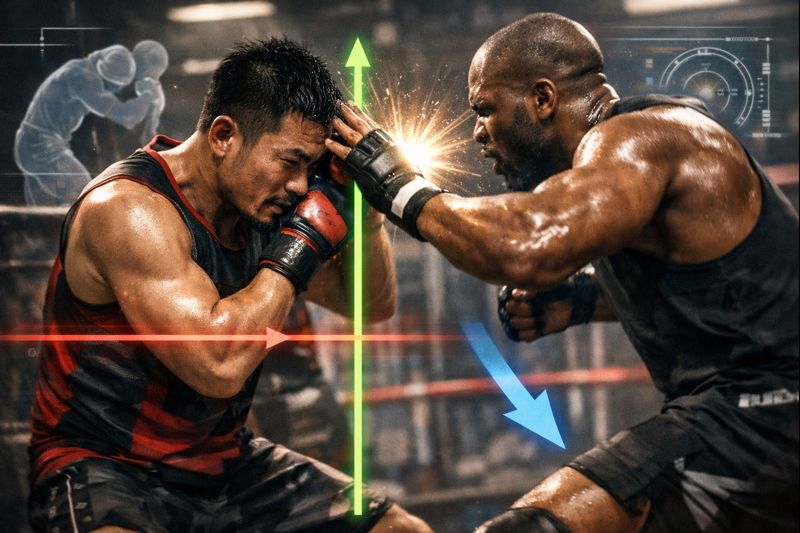
Your opponent alternates between attacks that must be blocked and throws that beat blocking. Strike/throw is the backbone of close-range offense because it forces you to either keep guarding (and risk being thrown) or attempt a defensive action (and risk getting counter-hit).
2) High / Low
High/low mix-ups force a change between stand block and crouch block. A common structure is: a safe mid string that conditions crouch block, then an overhead timed to catch you holding down-back. In some builds and control schemes, many overheads are standardized to a directional + medium input, while sweeps are standardized to a directional + heavy input—this helps recognition and training over time.
3) Left / Right
Left/right is a side switch. In tag fighters, left/right often comes from assist coverage, jump drift, and “cross-through” movement specials. It is most dangerous when it happens at the exact moment you must also decide high/low or strike/throw (for example: a jump-in that can cross up and then immediately threatens a low or a throw).
4) Timing (Frame Traps and Delays)
Timing mix-ups punish your impatience. Your opponent creates small gaps that look like “your turn,” but pressing a button gets you counter-hit. Delayed buttons, stagger pressure, and reset points are designed to make you flinch.
5) Resource-based mix-ups
2XKO includes defensive tools that cost meter or cooldowns, and offensive tools that become stronger when resources are available. This creates “resource mix-ups”: the same string becomes more threatening when your opponent can call assist, spend meter, or threaten a specific punish. Likewise, your defense changes when you have Break available, when you have meter for parry, or when your assist cooldown is ready for Push Assist.
Strong defense starts by asking one question: Which category is this pressure representing right now? If you misclassify it, you pick the wrong answer and your block “randomly fails.”
Default Guard Priorities (and When to Break the Rule)
If you watch high-level players, you’ll notice they are not reacting to everything. They are using defaults that beat the most common threats, then switching only when there is a clear cue. Here’s a timeless default system that works in 2XKO and most tag fighters:
Default #1: Crouch block first at close range
Why: low attacks and fast mids are common, and eating a low starter often leads to the biggest conversions. Crouch block also naturally stops many “scramble” pokes. The cost is that you can be opened by an overhead or thrown.
Default #2: Stand up only when you see the overhead cue
Do not “pre-stand” against overheads unless you have a read on timing. Overheads are designed to catch early stand-ups. A better habit is: keep crouch block, then stand at the last reasonable moment, then return to crouch. This is the foundation of fuzzy guarding (precise block switching to cover multiple options). If you want a clear definition of fuzzy guard in fighting games, see The Fighting Game Glossary.
Default #3: Accept some throws
This sounds counterintuitive, but it’s crucial. If you try to tech every throw, you become vulnerable to timing traps and throw baits. A throw is usually a smaller loss than a full counter-hit conversion. The goal is to reduce the opponent’s reward, not to eliminate all risk.
When to break defaults
- When the opponent shows a consistent overhead timing: begin fuzzy guarding or pre-standing at that rhythm.
- When the opponent refuses to throw: you can block longer and spend fewer defensive resources.
- When assists are active: your default often shifts to “block longer, escape later,” because mashing into layered assists gets you hit.
- When you have a clear resource advantage: you can represent parry, Push Assist, or Break, which changes the opponent’s risk calculus.
Blocking vs Assist Pressure and Cross-Through Attacks
Tag pressure changes the geometry of defense. Your opponent can create “two-point” offense: the point character threatens a strike/throw while the assist pins you in blockstun or controls the screen behind you. Here’s how to defend it without guessing yourself to death:
1) Treat assist hits as “don’t flinch” moments
When the assist is actively hitting or about to hit, your goal is to not press. Even if the point character looks spaced out, assists often create delayed frametraps. Your safest play is usually to block the sequence, then look for an escape after the assist finishes.
2) Understand “block relative to where the hit comes from”
Some systems require you to hold away from the point character to block assist attacks. If you ever feel like you “blocked the wrong way” while an assist was active, it’s often because you were holding away from the wrong reference point. In practical terms: keep your eyes on the character whose hitbox is connecting, not the character doing the mix-up.
3) Cross-through specials are a separate problem
Some moves travel through you and end on the other side. In those cases, the correct block direction is “away from where the attacker ends up,” not where they started. The defense skill here is recognition: if you identify the cross-through animation early, you stop trying to react at the final moment.
4) Reduce the decision count with spacing
Most true mix-ups require close range. If you can create half a character length of space, the opponent often loses either the throw threat or the clean high/low threat. This is why the next two tools—Retreating Guard and Push Assist—are so important. They are not “panic buttons.” They are spacing tools that reduce how many options you must cover at once.
Tech Throws: Timing, Windows, and Anti-Throw Habits
Throws are the pressure valve that beats pure blocking. If you never tech throws, you get walked to the corner and bled out by repeated strike/throw. If you try to tech everything, you get frametrapped and lose half your health. The solution is a structured throw-tech plan.
How throw escape works (conceptually)
In 2XKO’s modern control schemes, throws are typically input with Medium + Heavy, and throw escape (“tech”) uses the same input during the throw’s startup window. That means your defense must decide: am I continuing to block, or am I committing to a throw escape timing?
The hidden problem: tech attempts are also “button presses”
If your opponent staggers pressure (small delays between attacks), a tech attempt can become a counter-hit because you are no longer blocking. This is why raw “mash tech” is risky. Your opponent does not need a special read—they just need to vary timing.
The correct approach: tech in layers
- Layer 1 (early set): block more than you tech. Learn the opponent’s throw frequency and timing.
- Layer 2 (once they show throws): use late tech—delay your tech input slightly so you continue to block strikes but still catch throw attempts.
- Layer 3 (once they show throw baits): return to blocking and punish their hesitation with a safe escape tool (Retreating Guard, Push Assist) or by taking your turn when pressure ends.
Command throws change the rule
Many fighting games (including 2XKO kits) include command throws that cannot be teched. Against these, your “throw tech plan” becomes a “don’t be there plan”: you must jump, backdash, or retreat out of range before the grab connects. Do not confuse normal throws with command throws—one is a timing contest, the other is a positioning and read contest.
Anti-throw habits that don’t donate counter-hits
- Late tech (disciplined): a single delayed tech attempt after you’ve already blocked a few hits, not repeated tech mashing.
- Fuzzy jump (situational): block first, then jump at a timing that escapes throws and some slow overheads. This is powerful but can be clipped by tight frametraps, so use it when you’ve scouted the opponent’s rhythm.
- Backdash (sparingly): backdash can escape throws but loses hard to well-timed mids and assist coverage.
- Take the throw sometimes: especially when the opponent’s conversions on counter-hit are huge.
If you want to study defensive option-select ideas like fuzzy guard and fuzzy jump in a general fighting game context, Dustloop’s glossary and the Infil glossary are useful evergreen references: Dustloop Glossary and Infil’s Fighting Game Glossary.
Retreating Guard: Space Without Guessing
Retreating Guard is one of the most important “adult” defensive tools in 2XKO. It’s not glamorous, but it wins games because it converts a dangerous close-range mix-up into a mid-range situation where you can see what’s happening.
What it does
Retreating Guard is performed during blockstun and pushes your character backward to create space. The benefit is immediate: you reduce the opponent’s ability to threaten strike/throw and tight high/low sequences.
The built-in weakness (and why it matters)
Retreating Guard is vulnerable to lows during its animation. That means your opponent can “call you out” by intentionally using a low at the right time to score a special punish. In practical terms: you cannot spam Retreating Guard every time you block, or the opponent will start layering low attacks specifically to beat it.
How to use it correctly
- Use it after you’ve already blocked a clear mid/high. This reduces the chance that the next hit is a low timed to punish you.
- Use it when the opponent is assist-reliant. If the opponent’s pressure is “assist makes it safe,” Retreating Guard can separate them from the assist coverage and reset the situation.
- Use it as a threat, not a habit. The best Retreating Guard is the one that makes your opponent hesitate to over-extend, not the one you do every string.
How to beat the counterplay
Once your opponent starts fishing for low punishes, you gain something: predictability. You can respond by blocking low longer, by Push Assisting instead (different risk profile), or by simply holding block and letting their pressure overextend into unsafe spacing.
Push Assist: The Tag-Fighter Version of Pushblock
Push Assist is your “reset to neutral” tool when blocking becomes too expensive. In many tag fighters, pushblock exists to prevent infinite pressure loops. In 2XKO, Push Assist serves that same purpose, but it’s tied to your team system and cooldown management.
What it does
While you are blocking, you can call your off-screen partner to shove the opponent away. This creates space and can break the opponent’s ideal positioning. The animation has a fixed duration, which means it can sometimes “override” the tail end of blockstun and let you recover into a more favorable situation.
The real cost: cooldown and predictability
Push Assist typically incurs a longer assist cooldown. That matters because assists are also your offensive glue and your neutral control. If you Push Assist every time you feel uncomfortable, you may survive the moment but lose the next 10–15 seconds of the match because you cannot threaten your own assist-backed offense.
Best use cases
- Corner survival: when the opponent is about to loop pressure and you need breathing room.
- Assist-backed “sandwich” situations: when the opponent is creating left/right ambiguity with layered bodies on screen.
- After you’ve scouted a pattern: if the opponent always commits to one more button after a specific blocked move, Push Assist can blow up the autopilot extension.
How opponents try to beat it
Good players will bait Push Assist by leaving small gaps, spacing themselves to minimize the shove value, or using low-risk buttons that recover in time. Your answer is not to stop using Push Assist—it’s to stop being predictable about when you use it. Mix it with Retreating Guard, pure blocking, and the occasional parry threat.
Parry and Low Parry: High Reward, Real Risk
Parry is the flashiest defensive option in 2XKO, and it exists for a reason: it punishes predictable pressure and forces the attacker to respect your meter. Used correctly, parry turns “their turn” into “your punish.” Used incorrectly, it turns into a self-inflicted combo.
What parry is for (and what it is not)
- Parry is for calling out a predictable hit. It is strongest against repeated strings, slow specials, and telegraphed re-approaches.
- Parry is not a universal escape from pressure. If you parry randomly, you will run into lows (if you used high parry), mids/overheads (if you used low parry), throws, or delayed frametraps.
High parry vs low parry
In systems that support it, the “standard” parry covers mid and overhead attacks, while the low parry covers low attacks. This mirrors how high/low blocking works, but with a much narrower timing window and a much larger reward.
Resource discipline: the hidden win condition
Even when you do not parry, simply having meter changes the attacker’s offense. If your opponent knows you can spend meter to parry a predictable sequence, they may choose safer pressure that deals less damage or ends sooner. That is a defensive victory you earned without pressing anything.
Practical parry rules that hold up over time
- Parry the second/third hit, not the first. First hits are the most likely to be delayed or disguised. Later hits have more predictable timing.
- Parry when the opponent must swing to stay safe. For example, if they used a move that needs a follow-up to avoid being punished, the follow-up can become parry bait.
- Do not parry when throw is the main threat. If you are at point-blank range and the opponent has conditioned strike/throw, parry often loses to the “no strike” option.
If you want a concise “fundamentals-first” perspective on why defense is hard and how to structure your learning, Core-A Gaming’s educational content is a strong evergreen companion resource: Core-A Gaming.
Break (and Fury Break): The “Get Out” Button with Consequences
Break is the mechanic that prevents the game from becoming “one touch = death” at all skill levels. It’s also the mechanic that teaches discipline: Break is powerful, but it is not free.
What Break does
When your Break meter is full, you can activate Break during hitstun to disrupt the opponent’s combo. Your partner appears and interrupts the sequence, giving you a chance to reset the situation. Break is one of the few defensive actions available while you are actively being hit, which is why it is so valuable.
Why Break has consequences
- It is a limited resource. Break meter builds over time and through damage taken, and using it changes the next part of the round (and sometimes the next round).
- It can be baited. Strong opponents will structure combos to be “Break safe,” meaning that if you Break at the wrong time, you still end up in a bad situation.
- It can be punished if misused. In many systems, using Break when the opponent is blocking can cause a rebound or wall-bounce penalty, turning your “escape” into a liability.
When Break is correct
- To prevent a kill or a losing life deficit. If you will lose a character (or lose the round) without Break, spend it.
- To deny a strong tag sequence. In tag games, the scariest combos often also build resources and set up oppressive pressure. Breaking those sequences can be worth more than the raw damage saved.
- When you can convert the reset into position. If your Break usage leads to screen space, a tag reset, or a favorable scramble, it is often correct even if you still take minor damage afterward.
When to hold Break
Sometimes the right choice is to block and take damage. If the opponent’s combo is already scaled, if you are not at risk of losing a character, or if you can escape after the knockdown with strong wake-up defense, holding Break can be correct—especially because strong resource management wins long sets.
Wake-Up Defense and Rise Options
Most players think “defense” is only about blocking strings. In reality, many rounds are decided on wake-up: you get knocked down, and your opponent runs a setplay sequence that forces a mix-up. If you defend wake-up properly, you remove a massive chunk of your opponent’s offense.
Know the categories of wake-up pressure
- Meaty strike: they time an attack to hit you as soon as you stand. This beats most buttons and catches jump-outs.
- Throw: they threaten a grab as you rise, beating passive blocking.
- High/low: they threaten an overhead or low timed to your first block decision.
- Safe bait: they stand outside reversal range to punish your panic option.
Your wake-up answers should be structured
- Primary answer: block. Start by proving you will not donate damage for free.
- Secondary answer: escape with space tools. If they show repeated setplay, use Retreating Guard or Push Assist after you’ve blocked the first layer.
- Selective answer: wake-up attack (when available). If the system includes a getup attack or invincible wake-up option, use it sparingly and only when you have scouted that the opponent is committing too hard.
Do not “rotate options” randomly
A common beginner error is to treat defense like a roulette wheel: block once, then mash, then jump, then reversal. Strong opponents love this because your panic options are easier to punish than a disciplined block. Instead, keep one rule: only change your wake-up option after you’ve learned what the opponent is trying to cover.
Air Defense: Air Block, Air Recovery, Anti-Air Discipline
In 2XKO, a lot of pressure starts with jump-ins, air drift, and assist coverage that makes airborne approaches safer. To defend well, you need three air-focused habits:
1) Air block is strong, but not a plan
Air block helps you survive jump-in angles, but landing is still a vulnerable moment. If you always air block and land into a throw, you are still losing the sequence. Use air block to avoid immediate damage, then think about your landing: where will you land, and what is the opponent representing at that moment?
2) Air recovery decisions matter
When you get hit airborne and you have air recovery options, your choice affects whether the opponent gets a full conversion or must reset. The timeless rule: pick the option that avoids the corner first, then pick the option that avoids the opponent’s strongest follow-up.
3) Anti-air discipline beats “guessing defense”
Many players try to solve jump pressure by guessing block directions. A better approach is to reduce how often the opponent gets to jump at you for free. Learn your universal anti-air and use it when the jump is obvious. Even if you only anti-air 20% of jump attempts, you change the opponent’s risk profile and buy yourself more grounded, readable situations.
A Practical Training Plan (30 Minutes a Day)
Defense improves fastest when you practice it like a skill, not like a feeling. Here is a training plan designed to build muscle memory and decision-making without requiring character-specific lab work every day.
Block switching (10 minutes)
- Record a basic string that ends in a low.
- Record the same string that ends in an overhead.
- Randomize playback.
- Your goal is not “react every time.” Your goal is “hold the correct default, then switch only on cue.”
Focus on clean inputs. Most “I got hit by an overhead” moments are actually “I accidentally stood up early,” or “I tried to switch too late and got tagged.” The cure is repetition.
Throw tech discipline (8 minutes)
- Record strike into throw at a consistent timing.
- Record strike into delayed strike (frametrap) at the same starting rhythm.
- Randomize playback.
- Practice a single late-tech timing—one attempt, not repeated mashing.
Your goal is to reduce the damage you take, not to “tech everything.” If you can tech even one throw per sequence without eating counter-hits, your defense becomes dramatically harder to open.
Retreating Guard and Push Assist selection (6 minutes)
Record a pressure string that is safe and loops. Practice escaping using Retreating Guard at a specific point, then practice escaping using Push Assist at a different point. The key is timing: learn when each tool creates the most distance with the least risk.
Parry timing (6 minutes)
Record a predictable special or a repeated button sequence. Practice parrying the second or third hit. Then add a recording where the opponent delays the timing. This teaches the most important parry skill: recognizing when you are “sure enough” to spend the resource.
Defensive Decision Tree: What to Do Under Real Pressure
When you are actually in a match, you don’t have time to “think about everything.” Use this simple decision tree to make defense automatic:
Step 1: Identify the mix-up category
- If the opponent is point-blank and hesitating: expect throw or delay frametrap.
- If you see a clear overhead animation: prepare to stand then return to crouch.
- If assists are active: expect layered timing and left/right complexity.
Step 2: Choose a low-risk default
- Default to crouch block in most close-range situations.
- Do not press during assist hits.
- Accept that you may take a throw sometimes.
Step 3: Escape only after you’ve blocked the first layer
- If you need space: Retreating Guard (watch for low callouts).
- If you need a hard reset: Push Assist (watch cooldown and predictability).
- If you are being hit and will lose too much: Break (watch for bait and penalties).
Step 4: Take your turn safely
Your “turn” does not require a big swing. Often it’s a walk-out, a safe poke, a jump back, or a tag reset. The goal is to return to neutral or start your own offense—without gambling your life bar on a single mash.
Common Defensive Mistakes (and Fixes)
Mistake 1: Teching every throw
Fix: tech less, tech later. Train one late-tech rhythm and accept that some throws are the “cost of doing business.”
Mistake 2: Switching block too early
Fix: stay crouched longer. Stand only on the overhead cue or at the last moment your opponent can reasonably threaten it.
Mistake 3: Spending Push Assist on every string
Fix: treat Push Assist as a resource. Use it when position matters (corner, sandwich, assist lock), not simply when you feel uncomfortable.
Mistake 4: Random parries
Fix: parry only when the opponent is predictable. If you can’t name the exact hit you’re parrying, you’re gambling.
Mistake 5: Breaking too early
Fix: Break to prevent a kill, deny a strong tag sequence, or escape an unmanageable situation. Otherwise, consider holding it and defending the knockdown instead.
Closing Notes and Faster Improvement
Defense is the fastest way to climb in any fighting game because it turns your opponent’s offense into a smaller reward and more mistakes. If you only apply three habits from this guide, make them these:
- Classify the mix-up. High/low, strike/throw, left/right, timing—name it in your head.
- Use defaults. Crouch block first, stand on cue, accept some throws.
- Spend resources with intent. Retreating Guard for space, Push Assist for resets, Parry for predictable hits, Break for survival.
If you want to accelerate improvement with structured coaching goals (match review, matchup plans, defensive drills, and consistency tracking), you can also treat your rank climb like an Elo optimization problem. See Boosteria’s pricing here: https://boosteria.org/elo-boost/prices.
Bookmark these evergreen references for terminology and fundamentals that apply across patches and across fighters: The Fighting Game Glossary, Dustloop Glossary, and the official control overview 2XKO Basic Controls.