



CS2 Warm-Up Routine 2026: Workshop, DM & Retakes
Best Warm-Up Routines for CS2 (2026): Workshop Maps, Deathmatch, and Retake Servers
In Counter-Strike 2, “warming up” is not just about shooting a few bots. A good warm-up prepares three things at once: your mechanics (aim, recoil, movement), your decision-making (angle discipline, trading, timing), and your mental state (confidence, focus, emotional control). The best part: you do not need a complicated routine. You need a repeatable routine that fits your time budget and targets your weaknesses without turning into a second job.
This guide gives you a timeless CS2 warm-up system built around three pillars that will remain relevant across meta changes and updates:
- Workshop practice for clean, controlled reps (aim, recoil, counter-strafing, prefire patterns).
- Deathmatch for high-volume fights and crosshair discipline under pressure.
- Retake servers for realistic round scenarios: clearing, trading, utility habits, and clutch composure.
You will also get plug-and-play routines for 10, 20, 30, and 45+ minutes, plus role-based adjustments for riflers and AWPers. If you want a faster path to consistent ranked performance (or you are coming back after a break), a structured warm-up is one of the highest-ROI habits you can build.
Table of Contents
- 1) Warm-Up Principles That Actually Work
- 2) Quick Setup: Sensitivity, Posture, and “No-Waste” Settings
- 3) Time-Block Warm-Ups: 10 / 20 / 30 / 45 Minutes
- 4) Workshop Maps: What to Train and How to Choose Maps
- 5) Aim Fundamentals: First Bullet, Micro-Adjust, and Tracking
- 6) Recoil Control: Sprays, Bursts, and Transfers
- 7) Movement Warm-Up: Counter-Strafing, Peeks, and Pathing
- 8) Deathmatch Done Right: Avoiding Autopilot
- 9) Retake Servers: Turning Warm-Up Into Round-Winning Habits
- 10) Role-Based Routines: Entry, Support, Anchor, AWPer
- 11) Common Warm-Up Mistakes (and Fixes)
- 12) A Weekly Structure That Keeps Warm-Ups Fresh
- 13) How to Track Progress Without Overthinking
- 14) FAQ
1) Warm-Up Principles That Actually Work
Warm-up vs. practice vs. improvement
A warm-up is not the same as practice. The goal is to enter matches with stable mechanics and a calm, sharp mind. That means:
- Low friction: you can do it daily without motivation spikes.
- High signal: it targets skills that directly show up in fights.
- Short feedback loop: you can feel “locked in” within minutes.
Practice is where you grind weaknesses and build new skill. Warm-up is where you activate skill you already have. If your warm-up is too long or too stressful, you will burn mental energy before the match begins.
The three pillars (and why they matter)
Most players warm up aim only. But CS2 is a combined game: aim, movement, and decision-making work together. The three-pillar system is timeless because it trains that blend:
- Workshop = clean reps. You isolate errors and refine technique.
- Deathmatch = volume. You pressure-test crosshair placement and time-to-damage.
- Retakes = realism. You transfer mechanics into round logic: clearing, trading, utility, clutch control.
The “one rule” that prevents bad habits
Never train sloppy. If your mechanics start to degrade, you pause, reset, or switch drills. Warm-up is not about brute forcing. It is about quality reps at a pace you can execute correctly.
When you should shorten the warm-up
Shorten your warm-up if you feel:
- Mentally tired or distracted (use a simpler routine with fewer transitions).
- Mechanically “overheated” (your hand feels tense; your sprays are inconsistent).
- Time pressure (do the 10–15 minute version rather than skipping entirely).
A short warm-up that you actually do is always better than a perfect warm-up you only do once a week.
2) Quick Setup: Sensitivity, Posture, and “No-Waste” Settings
Lock in your sensitivity (and stop changing it daily)
Frequent sensitivity changes are one of the fastest ways to sabotage warm-ups. Your nervous system needs consistent inputs to produce consistent outputs. If you truly need to adjust, do it in small increments and commit for at least a week. The warm-up should adapt to your sensitivity, not the other way around.
Physical setup checklist (30 seconds)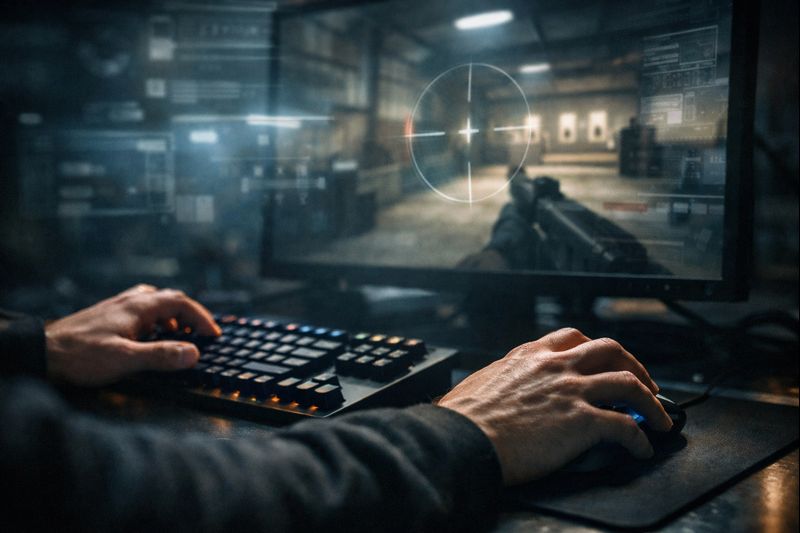
- Chair height: forearms relaxed on desk, shoulders not shrugged.
- Mouse grip: stable but not clenched; no “death grip” tension.
- Breathing: slow exhale before the first DM spawn to reduce jitter.
- Audio: consistent volume (too loud increases stress; too low hides cues).
Warm-up settings that reduce friction
Small setup changes can eliminate wasted minutes:
- Saved practice config: one click to load a training environment.
- Bind for restart: quickly reset a drill when reps get messy.
- Consistent crosshair and viewmodel: warm-up is not the time for aesthetic experiments.
If you want authoritative references for official updates and announcements, use Valve’s official Counter-Strike site and news posts, and for competitive event context and demos, many players use community resources like HLTV and Liquipedia:
3) Time-Block Warm-Ups: 10 / 20 / 30 / 45 Minutes
Use time blocks so you always know what to do, even when motivation is low. Pick the routine that matches your schedule and run it consistently.
10-minute “Minimum Effective Dose” (when you’re busy)
- Workshop (4 minutes): 2 minutes first-bullet flicks + 2 minutes counter-strafe taps.
- Deathmatch (4 minutes): rifle only, head-level crosshair, short bursts only.
- Retakes (2 minutes): 1–2 rounds focusing on clearing order and trading discipline.
Goal: enter ranked with clean first shots and calm movement. Do not chase top scoreboard. Chase correct reps.
20-minute “Standard Ranked Warm-Up”
- Workshop (7 minutes): aim + recoil (details in sections below).
- Deathmatch (8 minutes): 2 minutes taps, 3 minutes bursts, 3 minutes mixed fights.
- Retakes (5 minutes): 2–4 rounds; focus on utility timing and trades.
30-minute “Tournament Mode” (best balance)
- Workshop (10 minutes): aim (5) + recoil (3) + movement (2).
- Deathmatch (12 minutes): structured rules (no autopilot), “reset” every 3 deaths.
- Retakes (8 minutes): intentional comms, disciplined clears, calm post-plant decisions.
45+ minutes “Deep Warm-Up” (when you want peak form)
- Workshop (15 minutes): aim + recoil + prefire routine.
- Deathmatch (15 minutes): rifle + pistol segment.
- Retakes (15 minutes): scenario reps, clutch composure, utility habits.
Rule: If you feel fatigue, stop early. Peak performance is about quality, not duration.
4) Workshop Maps: What to Train and How to Choose Maps
Workshop maps are your “laboratory.” You want controlled reps where you can isolate one skill and improve it quickly. To discover maps, most players browse the Steam Workshop for CS2 and subscribe to training content that matches their needs:
What makes a workshop map ideal for warm-up
- Fast restarts: minimal downtime between reps.
- Clear targets: consistent target behavior so you can measure improvements.
- Adjustable difficulty: you can scale speed, distance, and target size.
- Focus: it trains one core skill at a time (aim, recoil, movement, prefire).
Workshop training categories (timeless)
Category A: Aim micro-drills
Look for maps that let you practice:
- Static flicks (snap to target, stop, shoot).
- Micro-corrections (tiny adjustment after an initial flick).
- Speed control (fast acquisition, slow final alignment).
Category B: Recoil and spray control
Prefer maps with visual recoil guides, adjustable distance, and the ability to practice:
- 10–15 bullet bursts
- full sprays
- spray transfers between targets
Category C: Prefire and angle clearing
Prefire maps teach you the muscle memory of common clearing sequences. This bridges workshop mechanics into match-relevant fights.
Category D: Movement and counter-strafe
Warm-up movement is not bhop showmanship. It is about stopping accurately and peeking efficiently:
- Counter-strafe timing
- wide vs. tight peeks
- shoulder bait + re-peek control
How many workshop maps should you keep?
Keep a small “warm-up stack” of 2–4 maps you rotate between. Too many maps increases friction and reduces consistency. Your routine should be predictable enough that you can do it half-asleep and still get quality reps.
5) Aim Fundamentals: First Bullet, Micro-Adjust, and Tracking
CS2 fights are often decided by the first accurate damage. Even at higher ranks, many duels are lost because the first shot is slightly off, the player panics, and then the spray becomes uncontrolled. Your warm-up should prioritize:
- First bullet accuracy (tap timing + correct stop)
- Micro-adjustments (correcting after a near-miss)
- Crosshair placement (being aimed before you see the opponent)
Drill 1: “Stop–Shoot” counter-strafe taps (2–4 minutes)
Goal: build the habit of stopping cleanly before firing.
- Strafe left/right around a target line.
- Counter-strafe (tap opposite key) and fire one accurate shot.
- Reset crosshair to head height every rep.
Common mistake: firing during movement. If you see inaccuracy or feel rushed, slow down until every shot is clean.
Drill 2: Micro-correction ladder (2–3 minutes)
Goal: train tiny corrective movements without overshooting.
- Snap close to the target quickly.
- Use a slow, controlled micro-correction to finish alignment.
- Fire 1–2 bullets max.
This drill prevents the “flick–miss–flick–miss” loop that happens when you are tense.
Drill 3: Controlled pace tracking (1–2 minutes)
Even though CS is not a tracking shooter, short tracking windows matter: enemies swing, you adjust, you confirm placement, you shoot. Practice tracking a moving target briefly, then finishing with a tap or burst.
The crosshair placement rule that changes everything
During warm-up, spend at least one minute walking a simple path and keeping your crosshair at the most likely head position for each angle. If you only warm up flicks, you become a reactive aimer. If you warm up placement, you become a proactive aimer.
6) Recoil Control: Sprays, Bursts, and Transfers
Recoil in CS2 is less about memorizing a perfect pattern and more about producing a repeatable, stable result under pressure. Warm-up recoil work should be short and focused, because long spray sessions can fatigue your hand and reduce your aim sharpness.
Warm-up recoil priorities
- Short bursts (3–6 bullets) for most mid-range fights.
- 10–15 bullet control for common sprays around corners.
- Transfer discipline for multi-kills (don’t drag wildly).
Drill 1: Burst accuracy ladder (3 minutes)
- Pick 3 distances (close, medium, far).
- At each distance, fire 5 bursts of 4–6 bullets.
- Focus on recovering between bursts: reset crosshair, re-center, then burst again.
Drill 2: 12-bullet control (2 minutes)
Fire 12 bullets in one pull, keeping the grouping tight. Repeat 6–10 times. If your spray opens up, reduce speed and focus on smooth mouse movement rather than aggressive dragging.
Drill 3: Two-target transfer (2 minutes)
Spray a short burst at target A, then transfer to target B for another short burst. Emphasize:
- stopping the transfer precisely (don’t drift)
- not over-committing to full sprays when a burst wins faster
Golden rule: recoil work must not ruin your aim
If recoil training makes your hand tense, shorten it. The goal is “stable confidence,” not exhausting your muscles.
7) Movement Warm-Up: Counter-Strafing, Peeks, and Pathing
Movement is the hidden force multiplier in CS2. Good movement makes your aim easier because it creates clean, repeatable firing windows. Bad movement forces panic shots and ugly sprays.
Counter-strafing: what you are really training
You are training timing: the exact moment your accuracy becomes reliable after stopping. Your warm-up should reinforce a single consistent rhythm so your brain does not guess in ranked.
Movement drill (3–5 minutes)
- Pick a wall marker or target line.
- Strafe → counter-strafe → fire 1 shot.
- Repeat with different peek widths: tight peek, medium peek, wide swing.
Peek discipline: the “one angle at a time” habit
During warm-up, avoid peeking two angles at once. In real matches, this is how you die to crossfires. Instead, practice:
- clearing the closest danger first
- isolating fights
- repositioning after contact
Pathing warm-up (1 minute)
Pick a map you play often and mentally rehearse a simple route (e.g., a default entry path). Walk the route in offline practice or in your head, and imagine your crosshair placement at each doorway, head height, and common off-angle. This is “tactical warm-up” with almost no time cost.
8) Deathmatch Done Right: Avoiding Autopilot
Deathmatch is the most common warm-up tool—and the most commonly misused. If you run deathmatch in autopilot mode, you reinforce exactly the habits that lose ranked games: ego peeking, reloading in the open, and taking fights without intention.
How to get value from DM (timeless rules)
- One goal per DM segment: crosshair placement, burst control, or movement timing.
- Reset after deaths: take a breath; re-center; don’t “rage spawn.”
- Deliberate engagement: practice clean peeks and clean stops.
- Minimal crouch spraying: crouch can be correct situationally, but overusing it builds lazy mechanics.
A structured 12-minute DM plan
- 2 minutes (taps only): single shots, head-level placement, no spray bailouts.
- 4 minutes (bursts): 4–6 bullet bursts, controlled recoil recovery.
- 4 minutes (mixed fights): choose tap/burst based on range; prioritize survival and positioning.
- 2 minutes (confidence close): play slightly faster while staying disciplined; end on a good rhythm.
Weapon selection: keep it relevant
Warm up the weapons you will actually use. Common approach:
- Riflers: main rifle + a short pistol segment (optional).
- AWPers: a dedicated flick/hold segment, then rifle DM to keep fundamentals.
Community DM vs. official DM
Different servers feel different. The timeless advice is simple: pick the environment that gives you the most clean, frequent engagements with minimal downtime. If a DM server makes you tilt or reinforces chaos, switch. Warm-up should increase confidence, not drain it.
9) Retake Servers: Turning Warm-Up Into Round-Winning Habits
Retake servers are where warm-up becomes match-ready. You practice:
- clearing order (which angles to clear first)
- trading (spacing and timing with teammates)
- utility timing (when to smoke, flash, or delay)
- clutch composure (not panicking under time pressure)
The retake mindset (do not play it like DM)
In retakes, the scoreboard is not the point. The point is training round discipline. Treat each round as a micro-scrim:
- Communicate your plan (even in short form).
- Clear angles in a logical sequence.
- Trade instead of chasing solo kills.
- Play the objective (time, bomb, and numbers).
Retake warm-up: 8-minute template
- Round 1–2: slow, perfect clears. Prioritize not dying to common angles.
- Round 3–4: tighten timing. Focus on trading and spacing.
- Round 5+: add utility discipline (flash for teammate, smoke to isolate).
Retake “micro goals” that build ranked strength
- Clear with crosshair placement instead of flicking every corner.
- Don’t wide swing into unknown crossfires; isolate fights.
- Use sound and timing: pause, listen, then commit.
- Clutch protocol: breathe, check time, isolate, then execute.
Why retakes are so valuable: They compress realistic decision-making into rapid repetitions. Over time, your default choices become calmer and smarter in ranked.
10) Role-Based Routines: Entry, Support, Anchor, AWPer
Different roles need different warm-up emphasis. Use the same three pillars, but adjust the drills and rules.
Entry fragger warm-up
- Workshop: counter-strafe taps + fast target acquisition.
- DM rule: practice wide swings with controlled bursts (no panic sprays).
- Retake focus: first contact discipline—take space, then don’t overextend.
Support / utility player warm-up
- Workshop: crosshair placement + burst control.
- DM rule: prioritize survival and positioning over kill chasing.
- Retake focus: flash timing and trading spacing; be the second man who wins rounds.
Anchor warm-up
- Workshop: hold angles + micro-adjust accuracy.
- DM rule: take fights from “good positions,” not constant running.
- Retake focus: discipline in post-plant/retake timing; don’t peek alone when you can delay.
AWPer warm-up
- Workshop: flick-to-stop shots + hold discipline (don’t over-flick).
- DM rule: short AWP segment if available, but keep rifle DM to maintain fundamentals.
- Retake focus: repositioning after shots; avoid predictable re-peeks.
Simple rule for all roles
Warm up the role you plan to play today. If you queue with friends and switch roles often, build a “hybrid” warm-up: rifle fundamentals + a short role-specific segment.
11) Common Warm-Up Mistakes (and Fixes)
Mistake 1: Doing the same thing every day even when it stops working
Fix: Keep the structure but rotate the micro-focus. Example: one day prioritize taps, next day bursts, next day prefire/clears. Same routine, different emphasis.
Mistake 2: Turning warm-up into ego DM
Fix: set rules. If you cannot explain what you are training, you are not training.
Mistake 3: Overtraining recoil until your aim feels heavy
Fix: recoil warm-up is short. Quality over volume.
Mistake 4: Skipping retakes and wondering why ranked feels chaotic
Fix: add 5 minutes of retakes. This is the fastest bridge from mechanics to round wins.
Mistake 5: Warm-up is longer than your actual ranked session
Fix: choose the 10–20 minute version and start playing. Consistency beats occasional marathon warm-ups.
12) A Weekly Structure That Keeps Warm-Ups Fresh
Here is a timeless weekly approach that prevents stagnation while keeping your routine predictable:
- Day 1: First bullet + counter-strafe focus (clean taps).
- Day 2: Burst control + recoil recovery (mid-range duels).
- Day 3: Prefire / clearing sequences (angle discipline).
- Day 4: Movement peeks + repositioning (survivability).
- Day 5: Retake-heavy day (round logic, trading, clutch calm).
You still do workshop + DM + retakes most days, but the “micro-focus” shifts. This keeps improvement moving while staying simple.
13) How to Track Progress Without Overthinking
You do not need complex analytics to benefit from tracking. Use a few simple signals:
- Warm-up feel: do you reach “stable aim” faster than last month?
- Early-round impact: are your first 3 rounds calmer and cleaner?
- Fight quality: are you losing fewer duels to panic shots?
- Role reliability: are you more consistent in your usual role (entry/anchor/support)?
A simple journal (optional)
Write one line after your session:
- “Today I lost duels because I shot while moving.”
- “Tomorrow I focus on stop–shoot taps and slower peeks.”
This keeps you honest and prevents repeating the same mistake for weeks.
14) FAQ
How long should my CS2 warm-up be?
If you play ranked regularly, 15–25 minutes is a strong baseline: enough to activate mechanics without draining energy. Use 10 minutes on busy days and 30 minutes when you want peak performance.
Should I warm up on bots or players?
Do both. Bots (workshop) build clean technique. Players (DM/retakes) pressure-test that technique. The combination is the point.
Is deathmatch alone enough?
It can be “better than nothing,” but it tends to create sloppy habits if you do not structure it. Retakes are the best bridge from aim to round wins.
What if workshop maps change or break?
That is why this guide stays timeless: you are selecting maps by function (aim, recoil, prefire, movement), not by a single map name. If one map disappears, you replace it with another that trains the same function.
How do I make warm-up translate into rank gains?
Warm-up improves consistency, but rank gains also require better decisions and teamwork. If you want to accelerate progress, pairing a structured warm-up with targeted coaching or ranked help can shorten the timeline. For players who want a direct performance boost in ranked, you can review CS2 service options here: https://boosteria.org/cs2-boosting/prices.
Bonus: A Copy-Paste “Daily Warm-Up” Checklist
- Workshop (7–10 min): stop–shoot taps → micro-corrections → short bursts → 12-bullet control
- Deathmatch (8–12 min): taps (2) → bursts (4) → mixed (4) → confidence close (2)
- Retakes (5–10 min): slow clears → trading focus → utility timing → calm clutches
If you run this consistently, you will not just “feel warmed up.” You will build a repeatable pre-match routine that reduces variance, improves early-round performance, and makes your mechanics show up when it matters.