



CS2 Positioning Fundamentals 2026: Angles & Crossfires
CS2 Positioning Fundamentals Guide 2026: Angle Holding and Crossfire Setups for Ranked
In Counter-Strike 2, “aim” wins duels—but positioning wins rounds. If you consistently feel a half-step late, get traded instantly, or lose sites even after first contact, the root cause is usually not mechanics. It’s where you stand, when you fight, and how you layer teammates to make every peek dangerous for the opponent.
This guide is built to be as timeless as possible: no map pool dependency, no patch-specific gimmicks—just the fundamentals that translate across every ranked match. You’ll learn how to hold strong angles without being predictable, create crossfires that farm entries, and reposition mid-round so you keep initiative instead of reacting.
Along the way, we’ll reference stable sources for official updates and competitive context—like the official Counter-Strike site (counter-strike.net), the CS2 Steam page (Steam), and pro match VOD hubs such as HLTV and Liquipedia. Watching pros is useful—but only if you understand why they stand where they stand. That’s what we’ll build here.
Table of Contents
- 1) What “Good Positioning” Really Means in CS2
- 2) Angle Fundamentals: Geometry, Cover, and Timing
- 3) Angle Holding: Strong Holds, Smart Peeks, and Survival Routes
- 4) Off-Angles, One-and-Done Spots, and When to Break Patterns
- 5) Spacing & Trading: The Backbone of Ranked Consistency
- 6) Crossfire Setups: Types, Rules, and Common Mistakes
- 7) CT Positioning: Information, Delay, and Anchor Discipline
- 8) T Positioning: Clearing, Layering, and Entry Support
- 9) Mid-Round Repositioning: When to Move, When to Freeze
- 10) Utility + Positioning: Flashes, Smokes, Mollies, and Lines of Play
- 11) Anti-Rush & Anti-Exec Positioning (Without Guessing)
- 12) Retake Positioning: Slicing the Site and Creating Isolations
- 13) Clutch Positioning: Turning 1vX Into Winnable Duels
- 14) Communication Templates for Positioning (Simple, Ranked-Friendly)
- 15) Practice & Review: Drills That Build Positioning Fast
- 16) Quick Checklists: “Am I Standing in the Right Place?”
- 17) FAQ
- 18) Next Steps
1) What “Good Positioning” Really Means in CS2
Good positioning is not “hiding” and it’s not “taking a duel.” It’s a system that maximizes three outcomes:
- Information advantage: You see them first, or you force them to reveal themselves safely.
- Damage efficiency: Your first bullets matter—because you’re steady, covered, and not rushed.
- Trade control: If you die, your teammate immediately wins the trade—or you survive to fight again.
Ranked games are chaotic because teams rarely coordinate perfectly. That makes positioning even more valuable: it’s the one skill that lets you be consistent regardless of teammate quality. A good position turns random teammates into a functional unit because it naturally creates trades, crossfires, and time for rotations.
Think of positioning as answering these questions before contact:
- What angle am I responsible for? (One job, not five.)
- If they swing me, can I fall back? (Escape route or cover reset.)
- If I die, who trades? (Distance and line-of-sight.)
- If they don’t come, can I gather info without donating my life? (Safe info peeks.)
If you can answer those consistently, you’ll stop feeling “unlucky” and start feeling in control.
2) Angle Fundamentals: Geometry, Cover, and Timing
Most positioning problems are actually angle problems. CS2 is a game of sightlines. If you understand how angles work, you’ll instantly improve without changing sensitivity or crosshair.
2.1 The “Slice” Rule: Only Fight One Threat at a Time
The safest way to move and hold is to structure your position so the enemy can only appear from one place at a time. If your angle exposes you to two different sightlines (for example, an entry lane and a secondary gap), you’re gambling. Even if you win one duel, the second player deletes you while you reset recoil.
Goal: Stand where walls/cover “slice” the space so you hold one line and your teammate holds the other. If nobody holds the second line, you either reposition or you accept that your position is temporary and you must escape after contact.
2.2 Cover Isn’t Just Protection—It’s a Reset Button
Good cover gives you the ability to:
- take a burst, then reset (recoil + composure)
- re-peek with a different timing
- bait a shot and punish the reload
- deny a trade (make them walk into a teammate)
If you hold an angle with no reset option, you are “one-and-done” by default. That’s not always wrong—but it must be intentional. One-and-done positions are best when you’re supported by a teammate’s trade, a crossfire, or utility that slows the flood.
2.3 Timing: Your Position Has an Expiration Date
Every position is strong only for a window. Early round, a forward hold might farm an entry. Mid-round, that same spot becomes predictable and easy to clear. Late round, it may be irrelevant if the bomb is planted elsewhere.
Ask: “Is my position still doing a job?” If it isn’t generating info, denying space, or enabling a trade/crossfire, it’s time to adjust.
3) Angle Holding: Strong Holds, Smart Peeks, and Survival Routes
Angle holding is not “stand still and hope.” The best holders treat an angle like a mini-plan: hold → contact → decision → reset.
3.1 A Strong Held Angle Has Three Components
- Head-level crosshair: You’re ready for the most likely elevation, not the floor.
- Minimal exposure: Only your model needs to be visible—not your whole torso.
- Exit option: One step returns you to cover or changes the duel to your advantage.
If any of these are missing, treat it as a temporary hold and don’t over-commit.
3.2 Passive Hold vs. Active Hold
Passive hold: You anchor a line and are ready for contact. Great for late round, low-info scenarios, or when you must survive (man advantage, bomb down, teammate rotating).
Active hold: You add small information peeks (micro-peeks) to confirm presence, then return to safety. Active holds are how you avoid being “out of the round” when the enemy is slow.
A simple active hold pattern:
- Hold the angle for 2–3 seconds.
- Micro-peek for info (quick shoulder / small strafe).
- If nothing: return to cover, adjust your crosshair, repeat.
This keeps you engaged without donating a kill.
3.3 Don’t “Glue” to One Line—Use Micro Repositions
Even moving one step changes the duel. If you hold the same pixel every round, the enemy will pre-aim and pre-fire. Instead, build a habit of small variations:
- Hold from tight cover one round, then half-step wider next time.
- Hold for contact, then fall back and re-hold from a new angle after 10–15 seconds.
- After a single shot, change elevation/side if possible (even a small move breaks their read).
3.4 Survival Routes: The Most Underused Skill in Ranked
Ranked players often die because they don’t know where to go after first contact. Decide your escape route before you hold.
Examples of survival routes (universal, map-agnostic):
- Back into a deeper corner that forces them to clear two angles.
- Fall behind a smoke line and re-hold the edge.
- Drop off an elevated position to break crosshair placement.
- Rotate through a safe connector while teammates delay.
Even if you don’t escape every time, having a plan prevents panic.
4) Off-Angles, One-and-Done Spots, and When to Break Patterns
Off-angles are positions that are slightly “wrong” relative to standard pre-aim lines—meaning the enemy must adjust their crosshair to hit you. Off-angles are powerful in ranked because many players clear by muscle memory.
4.1 When Off-Angles Are Best
- When you expect a fast clear where they pre-aim standard angles.
- When you have support for a trade or crossfire.
- When you need one kill to stop momentum (anti-rush).
4.2 When Off-Angles Are Risky
- If you’re isolated and can’t be traded.
- If the enemy is slow-clearing with utility and spacing.
- If your off-angle exposes you to multiple sightlines.
4.3 The “One-and-Done” Rule
A one-and-done position is one where you expect to either get a kill and die, or get traded immediately. That’s not automatically bad. It’s bad when it’s accidental.
Use one-and-done spots when:
- you need to delay a hit for rotations
- you have utility to slow the follow-up (molly/smoke)
- your teammate is ready to trade immediately
If none of those are true, prefer a position that lets you fight and fall back.
5) Spacing & Trading: The Backbone of Ranked Consistency
If you only master one concept from this guide, make it spacing. Spacing is what makes trades possible, crossfires clean, and rounds stable even with imperfect comms.
5.1 What “Good Spacing” Looks Like
Good spacing means two teammates are close enough to trade, but not so close they both die to one spray or one grenade set.
- Too close: One swing kills both, or one flash blinds both.
- Too far: You hear the fight but can’t trade in time.
- Just right: The second player sees the first player’s contact and can instantly swing or hold the escape.
In most ranked situations, “just right” is a distance where you can trade within a second or two without sprinting through open space.
5.2 The Two-Man Trade Triangle
A simple structure that works everywhere:
- Player A holds the primary angle (first contact).
- Player B holds a slightly different line that watches either the trade swing or Player A’s escape route.
- They are not standing in the same line (avoid lining up).
This creates a “trade triangle” where the enemy can’t comfortably commit without being punished.
5.3 Trading on T Side: Support the Entry, Don’t Spectate
On T side, many ranked players “default” into watching the entry die. The fix is positioning:
- Be close enough that your crosshair is ready to swing the moment the entry is shot.
- Don’t mirror the entry’s exact path; hold a slightly wider lane so you can see the killer.
- Move with discipline: clear one slice, then the next—together.
5.4 Trading on CT Side: Pair Roles Correctly
CT pairs work best when one plays “contact” and one plays “trade/cover”:
- Contact player: gets info, delays, maybe gets first kill, then falls back.
- Trade player: punishes the swing, covers the retreat, and becomes the next hold if contact falls back.
Two contact players often die together. Two passive players often give free space. Mix the roles.
6) Crossfire Setups: Types, Rules, and Common Mistakes
A crossfire is when two (or more) players hold angles that force the enemy to expose themselves to multiple threats. Done right, crossfires make entries feel impossible. Done wrong, they turn into two isolated duels that the enemy wins one by one.
6.1 The Core Rule: Crossfire Must Punish the Enemy’s Focus
A real crossfire means: if the enemy aims at Player A, Player B kills them. If they aim at Player B, Player A kills them. If both players are visible to the same swing, it’s not a crossfire—it’s a shared angle.
6.2 Three Timeless Crossfire Types
A) Hard Crossfire (Two Different Directions)
Enemy enters a zone and must turn to face Player A, exposing their side/back to Player B. This is the “classic” crossfire and the hardest to break without utility.
B) Soft Crossfire (Same Direction, Different Depth)
Both players face the same general lane, but one is deep and one is close. The enemy’s crosshair placement is wrong for one of them. This is extremely strong in ranked because enemies often clear only one depth.
C) Layered Crossfire (Bait & Switch)
Player A is “seen first” and fights briefly, then falls back while Player B activates. This is crossfire through timing, not just geometry. Great for anchors and retakes.
6.3 Crossfire Spacing Rules (So You Don’t Both Die)
- Don’t line up: avoid standing directly behind each other.
- Don’t share the same flash fate: if one gets blind, the other should still see or be able to swing.
- Assign “go” timing: decide who shoots first. Often the deeper player holds until the closer player makes contact (or vice versa), depending on escape routes.
6.4 The Biggest Ranked Mistake: Two People Holding the Same Angle
Two players staring at the same choke point feels safe, but it’s usually weak:
- one flash disables both
- one smoke removes both
- one good swing and spray can kill both
Instead, set a crossfire: one holds the choke, the other holds the follow-up angle (trade line or escape cut).
7) CT Positioning: Information, Delay, and Anchor Discipline
CT positioning is about time. You don’t need to “win” the fight instantly—you need to delay the hit, force utility, and create a tradeable situation. Good CTs make attackers spend resources and reveal commitment.
7.1 CT Jobs (Pick One Per Round)
- Info: confirm presence safely and fall back.
- Delay: stall a push with utility + survival routes.
- Anchor: hold a site lane and be tradeable.
- Rotator: stay alive and arrive with impact.
CTs lose rounds when everyone tries to do everything: fight, gather info, and rotate all at once.
7.2 Anchor Positioning: “Live First, Kill Second”
An anchor’s best round often looks boring: no hero play, just stable holds and clean trades. Anchor rules:
- Never die with zero info (if you can avoid it).
- Don’t give up your escape unless you’re committing to a crossfire/trade.
- Make them clear two layers (first angle + fallback angle).
7.3 The CT Fall-Back Ladder
Think in layers:
- First layer: early hold for info/contact (high risk, short window).
- Second layer: safer hold that denies an easy entry (tradeable).
- Third layer: retake/late hold (time-based, survives utility).
CTs who only play layer one feel powerful until they get punished. CTs who only play layer three give free map control. Rotate through layers based on sound, utility, and teammate positions.
7.4 Holding With a Teammate: Contact + Trade
Two-man CT holds are the core of crossfires:
- Contact player: takes first fight or first info.
- Trade player: holds the swing/trade line, ready to punish.
If you’re the contact player and you die, you should be confident your teammate wins the trade. If you’re the trade player and you can’t see the contact fight, your spacing is wrong.
8) T Positioning: Clearing, Layering, and Entry Support
T positioning is about structure. You’re the team that must enter. The easiest way to lose ranked rounds as T is to enter in a straight line with no trade spacing and no crosshair layering.
8.1 The “Clear, Then Occupy” Principle
Every space you take should be earned by clearing likely angles. Taking space without clearing turns into random deaths. Clearing without taking space wastes time.
A good T default looks like:
- one or two players apply controlled pressure (not rushing)
- one player supports with utility and trade distance
- one player watches flank or holds a connector timing
- one player stays flexible to rotate
8.2 Entry and Support Positioning: Stop “Bunching”
Common ranked problem: four Ts stuck behind each other, all blind to the same angle. The fix is simple:
- Entry is first, yes—but the second player must be close enough to trade and positioned to see the killer.
- Third player should be offset to cover a second angle (anti-swing) or watch a gap.
- Fourth player should be ready to plant or hold the post-plant crossfire angle—not stuck in the doorway.
8.3 “Layered Crosshair” Clearing
If two players clear the same angle, that’s waste. Instead, clear with layered responsibility:
- Player A clears close left, then deep left.
- Player B clears close right, then deep right.
- They move in sync so no gap is unheld.
This turns messy site hits into predictable trades.
8.4 Lurker Positioning (The Safe Version)
Lurking isn’t “go solo and pray.” A good lurker:
- holds space the team already gained
- punishes rotations and over-aggression
- keeps a safe escape route
- doesn’t die first
If your lurker dies early with no info, the lurk failed. If your lurker survives and gets one timing kill mid-round, your entire attack becomes easier.
9) Mid-Round Repositioning: When to Move, When to Freeze
Mid-round is where ranked rounds are decided. You’ll see the same pattern: someone gets a pick, then the team either freezes too long or rushes into a trap. Positioning solves both.
9.1 The Three Reposition Triggers
You should consider moving when:
- You’ve been spotted (your angle is now pre-aimed).
- Your job is done (you gathered info or delayed enough).
- The map state changed (a pick happened, a smoke wall went down, a teammate rotated).
9.2 The “Sound Tax”
Moving costs sound. Sound costs information. In ranked, people often reposition at the worst times—right as the enemy is close.
Use a simple rule: if you must reposition loudly, do it when:
- grenades are exploding (mask steps)
- teammates are making contact elsewhere
- you have a smoke line that blocks vision
Otherwise, choose shorter micro-moves that don’t reveal you.
9.3 Don’t Rotate Into Untradeable Positions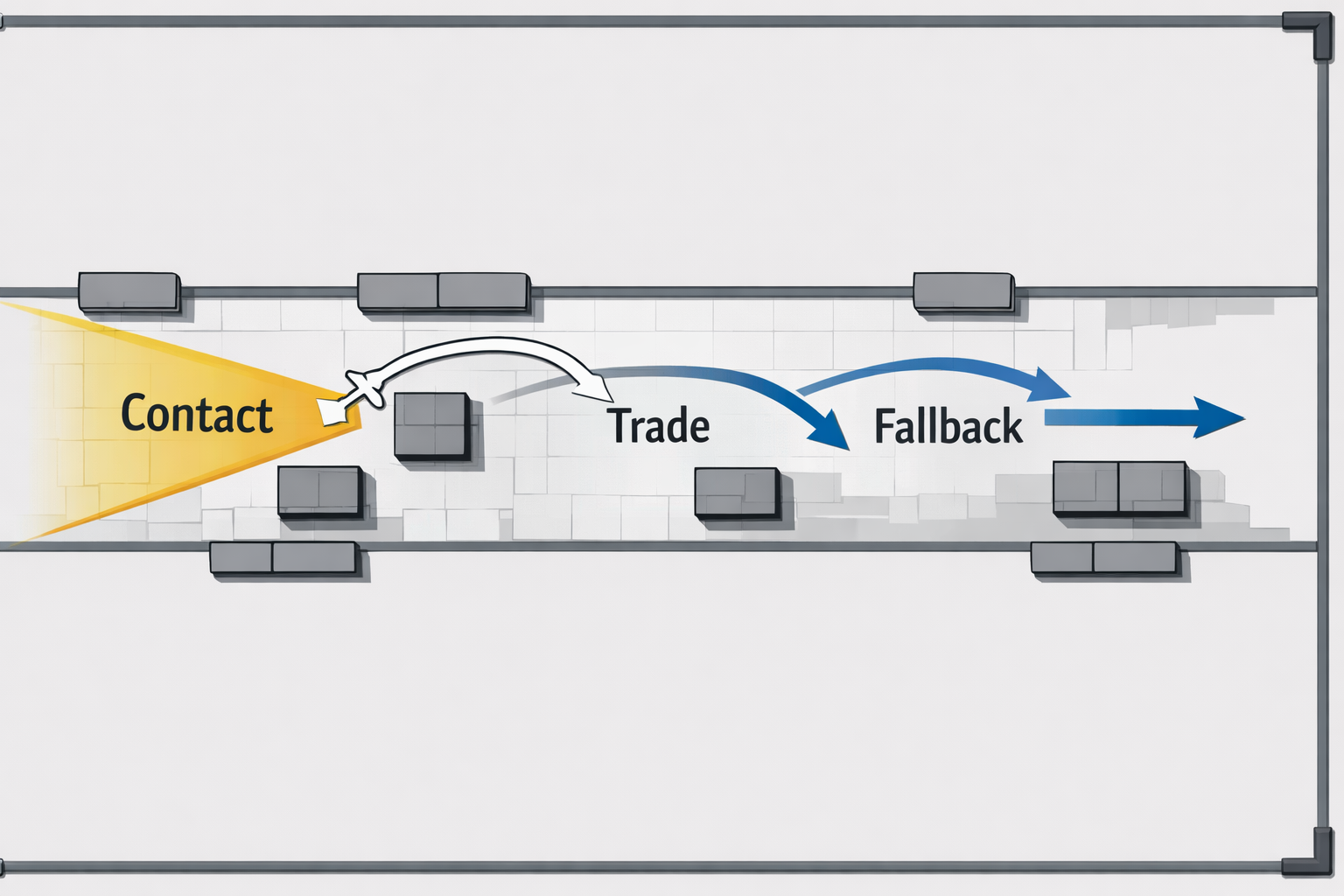
When you rotate, your first instinct is often “get there fast.” But if you arrive alone and take a duel immediately, you become a free kill.
Better: arrive, take a tradeable position, and let the fight come to you. Even in a hurry, prioritize a spot where a teammate can see your contact or where you can fall back.
10) Utility + Positioning: Flashes, Smokes, Mollies, and Lines of Play
Utility doesn’t replace positioning—it enables it. The goal is to use grenades to force predictable movement so your angles and crossfires become lethal.
10.1 Flash + Swing: The Simplest “Win Now” Combo
If you want ranked consistency, master one play: flash for a teammate’s angle.
- Teammate holds a line ready to swing.
- You throw a flash that blinds the enemy’s likely hold.
- Teammate swings on the pop—gets a kill or forces retreat.
Positioning detail: the swinger should stand where they can swing without exposing to multiple angles (slice rule). The flasher should stand safe and not blind their teammate.
10.2 Smoke Lines: Don’t Just Block Vision—Create New Angles
Smokes are often used defensively (“I can’t see them, so they can’t see me”). The stronger use is offensive geometry:
- Smokes remove one sightline so you can fight another cleanly.
- Smokes create edges that you can hold for free kills.
- Smokes force enemies into predictable exits where crossfires wait.
10.3 Mollies: Positioning Tool, Not Just Damage
A molly is a positioning tool because it:
- denies an anchor spot
- forces a peek at a predictable timing
- splits a site so entries can’t hold both angles
Even if it deals zero damage, it can win the round by forcing movement.
11) Anti-Rush & Anti-Exec Positioning (Without Guessing)
“Anti-rush” doesn’t mean gambling stacks. It means positioning with fallback layers, trade spacing, and delay utility so you can survive the first wave.
11.1 The Anti-Rush Triangle
- Contact angle: one player sees the first body and can shoot safely.
- Trade angle: a teammate is ready to punish the swing and cover retreat.
- Escape lane: the contact player can fall back without turning their back into open space.
11.2 “Give Space, Don’t Give Kills”
In ranked, people try to hold the front line until death. Often the better play is to give a small amount of space while farming time and forcing utility.
If you can survive and maintain a crossfire deeper, the attackers must clear again—under worse time pressure.
11.3 Anti-Exec Positioning: Play Where Smokes Don’t Kill You
Executes aim to cut sightlines. So anchors should avoid positions that become useless when one smoke lands. A timeless anchor approach:
- start with a line that gets info early
- fall to a second line that stays relevant through common smoke walls
- coordinate with a teammate for a flash re-take of space
Even if you don’t know the exact execute, this structure keeps you alive and impactful.
12) Retake Positioning: Slicing the Site and Creating Isolations
Retakes are positioning puzzles. You rarely win by charging in. You win by building a structure that forces 5v5 into smaller, winnable fights.
12.1 The Retake Golden Rule: Clear Together, Not Randomly
Two players entering from two different sides can be great—if they have timing. But in ranked, it often becomes two solo fights. To fix it:
- Wait half a second so both sides are ready.
- Pop a flash or smoke to reduce angles.
- Commit together so trades happen.
12.2 Slicing the Site (Universal Method)
When you enter a bombsite area, imagine you’re cutting a pizza into slices. You don’t check everything at once—you clear in order:
- close corners first (fast danger)
- then common head-level holds
- then deep angles
- then elevated/off-angles
This reduces surprise and keeps your crosshair disciplined.
12.3 Building a Retake Crossfire
Once you’ve cleared a chunk, don’t keep moving for no reason. Stop and hold the likely next peek while your teammate clears the next slice. Retakes are won by alternating: one clears, one covers.
12.4 Post-Plant as T: Win With Position, Not Peeks
After plant, many Ts throw rounds by peeking one by one. Instead:
- establish crossfires that punish defuse taps
- play time—force CTs to clear
- avoid positions that allow a CT to isolate you with one smoke
A calm post-plant with trades is far more reliable than “hunt the last kill.”
13) Clutch Positioning: Turning 1vX Into Winnable Duels
Clutching is positioning under pressure. The goal is to avoid fighting multiple enemies at once and to turn the round into a sequence of isolations.
13.1 The Isolation Checklist
- Can they swing you together?
- Can you force them to peek one at a time?
- Can you use cover to reset after each duel?
- Can you reposition after a kill so you’re not traded instantly?
13.2 Don’t “Hold the Middle” in a Clutch
Many players die because they stand in a place where they can be peaked from multiple directions. In a clutch, you want a position with:
- one primary threat line
- a reset cover point
- a route to reposition after contact
13.3 Time Is a Weapon
Especially on CT side retakes or T post-plants, time changes everything. Position so you can:
- force sound (bait steps/utility)
- make them check corners
- punish impatience
Often the best clutch play is not the fastest—it’s the one that forces the enemy to make the first mistake.
14) Communication Templates for Positioning (Simple, Ranked-Friendly)
Great positioning becomes unstoppable with simple comms. You don’t need paragraphs. You need roles and timings.
14.1 The 3-Part Call (Location + Action + Timing)
- “Holding [lane],” (what you cover)
- “Can you trade me?” (what you need)
- “I’ll fall back after contact,” (what happens next)
14.2 Crossfire Call Examples
- “Play cross: you shoot second.”
- “I bait first, you swing.”
- “Hold my retreat.”
14.3 Retake Call Examples
- “Wait—flash then we go.”
- “You clear close, I hold wide.”
- “Trade me; don’t chase.”
These small phrases create structure instantly.
15) Practice & Review: Drills That Build Positioning Fast
You can improve positioning without playing 10 hours a day. What you need is intentional reps and review.
15.1 The “Angle Ladder” Drill (10 Minutes)
Pick a common lane and practice moving between three holds:
- an early contact hold
- a safer second hold
- a deep fallback hold
Repeat the sequence until the movement feels automatic. The skill you’re building is not aim—it’s choosing the right layer under pressure.
15.2 The “One Angle Only” Rule in Matches
For 3 games, force yourself to hold only one responsibility at a time. If you find yourself staring at two sightlines, reposition. This single constraint trains the slice rule quickly.
15.3 Demo Review: Ask These Five Questions
- Did I die to a second angle I wasn’t watching?
- Did I hold an angle with no escape route?
- Was my teammate close enough to trade?
- Did we accidentally hold the same angle instead of crossfiring?
- After contact, did I reposition—or freeze and get pre-aimed?
Even a short review session creates massive improvement over time.
15.4 Learn From Pros the Right Way
Pro play is a positioning masterclass, but only if you focus on decisions, not highlights. Use VODs and match pages as study material via HLTV and reference context (roles, timings, event formats) through Liquipedia. Watch how players:
- hold early for info, then fall back before being cleared
- pair in tradeable distances
- build crossfires rather than stacking one angle
- reposition after being spotted
Don’t copy exact spots—copy the logic.
16) Quick Checklists: “Am I Standing in the Right Place?”
16.1 The 10-Second Positioning Check
- What angle am I holding right now?
- Can I be peeked from a second line?
- Where is my cover reset?
- Where do I go after first contact?
- Who trades me if I die?
16.2 The Crossfire Check
- Can the enemy see both of us from one swing?
- Will one flash blind both of us?
- Do we know who shoots first?
16.3 The T-Side Spacing Check
- Can I trade the entry within 1–2 seconds?
- Am I offset so I see the killer (not staring at the same wall)?
- Do we clear slices together?
Use these during freeze time and mid-round pauses. They build habit fast.
17) FAQ
Q1: Should I always play “safe” positions in ranked?
No. You should play purposeful positions. Sometimes “unsafe” early contact holds are correct—if you have a plan to fall back or be traded. The mistake is taking high-risk duels with no structure.
Q2: Why do I get traded instantly even when I get the first kill?
Usually because your position is untradeable for you. You’re visible to a second player and you don’t have cover to reset. Fix it by choosing angles with a reset point and repositioning after the first kill.
Q3: How do I stop dying to wide swings?
Hold angles with better geometry: reduce exposure, stand where you can fall back, and avoid holding two sightlines. Also vary your position (micro repositions) so you’re not pre-aimed.
Q4: Crossfires feel hard in solo queue—any simple approach?
Yes: don’t ask for perfect setups. Just avoid stacking the same angle. Put yourself in a spot that watches your teammate’s contact and be ready to swing on the first shot. Even that is a crossfire in practice.
Q5: Where can I see official CS2 updates and general game info?
Use the official Counter-Strike site (counter-strike.net) and the CS2 Steam page (Steam) for stable references.
18) Next Steps
If you apply just three habits—slice one angle, stay tradeable, and reposition after being spotted—your ranked results will improve quickly. Positioning is the skill that turns aim into wins.
If your goal is faster, more reliable rank progress (whether you’re short on time or want a consistent push), you can also check Boosteria’s CS2 options here: https://boosteria.org/cs2-boosting/prices.
Keep your improvement loop simple:
- Play 2–3 ranked games focusing on one positioning concept.
- Review 5–10 key deaths using the checklist.
- Adjust one habit for the next session.
That’s how fundamentals become automatic—and how you stop relying on “good days” to climb.