



VALORANT Map Callouts Guide 2026: Terms & Rotations
VALORANT Map Callouts Guide 2026: Essential Terms and Rotations for All Competitive Maps
Goal: help you communicate faster, rotate smarter, and win more rounds—without relying on patch-specific gimmicks. Map pools rotate, agents change, and executes evolve, but clear callouts + clean rotations stay permanently valuable in ranked, Premier, and scrims.
In this guide you’ll learn a universal callout language that works on every map, plus map-by-map rotation rules for the competitive pool. You’ll also get comm templates, role-based examples, and drills to lock everything in.
Recommended references for learning any map’s official names: Riot’s official maps hub and Liquipedia’s maps portal.
Why Callouts Win Rounds
In VALORANT, most rounds are decided by information speed, not raw aim. The team that communicates first gets to choose the terms of the next fight: stacking a site, taking space, isolating a lurker, or saving a teammate’s utility for the retake.
Great callouts do three things at once:
- Reduce uncertainty (Where are they? How many? What are they doing?)
- Synchronize actions (Who swings first? Who smokes? Who rotates?)
- Prevent over-rotations (The most expensive mistake in ranked is moving 3 people based on 1 sound cue.)
Think of callouts as a “shared minimap” in your team’s head. If your words paint the same picture for everyone, rotations become automatic—and you stop losing rounds to confusion.
The Golden Rules of Great Callouts
1) Be specific first, emotional never
“He’s insane!” is a feeling. “Jett close A Main, 1 HP, pushing smoke” is usable information.
2) Lead with location
Location is the fastest_toggle for teammates: it tells them whether to hold, swing, rotate, or lurk. Put location first in most situations.
3) Count beats names
Agent names help, but count is what changes rotations. “3 B Main” is more valuable than “Raze, Omen, Sova.” If you can add names, do it after count.
4) Add intention when it matters
Callouts become elite when they include the enemy’s direction or goal: “falling,” “pushing,” “holding,” “lurking,” “rotating,” “planting,” “saving.”
5) Don’t talk over the plan
When your IGL (or the calmest player) calls a pivot, keep comms minimal. Extra noise is how teams miss audio cues and double-peek the same angle.
Universal Vocabulary (Works on Every Map)
Core map words
- Lobby: area before Main (often safer, used for defaults and regrouping).
- Main: primary choke into a site lane (A Main / B Main).
- Site: the plant area itself.
- Link: connector between lanes or between Mid and a site (A Link / B Link).
- Heaven / Hell: upper platform / under-platform (common shorthand across maps).
- Back site: deep defensive area behind default plant.
- Elbow: a bent corridor (often a key retake route).
- Window: a sightline cutout; often a high-value angle.
- Close / Deep: distance along a lane (“close A Main” vs “deep A Main”).
- Top / Bottom: elevation or vertical position (especially Mid areas).
Timing words (the hidden advantage)
- Contact: move quietly, don’t reveal, punish aggression.
- Scale: take space step-by-step with trades.
- Explode: hit fast with layered utility.
- Reset: stop, regroup, and re-hit with new plan.
- Late: intentionally slow; burn util or pull rotates first.
- Pinch: attack a zone from two sides at once.
Utility vocabulary that avoids confusion
- Smoke here/there is vague. Say “smoke A Link” or “smoke Heaven”.
- When possible, include a purpose: “smoke Heaven to isolate site”.
- Use consistent verbs: flash out, dog in, drone in, nade default, molly plant, scan back site.
Comms Templates You Can Copy
Template A: Contact info
[Count] [Location] [Action] — optional: HP / util / spike
Example: “2 Mid Top holding, one tagged 80.”
Template B: Rotation trigger
“Pressure [Lane], I’m falling / I’m staying.”
Example: “Pressure B Main, I’m falling to site—play retake.”
Template C: Plan in one sentence
“We take [Space], then [Hit], watch [Flank].”
Example: “We take Mid, then split A; watch B flank.”
Template D: Post-plant roles
“I’m [Role] from [Spot]. You [Role] from [Spot].”
Example: “I’m holding flank from Lobby. You play lineups; two play crossfire site.”
Template E: Retake countdown
“Wait [number], then swing together.”
Example: “Wait 2… swing now.”
If your team uses these templates consistently, you’ll notice an immediate reduction in “random” deaths and missed trades.
Rotation Foundations: The 3 Questions
Every correct rotation answers three questions in order. If you skip one, you get over-rotations, empty sites, and late retakes.
Question 1: Is it real?
“Real” means more than a sound cue. Look for: multiple bodies seen, utility committed, spike spotted, or repeated pressure that takes space. One Sova dart or one smoke can be a fake—especially in ranked.
Question 2: What space do we own?
Rotations are safer when your team owns Mid or at least owns one connector. If you rotate through open territory, you get pinched by lurks.
Question 3: Are we rotating to fight now or to retake?
Decide early. “Rotate to fight” means arriving before the plant and holding chokepoints. “Rotate to retake” means staying alive, saving utility, and grouping for a coordinated reclaim. Mixing the two creates 1v3s and wasted ultimates.
Rotation rule that never expires
Don’t rotate away from information. If you have a player who can see the hit developing, keep them alive and keep them talking. If you rotate too early, you lose the only piece of certainty you had.
How to Learn Any Map’s Callouts Fast
Callouts can differ by region and rank, but you always have a reliable baseline: the in-game location label shown on your HUD. Use it to create a “team dictionary” in minutes.
The 10-minute callout method
- Load a Custom game and open the map overview.
- Walk each main lane: A Lobby → A Main → A Site, then Mid, then B Lobby → B Main → B Site.
- For each lane, identify 3 zones: close, middle, deep.
- Mark the two most important connectors (usually A Link and B Link).
- Find the two “power” elevations: a Heaven-like spot and an off-angle under it (Hell).
- Write down 12 callouts total. That’s enough to play ranked confidently.
Agree on shorthand before the match starts
In solo queue you can’t force everyone to learn “pro” names, but you can reduce confusion by quickly clarifying the one or two ambiguous terms:
- “When I say Heaven, I mean the upper platform above site.”
- “Link = connector between Mid and site.”
- “Close = first contact area in Main.”
This tiny habit prevents the classic ranked disaster: two teammates peeking different places because “Market” means different things to them.
Competitive Map Pool (2026) + How Rotation Works
VALORANT’s Competitive/Premier pool typically keeps a limited number of active maps and rotates them over time. In early 2026, the active ranked pool featured seven maps: Abyss, Bind, Breeze, Corrode, Haven, Pearl, and Split. Map rotations can change by Act, so the best long-term skill is learning a repeatable callout system and universal rotation rules.
Pro tip: even when maps rotate out of ranked, you can still practice them in Custom and other modes—so you’re never “behind” when a map returns.
Abyss: Callouts & Rotations
Identity: Abyss rewards discipline around space and punishes sloppy movement near drop zones. It also creates unique timing windows because certain fights happen near “high risk” areas where a single misstep can end a round.
Essential Abyss callouts (high-value)
You don’t need every corner name—learn the zones that decide rotates:
| Lane | Must-know callouts | Why it matters |
|---|---|---|
| A lane | A Main, A Link, A Site, A Tower | Defines whether defenders can rotate through Link safely or must retake through spawn. |
| Mid | Mid Top, Mid Library, Mid Catwalk, Mid Bend | Mid control decides whether attacks can split and whether defenders can pivot without getting pinched. |
| B lane | B Main, B Link, B Site, B Tower | B fights often decide quickly—clear these names to avoid chaotic retakes. |
Rotation rules that win on Abyss
- Don’t rotate through darkness. If your team has no info in Mid, assume a lurker is waiting. Rotate with a buddy or keep a flank watcher.
- Mid Library is a “truth zone.” If you own it (or deny it), you reduce fake potential and your rotates become safer.
- Commit to retake early if plant is inevitable. Dying “half-rotating” is worse than giving site and retaking with 5.
Example comms (attack)
“Pick Mid Top—take Library, then split B. One hold flank.”
“Smoke B Link, drone Tower, plant default, play crossfire.”
Example comms (defense)
“3 pressure A Main, I’m falling to A Site—don’t over-rotate yet.”
“Spike seen A Main—rotate now, keep Mid watcher.”
Common ranked mistake
Teams hear steps, panic-rotate, and leave Mid unguarded. Abyss punishes this hard: one lurker in Mid can cut rotates and win a round without taking a fair fight.
Bind: Callouts & Rotations
Identity: Two sites, no Mid, and teleporters that create instant timing swings. Bind is a map where rotations must be decisive and information-based, because “late rotates” often arrive into a planted spike and layered post-plant utility.
Essential Bind callouts
| Area | Must-know callouts | What it controls |
|---|---|---|
| A | A Short, A Bath, A Lamps (U-Hall), A Heaven | Whether attackers can plant safely and whether defenders can retake through Heaven/Lamps. |
| B | B Long, B Hookah, B Site, B Elbow | B hits are decided by Hookah control and Elbow pressure on retake. |
| Rotation tools | Teleporter (A→B / B→A), Defender Spawn | Fast pivots, fake pressure, and surprise timing. |
Bind rotation rules
- Count bodies, not footsteps. Bind audio is noisy. Rotate when you see multiple, or when your anchor is being traded.
- Teleporter = tempo weapon. Use it to re-hit quickly (attack) or to create a surprise retake angle (defense).
- Retake starts with space. On B retake, taking Elbow or Hookah first often matters more than instantly swinging site.
Attack defaults that stay relevant
- 2-1-2: two pressure A Short/Bath, one lurk/hold space, two pressure B Long/Hookah.
- When defenders over-rotate, explode the opposite site with smokes + flash timing.
Quick comm examples
“2 Hookah, 1 Long—don’t rotate off A yet.”
“They TP’d—hold your lane, watch spawn timing.”
“Planting B default—one Elbow, two site crossfire, one long post-plant.”
Breeze: Callouts & Rotations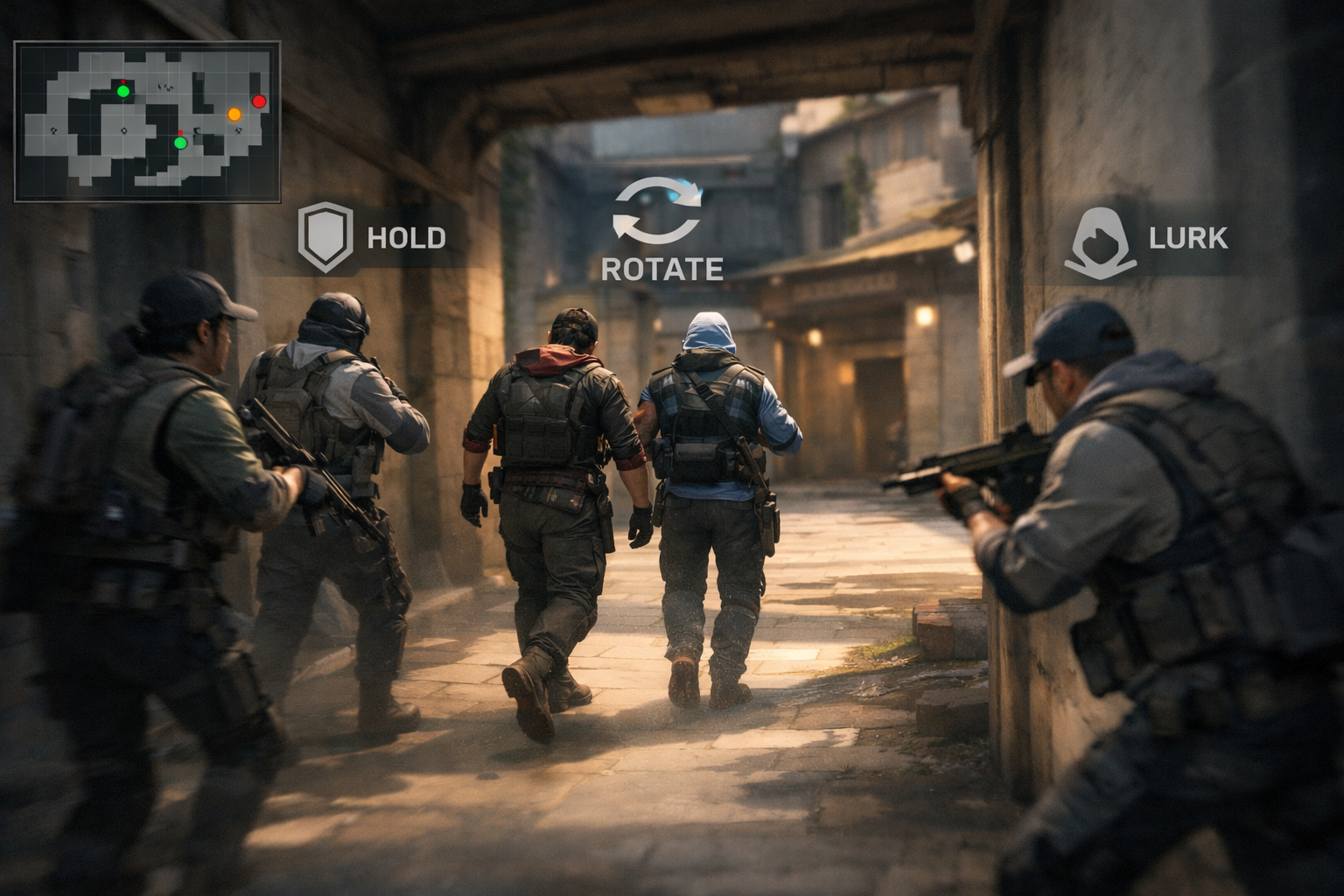
Identity: Breeze rewards long-range fundamentals, calm spacing, and disciplined flank coverage. Rotations can feel slow if you don’t plan them early, which is why Mid control and timed pressure are so valuable.
Essential Breeze callouts
| Lane | Must-know callouts | Why it matters |
|---|---|---|
| A | A Main, A Site, A Nest/Heaven (if present), A Back | A takes often hinge on isolating long angles and clearing deep defenders. |
| Mid | Mid, Mid Doors/Connector (if present), Mid Top/Bottom | Mid pressure enables safer pivots and prevents predictable site hits. |
| B | B Main, B Site, B Elbow/Back | B fights punish bad spacing—trades and utility layering win here. |
Breeze rotation rules
- Rotate earlier than you think—but only after confirming the hit is real. Because lanes are long, “late rotates” arrive too late to stop the plant.
- Respect lurks. A single lurker can win Breeze by cutting long rotations. Always assign a flank watch when you pivot.
- Fight for one stable anchor zone. If you lose all map control, every rotation is a gamble.
Comms that prevent chaos
“One deep B Main with op angle—don’t dry peek, smoke it.”
“We have Mid—rotate through connector, keep one holding flank.”
Common ranked mistake
Players take isolated 1v1s in wide-open space. Breeze rewards two-player trading more than most maps. If you’re not tradable, you’re donating the round.
Corrode: Callouts & Rotations
Identity: Corrode is a traditional three-lane map where Mid and its connectors heavily influence rotates. If your team communicates clearly about Mid space, the map becomes much simpler.
Essential Corrode callouts
Corrode’s commonly used callouts are very structured, which makes it ideal for fast learning:
| Lane | Must-know callouts | Rotation value |
|---|---|---|
| A | A Lobby, A Main, A Yard, A Link, A Elbow, A Site | A Link tells you whether defenders can rotate safely through Mid or must go spawn. |
| Mid | Mid Bottom, Mid Stairs, Mid Top, Mid Window | Mid Top/Window control enables splits and denies defender pivots. |
| B | B Lobby, B Main, B Link, B Elbow, B Site, B Tower/Arch | B Link is the “pinch gate”—lose it and your rotates get cut. |
Corrode rotation rules
- Mid first, then decide. If you own Mid Stairs/Top, you can pivot between sites safely.
- Don’t bleed utility early. Save at least one smoke/flash for the retake path (Link/Elbow) or for the second phase of a hit.
- When in doubt: group and trade. Corrode punishes solo entries because many fights happen through layered angles and small corridors.
Attack blueprint
- Default: pressure A Main and B Main while a pair tests Mid for space.
- Trigger: if Mid Window falls, split the closer site immediately before defenders re-take Mid.
- Post-plant: keep one player controlling Link to prevent fast retake pivots.
Example comms
“Two Mid Stairs, one Window—take Top, then split B.”
“B Link clear—rotate through Link, don’t go spawn.”
Haven: Callouts & Rotations
Identity: Three sites means rotations are less about “stacking perfectly” and more about not getting pulled apart. Haven rewards teams that keep information in the center of the map and rotate on confirmed pressure.
Essential Haven callouts
| Site | Must-know callouts | Rotation value |
|---|---|---|
| A | A Lobby, A Long, A Short, A Heaven, A Link | A Link tells you if Mid-to-A is safe or cut by a lurk. |
| B | Mid, B Site, Garage, Window | Garage control often determines whether C rotates are safe. |
| C | C Lobby, C Long, C Site, C Back, Garage | C Long pressure forces fast decisions; slow rotates arrive into plant. |
Haven rotation rules
- Don’t abandon B for free. B is the hinge. If you fully give up Mid/Garage, you’ll get split constantly.
- Anchor with information, not bravery. A solo anchor’s job is to live and report, not to get 2 kills every time.
- Retake = Garage timing. Many rounds are decided by whether defenders can reclaim Garage/Window before pushing site.
Comms examples
“3 C Long—save utility, play retake through Garage.”
“One A Short only—could be fake, hold your spots.”
“Garage control ours—rotate B-to-C safely.”
Common ranked mistake
Players rotate off first contact and leave a site completely empty. On Haven, a single lurker can punish that instantly. Rotate in layers, and leave a “tripwire” of information (a player, a piece of utility, or a safe angle).
Pearl: Callouts & Rotations
Identity: Pearl is a two-site map with a compact Mid that can decide the entire round. If you learn Mid doors/control zones and communicate them clearly, your rotations become safer and your attacks become less predictable.
Essential Pearl callouts
| Area | Must-know callouts | Why it matters |
|---|---|---|
| A | A Main, A Art, A Site, A Heaven, A Link | A Art often becomes the pivot point for late-round splits and retakes. |
| Mid | Mid, Mid Doors/Connector, Mid Top/Bottom | Mid decides whether defenders can rotate without getting flanked. |
| B | B Long, B Main, B Site, B Link | B Long pressure often forces defenders into uncomfortable crossfires. |
Pearl rotation rules
- Mid information is king. If you lose Mid, you must rotate with flank coverage or risk getting cut.
- Attack pivots should look “earned.” Pressure Mid/Art or Mid/B before pivoting—don’t run across the map with no threat.
- Retake paths matter more than hero plays. Coordinate your entry into site with a flash/smoke timing instead of trickling.
Example comms
“Mid Doors open—watch lurk, rotate through Link together.”
“We have Art—split A now, trade on contact.”
Split: Callouts & Rotations
Identity: Verticality, tight chokepoints, and Mid control. Split rewards teams that take Mid methodically and punish defenders who over-peek without trades.
Essential Split callouts
| Area | Must-know callouts | Rotation value |
|---|---|---|
| Mid | Mid, Mail, Vent, Mid Top/Bottom | Mid is the gateway—own it and you can split either site. |
| A | A Main, A Ramp, A Heaven, Screens, A Site | A splits rely on Vent/Ramp coordination and Heaven denial. |
| B | B Main, B Heaven, B Site, Back site | B takes often hinge on Heaven control and trade spacing in Main. |
Split rotation rules
- Mid control = rotation permission. If you don’t have Mid, rotating is dangerous because lurks through Vent/Mail can cut you off.
- On defense, don’t give Vent for free. Losing Vent often means losing the round, because both sites become splittable.
- On attack, “split” means timing. A split fails when the two sides arrive at different times and die alone.
Comms examples
“We have Mail—hit B with Heaven smoke, trade close.”
“Vent lost—play retake, don’t swing alone.”
“Wait for Ramp… 2… 1… swing.”
Common ranked mistake
Players run through Mid without establishing trades. On Split, tight corridors punish solo movement. If you’re not being traded, you’re giving defenders free picks.
Appendix: Inactive Maps & Staying Ready
Because the active pool rotates, you’ll eventually see other standard maps return (or new maps arrive). The best way to stay ready is to apply the same structure:
- Learn the 12-callout core (Lobby/Main/Site + Mid + Links + Heaven/Hell).
- Identify the map’s truth zones (the areas that confirm a hit vs a fake).
- Decide your team’s default rotation rule (fight early vs retake).
Quick notes on common inactive maps
- Ascent: Mid control (Cat/Market) drives everything; rotations punish teams that ignore Mid.
- Icebox: vertical clears and post-plant setups matter; define “top site” vs “under” clearly.
- Fracture: defenders can pinch from multiple directions; comm “where” and “when” relentlessly.
- Lotus: three sites; rotating doors add timing swings—call door usage instantly.
- Sunset: three-lane fundamentals; define Mid power positions early to avoid confusion.
Practice Drills (15 Minutes a Day)
Drill 1: The 12-callout walk (5 minutes)
In a Custom game, walk the map and say out loud: Lobby → Main → Site, then Mid, then the two Links, then Heaven/Hell. Repeat twice. This builds automatic recall under pressure.
Drill 2: “One sentence plan” (5 minutes)
Queue with a friend or solo and force yourself to call a one-sentence plan every buy round:
“We take [Space], then [Hit], watch [Flank].”
Drill 3: Retake countdown (5 minutes)
In Deathmatch or scrims, practice calling a clear countdown before a swing. Even in ranked, a simple “2…1…go” turns messy peeks into tradable fights.
FAQ
Do callouts change by rank or region?
Yes. That’s why the best baseline is the in-game location label plus a simple shared dictionary (Lobby/Main/Site/Link/Heaven). In most ranked games, clarity beats “perfect pro terminology.”
What if my teammates use different names?
Mirror their language when possible, then gently standardize: “You mean A Link, right?” Avoid arguments. The goal is shared meaning, not winning a vocabulary debate.
How do I stop over-rotating?
Rotate in layers and demand confirmation: count bodies, spike info, or repeated space taken. Keep one player as a “truth anchor” who stays alive and updates the team.
Where can I improve faster if I’m stuck?
Most players plateau because their communication and mid-round choices lag behind their mechanics. If you want structured improvement with role-specific feedback, check Boosteria’s Valorant boosting prices and pick the option that fits your goal (rank climb, placement help, or guided progression).