



Dota 2 Buyback Guide 2026: When to Buyback and Manage Gold
Dota 2 Buyback Guide 2026: When to Buyback and How to Manage It
Buyback is one of the most important mechanics in Dota 2, and it becomes more valuable the longer a match goes. In many games, lanes, farm patterns, hero matchups, item timings, and Roshan fights all matter greatly—but the final result still comes down to a small number of late-game decisions. One of the biggest of those decisions is whether to buyback, whether to hold buyback, and how to structure your gold so that a single death does not instantly lose the game.
This is why high-level Dota often feels so different from average pub Dota. Strong players do not just think about their next item. They think about whether that item is worth losing buyback for. They think about whether their team can defend without them. They think about whether the enemy can force Roshan, break high ground, or threaten the Ancient if they die once. They think about teleport cooldowns, lane positions, objective timing, and whether a buyback would actually change the outcome of the fight.
This guide is built to be as timeless as possible. Instead of depending on one patch-specific trick, it focuses on principles that stay useful across metas: objective value, map distance, cooldown efficiency, gold discipline, role-based priorities, and the hidden cost of dying without buyback. If you learn these principles, you will make better decisions no matter what heroes are popular.
If you want to sharpen your decision making further, it also helps to study official Dota 2 updates, track pro trends on Liquipedia, and review your own matches with resources like OpenDota and Dotabuff. Players who want more direct help climbing can also compare options on Boosteria’s Dota 2 boosting prices page.
Table of Contents
- What Buyback Is and Why It Matters
- How Buyback Works
- Why Buyback Wins Games
- The Golden Rule of Buyback
- A Simple Buyback Decision Framework
- When You Should Buyback
- When You Should Not Buyback
- Role-by-Role Buyback Priorities
- How to Manage Gold for Buyback
- Buyback Around Roshan, High Ground, and Base Defense
- Advanced Buyback Concepts
- Common Buyback Mistakes
- Practical Buyback Checklist
- FAQ
- Final Thoughts
What Buyback Is and Why It Matters
Buyback lets a dead hero instantly return to the game by paying a large amount of gold. That sounds simple, but the strategic implications are enormous. In Dota 2, death is not just a temporary pause. A death can mean losing Roshan, losing a lane of barracks, giving up map control, losing vision around your jungle, or ending the game outright. Buyback is the mechanic that gives teams one last chance to reverse that collapse.
Because of that, buyback acts like a second life in the late game. If your carry has buyback and the enemy carry does not, your team may effectively have one more full teamfight available. If your initiator can buyback and return with Boots of Travel or a TP scroll while the enemy offlaner cannot, the map changes instantly. The fight does not end with the first death anymore. It becomes a resource war where gold, cooldowns, positioning, and objective proximity decide everything.
That is why smart buyback management is not only about pressing the button. It is about planning your game so the button matters. You need enough gold. You need the right lane state. You need teleport access. You need teammates who understand whether you are buying back to defend, to counter-initiate, or to secure a game-ending push. Without that planning, buyback becomes expensive panic. With that planning, buyback becomes one of the strongest win conditions in Dota.
How Buyback Works
To use buyback well, you need to understand the practical consequences behind it.
First, buyback is expensive. The cost scales with your net worth, so the richer you are, the more painful it becomes. That is why cores feel the pressure more than supports, especially in the late game when one slot decision can decide whether you keep buyback available or not.
Second, buyback has a long cooldown. This means you cannot treat it as a normal defensive tool. If you use it carelessly and die again soon after, you may create an even worse situation called a dieback, where your hero is dead for a very long time with no second chance left.
Third, buyback changes your economy. Since it costs real gold and affects your next death timing, it is not free even if the fight looks good afterwards. You are paying now and accepting future risk later.
Fourth, buyback only matters if you can re-enter the game meaningfully. If you buyback but cannot teleport to the fight, the button did not save the fight. If you buyback after your team already lost the objective, you may only be increasing your future death timer with no reward.
Fifth, buyback interacts with information. Strong teams track who has buyback and who does not. In coordinated play, people constantly call: “carry no buyback,” “mid has buyback,” “support bought back,” or “bait their core.” Even in pubs, doing this more often will immediately improve your macro decisions.
So while buyback is technically just an instant respawn, in real Dota terms it is a late-game economy mechanic, a macro map mechanic, and a teamfight extension mechanic all at once.
Why Buyback Wins Games
Buyback decides games because Dota is objective-driven. Most late-game deaths matter not because of the hero kill itself, but because of what comes after. A dead carry near Roshan can mean Aegis. A dead mid without buyback can mean high ground. A dead support can mean lost vision and no save for the next push. The value of buyback comes from interrupting those sequences.
Here is the simplest way to understand it: buyback is strongest when the enemy is committed. If they already used big cooldowns, dove high ground, grouped for Roshan, or spent their mobility reaching your base, your buyback can punish them at the moment they are least flexible. They may have won the first half of the fight, but they are now trapped inside your next wave of resources: fresh hero, fresh mana from fountain, teleport advantage, defensive vision, and sometimes even fortification timing.
That is why defensive buybacks are usually easier to execute than offensive buybacks. When you defend, you buyback into a fixed location. You know what objective is threatened. You know where the enemy is. You know which route you can take back into the fight. Offensive buybacks can still be game-winning, but they require better lane setup, better teleport angles, and stronger communication.
Buyback also wins games psychologically. Teams that believe they have already won often overstay after taking one hero kill. They hit buildings too long, chase too far, or tunnel on one core. That is exactly where disciplined buyback usage turns a losing position into a wipe. Many teams do not lose because they lacked damage or scaling. They lose because they misread the enemy’s ability to return.
The Golden Rule of Buyback
The golden rule is simple:
Only buyback when it will likely change the result of a high-value situation.
This rule sounds obvious, but most bad buybacks happen because players ignore one of the three key parts of it.
Likely change the result: If your hero returns but cannot influence the fight, it is not a good buyback. Maybe you have no teleport. Maybe your key spell is still on cooldown. Maybe the enemy already disengaged. Maybe you respawn too far away.
High-value situation: Not every fight is worth it. A random skirmish over nothing at minute 24 is not equal to a minute-50 Roshan or a base defense with exposed buildings.
Buyback, not panic: Good buybacks are planned. Bad buybacks are emotional. If you press it because you are angry, embarrassed, or desperate, you are usually turning one mistake into two.
Every buyback decision should be connected to one of four outcomes:
- Save or defend the Ancient and critical base structures.
- Secure or contest Roshan and the map control around it.
- Win or extend a decisive late-game teamfight.
- Convert a won fight into a stronger objective than the enemy expected.
If your buyback does not point clearly toward one of those outcomes, you usually should not use it.
A Simple Buyback Decision Framework
When you die, ask these six questions before buying back:
1. What objective is at risk right now?
If the answer is “none,” your buyback is probably weak. If the answer is “Roshan,” “melee barracks,” “all of mid,” or “the Ancient,” the value rises fast.
2. Can my hero actually get there in time?
Buyback is much stronger if you have TP available, Boots of Travel access, or a nearby lane structure to join through. Distance matters. A strong buyback in your base can be useless if the fight is already ending near the opposite side of the map.
3. What spells and items do I return with?
If your most important teamfight cooldown is still unavailable, buying back might add less than you think. A carry with BKB and damage items ready may re-enter powerfully. A support without ultimate or save tools may not.
4. What buybacks do both teams have?
If you buyback but the enemy core can also buyback, the fight may continue into a longer resource trade. That may still be good, but you must evaluate who benefits more from the reset.
5. If I do not buyback, what do we lose?
Sometimes the answer is one tower and that is fine. Sometimes the answer is Aegis plus map control plus your next outer objective. Sometimes it is the game. This question prevents emotional overreaction and emotional underreaction.
6. If I buyback and die again, how bad is the dieback?
This is the final filter. If your next death would remove you from the game for a massive window, you must be confident the buyback is truly necessary.
If you ask these questions quickly and honestly, your buyback decisions will immediately improve.
When You Should Buyback
Defending the Ancient or Critical High Ground
This is the most obvious good buyback. If the enemy is threatening to end the game, buyback value becomes enormous. Even a support buyback can be game-saving if it adds one wave clear spell, one disable, one force staff save, or one extra body to stall creeps and buildings.
In base defense, the returning hero gets several advantages: access to fountain resources, direct teleport routes, familiar vision, and enemies who are already deep on the map. These factors make defensive buybacks efficient. If the enemy has committed big ultimates or already used BKBs, your buyback can flip the fight hard.
Contesting Roshan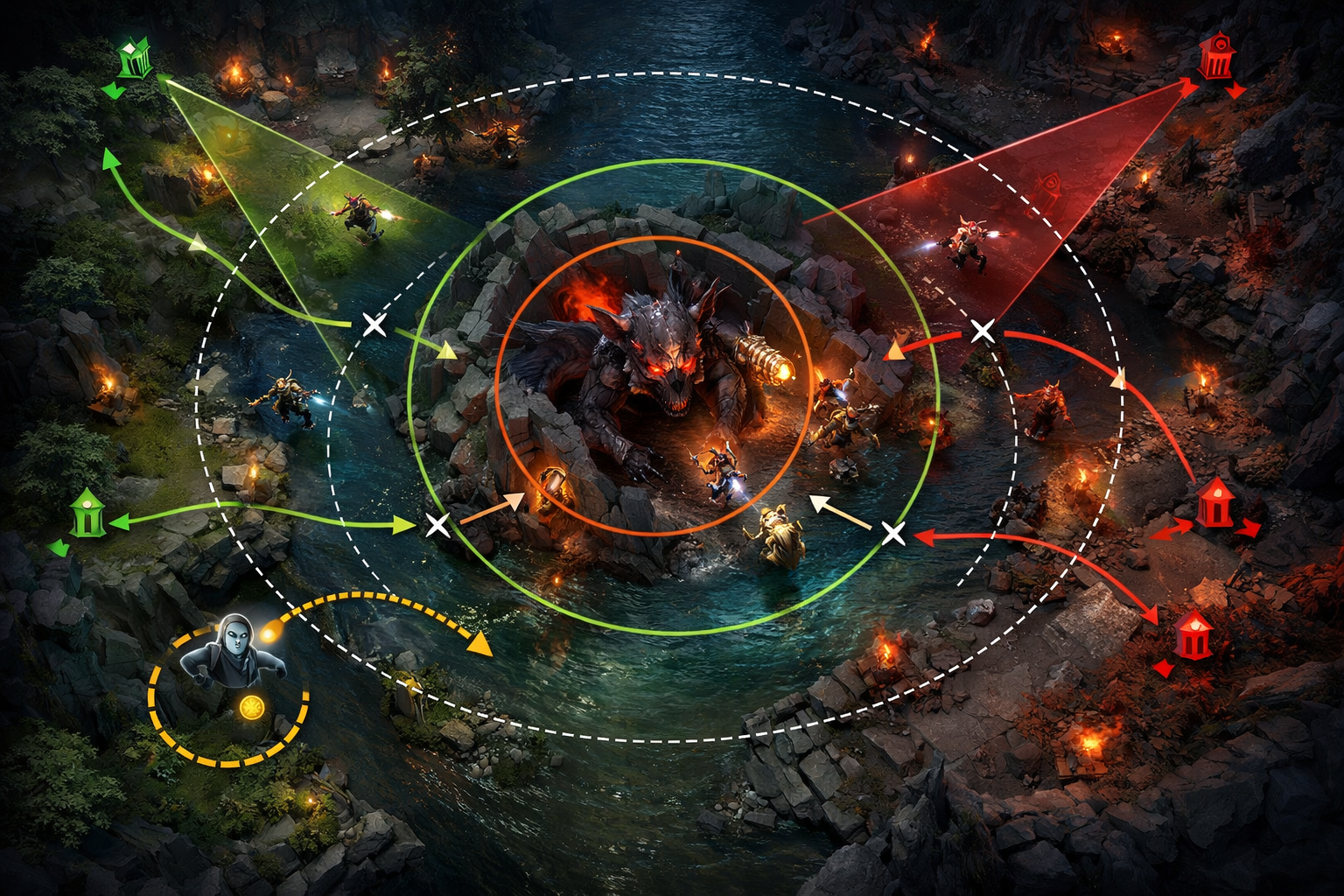
Roshan is one of the most common reasons to buyback. The reason is not just the Aegis itself. Roshan often creates a chain: Aegis leads to map pressure, map pressure leads to wards, wards lead to siege angles, and one lost fight becomes multiple lost objectives. If buying back denies Roshan, delays Roshan, or lets your team fight evenly around the pit, it can be game-saving.
Buyback around Roshan is strongest when your team still has contest tools: vision, buyback-ready cores, strong area control, or a way to force the enemy to remain near the pit. It is weakest when your team cannot approach, cannot enter the choke, or already used all their big spells.
Rejoining a Fight the Enemy Overcommitted To
Sometimes the enemy kills you first, but in doing so they spend too much. They dive deep, chase past vision, or blow several cooldowns. If your team is still fighting and your buyback lets you return into an already extended enemy formation, that is often a strong use.
This is especially powerful on heroes whose presence changes positioning. Initiators, big teamfight controllers, and damage cores can dramatically alter a fight simply by returning while the enemy is stuck in bad terrain.
Converting a Won Fight Into a Game-Ending Push
Offensive buybacks are riskier, but they can be excellent when the enemy used key resources, your team already won the fight, and your buyback allows you to join a throne push or secure multiple objectives. In this case, the buyback is not defensive insurance—it is acceleration.
The key is certainty. If the enemy still has wave clear, glyph, split push pressure, or multiple heroes with buyback, your offensive buyback may fail. But if the path to barracks or throne is open and your hero is needed for structure damage or control, it can be decisive.
Saving the Only Hero Who Can Defend a Specific Condition
Some heroes are disproportionately important in certain game states. Maybe your carry is the only hero who can clear megas safely. Maybe your offlaner is the only one who can start fights into enemy high ground. Maybe your support is the only reliable save against a pickoff lineup. If that hero dies at the wrong time, the buyback value rises sharply because the team’s entire structure depends on that one role returning.
Breaking Enemy Momentum After a Pickoff
Sometimes teams get one late-game pickoff and immediately rush into a chain of objectives. A good buyback interrupts that plan. The enemy thought they had a 5v4 window. Your buyback makes it 5v5 again before they fully capitalize. That alone can protect two or three minutes of map control, which in the late game is a huge amount of time.
When You Should Not Buyback
For a Low-Value Fight
If nothing major is happening, save it. Do not spend late-game insurance on a small map scrap, a support trade, or an uncertain chase. Your goal is not to feel active. Your goal is to preserve winning resources.
When You Cannot Rejoin Effectively
If the fight is too far away, your TP is unavailable, or the enemy is already disengaging, the buyback may do almost nothing. Buying back into empty space is one of the most common mistakes in pubs.
When Your Key Cooldowns Are Missing
A buyback without impact is often bad. If you are a hero whose value depends on one major spell or one defensive item timing, and those tools are unavailable, your buyback may only feed a later dieback.
When the Teamfight Is Already Lost
If two more teammates are dead, the objective is already gone, or the enemy can freely disengage, sometimes the correct play is to keep buyback for the next fight. Accepting one loss can prevent the larger loss of having no answer for the next push.
When You Need to Avoid Dieback at All Costs
If the enemy has full control of the area where you would return, and you are likely to die again instantly, your buyback can become catastrophic. This is especially dangerous against lineups with chain disable, long catch, or great base control.
When the Objective Trade Is Acceptable
Not every tower or lane is worth it. Sometimes giving up a side lane barracks while keeping buyback on all cores is better than forcing an ugly defense with no resources afterward. Good Dota is about choosing losses intelligently too.
Role-by-Role Buyback Priorities
Position 1 Carry
The carry is usually the most buyback-sensitive hero on the team because carry deaths in the late game often determine buildings, Roshan, and throne damage. As a carry, your buyback decisions should be stricter than everyone else’s. If the next fight can decide the game, preserving buyback is often more important than completing a luxury slot.
Carry buyback is strongest when:
- You are the main damage source.
- You have strong re-entry tools like TP, Boots of Travel, mobility, or long range damage.
- The enemy cannot disengage cleanly after killing you.
Carry buyback is weaker when:
- Your team already lacks control and cannot set up your second life.
- You return without BKB or critical item cooldowns.
- Your death location makes re-entry too slow.
One of the biggest marks of a good carry player is knowing when not to spend gold. If the map is tense and Roshan or high ground is imminent, holding buyback is often the correct “item.”
Position 2 Mid
Mids often control tempo, reach side lanes quickly, and provide either burst, teamfight, or instant catch. That makes mid buyback extremely context-dependent. A mid with huge spell impact may turn a fight with one buyback. A farming mid with long cooldown dependence may not.
As a mid, ask whether your return changes initiation or control. If your hero creates chaos, catches mobile targets, or deletes one core, your buyback can be devastating. If you are returning with no mana, no major cooldown, or no safe re-entry, it may be wasted.
Position 3 Offlane
Offlaners are often among the best buyback heroes in the game because they bring frontlining, vision pressure, aura value, or big initiation. A buybacking offlaner can instantly restore structure to a collapsing fight. They also often re-enter base defenses well because they do not need perfect positioning to matter.
If you are the hero who starts fights, protects buildings, or zones the enemy carry, your buyback is frequently high priority. But if your initiation cooldown is gone and the enemy can kite you forever, holding buyback may still be better.
Position 4 Support
Position 4 buyback depends heavily on your spell kit. Roaming utility heroes with big save, silence, reset, or vision tools can absolutely justify buyback. Cheap support buybacks are also easier to access than core buybacks, so a support who preserves gold intelligently can create huge value late.
However, a position 4 should not buyback just because it feels affordable. Your return must still matter. If your teamfight utility is already gone, or the fight location is inaccessible, save it.
Position 5 Support
Hard support buyback is often underrated. In many late-game fights, one defensive support spell, one force movement tool, one ward, one detection purchase, or one extra wave clear spell can completely change whether your carry survives long enough to win.
Position 5 buyback becomes extremely strong in base defense and Roshan contests because supports often return with immediate utility and clearer job descriptions. If your buyback gives your team control, saves, or the ability to stall, it can be worth far more than its gold cost suggests.
How to Manage Gold for Buyback
Knowing when to buyback is only half the equation. The other half is having buyback available when it matters.
Think in Thresholds, Not Just Items
Most players think, “I need 1400 more for item X.” Better players think, “I need 1400 for item X, but I also need buyback if we lose one fight.” This shift matters enormously in the late game.
Once the game reaches a decisive stage, your real economy is not your visible gold alone. It is your item progression plus buyback threshold. If buying one component removes your buyback and the enemy can force a major objective soon, that component may be a losing purchase.
Delay Luxury, Protect the Insurance
Luxury greed loses games. A late-game Moon Shard consume, a casual upgrade, or an unnecessary replacement item can look harmless until you die once and realize you cannot come back. When the game is volatile, buyback is often worth more than a small stats upgrade.
Understand Reliable and Unreliable Gold Emotionally
Even if you know the technical rule, many players still manage gold poorly in practice. They farm one more wave, spend too much, die in a side lane, and suddenly have neither item nor buyback. The lesson is simple: when the map is dangerous, your gold is not all equally safe. Protecting the ability to respond is more important than squeezing every last efficiency point out of your inventory.
Stash Discipline Matters
In tense late games, decide in advance what you will buy instantly and what you will hold. Do not open the shop after every wave and impulse-buy minor upgrades. Have a plan. Either you are committing to a timing and accepting no buyback, or you are preserving buyback and delaying the item. Indecision leads to messy thresholds.
Farm Patterns Should Change When Buyback Matters
If your team needs your buyback, you should also reduce unnecessary death risk. That means safer lanes, cleaner vision, shorter extensions, and more respect for missing heroes. Buyback management is not only a shop habit. It is a map habit.
Supports Need Intentional Buyback Savings Too
Supports often assume buyback is something only cores should think about. That is a mistake. In many late games, the support who saves buyback can decide whether the carry gets to play. Even a small reserve can matter if your death timer and spell impact align with a base defense or Roshan contest.
Buyback Around Roshan, High Ground, and Base Defense
Roshan Buyback Strategy
Roshan buybacks are not just about getting to the pit. They are about where your team can stand after you return. If you buyback into a bad river entrance with no vision and no cooldowns, the enemy can still finish Roshan and punish your approach. But if your lanes are pushed, your wards are ready, and your team can delay the take or force the enemy to remain in the area, your buyback becomes much stronger.
Before major Roshan windows, ask:
- Which heroes on both teams have buyback?
- Can we force them to stay in pit or around pit?
- Do we have smoke, wards, scan, or summons to stall?
- If one core dies, can they realistically return and matter?
These questions often decide whether a Roshan contest is playable.
Offensive High Ground Buybacks
When you are sieging, buyback decisions become more complicated. Offensive buybacks are powerful only if they lead directly to barracks or throne pressure. If you buyback but the enemy can clear waves forever, or your own lanes are bad, or your teleport options are poor, the investment may fail.
Before committing to an offensive buyback, ask whether the enemy already spent enough to make re-entry decisive. If not, you may simply be extending the game while crippling your own economy.
Defensive High Ground Buybacks
This is where buyback shines most consistently. The enemy has to approach your buildings. They often use cooldowns early to secure the first hero kill. You return from fountain with mana and HP. Your structures and terrain narrow their movement. If your team coordinates, defensive buybacks are often the cleanest way to punish overextension.
One subtle detail matters here: not every defensive buyback should be immediate. Sometimes waiting one or two seconds creates the better trap. Let the enemy walk farther in, commit one more spell, or show one more hero before you reveal the buyback return.
Split Push and Rat Situations
Against split push or rat pressure, buyback must be evaluated differently. If one hero can threaten buildings while your team is elsewhere, your buyback may be needed less for teamfight and more for structure defense or instant wave clear. In these games, teleport routes and lane state become just as important as raw combat strength.
Advanced Buyback Concepts
Buyback Is a Resource Trade, Not a Refund
Many players think of buyback as a way to erase a mistake. That mindset causes bad usage. Buyback does not erase the death. It transforms the death into a new trade. You still lost gold. You still created future risk. You still changed your next death timer. The question is whether the new trade is favorable.
Dieback Risk Should Shape Your Re-Entry
Once you buyback, your job is not to “go again” recklessly. Your job is to use the second life intelligently. Sometimes that means joining late instead of teleporting instantly. Sometimes it means defending from range instead of hard committing. Sometimes it means preserving your body while letting your spells and positioning do the work.
Two-Life Versus One-Life Teamfights
Late-game fights are often really about how many meaningful lives each side has. A team with two core buybacks ready may be able to take a riskier initiation. A team with none must often play slower. Thinking in terms of meaningful lives makes late-game macro much clearer.
Baiting Enemy Buybacks
Some of the best late-game teams do not just react to buybacks—they force them. They threaten Roshan, force base glyph, or kill one key hero in a position where the enemy must return. If you can force out a bad enemy buyback without losing too much yourself, the next objective window becomes much easier.
Teleport Economy Matters
Not all buybacks are equal because not all returns are equal. Boots of Travel, available TP, nearby creep waves, and surviving structures all affect buyback value. A core with instant global-ish re-entry is a different strategic piece from a core who must walk half the map.
Cooldown Dependency Matters More Than Gold Sometimes
One hero may have buyback and plenty of gold, but if their ultimate is still unavailable for 40 seconds, the practical value of that buyback can be low. Another hero may buyback with almost no net worth and still win the fight because one save or initiation spell is ready. Always evaluate impact, not just affordability.
Buyback Timing Can Change the Enemy’s Formation
Sometimes you do not buyback instantly because the threat of buyback changes enemy behavior. They hesitate on buildings, hold cooldowns, or back away earlier than they otherwise would. Information and uncertainty are part of buyback strategy too.
Common Buyback Mistakes
- Buying back for pride. You want revenge, not value.
- Buying back too late. The fight is already over when you return.
- Buying back too early. You reveal your second life before the enemy fully commits.
- Spending buyback gold on a minor upgrade. Small greed, huge consequence.
- Ignoring TP logistics. You can afford buyback but cannot rejoin.
- Returning into certain dieback. Your second life is thrown away instantly.
- Not communicating buyback status. Your team cannot plan around what it does not know.
- Defending everything. Sometimes the right decision is to give up one objective and preserve full buybacks for the real fight.
- Overvaluing support buyback or undervaluing it. Support buyback is amazing in some games and useless in others. Context matters.
- Forgetting enemy buybacks. Winning the first exchange is not the same as winning the objective.
Practical Buyback Checklist
Use this quick mental checklist in your matches:
- Is a major objective at stake right now?
- Can I return and influence the fight immediately?
- Are my key spells or items ready?
- What buybacks do both teams have?
- If I do not buyback, what do we lose?
- If I buyback and die again, how bad is it?
- Would keeping buyback for the next fight be stronger?
- Am I buying back for value or from panic?
If you build the habit of asking these questions, your late-game win rate will improve. Not because every answer becomes perfect, but because you will stop making the most expensive emotional errors.
FAQ
Should I always keep buyback in the late game?
Not always, but very often. If the next fight can decide Roshan, barracks, or the game, buyback becomes one of the most valuable resources you can hold. If the map is calm and no decisive objective is likely soon, finishing a key item may be better.
Is carry buyback always the highest priority?
Usually, but not automatically. Some games depend more on a mid’s catch, an offlaner’s initiation, or a support’s save than on pure carry damage. Prioritize the hero whose return most changes the outcome of the next objective fight.
When is support buyback worth it?
When the support returns with meaningful control, save, vision, or wave clear in a high-value fight. Base defense and Roshan contests are the classic examples.
Should I buyback for Roshan?
Very often yes, but only if your team can realistically contest. If your team cannot approach pit or cannot fight afterward, it may be wasted.
How do I get better at buyback decisions?
Review your losses. Look at every late-game death and ask: Did I need buyback? Did I waste gold before the fight? Did I buyback too quickly, too slowly, or not at all? Studying these moments is one of the fastest ways to improve macro play.
Final Thoughts
Dota 2 buyback is not just a button. It is one of the deepest strategy layers in the game. It connects your economy to your map movements, your deaths to your objectives, and your teamfights to your long-term planning. The best players do not simply ask, “Can I buyback?” They ask, “What does my buyback change, what do I lose if I hold it, and what does the enemy expect me to do?”
If you remember only one thing from this guide, make it this: buyback is strongest when it turns enemy commitment into your advantage. That is why it wins base defenses, why it flips Roshan fights, and why it decides so many late-game matches.
Manage your gold with intention. Respect dieback risk. Think in objective chains, not isolated kills. Track both teams’ buybacks. And when the decisive moment comes, do not treat buyback as panic insurance—treat it as a deliberate strategic weapon.
That is how you stop losing games with gold in the bank, and how you start winning the fights that matter most.