



Dota 2 Drafting Principles: Win Conditions, Disables, Damage
Dota 2 — Drafting Principles: Win Conditions, Disable Balance, Damage Types
Drafting in Dota 2 looks chaotic from the outside: dozens of heroes, constant patch changes, and a ban/pick phase that can feel like a mind game. The good news is that winning drafts is less about memorizing “best heroes” and more about building a coherent plan that survives uncertainty. If you can consistently answer three questions—How do we win?, How do we control fights?, and How do we deal damage?—you will draft better than most players in ranked.
This guide is designed to be timeless: instead of focusing on specific meta heroes, it teaches principles that stay valuable across patches, brackets, and playstyles. You’ll learn a repeatable drafting framework built around: win conditions (your path to victory), disable balance (how you start and finish kills), and damage types (how you break through defenses).
For official news and patch notes, Valve’s Dota 2 site is the source of truth: dota2.com. For hero stats, match trends, and deeper analysis, you can cross-check on Dotabuff and OpenDota. For competitive context and terminology, Liquipedia is a reliable reference.
1) The Drafting Mindset: Build Systems, Not “Heroes”
A classic ranked trap is drafting like you’re shopping for “strong heroes.” The result is often five decent picks that don’t work together: no initiation, no wave clear, no tower damage, or no way to catch slippery cores. To draft consistently, you need to think in systems: groups of tools that combine into a plan.
Drafts are plans under uncertainty
You can’t control everything in a pub: teammates may pick comfort heroes, lanes may go badly, and item builds vary. That’s why great drafts do two things:
- They have a clear win condition (a simple story for how the game ends in your favor).
- They have redundancy (multiple ways to start fights, catch heroes, or take objectives).
When you draft only one “way to win” (one initiator, one damage source, one tower hitter), a single ban, counterpick, or poor lane can collapse your plan. Redundancy makes your draft resilient.
A timeless drafting vocabulary
You don’t need to memorize every hero interaction, but you do need a shared language. These are the building blocks you should recognize instantly:
- Initiation: how you start fights on your terms (jump, long-range catch, forced movement).
- Follow-up: how you convert a catch into a kill (burst, chain disable, focus fire).
- Frontline: who stands first and absorbs attention (tanky core, sustain, auras, save tools).
- Backline damage: who outputs DPS safely (ranged carry, spell DPS, sustained damage).
- Control: disables, slows, silences, or zoning spells that limit enemy options.
- Sustain/saves: heals, shields, resets, disengage, defensive ultimates, dispels.
- Wave clear: how you defend towers and force enemy responses.
- Objective damage: how you take towers/Roshan (physical DPS, summons, minus armor, auras).
Every good draft can be explained as a combination of these tools. If your team can’t describe your plan in one sentence by the end of the draft, you probably don’t have one.
2) Win Conditions: The Core of Every Draft
A win condition is the most reliable path to victory for your lineup. It answers: What do we want the game to look like at 15 minutes, 25 minutes, and 35+ minutes? Great drafts don’t just “have strong heroes”—they shape the game into a situation where the enemy is uncomfortable.
The 5 most common win conditions
Most Dota games fall into one (or a blend) of these categories. If you can identify which one you’re drafting toward, your bans, picks, and item decisions become much easier.
| Win Condition | What it looks like | What you must draft | Common failure mode |
|---|---|---|---|
| Tempo / Snowball | Win lanes, take early towers, choke map, end before enemy peaks | Strong lanes, early initiation, tower pressure, fast Roshan potential | Draft has no scaling or can’t break high ground if game stalls |
| Teamfight | Win 5v5 around objectives; punish grouped enemies | Reliable AoE control, layered ultimates, front-to-back structure | Long cooldowns and no pickoff; enemy dodges fights and splits |
| Pickoff / Catch | Get vision, find isolated heroes, win numbers advantages | Instant disables, mobility, follow-up burst, vision tools | Can’t take objectives after kills; fights become messy 5v5 |
| Split Push / Map Pressure | Force reactions in multiple lanes; outmaneuver slow lineups | Wave clear, mobility, escape tools, strong 1–2 core side-laners | Gets caught once; lacks teamfight power to defend key objectives |
| Scale / Outcarry | Survive early, farm efficiently, win late fights with superior cores | Defensive supports, wave clear, stall tools, solid disables to protect cores | Dies early; map collapses, no safe farm, game ends before timing |
How to identify your win condition quickly
Use this simple checklist during the draft:
- Who is our main damage source at 20 minutes? (and at 35 minutes?)
- How do we start fights? (reliably, not “if they walk into us”)
- How do we take towers? (after a won fight or via constant pressure)
- How do we take Roshan? (fast, safely, or by forcing enemy away)
- What does the enemy hate playing against? (slow lineup vs split push, greedy draft vs tempo)
If your answers are vague (“we just fight”), you don’t have a win condition—yet. A real win condition is actionable: “We win lanes, take all outer towers by 18–22, control Roshan, and end with Aegis.” Or: “We stall with wave clear, protect our scaling carry, and win decisive fights after key items.”
Drafting for “two win conditions” (without confusion)
The best lineups often have a primary and a backup win condition. For example:
- Primary: teamfight around objectives.
- Backup: pickoff into towers if enemy avoids 5v5.
What you should avoid is drafting contradictory win conditions that fight each other: an ultra-greedy, farm-dependent carry plus four heroes that must win early, with no tools to stall. Or a full teamfight lineup with no catch, losing to split push because you can’t start fights. “Two win conditions” works when the tools overlap, not when your heroes want opposite games.
3) Disable Balance: Reliable Control Wins Games
If win conditions are the story of your draft, disables are the language that lets you execute it. In most brackets, games are decided less by “perfect macro” and more by whether your team can: catch the right hero, control them long enough, and secure the kill without overcommitting.
Why disable balance matters (not just “stun count”)
Players often reduce drafting to “we need stuns,” but the real concept is control coverage:
- Reliability: point-and-click, instant, hard to dodge.
- Range: can you start on backliners without walking in?
- Type variety: stuns + silences + roots + forced movement + disarms (each solves different problems).
- Layering: can you chain disables without overlap waste?
- Cooldown distribution: do you have control for every skirmish, not only big ult fights?
Disable types and what each one solves
| Disable Type | What it stops | When it’s most valuable | Common drafting reason |
|---|---|---|---|
| Stun | Movement + actions | Securing kills, interrupting channels, starting fights | You need at least one reliable way to lock a target |
| Root | Movement (still can cast/attack) | Chasing, controlling mobile heroes, setting skillshots | Pairs well with silence or burst follow-up |
| Silence | Spellcasting | Versus escape heroes and defensive supports | Stops “press button to live” gameplay |
| Hex / Break-like effects | Often disables items/passives and forces low response | Against strong passives, mobility, and reactive play | Creates clean, fast kills |
| Disarm | Attacks | Versus right-click cores and tower hitters | Buys time, reduces DPS in fights |
| Fear / Taunt / Forced movement | Positioning and control of formation | Teamfight disruption, breaking front-to-back structures | Turns fights chaotic in your favor |
| Slow | Mobility and chase | Long fights, kiting, securing follow-up | Enables sustained DPS lineups |
The “disable budget” rule: you need control in every phase
A draft can fail when all control is trapped in long cooldown ultimates. You win one fight, then have no tools for the next 3 minutes. A timeless approach is to ensure you have:
- At least one low-cooldown, reliable disable to enable skirmishes and ganks.
- At least one strong teamfight control tool for objective fights.
- At least one way to reach the backline (jump, long-range initiation, or catch + vision).
This doesn’t mean “pick 5 stun heroes.” It means that at any time in the game, your team should be able to create a kill opportunity without relying on the enemy making a huge mistake.
Disable layering: chain, don’t stack
Even with many disables, teams fail kills by stacking everything at once. Drafting can help by providing different timing shapes: an instant catch into a longer control spell; a short stun into a root; a silence window after the first disable ends.
During drafting, ask: Do our disables naturally “hand off” to each other? If every disable is “short and instant,” you may struggle to hold a target through defensive items. If every disable is “long but slow,” you may never start fights. Balance is the goal.
Disable balance vs defensive tools (the eternal battle)
Dota is a game of answers. As drafts scale, defensive options grow: dispels, saves, mobility, immunity, and positioning. Your disable plan must account for that reality without becoming patch-dependent.
Timeless questions to ask:
- Do we have instant initiation? (or do we only “walk in”?)
- Do we have a way to keep a target controlled after they react? (save, mobility, defensive item usage)
- Can we punish the saving support? (catch them too, silence them, force them to show)
- Do we have enough damage during our control window?
Practical guideline: “2 reliable starts, 1 reliable finish”
A strong pub-friendly draft usually has:
- Two reliable ways to start (so one mistake doesn’t end your game plan).
- One reliable way to finish (a long disable, hard lockdown, or unavoidable control window that converts into kills).
The exact heroes can change with patches; the principle does not. When your team has multiple “start buttons,” you control the pace of the match.
4) Damage Types: Physical, Magical, Pure, and “Mixed”
Drafting damage is not about “having enough damage.” Almost every lineup can deal damage if given time. The real question is: Can your damage actually finish kills against what the enemy is building? That’s why understanding damage types is timeless and draft-critical.
The three primary damage types (and what mitigates them)
| Damage Type | Common sources | Main mitigation | Drafting implication |
|---|---|---|---|
| Physical | Right-click DPS, many summons, some nukes | Armor, evasion, damage reduction | Great for towers/Roshan; needs tools vs high armor and kiting |
| Magical | Most nukes, AoE teamfight spells | Magic resistance, immunity windows, dispels | Great early/mid; needs control + follow-up vs defensive reactions |
| Pure | Selective spells and effects | Often limited; sometimes reduced by special mechanics | Powerful for finishing, but unreliable as a full plan |
Why “mixed damage” is the most timeless drafting advantage
A team that deals mostly one damage type gives the enemy a simple shopping list. If your lineup is almost entirely magical, opponents can prioritize magic resistance and defensive reactions. If your lineup is entirely physical, they can stack armor, sustain, and positioning tools.
Mixed damage forces uncomfortable choices: if they itemize against your magic burst, your physical DPS breaks them later. If they itemize armor early, your magic damage wins fights before carries scale. This is one of the simplest evergreen drafting edges you can gain.
Damage profiles: burst vs sustained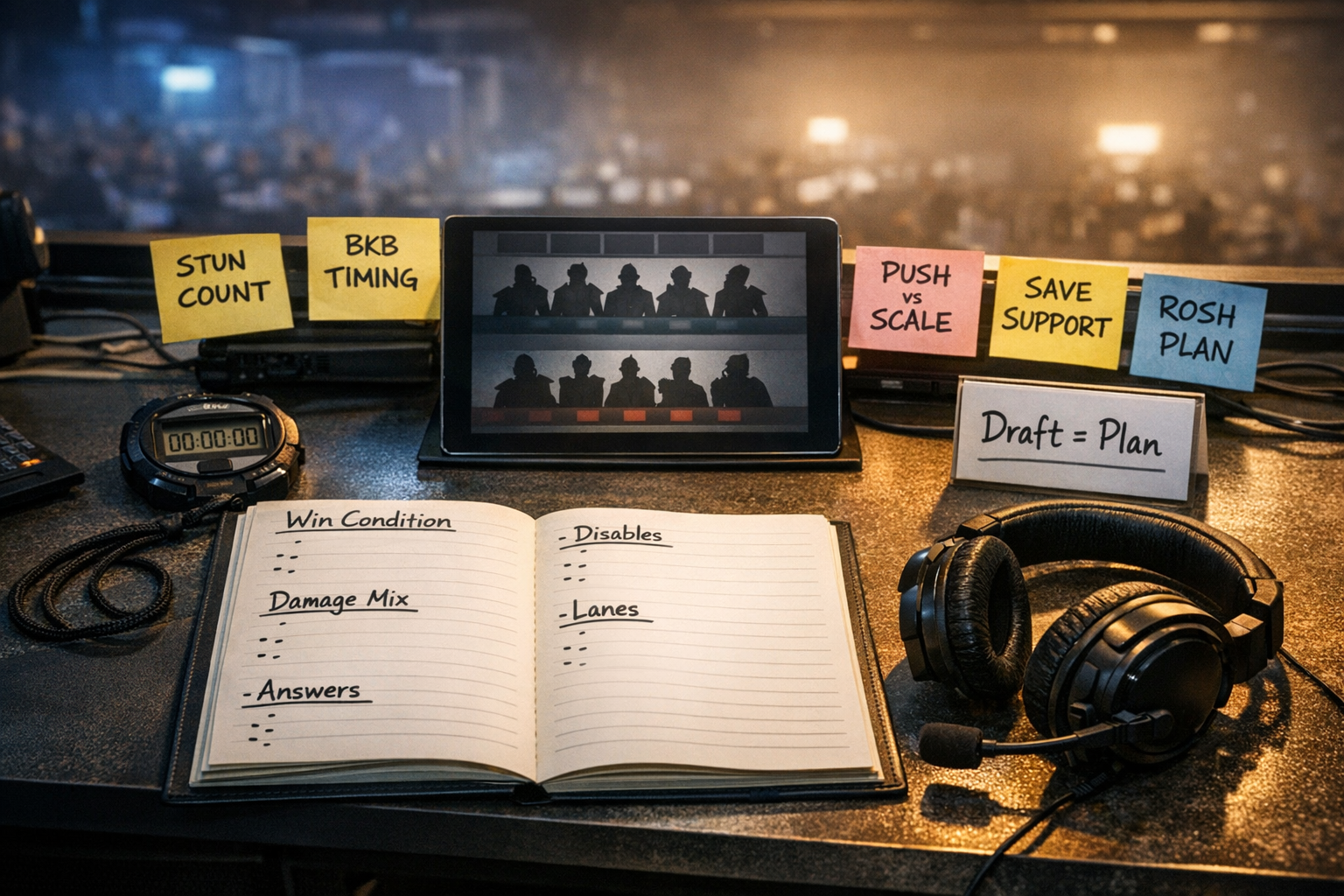
Damage type is only half the picture. The other half is time. Does your draft kill in 1–3 seconds, or does it win in 10–20 second fights? Both are valid, but each requires different drafting support.
- Burst drafts need: instant disables, vision, and follow-up to finish targets before saves land.
- Sustained DPS drafts need: frontline, slows, zoning, and protection to keep damage dealers alive.
A common ranked mistake is mixing “slow sustained damage” cores with “no frontline and no control.” The carry wants long fights, but the draft can’t keep anyone in range or alive long enough. If you draft sustained damage, you must draft time: control and survivability.
Tower damage is its own drafting category
Even if you’re winning fights, you must convert those wins into objectives. Some drafts kill heroes but struggle to take buildings, which gives the enemy infinite comeback opportunities. To stay timeless, think in tools rather than hero names:
- Reliable physical DPS (especially when spells are on cooldown).
- Summons / units that hit towers safely.
- Minus armor / damage amplification that makes objectives fall quickly.
- Aegis-compatible cores that can hit high ground without instantly dying.
If your lineup has amazing catch and teamfight but no safe way to hit towers, your win condition becomes fragile. Drafting at least one “objective enabler” makes your draft complete.
5) Timing Windows: When Your Draft Is Strongest
Dota drafts aren’t just “strong” or “weak.” They spike. A timing window is a period where your lineup is unusually powerful due to levels, item breakpoints, or map state. Drafting well means aligning your win condition with a realistic timing window.
Three universal timing windows
- Lane-to-first-objectives (0–15-ish): Supports rotate, first towers fall, map opens. Drafts with strong lanes, catch, and early ultimates thrive here.
- Midgame objective control (15–30-ish): Teams fight for outer towers, vision, and Roshan. Drafts with teamfight + initiation or pickoff + conversion thrive here.
- Late game decision fights (30+): One fight can decide the game. Drafts with superior scaling, buyback synergy, and disciplined high ground execution thrive here.
The exact minutes shift by patch and bracket, but the structure is timeless: early map formation, midgame objective battles, late game decisive fights.
Match your draft tools to your timing
Ask this during drafting: Do we have “buttons” that matter at our timing? For example:
- A tempo draft needs early initiation, reliable damage, and ways to force objectives.
- A scaling draft needs wave clear, defensive supports, and a plan to protect safe farm.
- A pickoff draft needs vision and catch that works even when enemies group.
The biggest timing mistake is drafting for a midgame power spike but picking cores that can’t fight until later. The second biggest is drafting late game but lacking the defensive structure to survive early pressure. Your picks must agree on when the game is meant to be played.
“Who starts fights?” decides whether your timing exists
Many lineups theoretically spike at a certain time, but in practice they never get to fight on their terms. If you can’t start fights, you can’t force objectives, and your timing evaporates. That’s why initiation and disable balance are not optional.
6) Draft Phase Strategy: Picks, Bans, and Information
Drafting is an information game. The best principle you can learn is: reveal as little as possible, for as long as possible, while still building your plan. In pubs, you can’t always control your teammates, but you can still make better decisions with the picks you influence.
First phase: pick flexible tools, ban hard counters to your plan
First phase is about foundation, not finishing. Strong first-phase picks usually provide at least one of the following:
- Reliable disable
- Wave clear
- Lane stability
- Flexible role assignment (can be core or support, or can lane multiple ways)
- Teamfight presence that doesn’t depend on rare combos
For bans, don’t just ban “popular heroes.” Ban the most efficient answers to what you’re trying to do. If your plan is to run at towers early, ban heroes/archetypes that hard-stall and punish overextension. If your plan is to scale, ban archetypes that crush lanes and take your map away before your timing.
Second phase: complete your control and damage profile
By the middle of the draft, your job is to ensure you’re not missing a critical category:
- Control: do you have initiation and follow-up?
- Damage mix: are you one-dimensional?
- Frontline: who plays first in fights?
- Objective plan: how do you take towers/Roshan after kills?
This is often where you correct the “pub draft shape”: if your team has picked two greedy cores, your next picks should stabilize lanes, add disables, and provide wave clear. If your team has picked three fighting heroes, you might need a scaling damage source and objective pressure.
Last picks: choose the hero that makes your plan easy
Last pick is not a trophy for “outsmarting” the enemy. The best last picks make the game simple: they reduce execution difficulty and increase consistency.
A timeless last-pick checklist:
- Does this hero improve our win condition? (not just “is it good”)
- Does it solve our biggest weakness? (lack of catch, lack of tower damage, lack of survivability)
- Does it create a clear target priority? (who do we jump and why?)
- Does it make our lanes playable? (avoid drafting a theorycraft that loses all lanes)
Information discipline: don’t draft yourself into predictability
If you reveal your only initiator early, the enemy can plan around it. If you reveal your only damage source early, the enemy can itemize and counterpick. Even in ranked, try to keep at least one “unknown” until later: either a flexible pick or a role that can shift. It’s not about fancy mind games; it’s about reducing the enemy’s ability to draft clean answers.
7) Lanes and Roles: Turning a Draft into a Playable Game
A draft can look amazing on paper and still lose because the lanes are unplayable. Timeless drafting means respecting lane fundamentals: you need at least two stable lanes and a plan for the unstable one.
Lane stability is a draft resource
When your lanes are stable, you can rotate, contest runes, and pressure towers. When your lanes are collapsing, you play defense and scramble. During drafting, think about lanes in terms of functions:
- Secure farm: at least one lane should reliably enable a core.
- Pressure lane: at least one lane should threaten kills or towers.
- Survival lane: if a lane is weak, draft tools to minimize losses (wave clear, escapes, defensive support).
Role balance: who does what job?
In a coherent draft, every hero has a job that is obvious by 10 minutes:
- One hero starts fights (or at least makes it easy).
- One hero follows up (damage or control that converts).
- One hero defends your backline (saves, counter-initiation, peel).
- One hero scales into a reliable damage source (to win late fights and take objectives).
- One hero provides tempo utility (vision, wave management, objective setups).
These jobs can overlap, but if none of them exist, your draft becomes “five players doing their own thing.” That’s how games slip away.
Front-to-back is the default structure in ranked
Many pub drafts work best with a simple structure: a frontline hero draws attention, supports stand behind with disables and saves, damage dealers hit what is in range. This is not the only way to play, but it is the most consistent in solo queue.
If you draft a “dive” style, you must commit fully: you need initiation, follow-up mobility, and a plan to survive counter-initiation. Half-dive drafts are some of the worst: they jump in but can’t finish, then feed.
8) Answers and Counters: Drafting Defense Without Killing Your Plan
Dota drafting is often described as counterpicks, but “countering” is broader than hero-vs-hero matchups. Most countering is about answering a concept: mobility, teamfight, sustain, illusions, healing, or high ground defense.
The best counters are “soft” and don’t distort your draft
A soft counter is an answer that fits naturally into your plan. Examples by concept (not hero name):
- Vs mobility: instant disables, roots, silences, vision tools.
- Vs sustain: burst, anti-heal mechanics, chain control to prevent resets.
- Vs teamfight: split push pressure, pickoff, forcing awkward fights.
- Vs heavy physical: armor auras, disarm, kiting, strong frontline.
- Vs heavy magical: magic resistance tools, dispels, spacing, disciplined fights.
A hard counter can win a matchup but ruin your overall draft if it doesn’t fit your timing, lanes, or win condition. In ranked, it’s usually better to draft a coherent lineup with decent answers than to draft a “counter” that no one can execute around.
Countering win conditions
One of the most timeless drafting skills is identifying the enemy’s win condition and drafting to make it difficult:
- If they want to snowball: draft wave clear, stable lanes, and tools to punish dives.
- If they want to teamfight: draft split pressure or pickoff to avoid clean 5v5.
- If they want to pickoff: draft saves, tanky cores, and strong vision discipline tools.
- If they want to outscale: draft tempo, tower pressure, and objective control to end earlier.
Notice how none of these require naming specific heroes. This is why the approach stays relevant across patches.
Drafting around defensive supports
In many games, the “real enemy” is not the carry but the support that makes kills impossible. If the enemy draft has strong saves and resets, you need one of these timeless solutions:
- Silence or control the saver (so they can’t cast).
- Kill faster (burst during your disable window).
- Force them to show (pressure multiple lanes, vision traps).
- Target swap discipline (don’t tunnel; hit what’s actually killable).
This is why disable balance and damage profile are linked: you don’t solve saves with “more damage” alone—you solve it with the right control and timing.
9) Objectives: Towers, Roshan, and Map Control
A draft that cannot convert kills into objectives will eventually lose. Comebacks happen because the losing team gets time: time to farm, time to find a pickoff, time to win one big fight. Objectives remove time from the enemy.
Drafting for tower progression
Ask: How do we take Tier 1 towers? Usually you need at least one of the following:
- Lane pressure that forces defenders to show.
- Wave clear advantage so you push safely.
- Catch to punish defenders.
- Siege tools that hit towers without dying instantly.
Then ask: How do we take high ground? High ground is the biggest execution test in Dota. Timeless high ground drafting benefits include:
- Aegis synergy (a hero that can hit buildings while protected).
- Disengage/reset tools (so one bad step doesn’t lose the game).
- Wave clear vs counter-push (so you aren’t dragged into chaos).
- Backline access (so the enemy can’t freely defend with spells).
Roshan as a drafting checkpoint
Roshan is not just an objective; it’s a drafting checkpoint. Teams with a clear Roshan plan control the midgame: Aegis enables high ground, and the threat of Roshan forces fights on your terms.
Drafting tools that make Roshan easier:
- Physical DPS that takes Roshan quickly.
- Minus armor or damage amplification that speeds it up.
- Zoning teamfight to keep enemies away.
- Vision control to avoid being surprised.
Even if your lineup doesn’t take Roshan fast, you can still draft a Roshan plan: win a fight first, or force the enemy away with map pressure, then take it safely.
Map control is drafted, not “found”
Vision, mobility, and wave clear determine who gets to play on which side of the map. Drafting for map control means ensuring you have:
- Heroes who can safely show on lanes (escape, tankiness, or distance).
- Heroes who punish lane showing (catch and burst).
- Heroes who defend vision (can stand near wards or protect deward attempts).
This is why pickoff drafts feel oppressive when they are coherent: they show a lane safely, then punish anyone who responds.
10) Common Drafting Mistakes (and Fixes)
Mistake #1: Drafting “five good heroes” with no plan
Symptom: your team doesn’t know what to do after lanes, fights are random, and you rely on outplaying.
Fix: before the draft ends, state one clear plan: “We take early towers and Roshan” or “We stall and outscale”. Then choose picks that support that plan (control, damage type mix, objectives).
Mistake #2: No initiation (or initiation that is easy to dodge)
Symptom: you only fight when the enemy runs into you; you can’t start on backliners.
Fix: prioritize at least one reliable start tool and one follow-up. Drafting is about forcing the enemy to respond, not waiting.
Mistake #3: Too much magical burst, no sustained damage
Symptom: you win early skirmishes but later fights drag and you can’t finish cores.
Fix: add a scaling physical damage source or sustained DPS plan, plus control to keep targets in range.
Mistake #4: Too much physical damage, no way to reach targets
Symptom: your carry hits hard but can’t touch anyone; enemies kite and reset.
Fix: add slows, catch, and teamfight control that buys time for your DPS to work. Physical damage is not enough without a way to keep fights “in front of you.”
Mistake #5: Greed stacking with no defensive structure
Symptom: multiple farm-heavy cores, but supports can’t protect them; lanes collapse.
Fix: if you have greedy cores, draft defensive supports and wave clear. If your supports are greedy, draft stable lanes and early fight ability. Someone has to hold the game together.
Mistake #6: Drafting “answers” that break your win condition
Symptom: you counterpicked one enemy hero but lost lanes and timing.
Fix: prefer soft counters that fit your plan. If a counter forces you into a different timing window, lane setup, or teamfight structure, it may not be worth it.
11) Drafting Checklists: Fast Rules You Can Use Today
The 60-second draft sanity check
- Win condition: Can we explain how we win in one sentence?
- Initiation: Do we have at least one reliable way to start fights?
- Follow-up: Do we have chain control or burst to finish kills?
- Damage mix: Are we too heavy in one damage type?
- Frontline: Who stands first and enables the backline?
- Wave clear: Can we defend towers and control lanes?
- Objectives: How do we take towers and Roshan after kills?
- Timing: When are we strongest, and can we force fights then?
Disable balance mini-checklist
- Do we have at least one instant or reliable catch?
- Do we have at least one follow-up control tool to extend the kill window?
- Do we have control that reaches the backline (range/mobility/vision)?
- Do we have something for defensive supports (silence/catch/target swap tools)?
Damage type mini-checklist
- Do we have a plan for early/mid fight damage (often magical or mixed)?
- Do we have a plan for late fight damage (often physical sustained or mixed)?
- Do we have tower/Roshan damage that converts leads into wins?
A simple, pub-friendly draft blueprint
If you want a timeless default structure that works in many ranked games, aim for:
- 1 frontline initiator (starts fights, soaks attention)
- 1 scaling DPS core (late fight and objective reliability)
- 1 flexible damage/control core (bridges early to midgame)
- 1 disable-heavy support (catch, follow-up, lane presence)
- 1 save/utility support (stability, defensive tools, teamfight support)
The exact hero names can change, but this shape remains consistently strong because it covers initiation, damage, disables, and survivability.
Want a faster climb?
If you’re trying to rank up efficiently, drafting principles are a huge multiplier—especially if you consistently create coherent lineups and avoid “unplayable” drafts. If you’d like help accelerating your progress (MMR goals, role-specific guidance, or structured improvement), you can check Boosteria’s Dota 2 options here: https://boosteria.org/dota2-boosting/prices.
12) FAQ: Drafting Questions Players Ask Every Day
How many stuns do we need?
There is no perfect number, but most coherent drafts have at least one reliable initiation disable and enough follow-up control to secure kills through reactions. Think in terms of coverage (reliable start, follow-up chain, backline reach), not raw stun count.
Should we draft for lanes or for teamfight?
In ranked, you generally want playable lanes first, then teamfight. A draft that wins every theoretical 5v5 but loses all lanes often never reaches its timing. The timeless compromise is drafting heroes that are stable in lanes and still scale into a teamfight plan.
Is it okay to draft one-dimensional damage if our heroes are strong?
It can work, but it makes the game easier for the enemy. Mixed damage is a timeless advantage because it forces difficult item decisions and reduces “one solution” counterplay. If you end up one-dimensional, compensate with better control, objective conversion, and timing discipline.
How do we draft against a teamfight lineup?
The most reliable approach is to avoid giving them clean 5v5s: draft split pressure or pickoff so they must respond in multiple places. Alternatively, draft a better teamfight with superior initiation and follow-up—but make sure you can force fights on objectives.
What if teammates pick comfort heroes that don’t fit?
Draft around them with principles: if they picked greedy cores, add wave clear and defensive supports. If they picked fragile damage, add frontline and disables. If they picked no catch, prioritize reliable initiation. You can’t always control the draft, but you can usually fix one missing category with your pick.
How do I improve drafting without studying every patch?
Focus on timeless categories: win condition, disable balance, damage mix, lane stability, and objective plan. Use Dotabuff and OpenDota to review your own games and identify the recurring failure: no initiation, no tower damage, too greedy, or no wave clear. Fix the recurring failure first; that alone can raise winrate more than chasing meta picks.
Helpful reference tools: OpenDota, Dotabuff, Liquipedia, and Valve’s official site: dota2.com.
Final Takeaways
- Win condition first: know how you plan to win and draft tools that make that plan easy.
- Disable balance wins fights: reliable initiation + follow-up control beats “hope they misplay.”
- Mixed damage is timeless: it prevents simple item counters and improves late-game consistency.
- Timing is everything: align your heroes so your draft spikes together, then force objectives.
- Objectives close games: kills don’t win by themselves—towers and Roshan do.
If you adopt just one habit from this guide, make it this: After every draft, say out loud: “We win by ___.” If you can’t fill in the blank, fix the draft shape next game—starting with initiation, disable balance, and objective conversion.