



Dota 2 MMR Guide: Roles, Hero Pools, Climbing Tips & Pro Mindset (2026)
Let’s talk about MMR in Dota 2—what it actually is, why it matters, and how you can raise it without turning the game into a miserable grind. If you just started your journey in Defense of the Ancients, the fastest way to stop feeling “lost” is to understand the ranked ecosystem: roles, win conditions, timing windows, and the habits that separate consistent climbers from players who bounce up and down forever.
This guide is written to be useful for years. It’s refreshed with 2026 in mind (so the structure matches modern Dota), but the main content stays timeless: fundamentals, decision-making, and repeatable systems that remain relevant even when Valve changes hero numbers, item stats, or meta trends. Wherever patch-specific details could age quickly, you’ll find them moved into a Legacy section at the end.
Table of Contents
- Basics of MMR in Dota 2 (and why people care)
- How Ranked Works: MMR, medals, solo vs party, and expectations
- The 5 Positions Explained (what your team expects from you)
- Position 1: Carry (farm patterns, item timings, win conditions)
- Position 2: Mid (tempo control, runes, rotations, snowball)
- Position 3: Offlane (pressure, initiation, lane disruption)
- Position 4: Soft Support (playmaking, roaming, economy)
- Position 5: Hard Support (vision, lane enabling, map control)
- Choosing a Hero Pool: the fastest way to get strong
- Laning Fundamentals: creep equilibrium, pulls, trades, and lane goals
- Farm Fundamentals: efficiency, stacking, and “safe greed”
- Objectives & Macro: towers, Roshan, smokes, and map pressure
- Communication & Mental: how to win more without “mechanics”
- A Real Improvement System: warmups, replays, and measurable goals
- How MMR boosting works (and when people consider it)
- FAQ
- High-trust Dota resources
- Legacy section (older patch references and historical notes)
Basics of MMR in Dota 2 (and why people care)
MMR is Dota 2’s matchmaking rating: a number that estimates your skill based on wins/losses and matches you with players of similar rating. People care about MMR because it’s a measurable signal of progress, unlocks tougher competition, and often becomes a personal challenge.
But here’s the truth: the number itself is not the “real game.” The real game is the set of skills that produces the number:
- Role clarity (knowing your job every minute)
- Laning habits (how you secure gold/XP without dying)
- Macro decisions (where to be on the map and why)
- Timing sense (when your hero is strong and when it isn’t)
- Emotional control (not throwing games because you’re tilted)
Many players get stuck because they chase MMR directly instead of building the habits that create MMR as a side effect. Your goal should be to become a player who wins consistently—then the rating follows naturally.
If your long-term dream is “how to become a professional player in Dota 2,” you’ll eventually need to master at least one role deeply, maintain high consistency, and build a reliable hero pool. Pro-level play is not just mechanics; it’s discipline, preparation, and decision-making under pressure.
To start learning the ranked ecosystem, the official Dota 2 site is a reliable place to track announcements and updates: dota2.com.
How Ranked Works: MMR, medals, solo vs party, and expectations
Ranked in Dota 2 is designed to do one thing: place you into matches where your skill roughly equals the lobby average. Over time, if you play well and win more than you lose, your MMR rises. If you play worse than your bracket or lose more, it falls.
What MMR represents (in practical terms)
- Not your “worth”: It’s a matchmaking tool, not a life score.
- Your consistency: It rewards players who can win many different game states.
- Your decision quality: In Dota, decisions create huge swings—MMR follows decision quality more than “aim.”
Solo vs party dynamics
Even when the game evolves, one idea stays constant: queue type changes the skill you need.
- Solo: you must be self-reliant, read teammates quickly, and play for “what works” rather than “what should work.”
- Party: coordination can create huge advantages: smoke timings, lane setups, synchronized power spikes, and draft synergy.
The most important ranked expectation
In every bracket, you will lose games that feel “unfair”: a teammate feeds, someone disconnects, draft is weird, or the enemy has a smurf. This is normal. The only thing that matters for climbing is whether you are a net-positive influence across many games. If your level is above your bracket, you will climb over time.
The 5 Positions Explained (what your team expects from you)
Dota’s five positions are not just “lanes.” They are economic priorities and responsibility packages. A good team allocates farm to heroes that scale with gold, and allocates time/space to heroes that enable the cores.
To be impactful, you need a hero pool of about 3 to 6 heroes for your main role—enough to handle bans, bad matchups, and meta shifts. You also need basic competence on at least one backup role, because you won’t always get your first choice.

Professional teams constantly experiment with compositions and laning schemes, but the core logic stays the same: each position has a job, and the team wins when those jobs align with the game’s timing windows.
One simple principle: before the game starts, your team expects you to do something specific. If you don’t understand that expectation, you’ll feel lost even if your mechanics are decent.
Position 1: Carry
Carry is the late-game engine of many drafts. Your job is to convert farm into game-winning damage or objective pressure. The carry is usually the highest economic priority, especially in the first 15–25 minutes.
What your team expects from a carry
- Stable lane outcome: you don’t have to “win,” but you must avoid catastrophic feeding.
- Efficient farm: you hit a real timing (not “farming forever”).
- Correct fights: you show up when your hero is strong, and avoid fights that delay your win condition.
- Objective conversion: after winning fights, you translate it into towers/Roshan/map control.
Carry fundamentals that win MMR
Carry is less about flashy outplays and more about economy discipline:
- Last-hit reliability: missing free CS is like donating MMR.
- Wave reading: you know which lane is safe to farm and which is bait.
- Farming routes: you farm in a pattern that reduces time wasted walking.
- Death minimization: every death is lost farm + lost map control.
Carry timing mindset
Instead of “I need 6 items,” think like this:
- Timing 1: lane stability + first small power spike (boots / small core components)
- Timing 2: first major item that changes fights (your “I can join now” moment)
- Timing 3: second major item that makes you the strongest hero on the map (your “we can force objectives” moment)
If you can identify these timings for your hero, your decision-making becomes simpler: farm until timing, then force advantage when timing arrives.
Position 2: Mid Laner
Mid is the role of tempo. Many mid heroes spike earlier than carries and can snowball by controlling runes, pressuring towers, and rotating to side lanes.
What your team expects from a mid
- Lane competence: you don’t necessarily need to win lane, but you must not lose mid so hard that the map collapses.
- First rotations: you create pressure where the enemy is vulnerable.
- Rune control: you manage resources that decide early fights.
- Space creation: you force reactions so your carry can farm.
The mid laner’s “job switch”
Many mid players lose MMR by staying in mid too long. A good mid has a clear switch point:
- Before your hero is online: stabilize lane, secure runes, avoid dying.
- Once you are online: stop playing “mid only” and start playing the map.
How to rotate without throwing
- Push first: if you rotate on a bad wave, you lose your tower or lose 2 waves.
- Rotate with a purpose: you’re not “walking bot,” you’re going for a kill, a tower, or a rune control play.
- Track enemy supports: many rotations fail because the enemy support is already there.
Position 3: Offlane
The offlaner is the pressure role. You disrupt the enemy carry’s lane, absorb attention, and often become your team’s initiator or frontliner.
What your team expects from an offlaner
- Lane disruption: you make the enemy carry uncomfortable, even if you don’t kill them.
- Initiation or frontline: you start fights or stand in dangerous areas so your cores don’t have to.
- Objective pressure: you turn small advantages into tower damage or map control.
Offlane win condition: “force reactions”
Offlane is powerful because you can win without being the richest hero. You win by being annoying:
- Cutting waves
- Threatening dives with support
- Taking tower early
- Forcing multiple enemy heroes to respond
If 2–3 enemy heroes come to stop you, your carry gets free time. That is the offlane trade.
Position 4: Soft Support (Semi-support)
Position 4 is the role of playmaking and opportunistic economy. You’re not the primary ward buyer every minute, but you still participate in vision, rotations, and fight setups.
What your team expects from a pos 4
- Lane impact: help win the offlane or secure a stable lane outcome.
- Rotations: create kills with smokes, ganks, and rune control.
- Key utility item timing: many pos 4 heroes become game-changing with a single item.
Pos 4 economy rule
You’re allowed to take some farm—but only farm that cores cannot safely take or don’t want to take. You “collect leftovers” while staying active on the map.
Position 5: Hard Support
Position 5 is the role of map control, lane enabling, and sacrifice. Your job is to make the game easy for your cores: stabilize lanes, protect them, give vision, and coordinate objective setups.
What your team expects from a pos 5
- Lane enabling: your carry’s first 8–10 minutes often depend on you.
- Vision: wards that actually lead to plays, not random wards.
- Smokes and coordination: guiding the team when to move and why.
- Saving/peel: using spells to keep cores alive in fights.
Support doesn’t mean “poor and powerless”
A good support is not just a ward dispenser. Your skills decide fights. If you consistently cast your spells correctly, position safely, and communicate timings, you will climb quickly—especially in mid MMR brackets where supports often play passively.
Choosing a Hero Pool: the fastest way to get strong
The number one reason new players stall is that they play too many heroes. Dota has too many mechanics to learn everything at once. Your hero pool should be:
- Small enough to master matchups and timings.
- Diverse enough to handle bans and draft needs.
- Comfortable enough that you can focus on macro, not buttons.
How to build a 3–6 hero pool (a template)
Pick heroes by function rather than popularity:
| Role | Hero Pool Functions | Why it matters |
|---|---|---|
| Carry | One stable laner, one flash farmer, one late-game monster | You can adapt to tempo games or long games |
| Mid | One rune controller, one teamfight mage, one ganking snowball | You always have a way to impact side lanes |
| Offlane | One initiator, one lane dominator, one aura/teamfight core | You can start fights or build team strength |
| Pos 4 | One roamer, one teamfight control, one save/utility | You can create kills or protect cores |
| Pos 5 | One lane bully, one hard save, one teamfight support | You can stabilize lanes and win fights later |
The rule that makes hero pools work
Play one hero until you stop thinking about buttons. When mechanics become automatic, your brain can focus on waves, vision, smoke timings, and objectives. That is how MMR climbs.
Laning Fundamentals: creep equilibrium, pulls, trades, and lane goals
Most games are decided by the first 10 minutes. Not always by kills—by lane outcomes. A “good lane” in Dota is not always “I got 3 kills.” It is:
- Your core hits their early items on time.
- Your tower stays alive long enough.
- You don’t feed momentum to the enemy.
- You set up the map for mid game (vision + tower pressure).
Creep equilibrium (simple and powerful)
Creep equilibrium is where the wave meets. If the wave is closer to your tower, you are safer. If it’s closer to their tower, you are more aggressive—but also more gankable.
- Carry wants: wave near your tower, but not under it (safe last-hits).
- Offlane wants: wave closer to enemy tower so you can pressure and deny farm—or manipulate it to create kill angles.
- Supports want: equilibrium that protects their core while enabling trades.
Pulling and stacking in lane
Lane pulls do three important things:
- Reset the wave toward your tower (safer farm).
- Deny XP from the enemy if done correctly.
- Create a timing window to trade, ward, or rotate.
Pulls are not “automatic.” A bad pull can lose the lane by giving the enemy a free wave under their tower or by leaving your core 1v2 at the wrong time. Always ask: Can my core survive if I leave the lane for 15 seconds?
Trading fundamentals (why supports decide lanes)
Supports win lanes through trades. The simplest trade rules:
- Trade when you have more creeps: creeps are extra damage in early fights.
- Trade when your spells are up: if your disables are down, you’re a walking donation.
- Protect your core’s HP: low HP carry equals lost waves, lost camps, lost game.
Lane goals by role
- Carry: secure last-hits, avoid dying, hit first item timing.
- Mid: secure runes, control bottle/regen flow, avoid losing tower too early.
- Offlane: deny farm, threaten tower, force defensive rotations.
- Pos 4: enable offlane kills or pressure, rotate when you have a strong timing.
- Pos 5: protect carry, manage pulls, control lane vision, stop dives.
Farm Fundamentals: efficiency, stacking, and “safe greed”
To increase MMR, you don’t need to farm “more.” You need to farm smarter. Dota rewards players who minimize wasted seconds.
Farm efficiency basics
- Always have a plan for the next 60 seconds: wave → camp → camp → wave, or wave → rotate → objective.
- Don’t walk across the map without purpose: walking is the enemy of MMR.
- Use TP intelligently: a good TP can save a tower or win a fight; a bad TP can trap you and waste minutes.
Stacking: the easiest “free” MMR habit
Stacks convert support time into core farm. If you play support and stack consistently, you will win more games even without kills, because your carry hits timings faster.
“Safe greed” vs “suicidal greed”
Climbing is about taking the maximum farm your hero can take without dying. Safe greed looks like:
- Farming on your side of the map when enemies are missing.
- Showing on lanes only with vision.
- Backing off when key enemy heroes disappear.
Suicidal greed looks like:
- Hitting one more wave with no wards and no info.
- Farming alone in enemy territory while your team shows elsewhere.
- Ignoring smoke timings and missing heroes.
If you reduce “suicidal greed deaths,” your MMR will rise quickly.
Objectives & Macro: towers, Roshan, smokes, and map pressure
Dota is not a deathmatch. Kills only matter because they enable objectives. If you win fights but take nothing, you’re giving the enemy time to recover.
The objective ladder (a simple macro hierarchy)
- Protect your towers when it’s efficient.
- Take enemy towers to open the map.
- Secure Roshan when it’s safe and meaningful.
- Take control of enemy jungle with wards and pressure.
- High ground when you have Aegis/strong advantage and correct waves.
Roshan: why it decides games
Roshan is the cleanest way to break high ground and prevent throws. If your team wins a fight and can take Roshan safely, it is often the best conversion—even if you could also take a tower.
Smoke fundamentals
Smokes win games because they create information asymmetry: the enemy thinks the map is safe, then suddenly they lose a core.
Good smoke rules:
- Smoke when your team has a timing: a new ultimate, a new item, or a strong cooldown advantage.
- Smoke with a purpose: kill → tower, kill → Roshan, kill → ward control.
- Smoke into vision: place wards after the smoke, not randomly.
Communication & Mental: how to win more without “mechanics”
Many players could gain hundreds of MMR just by improving communication and mental control.
Communication that actually helps
- Short, actionable calls: “Smoke top with ult,” “Roshan now,” “Don’t fight, wait BKB.”
- Timing pings: ult cooldown, item timing, buyback status.
- Wave calls: “Push mid then smoke,” “Defend top, give bottom.”
Communication that loses games
- Arguing about blame
- Typing essays while lanes collapse
- Spam pinging teammates after mistakes
How to avoid tilt like a climber
Climbers treat MMR like a long-term project. The “tilt system” is simple:
- If you feel angry, you play worse.
- If you play worse, you lose more.
- If you lose more, you get angrier.
Break the loop by using rules:
- Two-loss rule: after two frustrating losses, take a break.
- One-hero rule: don’t switch heroes every game when tilted.
- One-focus rule: pick one improvement goal per session (warding, last-hits, rotations).
A Real Improvement System: warmups, replays, and measurable goals
MMR boosting yourself is not about playing 12 games a day. It’s about playing games that actually improve you.
Warm up before ranked
Warming up is optional, but it helps consistency. You can:
- Play an unranked match with your hero
- Use a custom mode to wake up mechanics
- Spend 10 minutes in last-hit practice to sharpen timing
Some players also use reaction trainers outside Dota. For example, osu! is a known rhythm game many gamers use for coordination and timing practice.
Choose hero and position (the “small pool” method)
To climb quickly, pick one primary role and commit to it for a period (like 50–100 games). Build a 3–6 hero pool, then expand slowly.
Even the most meta hero can’t compensate for lack of practice. Dota rewards familiarity with exact damage thresholds, power spikes, and survival instincts. That takes repetition.
Replay review (the fastest skill multiplier)
If you review just 1 replay per day, you will improve faster than most players. Here’s how to do it efficiently:
- Pick one loss where you felt confused.
- Watch the first 12 minutes only.
- Identify 3 mistakes:
- One laning mistake (equilibrium, pulling, trading)
- One map mistake (wrong lane, bad TP, bad rotation)
- One fight mistake (positioning, target choice, spell usage)
- Write one rule to prevent each mistake next time.
Measurable goals that actually increase MMR
- Carry: increase average last-hits at 10 minutes; reduce deaths before 15 minutes.
- Mid: improve rune control; rotate at least once with a good wave state.
- Offlane: force at least one enemy rotation; take tower or create a tower pressure threat.
- Support: stack 2–4 camps by 10 minutes; place wards that lead to kills/objectives.
How MMR boosting works (and when people consider it)
Boosting MMR in Dota 2 through normal play is a long-term process. It can be extremely rewarding, but also time-consuming. Some players consider paid solutions when they feel they understand the game but don’t have enough time to grind, or when they want to reach a target bracket to play with friends.
If you’re exploring that route, you can view Dota pricing and options here: https://boosteria.org/dota2-boosting/prices, and learn more about the platform at boosteria.org.
Regardless of what path you choose, remember one timeless truth: keeping a rank requires the fundamentals. If your gameplay habits don’t match the bracket, you’ll fall back. That’s why the best long-term approach is always to build real skill—lane discipline, macro understanding, and calm decision-making.
FAQ
How long does it take to climb MMR?
It depends on consistency and improvement habits. If you play a small hero pool, review replays, and reduce deaths, you can climb steadily. If you spam random heroes and tilt, you can play forever without moving.
Do I need to master all five roles?
To climb, you mainly need one role mastered and one backup role functional. To become truly high-skill (and eventually pro-level), understanding all roles helps you read the map and predict enemy behavior.
Is Dota more about mechanics or decision-making?
Both, but decision-making scales harder. Mechanics win fights; decisions win games. You can outplay someone mechanically and still lose because you took the wrong fight at the wrong time.
What is the best role to climb with?
The best role is the one you can play consistently without tilting. Carry and mid can “hard carry” games, but support can also climb fast if you consistently win lanes, stack, ward well, and coordinate smokes.
High-trust Dota resources
These are reliable places to learn core concepts, track the game, and study competitive play:
- Official Dota 2 site
- Liquipedia Dota 2 Wiki (mechanics, heroes, competitive info)
- Dotabuff hero stats and meta trends
- OpenDota (match analysis and replay insights)
Legacy section (older patch references and historical notes)
This section preserves older references from the original text that may no longer reflect current meta realities. The concepts behind these lists can still be useful, but patch numbers and “best heroes” change frequently.
Legacy: Patch-specific “best heroes” lists (historical snapshot)
The original article referenced “best heroes” by patch number (for example, 7.20). These lists are kept here for context:
Legacy: “Best Carry heroes” (patch 7.20 snapshot)
- Phantom Assassin
- Juggernaut
- Terrorblade
- Anti-Mage
- Faceless Void
Legacy: “Best Mid Laners” (patch 7.20 snapshot)
- Rubick
- Kunkka
- Outworld Devourer
- Invoker
- Monkey King
Legacy: “Best Offlaners” (patch 7.20 snapshot)
- Tusk
- Brewmaster
- Tiny
- Centaur Warrunner
- Beastmaster
Legacy: “Best Pos 4” (patch 7.20 snapshot)
- Grimstroke
- Rubick
- Lion
- Undying
- Phoenix
Legacy: “Best Supports” (patch 7.20 snapshot)
- Lich
- Dazzle
- Lion
- Shadow Shaman
- Keeper of the Light
Legacy: Original section text preserved (lightly cleaned)
Increasing your MMR in Dota 2 is a never-ending process that can drain your energy, but the emotions you get from winning against strong opponents are priceless. If you want worthy enemies, you must climb toward the highest ranks.
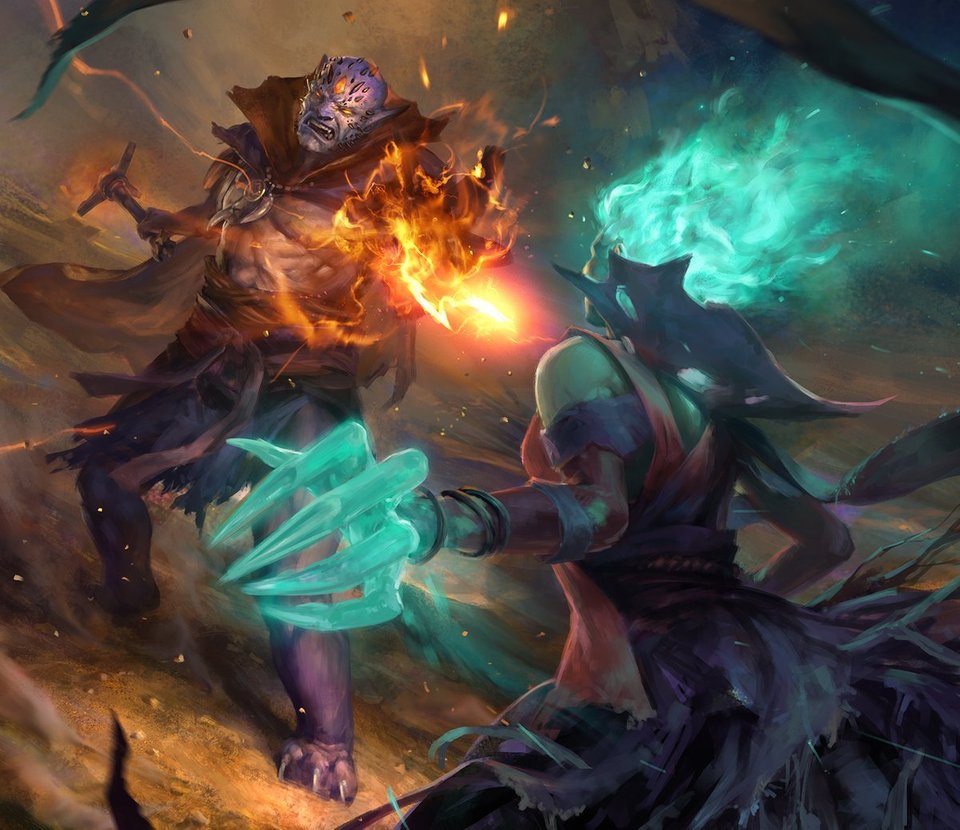
The original article also mentioned warmups (normal games and custom games like “Overthrow”) and emphasized that practice is the best way to increase your skill. Those points remain correct: warmup routines, small hero pools, and consistent habits are timeless.
Conclusion: If you want to climb MMR in Dota 2, you don’t need perfect mechanics—you need a system. Pick a role, master a small hero pool, win your lane more often, die less, convert fights into objectives, and review mistakes with calm honesty. Do that consistently and your MMR will rise naturally, not just in 2026, but beyond.


