



Twisted Fate Guide (LoL): Runes, Builds, Matchups, Roaming & Climb Tips (2026)
Summoner Spells


Items
Abilities


MASTERIES
During LoL ranked games you can sometimes hear the phrase “elo boost” or “elo boosted.” Twisted Fate is one of the champions most associated with that kind of talk—not because he’s “easy,” but because a good Twisted Fate can make a game feel unfair: lane goes quiet, then suddenly Destiny lights up the map and a side lane explodes. If you’ve ever watched a Twisted Fate take over a match with one perfect gold card and a clean roam, you already know why he’s worth learning.
This guide is written to stay useful long-term. It’s updated with 2026 in mind (so the structure matches modern LoL), but the main sections focus on fundamentals that won’t expire next year: wave control, vision, tempo, card discipline, and map decision-making. When patches shift items/runes, Twisted Fate players who understand the “why” keep climbing while everyone else relearns the “what.”
Table of Contents
- Quick Snapshot: How Twisted Fate Wins
- Champion Identity: What TF Actually Does
- Abilities & Card Discipline (Combos + Micro)
- Runes: The Timeless Logic Behind Each Setup
- Summoner Spells: When to Take Ignite, Teleport, Cleanse, etc.
- Items: Build Frameworks That Survive Meta Changes
- Laning: Wave Patterns, Trading Windows, and “Anti-Gank” Habits
- Roaming With Destiny: Timing, Angles, and “No-Throw” Rules
- Matchup Playbook: Assassins, Control Mages, Poke, and Melee
- Mid Game Macro: Side Lanes, Objectives, and Tempo
- Teamfights: Pick, Peel, and Target Priority
- Practice Plan: 7 Drills That Make You Instantly Better
- “Elo Boost” Explained: What It Means & Why People Say It
- High-Trust Resources (Build Data + Official Pages)
- FAQ
- Legacy Section (Older Notes & Historical Context)
Quick Snapshot: How Twisted Fate Wins
Twisted Fate doesn’t win the same way a pure burst mage or an all-in assassin wins. He wins by controlling space, time, and numbers:
- Space: Gold Card threatens a pick; red card threatens wave control and slow AoE pressure; blue card fuels mana and tempo.
- Time: He “buys time” with waveclear, then spends that time roaming or setting up vision.
- Numbers: Destiny creates unfair fights—2v1, 3v2, a guaranteed collapse, or a clean disengage for your team.
If you remember only three rules, remember these:
- Never waste your wave. Every Destiny roam begins with wave control.
- Never gamble the gold card. Your gold card is a promise—don’t promise if you can’t deliver.
- Never arrive late. The best Destiny is the one that’s already in motion before the enemy realizes it.
Champion Identity: What TF Actually Does
Twisted Fate is a tempo mage with global pressure. His lane phase isn’t about “solo killing every matchup.” It’s about building a stable gold/XP base, keeping the wave manageable, and forcing the enemy mid to choose between:
- Matching your push (and losing resources when you roam), or
- Holding the wave (and watching you disappear into fog), or
- Greeding for plates (and getting punished by a collapse).
His kit rewards players who can stay calm under pressure. Many people fail on Twisted Fate because they play him like a normal mage: they spam Q, run out of mana, get shoved in, and then Destiny becomes a panic button. A strong TF does the opposite: he manages the first 8–12 minutes carefully, then uses Destiny to force the map into predictable patterns.
What Twisted Fate is great at
- Creating picks with point-and-click CC.
- Snowballing side lanes through repeated, clean ults.
- Tempo control (push, move, ward, reset).
- Front-to-back teamfights as a stun/peel tool when needed.
- Objective setups by arriving first and threatening gold card.
What Twisted Fate is NOT great at
- Blind all-ins without wave/vision setup.
- Face-checking (you’re not a frontline).
- Hard carrying without farm (TF needs consistent gold due to his kit’s utility-heavy nature).
Abilities & Card Discipline (Combos + Micro)
Core idea: your W is your “contract”
Pick a Card isn’t just an ability—it’s a commitment. When you lock gold card, you are saying: “I can reach you, and I can follow up safely.” If either part is false, don’t lock gold card.
Ability purpose (timeless)
- Q (Wild Cards): waveclear + poke + finishing damage. Use it with intent, not on cooldown.
- W (Pick a Card): decision tool: blue for mana/tempo, red for wave/slow, gold for pick/peel.
- E (Stacked Deck): passive DPS that rewards clean auto spacing and tower damage windows.
- R (Destiny / Gate): the entire reason enemies must respect you. Used correctly, it turns LoL into a numbers game.
Combos you should actually practice
- Lane trade (safe): Red card on a minion bounce → Q through the wave → step back. This wins lanes without risking your life.
- Pick combo (standard): Lock gold → walk into range → auto (gold) → Q → reposition (don’t overstay).
- All-in with teammate: Gold → Q → keep autos with E procs while your teammate finishes.
- Defensive peel: Hold gold card while hovering your carry, don’t throw it early—make the diver “pay” only when they commit.
- Wave reset: Red card caster line → Q → auto last hits. The goal is to leave lane first.
Gold card timing tip
Many TF players lose fights because they lock gold card too early and walk forward holding it, broadcasting the play. Instead:
- Walk into a “normal” position first (as if you’re last-hitting).
- Start W late (when your target has fewer options).
- Lock gold when you are already within realistic range or when you can guarantee approach (ally CC, fog, flank).
Runes: The Timeless Logic Behind Each Setup
Rune pages change often across seasons. The best TF rune page is not “the one you saw in a screenshot,” but the one that matches your job in that game:
- Job A — Tempo & Utility: clear waves, roam, create picks.
- Job B — Lane Pressure: poke, win lane control, force the enemy to play defensively.
- Job C — Survival: live through assassin threats and reach mid game.
- Job D — Scaling Damage: become a real threat later (usually when your team lacks consistent damage).
Keystone archetypes
1) Utility keystones (the “map TF” style)
If your goal is to be everywhere, utility keystones shine because they help you stabilize lane and enable Destiny plays. This style pairs best with disciplined wave control.
- When to pick: volatile sidelanes (snowball lanes), you have a gankable enemy bot/top, or your team has strong follow-up CC.
- How you win: shove → disappear → ult → repeat.
2) Poke keystones (the “lane TF” style)
Poke-focused keystones help you get lane priority without risking all-ins. The goal is to chunk the enemy so they can’t contest wave states safely.
- When to pick: you outrange/outsustain the enemy mid, or the enemy has weak all-in early.
- How you win: repeatable red card + Q trades while staying safe from ganks.
3) Burst keystones (the “pick TF” style)
Burst setups turn gold card into an actual kill threat, especially when paired with jungle pressure.
- When to pick: your jungler wants to play mid, or enemy comp is squishy and pickable.
- How you win: gold card becomes a guaranteed chunk/kill window.
4) Sustain/defense keystones (the “survive assassins” style)
Sometimes the correct TF is the one that does not die. Defensive setups can feel less “carry,” but they win games by preventing the enemy mid from snowballing.
- When to pick: heavy dive, lots of burst, difficult matchups where one mistake ends lane.
- How you win: you deny the enemy’s win condition and reach your Destiny timers.
Secondary runes (simple rules)
- Need mana + tempo? Choose runes that let you cast Q to manage waves without going OOM.
- Need safety? Choose defense and movement tools so you don’t get one-shot.
- Need roaming value? Choose speed/utility so your roams are faster and more consistent.
Important mindset: your rune page should make your first 10 minutes easier. Twisted Fate wins by reaching the map stage cleanly. If your runes make lane harder, you’re delaying your real power.
Summoner Spells: When to Take Ignite, Teleport, Cleanse, etc.
Flash is almost always mandatory. Your second spell is a strategic choice based on matchup and game plan:
Ignite
- Pick when: your lane is killable, your jungler plays mid, and enemy has healing you need to reduce.
- Win condition: gold card becomes lethal with ignite timing; early tempo leads to side lane snowball.
Teleport
- Pick when: you expect a farm-heavy lane, or you need stable resets to keep Destiny pressure.
- Win condition: you never miss waves, you reset efficiently, and you can show up to objectives on time.
Cleanse
- Pick when: the enemy has reliable CC that turns one hit into death (mid + jungle chain CC, or oppressive pick tools).
- Win condition: you remove the “single mistake = loss” condition and keep your tempo.
Exhaust
- Pick when: enemy’s main threat is a diver/assassin that must be neutralized in fights.
- Win condition: you survive the first burst, then gold card wins the extended fight.
Heal / Barrier
- Pick when: you need extra survivability versus poke/burst and your team composition benefits from it.
- Win condition: you don’t get forced out of lane, and you keep wave control.
Items: Build Frameworks That Survive Meta Changes
Item names and systems shift. The best way to stay consistent is to build TF as a set of functions. Think in slots:
Slot 1 — Mana/Tempo Foundation
You want a foundation that lets you cast enough spells to control waves and rotate without constantly being forced to base. Across seasons, this usually means a mana-focused start path or mana-efficient choices.
Slot 2 — Threat Item (your “gold card matters” purchase)
This is the item that turns gold card from “CC” into “CC + real punishment.” Often it’s a damage spike, a sheen-style spike, or a burst-enabling spike.
Slot 3 — Safety / Anti-Throw Tool
This is where Twisted Fate players stop feeding. You will win more games by buying one anti-throw item at the right time than by buying “more damage” and dying with it. Stasis tools and spell shields are classic examples of anti-throw value.
Slot 4 — Range/Utility (optional but often game-winning)
Some games are decided by whether you can safely deliver a gold card onto the correct target. Items that increase your threat range or enable picks become extremely valuable in those drafts.
Slot 5 & 6 — Scaling Damage / Penetration / Situational Defense
Late game TF either becomes a legitimate DPS threat or plays as a utility controller who enables teammates. Choose based on what your team lacks.
Three evergreen build “styles”
1) Pick & Burst TF (solo queue classic)
- Goal: gold card = kill window.
- Play pattern: shove, disappear, create picks, punish mispositioning.
- Best into: squishy comps, low peel, high mobility targets that still must commit to fights.
2) Utility/Roam TF (map control)
- Goal: wave control + Destiny tempo.
- Play pattern: push first, ward, reset, ult, repeat.
- Best into: games where side lanes are volatile and objectives decide everything.
3) Anti-Assassin TF (survive and win later)
- Goal: don’t die, keep wave manageable, punish overdives.
- Play pattern: farm safely, hold gold card defensively, ult for guaranteed numbers plays only.
- Best into: heavy dive, burst mid + gank jungler, comps that want to snowball off your mistakes.
Laning: Wave Patterns, Trading Windows, and “Anti-Gank” Habits
Twisted Fate lane phase is about repeatable decisions. You don’t need to outplay every trade; you need to make trades that don’t risk your life.
The three wave plans (choose one every game)
Plan A: “Red Card Opening” for early priority
This is used to gain the first wave advantage so you can ward, help your jungler, or set up your first reset cleanly. You use red card and autos to push early, then calm down and manage the bounce.
- Use when: enemy has weak early waveclear or can’t punish you immediately.
- Warning: early push without wards is the fastest way to die. If you do this, you must ward on time.
Plan B: “Pull and Freeze” to survive dangerous lanes
This is how you beat matchups that want to all-in you. You let the wave come closer to your tower, then freeze just outside turret range. You farm safely, deny the enemy aggressive trades, and punish them when they overstep.
- Use when: assassins/melee threats, heavy gank pressure, or when you’re not confident.
- Win condition: you stay alive and reach your first Destiny plays without donating kills.
Plan C: “Match shove” in skillshot lanes
Some matchups are about positioning and dodging while keeping the wave stable. If you shove too hard, you become gankable. If you get shoved under turret, you eat poke and lose tempo. So you match waveclear and keep the lane “neutral.”
- Use when: control mages and poke mages where both sides can clear.
- Win condition: you maintain lane parity and roam on your timers.
Trading rules that prevent 80% of TF deaths
- Don’t walk up to “W them” if their key CC is available. Use red card bounce trades instead.
- Trade after they use a key spell. TF is a punish champion: you punish cooldowns.
- Never Q the wave “because it’s up.” Q is your tempo tool. Use it when you need wave control or a real poke window.
- Track jungle without ego. If you don’t know where the jungler is, play as if they’re behind you.
Ward patterns that match TF’s playstyle
- When you push: ward deep on the side you want to play toward (so you can roam safely).
- When you freeze: ward the “gank entry” that breaks your freeze (so you don’t get forced off the wave).
- Before you ult: drop vision on your exit path, not just your lane. You’re about to leave; don’t die on the way back.
Roaming With Destiny: Timing, Angles, and “No-Throw” Rules
Destiny is not “press R and hope.” It is a system. Your job is to make the system repeatable.
The 5-step Destiny checklist
- Wave: Can you push, crash, or at least neutralize the wave first?
- Vision: Is the route safe, and do you know where the enemy jungler is likely to be?
- Target: Who is actually killable (low mobility, no flash, no cleanse, no tower safety)?
- Angle: Are you gating behind them (cut-off) or on top of them (burst), and which is safer?
- Exit: After the play, where do you go—back mid, to a side wave, to an objective?
Destiny angles (simple)
- Behind the target (cut-off): best for guaranteed kill or forcing flash toward your team.
- On the target (burst): only do this if you are sure you won’t be instantly turned on.
- To a wave (tempo): sometimes the best Destiny is not a kill—it’s catching a side wave, saving a tower, or setting up an objective.
The “No-Throw” rule
If your Destiny play is not at least 70% likely to succeed, don’t take it. Twisted Fate throws games by ulting into “maybe” fights. Win more by taking fewer, cleaner ults.
Matchup Playbook: Assassins, Control Mages, Poke, and Melee
Instead of trying to memorize every matchup, use categories. Matchups change with balance, but categories don’t.
Versus assassins (burst + dive)
Your goal: survive lane, deny snowball, punish their overcommit.
- Wave plan: pull/freeze or neutral wave. Don’t perma-push without vision.
- Card choice: gold card as a threat tool, not a “start fight” tool. Hold it defensively if needed.
- Trading: punish cooldowns. If their gap closer is down, you can actually trade aggressively.
- Roams: ult only into guaranteed numbers plays (countergank style).
Versus control mages (range + waveclear)
Your goal: maintain tempo parity and roam on good timers.
- Wave plan: match shove. Keep the wave centered so you’re not stuck under turret eating poke.
- Trading: red card bounce + Q, avoid walking up into their primary CC.
- Roams: your advantage is speed—push first, then disappear.
Versus poke mages (long range harassment)
Your goal: stay healthy enough to keep wave control.
- Wave plan: early shove to avoid getting “held” in lane, then stabilize.
- Positioning: don’t stand in your minion wave; make them choose between hitting you or the wave.
- Summoners: defensive summoners can be correct if one hit leads to death.
Versus melee mids (skirmish + gap close)
Your goal: deny all-in windows and punish with wave + spacing.
- Wave plan: freeze near your turret to make their engage risky.
- Card choice: red for wave control early, gold to punish their dash timing.
- Key concept: TF wins melee lanes by spacing and wave discipline, not by “dueling.”
Mid Game Macro: Side Lanes, Objectives, and Tempo
Mid game is where Twisted Fate becomes real. Your job is to become a tempo engine:
Where should TF stand after lane?
- If you can safely side lane: side lane is powerful because it forces someone to respond, and you can still ult into fights.
- If the game is dangerous (heavy assassins): play mid near your team, waveclear, and look for picks. Don’t die alone in a side lane.
Objective play: arriving first wins games
Twisted Fate is amazing before objectives because gold card turns fog-of-war into a threat. The simplest objective plan is:
- Push the nearest wave first.
- Move with your jungler/support to get vision.
- Hold gold card and threaten whoever face-checks.
When to split push vs group
- Split when: you win side 1v1 or can safely farm, and Destiny is up soon.
- Group when: your team needs peel/pick, or the enemy can kill you in sidelane easily.
Teamfights: Pick, Peel, and Target Priority
Twisted Fate teamfights are often misunderstood. You are not obligated to dive backline every fight. Your job is to choose between two roles:
Role 1: Pick TF (start fights)
- When: enemy carries are exposed or your team can instantly follow.
- How: hold gold, threaten fog angles, stun the target that matters (not the first target you see).
Role 2: Peel TF (win fights safely)
- When: enemy has strong divers, your carry is the win condition, or you’re behind.
- How: stand near your carry, hold gold, punish the diver when they commit.
Target priority (simple but real)
- Who kills your carry? Stun them first.
- Who is easiest to kill after stun? Choose that target when your team is ready.
- Who has flash/cleanse? Sometimes your job is to force those tools, not kill immediately.
Practice Plan: 7 Drills That Make You Instantly Better
Twisted Fate skill is not just mechanics—it’s consistency. These drills build the real TF muscles:
1) Wave control drill (10 minutes)
In practice or normal games, focus on hitting a clean wave state every 2 waves: crash, reset, or freeze. Your goal is to stop “random wave play.”
2) Card discipline drill
For 5 games, track every gold card you throw. Ask: was it necessary, and could it be punished? You will quickly see patterns.
3) “Ward before roam” habit
Every time you push and want to leave lane, ward first. No exceptions. This turns roams from risky to repeatable.
4) Destiny timing drill
Decide your Destiny plan before you hit level 6: which lane is gankable, where will you place your first control ward, and what wave do you want to ult on?
5) Minimap drill
Every time you last-hit a cannon minion, glance at minimap for 1 second. This builds map awareness without forcing you to “remember” it.
6) Safe side-lane drill
Side lane for 3 waves, then disappear and move toward mid/objective. This teaches you tempo cycling (farm → move → farm).
7) Teamfight patience drill
In fights, hold gold card for 1–2 seconds longer than you want to. You’ll start landing gold on the real target instead of the nearest target.
“Elo Boost” Explained: What It Means & Why People Say It
During LoL ranked games you’ll hear “elo boosted” as an insult, usually meaning: “You don’t deserve your rank.” People say it when a player has strong rank but weak fundamentals, or when someone looks lost in lane/macro.
What is “elo boosting” (common meaning)
Elo boost is commonly used to describe the process of improving a player’s position in LoL ranked by having a higher-skilled player influence the climb—either by playing on the account (account access), or by playing together in a coordinated way (duo/assist).
In most cases, ranked boosting is a paid service. If you’re exploring options to save time while you keep learning, you can check Boosteria’s platform at boosteria.org. Many players also enjoy multiple competitive games; if you’re active in Dota as well, Boosteria has a dedicated page for Dota pricing here: https://boosteria.org/dota2-boosting/prices.
Important for long-term improvement: whether you climb by grinding, coaching, duo, or anything else, you’ll keep the rank only if you fix the fundamentals. That’s exactly why Twisted Fate is a great learning champion: he forces you to understand wave states, vision, and tempo—skills that carry across seasons and across champions.
High-Trust Resources (Build Data + Official Pages)
If you want quick, reliable reference points while keeping this guide’s fundamentals as your foundation, these are strong places to cross-check builds and ability details:
- Official Twisted Fate champion page (LoL)
- OP.GG Twisted Fate build data
- U.GG Twisted Fate builds and rune trends
FAQ
Is Twisted Fate hard to learn?
He’s “high difficulty” because he demands discipline, not because every combo is mechanical. If you can manage waves and track the map, TF becomes much easier.
Should I always roam at level 6?
No. The best Destiny is the one backed by wave control and a clear target. If the map isn’t set up, use Destiny for vision, tempo, or to secure a safer reset.
What’s the biggest mistake new TF players make?
They lock gold card too early, push without vision, and ult into uncertain fights. Fix those three and you’ll instantly climb.
How do I stop dying to ganks?
Stop perma-pushing without wards, and choose a wave plan (freeze, match shove, or controlled crash). TF deaths are usually predictable, not surprising.
Legacy Section (Older Notes & Historical Context)
This section exists only to preserve older references that may appear in screenshots or older discussions. It’s not required for the main guide, but it can help if you’re comparing past builds or reading older posts.
Older rune page screenshots (historical reference)
Some older TF guides referenced specific Sorcery/Inspiration pages and lane-focused setups. If you see these images in older discussions, they represent a past snapshot of rune thinking:


Older build path screenshots (historical reference)
Item systems have changed multiple times across seasons. You may still find older screenshots showing early “example buys” and typical mage progressions:


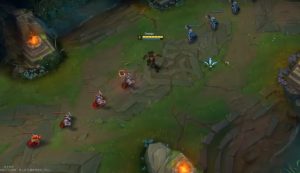
Older lane images (historical wave examples)
Some older guides used wave screenshots to illustrate “red card opening” and “pull/freeze” patterns. The concepts remain useful, even when details shift:

Final thought: Twisted Fate rewards the player who can do the boring things perfectly. If you become consistent with wave states, vision, and disciplined gold cards, TF stops being “anti-fun” and starts being one of the most reliable climb tools in LoL—no matter what season you’re in.


