



Dota 2 Support Fundamentals: High Impact on Low Net Worth
Dota 2 — Support Fundamentals: High Impact on Low Net Worth
Support is one of the most misunderstood roles in Dota 2. Many players think low net worth means low agency, low carry potential, or low influence over results. In reality, support is often the role that decides whether a game feels smooth or impossible for the rest of the team. A good support creates good lanes, protects key resources, stabilizes bad moments, enables aggression, and turns chaotic fights into clean wins. You do not need to be the richest hero on the map to be the most important one.
This guide is built to be as timeless as possible. Instead of focusing on one temporary patch trend, one hero flavor of the month, or one short-lived build, it explains the permanent support principles that stay useful across metas. Specific items, map details, and hero numbers may change over time, but the big ideas behind support impact remain stable: information, positioning, tempo, resource conversion, and decision quality.
If you want to keep up with broad official game changes, the best starting points are the official Dota 2 site and the official update page. For terminology and mechanic references, the Liquipedia Dota 2 glossary is useful. For self-review and trends, many players also use Dotabuff and OpenDota. If your goal is faster ranked progress with expert help, Boosteria also has a Dota 2 boosting pricing page.
Table of Contents
- What Support Really Is
- Why Low Net Worth Can Still Win Games
- The Two Core Support Identities
- Lane Stage Fundamentals
- Trading HP, Mana, and Space
- Pulling, Stacking, and Wave Control
- Vision and Information Control
- Rotations and Timing
- Playing Around Objectives
- Midgame Support Priorities
- Teamfighting on a Budget
- Itemization Principles
- How to Play From Ahead
- How to Play From Behind
- Common Support Mistakes
- Simple Practice Framework
- Hero Selection and Pool Building
- Final Thoughts
What Support Really Is
Support in Dota 2 is not “the poor role.” Support is the role of amplification. Your job is to increase the value of every important thing your team does. When your carry farms, you make that farm safer. When your mid wants a power rune or a rotation window, you make it easier to convert. When your offlaner wants to pressure a tower, you provide the control, vision, or body needed to do it without feeding. When the enemy wants to play the map comfortably, you make them uncomfortable.
The most useful way to understand support is to stop asking, “How do I get farm?” and start asking, “What action gives my team the most value right now?” Sometimes that answer is blocking a gank path with vision. Sometimes it is using a spell to secure range creep pressure in lane. Sometimes it is sitting behind a core and showing patience so an enemy initiation fails. Sometimes it is smoking with one ally instead of five. Support is the art of knowing what matters most now, and doing it before the enemy does.
This is why great support players often look calm rather than flashy. They are not reacting late. They are anticipating. They arrive first to important moments, make the map easier for teammates, and spend limited gold on the exact tools the game demands. Their scoreboard may not always scream “MVP,” but the game often feels unwinnable against them and effortless beside them.
Why Low Net Worth Can Still Win Games
Dota 2 rewards gold, but it does not reward gold alone. Some of the most game-changing contributions cost little or nothing: a smoke move at the right time, a sentry that reveals a defensive ward, a stun held for the true target, a TP response that stops a dive, a body positioned between your core and danger, or a stack that multiplies someone else’s recovery speed. Supports turn small investments into oversized outcomes.
High impact on low net worth comes from leverage. A Force Staff can save a hero worth three times your net worth. A defensive ward can protect an entire farming pattern for minutes. One smoke can create a pickoff that becomes Roshan, tower damage, and map control. One correctly timed silence or save can waste the enemy team’s most important cooldown. Support is full of leverage plays like this.
Another reason low net worth can still dominate games is that supports often dictate the flow of uncertainty. Core players want predictable conditions: safe farm, visible enemies, clear objectives, and protected positioning in fights. The support role creates those conditions. When a team lacks that structure, even farmed heroes play badly because the map feels dark, risky, and disconnected. Good support restores clarity, and clarity wins games.
Think of net worth as one form of power and decision quality as another. Supports rarely win by matching carry gold. They win by creating a better game state than the enemy support duo. That difference may be invisible in one moment, but over ten minutes it becomes towers, rune control, cleaner teamfights, and fewer deaths on your important heroes.
The Two Core Support Identities
Although Dota is flexible, support usually breaks into two broad identities. The first is the stable backline enabler. This support protects lanes, secures vision, saves teammates, and makes the game easier for the team’s win condition. The second is the tempo disruptor. This support leaves lane more aggressively, pressures key areas, forces reactions, and makes the enemy cores feel hunted. Some heroes lean heavily toward one identity, while others can do both depending on draft and game flow.
The mistake many players make is trying to do both identities at all times. If your carry desperately needs lane stability, random roaming may lose the lane outright. If your lane is already fine and your mid is ready to snowball, staying static can waste a powerful timing. Good support begins with identifying which identity the game asks of you right now.
Ask three simple questions:
- Who on my team benefits most from protection right now?
- Who on the enemy team is most vulnerable to disruption right now?
- What is the fastest path from my next action to a meaningful map advantage?
Your answers decide whether you should babysit, rotate, ward aggressively, counter-gank, or simply stand near the right hero and wait. Support is not random helpfulness. It is role clarity applied minute by minute.
Lane Stage Fundamentals
The lane stage is where support players can quietly win the game before the scoreboard shows it. A great lane does not always mean many kills. Often it means one of three outcomes: your core farms comfortably, the enemy core farms poorly, or the lane remains stable enough that your team reaches its first timings without disaster. All three are valuable.
Your first lane responsibility is to understand the matchup. Who has better sustained trading? Who has burst? Which side wants a long lane? Which side needs equilibrium near tower? Which hero is vulnerable if the wave pushes too far? These answers shape your first two minutes more than any automatic habit ever will.
In strong lanes, support should pressure the enemy while preserving your own resources. In weak lanes, support should reduce damage, protect equilibrium, and minimize losses. In volatile kill lanes, small movement details matter: fog usage, aggro manipulation, attack timing, and whether you show or hide before a spell trade. The best supports do not just cast abilities. They control the lane’s emotional pace. They decide whether the lane feels calm, stressful, greedy, or dangerous.
One timeless rule: do not let the lane happen to you. Decide what the lane is supposed to look like. If your carry needs a safe wave near tower, play for that. If the enemy support keeps walking up for free, punish that pattern. If the enemy offlaner is greedy without regen, identify that and convert it into zone pressure. Lane support is proactive, not decorative.
Protecting the First Few Waves
Early waves matter because they set level timing, regen pressure, and lane confidence. Many lanes are “won” not by a kill, but by forcing the enemy to spend more health and mana than they wanted while your core still last-hits cleanly. Denying enemy comfort is often more valuable than chasing a low-probability kill.
Try to think in windows rather than constant aggression. When the enemy steps up for range creep. When your creep advantage is bigger. When your carry has a key spell available. When the enemy used a cooldown carelessly. Those are windows. Use them. Outside those windows, protect your own resources and reset the lane.
TP Discipline During Lane Phase
Many support mistakes begin with bad teleport use. If you TP casually and then a real emergency happens on the other side of the map, you have no answer. If you walk needlessly while your lane collapses, you lose the lane. Be intentional. TP should either save something meaningful, create a concrete advantage, or preserve a timing. Supports with disciplined TP usage feel everywhere because they are not wasting the spell on half-valuable moves.
Trading HP, Mana, and Space
Support players live in the economy of small resources. Gold matters, but health, mana, time, vision, and lane space matter just as much. Great supports constantly ask whether a trade is actually good. Spending half your mana pool to deal some damage may be bad if it removes your threat. Dropping low to force the enemy support low may be good if your carry can now farm without pressure. Walking forward may be valuable even without casting a spell if it denies enemy positioning.
Space is especially important. When your presence prevents the enemy from standing in a comfortable place, you are already doing work. Not every trade has to be damage-based. Sometimes the best lane trade is to make the enemy support choose between helping their core and protecting themselves. That tension opens room for your core to play better.
Mana should be treated as pressure currency. If your hero’s spells define threat, then empty mana means the enemy can take liberties. Keep enough mana to punish greed, disengage from dives, or threaten kills. Running out of mana at the wrong time often makes your lane lose shape instantly.
Health, meanwhile, is both a resource and a signal. A healthy support can posture. A low support invites aggression. Use regen proactively rather than clinging to consumables while the lane slips away. It is often better to stay functionally healthy and threatening than to “save” regen until after you have already lost control.
Pulling, Stacking, and Wave Control
Pulling, stacking, and wave control are among the purest support skills because they create structural advantage rather than coin-flip action. These mechanics help solve lane problems without relying on perfect execution in a fight. They also stay relevant across virtually every patch because the underlying reason never changes: controlling where creeps meet changes who can farm, who is exposed, and who gets to play comfortably.
Pulling is not something you do because supports are “supposed to.” You pull because you want to reset or manipulate equilibrium, deny your own creeps, drag the enemy lane into an awkward shape, or create time windows. Pulling at the wrong time can grief your lane. Pulling at the right time can rescue it.
Stacking is one of the highest-value low-gold plays in Dota. A stack can accelerate a recovering core, create an objective timing, or compensate for a weak early lane. Stacks are powerful because they multiply efficiency for the hero clearing them. One small action from you can create a large net worth swing for someone else.
Wave control is the larger umbrella over both mechanics. Ask what you want the next wave state to be. Safe for your carry? Extended for kill threat? Pulled back so the enemy offlaner cannot freely contest? Faster pushed so you can rotate? Every support action around camps and creeps should serve that broader wave goal.
When Pulling Is Good
- When the lane is pushing too far away from your tower and your carry needs safety.
- When you want to deny enemy experience and gold.
- When your lane cannot fight directly and needs a structural reset.
- When you want to create a short window to ward, refill, or rotate.
When Pulling Is Bad
- When your carry will be exposed 1v2 and can die easily.
- When the lane is already in a good place and you unnecessarily disturb it.
- When the enemy can easily contest and punish you.
- When your team wants immediate lane pressure and you remove creeps at the wrong time.
The goal is not mechanical perfection. The goal is understanding why the mechanic matters. Once you see pulling and stacking as strategic tools instead of chores, your lane decisions become much sharper.
Vision and Information Control
Wards are not magical because they reveal an area. They are magical because they change behavior. Good vision lets your team play faster, greedier, and more confidently. Good dewarding makes the enemy slower, more paranoid, and more likely to split incorrectly. Support players who understand this do not place wards randomly on cooldown. They place them to unlock actions.
The best ward is not always the most clever one. It is the ward that supports the next thing your team actually wants to do. If your carry wants to farm one side of the map, ward that pattern. If your team wants to invade triangle, ward entry routes and expected fight spaces. If you are losing, defensive vision that preserves core farm can be far more valuable than optimistic deep wards that die instantly.
Think of warding in layers:
- Protective vision: keeps your own side playable.
- Transition vision: supports movement between zones.
- Aggressive vision: enables catches, invasions, and objective pressure.
- Punishment vision: reveals the routes the enemy must take when behind or desperate.
Sentries are equally important because information denial can be stronger than information gain. When the enemy loses vision before an objective or smoke, they often make visibly worse decisions. Dewarding is not just economic; it is psychological. It makes your next aggressive action much stronger.
How to Think About Safe Warding
Many support deaths happen because players ward as if the map were neutral. The map is never neutral. Before placing vision, ask who can kill you, who is showing, what objective matters, and whether your team can punish a fight if it starts. If none of those answers feel good, you may need to ward with a teammate, smoke first, or delay the ward. Dead supports often provide vision for the enemy.
Use Vision to Confirm, Not Just Guess
Amateur supports often ward after the enemy already disappeared. Strong supports ward where disappearance is likely to matter next. They use vision to confirm expected movement patterns. This lets their team respond early rather than late. Information is strongest before danger arrives.
Rotations and Timing
Rotating is one of the easiest ways to look useful and one of the easiest ways to throw a game. A bad rotation leaves your original lane exposed, wastes time, and gives the enemy more freedom than you gained elsewhere. A good rotation is efficient, purposeful, and connected to a timing: rune spawn, catapult pressure, level spike, tower dive punish, or an enemy who is overextended without backup.
The key question is simple: what will likely happen if I leave, and what can realistically happen if I arrive? If leaving dooms your carry and arriving only creates a maybe, do not rotate. If leaving is fine and arriving creates a high-probability kill, tower pressure, or rune control, move.
Support rotations become much cleaner when you stop viewing them as “ganks” only. Some rotations are for counter-ganks. Some are for vision. Some are for protecting a power rune. Some are for helping push a wave so your mid can move first. Some are for escorting a hero into a dangerous farming area. Rotation is simply movement with purpose.
Timing matters more than distance. Arriving five seconds early can hide your intent, place vision, and set a trap. Arriving five seconds late often means you only watch your teammate die. Good support players respect the clock in Dota. They think ahead rather than after.
Playing Around Objectives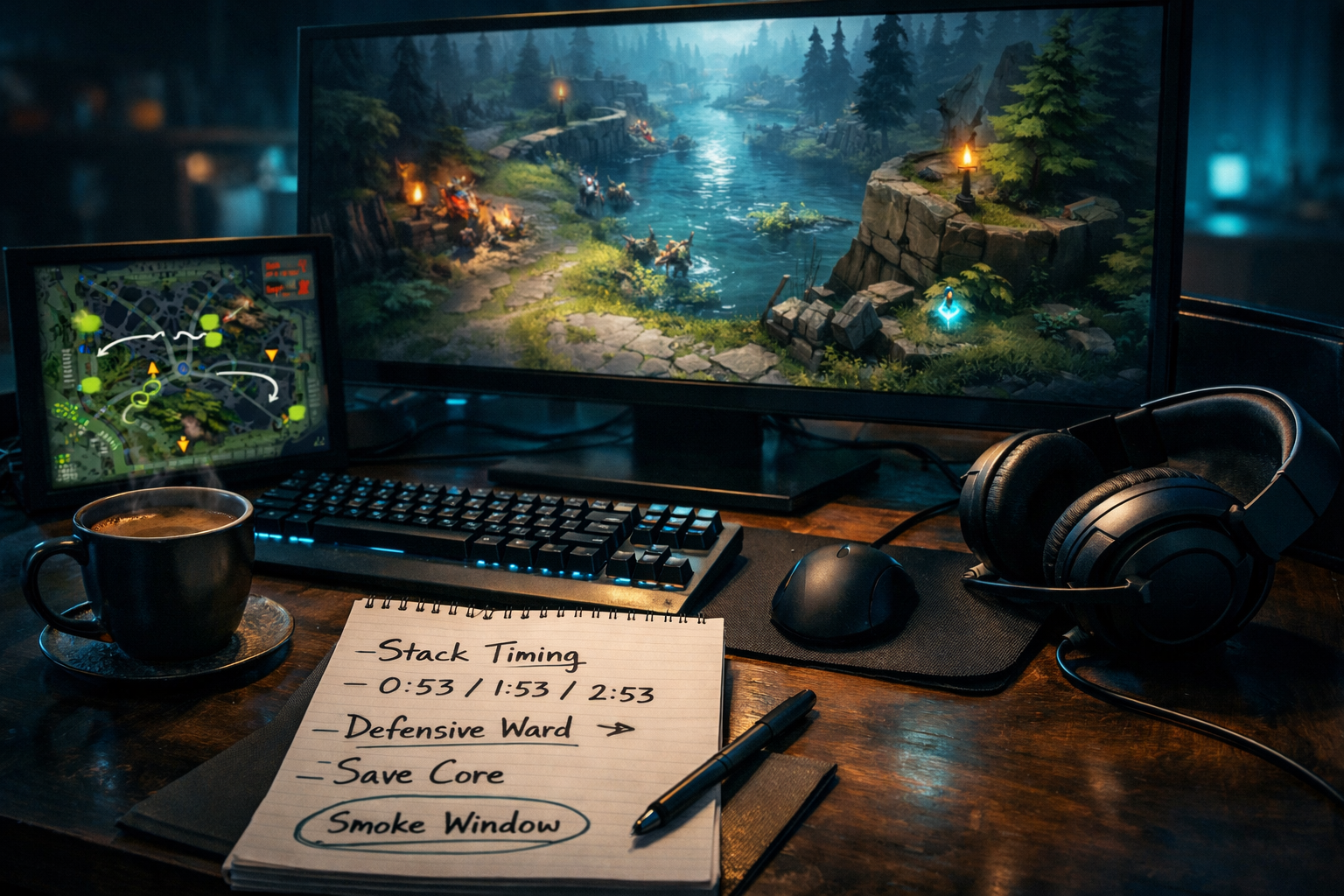
Support becomes much stronger when tied to objectives. Kills are useful only if they convert into something meaningful: tower damage, map control, Roshan pressure, ward access, enemy jungle restriction, or safer farm for your team. The support role is often the bridge between a successful skirmish and a lasting reward.
After any won fight, immediately ask: what objective became easier because of that? Can we place vision? Take a tower? Invade a camp triangle? Secure Roshan vision? Fix lane positions? Too many teams get a good pickoff and then scatter. A good support turns isolated success into map structure.
The reverse is also true. Before a major objective, supports should already be thinking about lanes, vision, positioning, buybacks, and likely enemy approaches. Objectives are where planning outperforms reflexes. The team with better information, better spell discipline, and cleaner staging often wins even with less farm.
In timeless terms, support objective play comes down to three jobs:
- Prepare the area before the fight.
- Control the fight without overcommitting first.
- Convert the result into a meaningful map gain.
Midgame Support Priorities
The midgame is where many support players drift. Lane habits are over, teams start spreading, and the map becomes less scripted. This is the stage where support discipline matters most. If you do not know what to do, return to priorities instead of random movement.
A strong midgame support checklist looks like this:
- Which core matters most right now, and what does that hero need from me?
- Which area of the map are we truly playing, not just visiting?
- What enemy initiation or smoke route is most dangerous?
- What spell or item am I saving for the next real fight?
- What lane state helps our next move?
Supports often lose games in midgame by floating between heroes without commitment. Pick a purpose. Are you shadowing your strongest hero so they can pressure safely? Are you defending your farming core with vision and counter-save? Are you setting a trap around a tower? Are you fixing waves so the enemy has fewer clean options? Your movement should tell a consistent story.
Midgame also punishes greed. A support who tries to farm one more wave in a dangerous lane may delay a crucial smoke, miss a save, or feed away map control. This does not mean supports should never farm. It means farm should fit into the game state, not ignore it. Take gold from safe windows, dead areas only when truly safe, and waves no core can efficiently claim. Farm as a function of team structure, not personal impulse.
Teamfighting on a Budget
Many support players think teamfighting is mainly about landing spells. That is only part of it. Great support teamfighting is mostly about timing, positioning, and target discipline. If you cast too early, you may waste the spell on the wrong hero. If you stand too far forward, you die before using your tools. If you panic-cast everything at once, the enemy’s second wave of engagement wins.
In most fights, support should identify one of four roles before the first spell is used:
- Initiation follow-up: chain control and secure the first target.
- Counter-initiation: wait for the enemy jump, then punish it.
- Save duty: hold your key spell or item for the hero the enemy must kill.
- Zone and protect: make enemy divers uncomfortable and defend space.
You do not need many items to excel at any of these if your positioning is strong. Stand where you can affect the fight without becoming the easiest opening target. Use fog, trees, elevation, and distance intelligently. Low-net-worth supports often win fights precisely because the enemy misjudges them as unimportant until a key disable, save, or utility item changes everything.
Another timeless skill is spell layering. If two supports both throw their defensive cooldowns onto the same non-lethal moment, the enemy can re-engage freely. If disables overlap wastefully, the target may survive after the chain ends. Support players create immense value by sequencing calmly. One spell to force response. Another to punish overcommitment. Another to secure retreat or finish. Budget heroes win fights with clean order.
How to Stay Alive Longer
Support survival is not about cowardice. It is about usefulness. If you are alive, your hero still represents a stun, silence, save, reveal, force movement, or body block. If you die before using those tools, your team effectively played the fight short-handed. Buy utility, yes, but also buy good positions. That means arriving from angles, not the center; being near allies, but not stacked; and keeping escape or save pathways in mind before the fight begins.
Itemization Principles
Support itemization should answer problems, not satisfy habits. The most common low-MMR error is buying the same utility path every game without asking what the enemy lineup actually threatens. The second most common error is greed-buying expensive items while skipping the small survivability or utility piece that would have mattered earlier.
Timeless support item logic is simple: first buy what lets you participate, then what lets you solve problems, then what increases fight control. If you cannot cast because you die instantly, solve survival. If your team loses to catch, buy reposition or save. If your lineup lacks initiation follow-up, buy range or mobility. If invisibility or vision wars matter, invest accordingly. Build around the game, not the item fantasy.
Useful support item categories include:
- Survival: stats, positioning tools, magic resistance, cheap effective durability.
- Save: items that remove allies from danger or reduce enemy conversion.
- Catch: mobility, cast range, or control that helps start and continue kills.
- Aura and utility: tools that improve teamfight texture for everyone.
- Vision and detection: wards, sentries, smoke, dust, and map control consumables.
A support with the right small item at minute 18 is often stronger than a support saving for the wrong big item until minute 28. Effective itemization is about timing and relevance, not vanity net worth.
Do Not Neglect Consumables
Because support impact is leverage-based, consumables remain important much longer than many players think. Vision, detection, smoke, regen, and teleport availability directly affect what your team can attempt. Sometimes the best “item choice” is not another component. It is making sure the team has the information and tools to move first.
How to Play From Ahead
When ahead, support players often throw by becoming careless. They ward too deep alone, start fights without backup, or chase kills while lanes and objectives are ignored. Being ahead does not mean doing anything you want. It means you have more options than the enemy and should choose the safest, most converting ones.
From ahead, your job is to compress the map. Protect your team’s strongest areas, deny enemy recovery zones, and make it dangerous for the losing team to collect farm. Vision should support invasion paths and objective staging. Smokes should target the enemy’s likely farming routes or the heroes needed to defend towers. Fights should happen in places where your team can reinforce faster.
Another important support habit when ahead is not showing unnecessarily. If the enemy cannot see you, they must respect the possibility of a smoke, save, or follow-up control. Visible supports often reduce pressure because the enemy instantly knows which part of the map is temporarily safer.
Most importantly, from ahead you should prioritize game-ending structure over highlight chasing. The goal is not to maximize kills. The goal is to remove the enemy’s ability to play. Supports help achieve this through map clarity, objective discipline, and controlled aggression.
How to Play From Behind
Playing support from behind is difficult because mistakes become more punishing, but the role still has major influence. Your goal shifts from control to repair. You need to restore enough order that your cores can reach their next useful timing without hemorrhaging more map than necessary.
Defensive support does not mean passive support. It means efficient support. Place vision that protects the areas your team can realistically hold. Avoid greedy warding missions that cost another death. Push out the safest possible waves when needed. Play around heroes with strong counter-initiation or wave clear. Buy detection and utility that punish enemy overconfidence.
When behind, look for the enemy’s impatience. Leading teams often get sloppy. They split too much, dive too far, or assume they can force every objective. Supports can punish that by staging behind the correct core, hiding in fog, or baiting around a defensive ward. One successful fight from behind matters more than several small, desperate skirmishes.
The biggest rule when behind is to value information. Blind movement feeds games away. Every ward, scan-like read, wave state, or visible enemy matters. Supports become the navigators of recovery. If you can keep the map understandable for your team, comeback windows appear far more often than players think.
Common Support Mistakes
Support players rarely lose because they “didn’t have enough farm.” More often they lose due to repeated small errors that destroy timing and clarity. Here are some of the most common timeless mistakes:
1. Warding Without a Plan
Random wards feel active but often accomplish little. Every ward should support a current or upcoming action: farming safety, smoke pathing, tower pressure, objective defense, or enemy route prediction.
2. Rotating for Low-Value Fights
Not every skirmish deserves your time. If a move has low probability, poor conversion, or leaves something important exposed, it may not be worth it.
3. Leaving Lane Too Early or Too Late
Some supports abandon a fragile lane because they are bored. Others never rotate despite obvious opportunities. Know what your lane still needs from you.
4. Casting Spells on the Wrong Target
The first hero you see is not always the most important hero to control. Ask who actually matters in the fight.
5. Dying for Vision Alone
Information matters, but feeding while placing it is often a net loss. Ward with context, not hope.
6. Building Habit Items Instead of Needed Items
Support itemization should reflect enemy threats, ally needs, and fight patterns. Autopilot builds reduce your real impact.
7. Farming at the Wrong Time
Support farm is good when it is efficient, safe, and does not remove your team’s ability to fight or defend. It is bad when it delays crucial map presence.
8. Showing on the Map for No Reason
Visibility tells the enemy a lot. Sometimes the best pressure is uncertainty.
9. Forgetting Wave States
Supports who ignore lane pressure often force their own team into awkward choices. Waves are strategy, not background noise.
10. Playing Every Game the Same Way
Dota punishes rigidity. Some games need a bodyguard. Some need a hunter. Some need defensive vision. Some need a smoke captain. Adaptation is a core support skill.
Simple Practice Framework
If you want to improve support consistently, do not try to fix everything at once. Pick a narrow framework and review it honestly over a block of matches. A simple five-point self-review works well:
- Laning: Did I help my lane become easier or harder for my core?
- Vision: Did my wards unlock actions, or were they random?
- Deaths: Which of my deaths were necessary, and which were avoidable?
- Fight value: Did I use my key spells and items on the right targets?
- Timing: Was I present at the important moments early enough?
You can review these ideas with your own match history on resources like Dotabuff or OpenDota. The point is not to obsess over one statistic. The point is to spot patterns. Are you dying first too often? Are your observer wards placed in the same obvious spots every game? Are you spending too much time walking without purpose? Support improvement accelerates when feedback becomes specific.
A strong improvement cycle looks like this: choose one support hero or two, play a focused set of games, review only one or two mistakes categories, then repeat. This creates real habits faster than constantly changing heroes, roles, and goals.
Hero Selection and Pool Building
You do not need a giant hero pool to become a strong support player. In fact, smaller pools often improve faster because they free mental space for map decisions. Choose a compact support pool that covers a few timeless needs:
- A stable lane support with reliable disable or save.
- A playmaking support that can rotate and start action.
- A defensive support that scales through utility and positioning.
When picking support heroes, prioritize clarity over trend-chasing. Ask:
- Can this hero function on low net worth?
- Does this hero contribute even when behind?
- Can this hero lane well into common situations?
- Does this hero offer either control, save, vision value, or objective utility?
Timeless support picks usually share one trait: they matter without needing expensive items. That is the heart of this guide. If a support hero still creates impact when poor, that hero teaches good role habits. If a support hero only feels useful when rich, be careful not to let it distort your understanding of the position.
Support Mindset: The Invisible Carry
One of the healthiest mental models for support is to think of yourself as the invisible carry of game structure. You are not always carrying damage. You are carrying order. You carry lane shape, information flow, reinforcement timing, initiation follow-up, save discipline, and objective preparation. When supports do these jobs well, their cores look smarter, stronger, and luckier than they really are. That is not coincidence. That is enablement.
This mindset also helps avoid frustration. If you judge your games only by kills, net worth, or flashy moments, support will feel thankless. If you judge by how many good situations you create for your team, the role becomes deeply satisfying. Great supports influence outcomes before the fight starts and after the fight ends, not just during the fight itself.
Communication also matters here. Simple, clear, non-emotional information helps far more than lectures. “Ward here and play this side.” “Their jump is missing.” “Wait for me to save.” “Push one more wave then smoke.” Support players often act as the team’s stabilizer. Calm, useful calls outperform blame almost every time.
Final Thoughts
Dota 2 support is one of the highest-impact roles in the game precisely because it teaches you to value what truly wins matches: structure, timing, information, positioning, and conversion. Gold remains important, but support proves that smart decisions can amplify every point of gold your team already has. You do not need to top net worth charts to control a match. You need to make the game easier for your team and harder for the enemy.
If you remember only one idea from this guide, let it be this: support is the role of leverage. A small item, a small ward, a short rotation, a single saved cooldown, a single stack, or one patient position can decide far more than its cost suggests. That is why support fundamentals age well. Even as heroes, numbers, and patch details evolve, leverage remains leverage.
Play your lanes with intention. Trade resources with purpose. Control waves and camps for a reason. Ward for actions, not decoration. Rotate on timings, not boredom. Build for problems, not habit. Teamfight with patience, not panic. Recover with information. Press leads with discipline. Do these things consistently, and you will have high impact on low net worth in any era of Dota 2.