



Dota 2 Team Synergy Guide 2026: Strong Hero Combinations
Dota 2 Team Synergy Guide 2026: Building Strong Hero Combinations
Dota 2 is often discussed in terms of individual mechanics, farming patterns, laning efficiency, and late-game decision-making. All of those things matter. But many ranked games are actually decided much earlier, at the point where a lineup either makes sense together or quietly fights against itself. That is where team synergy becomes one of the most important and underrated parts of consistent climbing. A well-built draft makes average decisions easier, turns good spell usage into great teamfights, and gives every player a clearer job. A disconnected draft does the opposite: it forces perfect execution just to stay even.
This guide breaks down how Dota 2 team synergy really works, how to recognize strong hero combinations, how to draft around a win condition, how to avoid anti-synergy, and how to build lineups that stay effective across patches. The goal is not to chase a short-lived meta list. The goal is to understand the durable rules behind strong combinations so you can recognize them in any patch, any MMR bracket, and any draft environment.
If you want to improve draft understanding, teamfight structure, lane pairings, and overall lineup quality, this guide will give you a timeless framework you can use in solo queue, party queue, captain’s mode, and organized play. For official game information and hero pages, it is always useful to check Dota 2’s official hero page. For match data and broad trends, resources like Dotabuff, STRATZ, and Liquipedia can help you study how different heroes and lineups are being used in real games.
What Team Synergy Means in Dota 2
Team synergy in Dota 2 is the degree to which heroes make each other stronger through spell interaction, timing overlap, lane support, map movement, item scaling, and shared win conditions. It is not just about having one flashy combo. It is about whether the entire lineup pushes toward the same kind of game.
A lineup with strong synergy usually has clear answers to a few basic questions. Who starts fights? Who follows up? Who protects the damage dealer? Who hits towers? Who controls vision areas? Who threatens Roshan? Who farms dangerous lanes? Who buys time when the first move fails? When these jobs are distributed naturally, the draft feels smooth. When they are missing or confused, the game becomes awkward.
For example, a lineup with reliable initiation, layered crowd control, safe backline damage, and one defensive save already has the skeleton of a strong teamfight draft. A lineup with five greedy heroes, no tower pressure, weak catch, and no answer to early tempo might still scale hard on paper, but in practice it often collapses before that scaling matters.
Strong hero combinations come in many forms. Some are direct spell pairings, like a setup spell into a guaranteed AoE ultimate. Some are strategic pairings, like a frontliner enabling fragile damage dealers. Some are macro pairings, like a global hero supporting a split-push core. The strongest drafts usually combine all three levels: spell synergy, role synergy, and map synergy.
Why Team Synergy Wins More Games
Good synergy wins because it reduces the number of difficult decisions your team needs to make under pressure. If your heroes naturally want to play the same area of the map, take the same objectives, and fight on the same timings, coordination becomes easier even without perfect communication. You do not need everyone to invent a plan in the moment. The draft already suggests the plan.
This matters enormously in ranked play. Most teams lose structure as soon as the laning stage ends. One core wants to farm triangle, another wants to smoke, a support wants to defend a dead tower, and someone else is already hitting a jungle camp on the opposite side. A synergy draft reduces that chaos because its strengths are obvious. Push lineups group around item peaks. Pickoff lineups play around vision and fog. Big wombo-combo drafts defend high ground and force fights in choke points. Save-heavy drafts bait and counter-initiate.
Another reason synergy matters is that Dota 2 is a resource-conversion game. A kill does not matter if it cannot become map control, vision, Roshan, or buildings. Strong hero combinations convert better because their kits overlap in useful ways. One hero catches, one hero provides burst, one hero tanks the response, one hero hits objectives, and one hero keeps the team healthy enough to stay on the map. That is how a single successful move becomes a winning sequence instead of a temporary highlight.
Synergy also increases consistency across skill levels. Mechanically gifted players can sometimes carry weak drafts through pure execution, but strong synergy raises the floor for everyone. It gives average mechanics a better platform. That is why learning lineup logic is such a valuable long-term skill for climbing.
The Core Pillars of Strong Hero Combinations
When evaluating whether heroes work well together, focus on five pillars: control, damage structure, protection, objective play, and timing.
1. Control
Control means how reliably your lineup can start fights, hold targets in place, interrupt key spells, and punish positioning mistakes. This includes stuns, roots, slows, silences, repositioning tools, and area denial. Great synergy often starts with easy control chains. One hero provides the first catch, another extends it, and a third makes escape impossible.
2. Damage Structure
Your lineup’s damage needs to be practical, not just theoretical. Burst damage helps pickoffs and punish saves. Sustained damage helps kill frontliners, Roshan, and buildings. AoE damage wins clustered fights. Single-target damage deletes priority heroes. Strong combinations usually mix at least two damage patterns so they do not become too easy to counter.
3. Protection
Many drafts look strong until they are forced to protect a fragile core. Defensive synergy is what keeps your damage source alive long enough to matter. Saves, heals, repositioning, defensive buffs, counter-initiation, and aura coverage all belong here. Protection is especially important in modern Dota because almost every lineup needs a stable way to survive the first jump.
4. Objective Play
Winning fights is only part of Dota 2. Strong synergy also helps with towers, Roshan, map control, and lane pressure. Some lineups kill heroes well but stall around objectives because they lack summons, building damage, sustain, or safe siege tools. A good draft can convert fight wins into real structural advantage.
5. Timing
Heroes do not just need to work together in a vacuum. They need to be strong at roughly the same phases of the game. If two heroes peak early and two others need twenty extra minutes, your lineup may never fully come online. Timing synergy means your first major power spike arrives with enough heroes ready to fight, push, or take control.
| Pillar | Main Question | What Good Synergy Looks Like |
|---|---|---|
| Control | Can we start and hold fights? | Reliable initiation, layered disables, anti-escape tools |
| Damage | Can we actually finish targets? | Burst plus follow-up, AoE plus single-target balance |
| Protection | Can our damage dealers survive? | Saves, heals, frontliners, counter-initiation |
| Objectives | Can we turn wins into map control? | Tower pressure, Roshan speed, lane shove, siege tools |
| Timing | Do our heroes spike together? | Shared item peaks, synchronized fight windows |
Draft From the Win Condition Backward
One of the best drafting habits is to stop thinking in terms of “good heroes” and start thinking in terms of “winning games in a specific way.” That is the essence of drafting from the win condition backward.
Before you ask which hero to add next, ask what your lineup wants to accomplish. Do you want to run over lanes and snowball towers? Do you want to survive the early game and dominate long fights later? Do you want to hunt isolated targets with superior vision? Do you want to force Roshan and dare the enemy to walk into your area control? Once that answer is clear, the right hero combinations become easier to spot.
A simple way to think about it is this:
- Choose the lineup’s primary way to win.
- Add the heroes that make that win condition easier to reach.
- Patch the weaknesses that would stop it from working.
For example, if your main idea is teamfight domination, then you need more than one big ultimate. You need initiation to force the fight, vision or map pressure to bring enemies into your area, enough damage to capitalize on the control, and some way to take an objective afterward. If your idea is split pressure, then you need wave clear, map mobility, defensive heroes who can stall 4v5, and enough catch to punish overcommits.
The biggest drafting trap is selecting individually strong heroes that each want a different game. One hero wants to five-man early, another wants to recover farm for fifteen minutes, another wants long cooldown fights only, and another wants constant skirmishes. Even if those heroes are powerful on their own, they may create no shared direction.
Lane Synergy: Building Stable Early Games
Team synergy begins in the lanes. If your side lanes function well, the whole draft becomes easier to execute later. If the lanes are unstable, your lineup may never hit its intended timing.
Strong lane synergy usually comes from one of four structures:
Kill Lane
A kill lane pairs control with burst or sustain damage. The goal is to threaten repeated kills, deny farm, and force defensive reactions. These lanes work best when both heroes can punish the same positioning errors. A stun into a high-damage nuke, or a slow into a long chase, are classic examples.
Pressure + Farm Protection
Some lanes are built not to dominate kills, but to make farming safe while still threatening punishment. The support zones, trades, and resets the lane while the core farms comfortably. This type of lane is common when a carry needs a solid first ten minutes but can contribute hard later if not disrupted.
Sustain Lane
Sustain-heavy lanes win through attrition. They absorb harassment, maintain resources, and slowly force the enemy out of favorable trades. They may not look explosive, but they often generate level advantage and stable net worth while reducing the enemy lane’s tempo.
Wave Control Lane
Some pairings excel because they manipulate the creep wave better than the opponent. They secure pulls, threaten under-tower dives, or keep the lane in a hard-to-play position for the enemy. Wave control is a subtle but central form of synergy because it shapes everything else: rune access, support rotations, and tower pressure.
When judging lane synergy, ask these questions:
- Can the lane secure ranged creeps reliably?
- Can it punish overextension?
- Can it survive rotations?
- Can it recover if the first few waves go poorly?
- Does success in lane connect to the lineup’s midgame plan?
That last question matters most. Winning a lane is nice, but the lane should also feed the broader draft. A lane that creates tower pressure is especially valuable in lineups that want early map control. A defensive lane is valuable in drafts that scale harder. Synergy is strongest when the lane phase supports the lineup’s intended rhythm.
The Main Types of Dota 2 Hero Synergy
There are many hero combinations in Dota 2, but most of them fit into a few repeatable categories. Learning these categories helps you recognize synergy even when you are dealing with unfamiliar matchups or changing hero balance.
1. Setup Into Area Damage
This is one of the most famous forms of synergy. One hero groups or immobilizes enemies, and another hero lands devastating AoE damage or control. The setup does not need to be flashy. Reliable setup is better than ambitious setup that rarely lands. This kind of pairing is powerful because it compresses execution: once the first spell lands, the rest becomes simple.
2. Frontliner + Backline Damage
Many drafts work because one hero safely occupies space while another hero deals damage from behind. The frontliner absorbs initiation, reveals enemy positioning, and forces attention. The backline core then plays with freedom. This structure is extremely stable because it makes target priority hard for the enemy.
3. Save Support + Greedy Core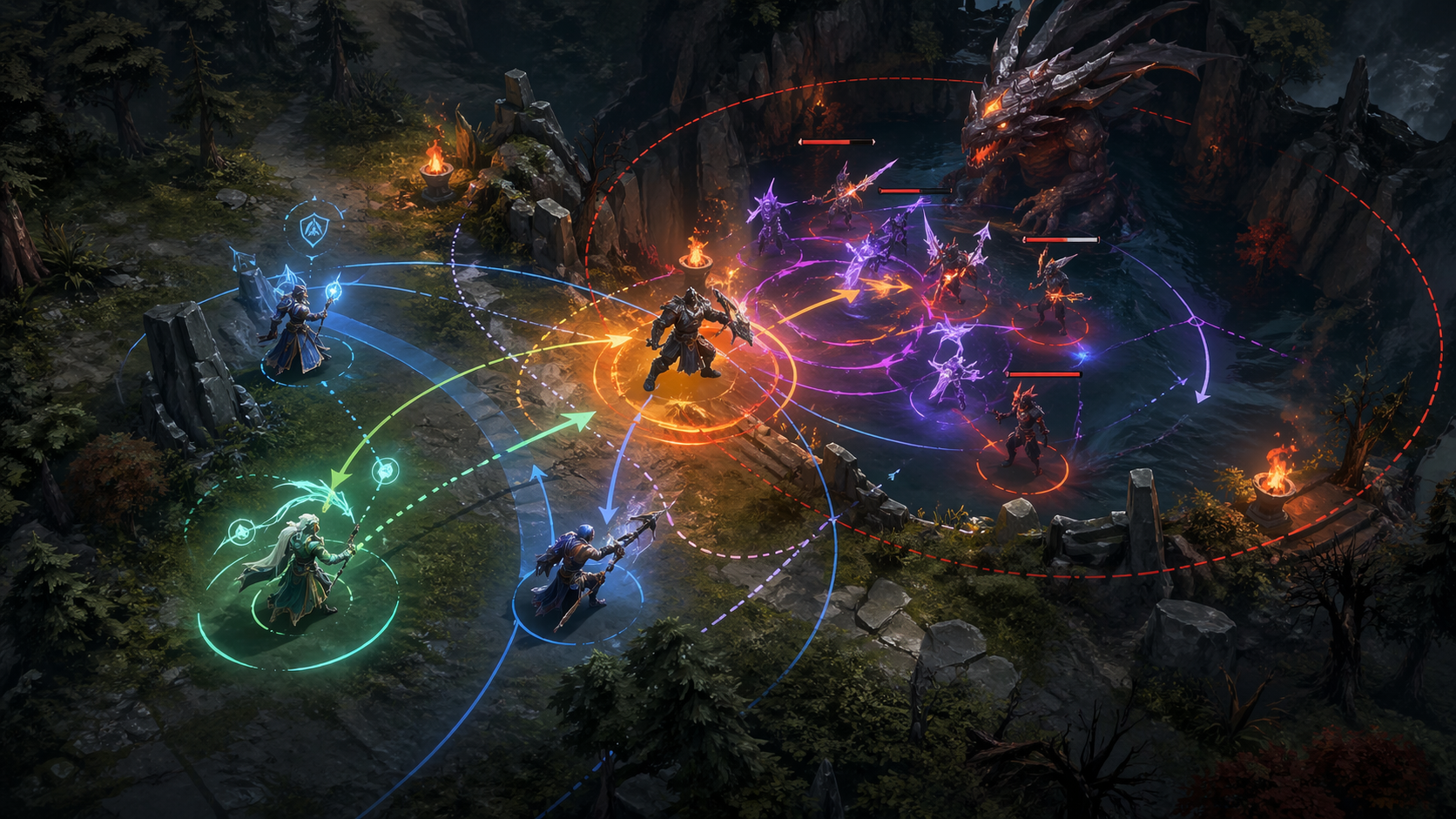
Some carries and mids are strongest when they can commit aggressively without dying to the first counterplay. Defensive supports amplify these heroes by giving them one extra life, one extra spell cycle, or just enough time to turn the fight. This is one of the most practical synergy structures in ranked games because it increases margin for error.
4. Pickoff + Vision Control
Catch is much stronger when combined with vision dominance. Heroes that jump or isolate targets become far more dangerous when paired with supports or offlaners who establish deep wards, summon units, or control key pathways. This combination creates map fear, and map fear wins games by shrinking enemy farm space.
5. Push + Sustain
Pushing lineups need more than building damage. They need ways to keep wave pressure alive and avoid losing momentum after minor damage taken. Sustain heroes, aura heroes, and summon-based heroes often combine well because they let a team stay grouped longer and keep pressure up after skirmishes.
6. Teamfight Reset Synergy
Some lineups are built not just to start fights, but to survive the first exchange and then re-engage. They use saves, heals, kiting, cooldown management, and tanky positioning to drag fights out. This kind of synergy is strong against burst-heavy enemies because it turns their initial commitment into a bad trade.
7. Global and Semi-Global Synergy
Global heroes or heroes with strong map mobility can support aggressive side-lane cores, punish dives, and create number advantages unexpectedly. This kind of synergy changes how the whole map is played. It gives one hero permission to push farther because the team can arrive quickly.
8. Objective Control Synergy
Some lineups are built around control of pits, ramps, towers, or jungle entrances. Their hero combinations may not seem overwhelming in open field fights, but they are devastating when the enemy walks into a prepared area. This is especially relevant for Roshan control and high-ground defense.
Classic Hero Combination Examples That Teach Draft Logic
The goal here is not to provide a temporary tier list. It is to show examples that illustrate why certain hero pairings stay useful across many versions of Dota 2.
Magnus + Melee Carry
This is one of the cleanest examples of amplification synergy. Magnus offers repositioning, initiation threat, and a powerful farming and fighting steroid for melee cores. The exact carry can change, but the logic stays the same: one hero improves another hero’s speed, scaling, and teamfight access. This is synergy through empowerment, not just combo damage.
Dark Seer + Area Follow-Up
Dark Seer’s ability to manipulate enemy positioning has made him a classic combo enabler for years. Heroes that punish grouped targets become dramatically stronger when paired with reliable clumping. The lesson is simple: movement manipulation multiplies AoE threat.
Faceless Void + High-Value Spell Follow-Up
Chronosphere is an obvious example of setup into concentrated damage. But what makes the pairing so strong is not only that enemies are trapped. It is that your team gains guaranteed casting conditions. Long-cast-time, position-sensitive, or fragile damage sources all become easier to use. This teaches an important principle: the best synergy often removes execution difficulty.
Mars + Phoenix
This pairing is famous because their zones overlap so naturally. One hero creates an arena that limits movement; the other forces the enemy to choose between bad options inside that controlled space. The deeper lesson is that some heroes do not just combo with spells, they combo with terrain and decision pressure.
Oracle or Dazzle + Committing Core
These defensive supports shine when paired with cores that want to play near the edge of danger. The support does not need to carry the fight; it simply needs to extend the core’s uptime long enough for the core to win the exchange. This teaches that save synergy is often more valuable than extra damage.
Clockwerk + Long-Range Magical Burst
Clockwerk isolates targets and creates confined fights. Pair him with heroes who love stationary targets and the pickoff becomes much cleaner. The lesson here is that catch plus accessible damage is one of the most reliable ways to farm the map and build momentum.
Beastmaster + Tower Pressure Core
Beastmaster contributes vision, lockdown, summons, and objective acceleration. Pair him with heroes that hit buildings well or heroes that fight strongly around vision control, and you create a lineup that converts small wins into towers. This shows how objective synergy often matters more than highlight combos.
Io + Durable or Scaling Core
Io is a classic partner hero because he offers sustain, mobility, and damage amplification patterns depending on the patch and the paired core. The broader lesson is that some heroes are designed not to be individually dominant, but to make one teammate much harder to deal with.
Underlord + Map-Mobility Partners
Heroes that move teams around the map change the value of every other hero in the draft. An Underlord lineup can pressure one lane and appear elsewhere, protect split-pushers, or turn disengage into regroup. This teaches macro synergy: not all combinations are decided inside one fight.
Grimstroke + Strong Single-Target Spellcasters
When one hero doubles the value of another hero’s single-target impact, the synergy becomes obvious. This is a great example of spell-rule synergy: one kit changes the ceiling of another kit by changing how its target structure works.
Notice what all of these examples have in common. They are not random hero friendships. They are based on repeatable logic:
- One hero enables another hero’s strengths.
- One hero covers another hero’s weakness.
- Together they create an easier or faster win condition.
How to Build a Balanced Lineup
Strong combinations are useful, but your full lineup still needs balance. The best drafting habit is to view each hero as serving both a role and a strategic function. A balanced lineup does not mean equal amounts of everything. It means the essentials are covered well enough that your main plan can operate.
In most games, a balanced Dota 2 lineup wants these elements:
- At least one reliable form of initiation or catch
- At least one durable hero or frontliner
- At least one sustained damage source for long fights and objectives
- At least one way to threaten towers or Roshan
- At least one defensive or reset tool if your draft is vulnerable to jump
- Enough wave clear to avoid map collapse
You do not need each job on a separate hero, and some heroes cover multiple jobs at once. The key is that the lineup as a whole must have access to these tools. Problems start when too many functions are missing at the same time.
For example, a draft with incredible teamfight ultimates can still be weak if it lacks catch outside those cooldowns. A draft with excellent pickoff may still fail if it cannot push lanes safely or threaten Roshan. A lineup with huge damage may still underperform if there is no hero willing to stand in front and reveal enemy positioning.
One useful way to self-check balance during a draft is to ask:
- How do we start fights?
- How do we protect our best damage source?
- How do we take towers?
- How do we force or contest Roshan?
- How do we recover if we fall behind?
If you cannot answer two or three of those questions clearly, the lineup is probably too narrow.
How to Spot Anti-Synergy Before the Game Starts
Understanding anti-synergy is just as important as recognizing strong combinations. Anti-synergy happens when heroes want different game tempos, compete for the same farm, overlap their weaknesses, or make each other harder to play.
Multiple Greedy Cores With No Space-Creator
This is one of the most common drafting errors in ranked games. Two or three cores all want protected farm patterns, but nobody wants to start fights, absorb pressure, or play the dangerous areas of the map. The result is a passive lineup that gives up map control until it is too late.
Too Much Cooldown Dependence
If your draft needs multiple long cooldown ultimates just to win one fight, it can become easy to predict and exploit. Cooldown-dependent lineups need compensation through lane dominance, tower pressure, or strong non-ultimate skirmishing.
No Damage Follow-Up
Some lineups draft plenty of control but never actually kill priority targets. They look annoying, but not lethal. Reliable disable only matters if someone can capitalize before the enemy resets.
No One Wants to Hit Buildings
Many pub drafts lose not because they cannot fight, but because they cannot end. Without tower pressure, every kill has to be repeated over and over. That gives the enemy more chances to recover.
Overlapping Positioning Needs
If too many heroes need the same safe area to operate, fights become cramped and awkward. For example, two fragile backliners with no frontliner may constantly expose each other. Good synergy often comes from varied positioning responsibilities.
Conflicting Tempo
When one part of the lineup peaks early and another part needs a long delay, the team is forced into impossible choices. Either it fights weak or farms while its strongest hero timing is wasted. Timing conflict is one of the cleanest signs of bad synergy.
A quick anti-synergy checklist:
- Do too many heroes need priority farm?
- Are we missing tower damage?
- Do we have enough catch without long cooldowns?
- Can we play from behind?
- Do our heroes want the same map areas and same timing windows?
Itemization and Timing Synergy
Hero synergy does not stop at the draft. Items often decide whether a lineup’s intended interactions become real. A draft may have strong theoretical combinations, but if its item timings are scattered or poorly chosen, the synergy never materializes when it matters.
Think of item synergy in three levels:
Team Initiation Timing
Some lineups become dangerous the moment a single blink, mobility item, or lockdown upgrade arrives. If the rest of the team understands this timing and groups properly, the first initiation item can unlock the whole draft.
Survivability Timing
Sometimes the most important synergy item is the one that lets your core survive long enough to exploit the draft. Defensive items, dispels, aura items, and save-enabling purchases often have more strategic value than one more damage item.
Objective Timing
Roshan-oriented lineups, summon lineups, and push lineups often hinge on one or two key item thresholds. Hitting those items together allows the team to force space and convert pressure before the enemy lineup reaches comfort.
Good item synergy means players understand the lineup’s purpose. If your team is built around one timing, random greedy purchases can delay the moment when the lineup is strongest. If your draft is meant to scale, forced early fighting items can weaken its late-game identity. Item choices should help the draft become itself.
How to Play a Synergy Draft in the Mid Game
Even a strong draft can look weak if it is played incorrectly. Once the lanes end, the team needs to play around its structural advantages.
Play Around the Right Area
Pickoff lineups should not take wide, front-to-back fights in open space unless necessary. Teamfight lineups should not scatter into isolated skirmishes with no follow-up nearby. Push lineups should not waste time hunting low-value kills while lanes remain unshoved. Your draft should influence where you want the game to happen.
Fight on Timing, Not Emotion
A common ranked mistake is forcing fights because they look available, not because the lineup is ready. Strong synergy drafts become much stronger when they wait for the right cooldowns, the right item, or the right ward position. Discipline is part of synergy.
Chain Objectives
When your lineup wins a fight, ask what it is best at converting. Towers, deep vision, enemy triangle invasion, Roshan, or lane pressure are not equal in every draft. Push-oriented lineups should push. Roshan lineups should threaten the pit. Pickoff lineups should claim vision and shrink map access.
Protect the Structure of the Fight
Many teams lose despite better heroes because they break their own structure. The frontliner goes too deep without backline reach. The save hero shows first and gets jumped. The damage core reveals before initiation. If your draft relies on sequence, protect that sequence.
Respect the Enemy’s Counter-Synergy
No lineup exists in isolation. The enemy may have stronger disengage, better reset, more durable frontline, or better anti-combo tools. Playing your synergy draft well includes understanding how it gets disrupted. Sometimes that means forcing BKB timings, baiting out saves, or fighting around vision so the combo lands cleanly.
Using Team Synergy in Solo Queue
Many players assume team synergy matters less in solo queue because coordination is unreliable. In reality, it matters more. Since communication is weaker, your heroes need to cooperate naturally.
In solo queue, prioritize synergy that is easy to execute:
- Reliable setup into obvious follow-up
- Simple defensive saves
- Frontliner plus ranged damage structures
- Heroes that play the same area of the map without needing constant calls
- Lineups with clear objective conversion after kills
Also remember that solo queue synergy is partly social. If you pick heroes that make your teammates’ games easier, your average match quality improves. A support that stabilizes lanes, a mid that rotates on clear timings, or an offlaner that starts fights cleanly can create draft value beyond pure individual strength.
If you are last-picking in solo queue, one of the smartest habits is to fill structural gaps instead of only counterpicking lanes. If your team has damage but no initiation, pick initiation. If your team has great teamfight but no tower pressure, choose a hero that converts wins. If your cores are greedy, consider a support or offlaner that buys time and occupies space. Solving the draft’s biggest structural problem often wins more games than picking a slightly better lane matchup.
Players who want to climb faster while improving game understanding often benefit from studying how strong lineups are built and executed. If you are interested in progressing more efficiently, you can also review Boosteria’s Dota 2 boosting prices as part of a broader improvement plan alongside replay analysis and draft study.
Practice Routine for Better Draft Understanding
Draft skill improves fastest when you study lineups actively instead of passively. Here is a simple routine you can repeat.
Step 1: Review Your Last 10 Games
For each game, write down your lineup’s win condition in one sentence. Then write down the enemy lineup’s win condition. If you struggle to do this, that is already valuable information. It means your draft reading can improve.
Step 2: Identify the Structural Winner
Before looking at result or net worth, ask which lineup had the easier game plan. Which side had cleaner initiation, easier Roshan, more reliable tower damage, or better protection for its carry? This trains your eye for synergy beyond outcome bias.
Step 3: Study One Hero Through Partnerships
Pick a hero you play often and list its best partners. Do not just list famous combos. Ask why those partners work. Is it about lane pressure, save potential, fight setup, or timing overlap? This helps you internalize synergy logic at the hero level.
Step 4: Watch Drafts With Intention
When watching pro or high-level pub games, do not just admire execution. Pause after each pick and predict the draft’s direction. Ask what problem the next hero needs to solve. This is one of the best ways to sharpen drafting instinct.
Step 5: Make a Personal Synergy Sheet
Create a small note with categories like initiation partners, save partners, lane partners, push partners, and Roshan partners for your hero pool. Over time, this becomes a practical drafting guide tailored to your games.
Common Team Synergy Mistakes
Picking for Highlight Reels Instead of Consistency
Huge combo clips are memorable, but many games are won through simple, repeatable synergy rather than spectacular one-time interactions. Do not overvalue low-frequency wombo potential if the rest of the lineup becomes unstable.
Ignoring Objective Conversion
If your draft can kill but cannot take towers or Roshan, you are forcing yourself to win the same fight too many times. Objective conversion is one of the most important forms of synergy in real games.
Underestimating Saves
Players often value damage over protection in the draft. In practice, one good save can be worth more than another nuke because it preserves your core’s farm, positioning, and fight presence.
Confusing “Good Hero” With “Good Fit”
A hero can be strong overall and still be wrong for a specific draft. Fit matters. Drafting is contextual.
Overloading One Type of Utility
Too many slows but no hard catch. Too much magical burst but no sustained damage. Too many teamfight ultimates but no skirmish tools. Balanced utility wins more often than overloaded utility.
Failing to Respect Sequence
Some lineups need a clean order of actions: vision first, initiation second, save third, objective fourth. If everyone acts independently, the synergy draft never reaches its natural strength.
FAQ
What is the most important kind of team synergy in Dota 2?
The most important synergy is usually the one that matches your lineup’s win condition. In many games, that means reliable initiation plus follow-up and some way to convert the fight into an objective. In others, it means save plus scaling core, or pressure plus sustain.
Are flashy spell combos better than simple lineups?
Not necessarily. Simple, repeatable combinations often perform better in ranked games because they require less perfect timing and less communication. Easy execution is a form of power.
How many heroes in a draft need to work together for good synergy?
Ideally all five contribute to the same game plan, but even two-hero and three-hero structures can define a draft. The key is that the remaining heroes should support that structure instead of disrupting it.
What if my team already drafted badly?
Then draft to solve the biggest problem. Add initiation, tower damage, wave clear, save, or tempo depending on what is missing. Repairing structure is more valuable than drafting for comfort alone.
Does team synergy matter more in party queue or solo queue?
It matters in both, but for different reasons. In party queue it enables deeper coordination. In solo queue it reduces the amount of communication needed because the lineup naturally wants to play together.
Conclusion
Dota 2 team synergy is not a bonus feature added on top of mechanics. It is one of the foundations of winning consistently. Strong hero combinations make lanes easier, make teamfights cleaner, make objectives more accessible, and give your team a shared direction. Weak synergy does the opposite: it creates confusion, forces overperformance, and wastes advantages that looked good on paper.
If you want to draft better, stop asking only whether a hero is strong. Ask what the lineup is trying to do, what tools it still needs, and whether the heroes make each other easier to play. Look for control plus follow-up, frontline plus backline, save plus commitment, pressure plus sustain, and timing overlap across the whole draft. Learn to value objective conversion as much as kill potential. Learn to recognize anti-synergy before the horn even sounds.
The best part is that this knowledge stays useful even when heroes are buffed, nerfed, or shifted across roles. Patch numbers change. Draft logic lasts. If you build around durable principles instead of temporary lists, your understanding of Dota 2 becomes much stronger and much more transferable.
That is what makes team synergy such a powerful long-term skill. It improves your drafting, your replay review, your communication, your itemization, and your decision-making once the lanes are over. And when you understand why hero combinations work, you stop seeing drafts as random collections of characters. You start seeing them as systems built to win in specific, repeatable ways.
Master that perspective, and you will not only draft stronger teams. You will understand the game at a higher level.