



DPS & Burst damage in League
DPS vs Burst Damage in LoL – Complete 2025 Guide
In many team-based games the amount of damage you are capable of dealing is a very important factor that often decides who wins. In LoL (League), damage isn’t the only thing that matters – vision, macro, crowd control and objectives all play a huge role – but knowing how DPS and burst work is one of the biggest skill boosts you can give yourself.
This updated 2025 guide breaks down the difference between DPS and burst, how to itemize, position and choose targets, and how high-elo players (and professional boosters) think about damage profiles in drafts. At the end you’ll also find a legacy section that keeps the old calculations and item combinations for players who are curious about previous metas.
What Do DPS and Burst Mean in LoL?
DPS stands for Damage Per Second. It describes how much damage a champion can deal over time while they are allowed to continuously hit their target. Champions that rely on DPS want long fights where they can keep attacking without being forced to back off.
Burst damage is the opposite. Burst is about dealing a huge amount of damage in a very short time window, then waiting for cooldowns. Burst champions try to delete a target in one rotation of abilities before they can react or get peeled.
In simple terms:
- DPS = consistent damage over time.
- Burst = fast “damage spike” in 0.5–3 seconds.
Most champions lean heavily toward one of these styles, but some are hybrids and can do both depending on build and game state.
Damage Types and Resistances in 2025 LoL
To really understand DPS and burst, you must understand how damage is reduced in modern LoL. The game still uses three main damage types:
- Physical damage – reduced by armor.
- Magic damage – reduced by magic resist.
- True damage – ignores both armor and magic resist.
Armor and magic resist both use similar formulas that produce diminishing returns – the first 50 armor is a bigger deal than going from 250 to 300 armor. If you are interested in exact formulas and numbers, you can check detailed breakdowns on high-quality resources like League of Legends wikis and item guides.
Practical takeaway:
- If enemies are stacking armor, building armor penetration or lethality dramatically increases your effective DPS.
- If they stack magic resist, magic penetration does the same for AP and mixed mages.
- True damage is strong but usually tied to specific abilities, passives or items – it’s not something you can stack freely.
Modern stat sites like OP.GG champion pages help you see how much damage top players are actually dealing in real games and which builds produce the best damage profiles.
Champion Archetypes: Sustained DPS vs Burst
Almost every champion in LoL falls into one of these damage patterns, even if they are tanks or supports. Knowing which you are playing – and what your teammates and opponents are – is crucial for good drafts and teamfights.
Examples of Sustained DPS Champions
These champions shine in extended fights where they can stand and hit:
- Marksmen (bot lane carries) – Jinx, Kai’Sa, Sivir, Vayne, Kog’Maw.
- DPS mages – Cassiopeia, Azir, Ryze, Swain, Rumble.
- DPS fighters – Aatrox, Kayle, Master Yi, Jax, Tryndamere.
They usually scale very hard with items and rely on attack speed or low-cooldown abilities. Protecting these champions in teamfights is one of the most common win conditions, both in solo queue and organized play.
Examples of Burst Damage Champions
These champions are built to jump in, one-shot or heavily chunk a target, then kite or disengage until cooldowns return:
- Burst mages – Syndra, Veigar, LeBlanc, Lux, Annie, Fizz.
- Assassins – Zed, Talon, Rengar, Qiyana, Akali.
- Burst marksmen – Lucian, Graves, Tristana (early/mid), Miss Fortune.
They live and die by timing and positioning. If they miss their window or fail to kill, they can be punished very hard.
Consistent DPS in LoL – The Three Pillars
To keep your DPS high and reliable, you need to optimize three things:
- Item build
- Positioning
- Target priority
Players often obsess over build only, but in high-Elo games your DPS uptime (how long you can safely hit) is often more important than raw stats. Good positioning and target selection can easily double or triple your effective DPS compared to a greedy, badly positioned carry.
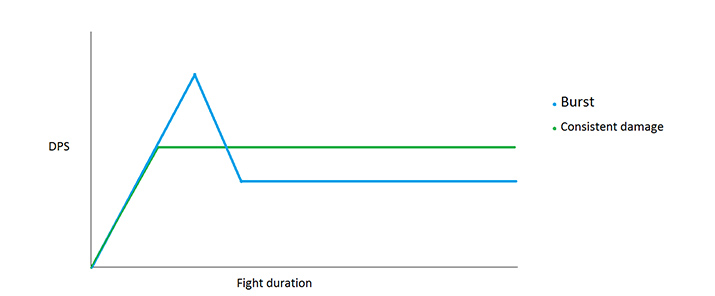
The graph shows the approximate difference between consistent damage (DPS) and burst damage in LoL.
Itemization for Maximum DPS (2025 View)
The exact best DPS items change from patch to patch, but the logic behind them stays almost the same. Think in terms of stats and enemy resistances, not just item names.
Core Stats for Physical DPS Carries
For bot lane marksmen and many fighters, your DPS usually comes from a combination of:
- Attack damage (AD)
- Attack speed
- Critical strike chance
- Armor penetration / lethality
- Ability haste (for spell-based DPS patterns)
A typical late-game build will combine at least:
- One or two strong raw damage + crit items.
- One or two attack speed items.
- One penetration item (armor penetration or lethality).
- One defensive or hybrid item (lifesteal, shield, revive, etc.).
Items like Infinity Edge, Phantom Dancer and the Last Whisper family (Lord Dominik’s, Mortal Reminder, Serylda’s) are classic examples of a high–DPS core that has stayed relevant across many seasons, even though exact stats and costs were adjusted in the Season 14–15 updates.
When to Buy Penetration vs Raw Damage
This question never goes away, no matter how Riot changes the shop:
- If enemies stack a lot of armor, build percent armor penetration early (Last Whisper upgrades, lethality items).
- If enemies stack magic resist, get magic penetration (Void Staff and similar items for AP champions).
- If they are not stacking resistances, raw AD / AP and crit / attack speed will usually give more DPS than rushing penetration.
A good rule of thumb: if you look at the scoreboard and see two or more tanks/bruisers buying armor or MR, you usually want your penetration item around your third completed item, not as a last-second purchase.
Sites like Mobalytics LoL guides or OP.GG builds & stats are very useful to quickly check what high-winrate DPS and burst builds look like on your champion in the current patch.
DPS Mages and On-Hit Patterns
Mages with sustained damage patterns (Cassiopeia, Ryze, Azir, etc.) care more about:
- Ability power
- Mana / mana regeneration
- Ability haste
- Magic penetration
They want to spam spells non-stop in fights. That means items that mix AP with mana and haste are extremely valuable. Once you have a safe amount of mana and haste, penetration and pure AP become the main DPS multipliers.
Positioning as a Ranged DPS Champion
If you are playing a ranged DPS champion (marksman or DPS mage), your number one job in teamfights is to:
- Stay alive.
- Stay in range to hit as often as possible.
That usually means:
- Standing behind your frontline.
- Positioning so that your support can peel for you (shields, heals, CC, exhaust).
- Playing close to terrain and vision so you are not easily flanked.
If the enemy team has long range or many mobile assassins and they still reach you even with good positioning, you should add a defensive item to your build. For example:
- As a mage against physical assassins like Zed or Talon, early Zhonya’s Hourglass can be lifesaving.
- As a marksman against heavy divers, defensive options like Guardian Angel, Randuin’s Omen, or health/armor hybrids often let you survive the initial burst and keep hitting.
Don’t be afraid to “sacrifice” some raw DPS to survive. A live carry hitting for 10 seconds does more damage than a glass cannon deleted in one second.
Positioning as a Melee DPS Champion
Melee DPS champions (bruisers and some assassins built for extended fights) always play at higher risk because they must walk into danger to deal damage. Your job is to:
- Reach the enemy backline or priority targets.
- Stay in the fight long enough for your DPS to matter.
Key tips:
- Use your frontline or engage tools (supports, jungler) to start fights. You usually don’t want to be the one face-checking fog.
- Build cost-efficient defensive items after your core damage. Armor, magic resist and health dramatically improve how long you stay in the fight.
- Identify whether enemy damage is mostly AD or AP and choose your defensive item accordingly (e.g., armor vs fed marksman, MR vs fed burst mage).
If the enemy marksman is very fed and you have tools to stick to them, items that reduce attack speed or punish autos are extremely valuable. If you can’t stick to them, reflect or zone damage instead and focus whoever you can consistently reach.
Target Priority for DPS Champions
Ranged DPS Target Priority
You will often hear people say “Never hit the tank, always hit the carry”. That’s only half true.
The real rule is:
- Hit the highest-priority target you can safely reach without instantly dying.
Sometimes that will be the enemy front line. And that’s perfectly fine. If you are playing Jinx, Kai’Sa or another hypercarry and you can shred the opposing tank line while staying safe, you are doing your job. Enemies misposition eventually – and when a squishy steps forward, you instantly swap focus.
This is where good map awareness and camera control matter. Keep checking side angles and flanks to catch mispositioned carries as they appear instead of tunnel-visioning the closest target.
Melee DPS Target Priority
For melee DPS the priority is often:
- Enemy carries you can actually reach (marksman & burst mages).
- Enemy bruisers or fighters if the carries are too deep or too well protected.
- Frontline tanks if they are the only targets in range but your team still has damage to burn them.
Because melee DPS is usually the main threat to the enemy backline, supports and peel champions will do everything to stop you – stuns, roots, knockups, exhaust. That’s why choosing when to go in matters as much as choosing who to hit. If key enemy CC abilities are still available, a greedy dive usually means instant death.
How Burst Champions Play Fights
Itemization for Burst Champions
Assassins and burst mages are all about hitting a damage threshold. Instead of maximising damage over 10 seconds, they want to guarantee a kill in one combo. This means:
- Prioritizing raw damage (AD or AP).
- Buying enough penetration so that squishy targets can’t survive your combo with just one defensive item.
- Adding limited survivability (stasis, mobility, shields) so that you can escape after committing.
Typical patterns:
- Burst mages rush AP + pen; items like Rabadon’s, Shadowflame, and later Void Staff are classic examples of “all-in” burst scaling.
- AD assassins stack AD, lethality and ability haste to maximize their one-shot window and keep ultimates up more often.
- Burst marksmen often combine AD/crit items with one strong ability-centric item so that a single spell + auto combo chunks 60–80% of a squishy’s health.
Positioning and Vision for Assassins
As an assassin you want to be:
- Hidden from enemy vision (flanks, fog of war, control wards).
- In a flanking position where you can reach enemy carries without having to walk through the entire frontline.
If enemies can see you, they can pre-position and peel. If they lose track of you, they are forced to play further back and respect your threat – which itself is a form of “zone control”.
Good assassin play usually looks like this:
- Your team starts or threatens an objective or a fight.
- The enemy backline steps up to contribute.
- You arrive from the side or behind, use your combo on the highest-priority target, then instantly exit or use stasis while your team follows up.
Target Priority for Burst Champions
Unlike sustained DPS, burst assassins usually choose a primary target before the fight starts. Swapping targets mid-combo often ruins your kill potential. Plan your sequence in advance:
- “If enemy X steps forward without flash, I go on them instantly.”
- “If they still have key peel abilities, I wait until they use them on someone else.”
Burst marksmen follow similar rules, but they also try to position so that their abilities hit multiple targets at once (e.g., Graves Q on several champions, Miss Fortune R across the whole team).
Playing Losing Lanes vs Burst Champions
Many DPS champions struggle in lane versus strong burst picks – for example, Cassiopeia into Diana, or scaling ADCs into aggressive early lanes.
General rules for being at least even in a “losing” lane:
- Respect early burst levels (usually level 2–3 and level 6) and don’t trade into full cooldown rotations.
- Buy early resistance (armor vs AD burst, MR vs AP burst) – even a single defensive component can completely change all-in math.
- Use wave control to keep the lane closer to your tower so that dives are harder and your jungler has better gank angles.
- Accept that you might have to give up some CS rather than taking a 50/50 fight against an assassin with ignite.
A classic example: a Cassiopeia facing a Diana mid. Diana’s level 6 burst is extremely threatening. By buying MR early (for example, components that will later build into a magic-resist + AP item) you reduce her one-shot potential while still scaling your own damage. Harassing her before she hits level 6, dodging her main poke and staying healthy under wave is key to reaching mid game without feeding.
Sometimes it’s worth taking defensive summoner spells like Exhaust or Barrier instead of Heal or Ignite, especially when facing assassins who rely on a single all-in window. Exhaust massively lowers their burst, and Barrier is not affected by Grievous Wounds like Heal is.
How to Practice DPS and Burst (Practical Drills)
Understanding theory is one thing. Turning it into mechanics is another. Here are some practical ways to train:
1. Practice Tool DPS Drills
- Spawn a target dummy and time your damage over 5 and 10 seconds with different builds.
- Try different rotations: auto-only, auto + abilities, full combo with kiting.
- For burst champions, practice landing your full combo as fast as possible with clean animation cancels.
2. Replay Review Focused on Damage Windows
- In replays, watch every teamfight from your perspective.
- Pause and ask: “How many seconds in this fight was I actually hitting?”
- Look for moments where you could have hit safely but were walking, typing, or hesitating.
Many players are shocked when they realize that in most fights they only spend 1–2 seconds actually dealing damage when they could have had 4–6 seconds of uptime.
3. Learn From High-Elo Builds and Damage Graphs
Use post-game stats and external tools to see how your damage compares to players on the same champion:
- Compare your damage graphs to players of your rank and above.
- Check if your build is similar to the most successful builds in recent patches.
Resources like OP.GG and advanced coaching platforms give you a very good idea of what realistic DPS numbers look like across ranks.
How Boosters and High-Elo Players Think About DPS vs Burst
High-elo players, including professional boosters, don’t just “pick a high DPS champion and hope for the best”. They think in terms of total team damage profile and win conditions:
- Does the team have enough reliable DPS for objectives (Baron, dragons, towers)?
- Does the team have at least one strong burst thread to punish mispositioned carries?
- Is there a good frontline + peel core so that DPS champions can actually hit?
If you struggle to understand this alone, learning with someone significantly stronger than you is one of the fastest ways to progress. Services like Boosteria’s LoL elo boosting and coaching offer the chance to watch how high-elo players trade, itemize and position in real ranked matches while explaining their decisions.
If you play multiple games or multiple roles over time, the Boosteria loyalty program rewards you with progressively better discounts the more you play – including across different titles. And if you also grind Riot’s other tactical shooter, understanding DPS vs burst will help you a lot there too: you can check Valorant boosting prices if you want to combine learning LoL macro with FPS improvement.
Quick DPS vs Burst Checklists
Before the Game
- Identify whether you are a DPS or burst champion this game (sometimes your build can change your role).
- Look at team comps – who will do most of your team’s damage, who peels, who engages?
- Think about whether you need more penetration or more raw damage based on expected enemy items.
During Lane Phase
- Take favorable trades that match your damage pattern (short burst trades vs long DPS trades).
- Buy early defensive stats in losing matchups vs burst.
- Track enemy key cooldowns, especially if you are an assassin or burst mage.
During Mid/Late Game Teamfights
- Ranged DPS: stay alive, hit nearest safe target, be ready to swap to squishies.
- Melee DPS: enter fights after your frontline, not before. Build survivability.
- Burst/assassin: play with fog of war and flanks, commit when key CC/defensives are down.
DPS and Burst Damage in LoL – Short Resume
- DPS is very important and you should always look for ways to increase your effective uptime, not just raw stats.
- Itemization (raw damage vs penetration vs defensive stats) must react to enemy resistances and damage profile.
- Positioning and vision decide whether you live long enough to actually use your damage.
- Consistent damage dealers usually hit whoever is closest and safe, while burst champions pre-select a key target and commit their whole combo.
- In losing lanes, DPS champions focus on safe farm, while assassins and burst champions look for roams and skirmishes to force lane phase to end.
Legacy Section (2012–2015 Version – Old Items & Calculations)
This section keeps a lot of the original guide content, including old item names and a burst damage chart from 2012. It’s useful if you’re curious about how people used to think about DPS and burst in older seasons, but exact builds here are not updated for the 2024–2025 item system.
DPS Definition (Legacy)
DPS is an abbreviation which means damage per second. It’s mainly used in MMORPGs where fights against big raid bosses are long and DPS is the most important characteristic for players who choose damage dealer as their main role. In LoL, DPS is essential for attack damage carries (ADc). In late game one of the main goals in teamfights is successfully protecting your AD carry and providing them with the opportunity to do maximum DPS without any barriers – a process often called peel, when you keep bruisers and tanks off your carry.
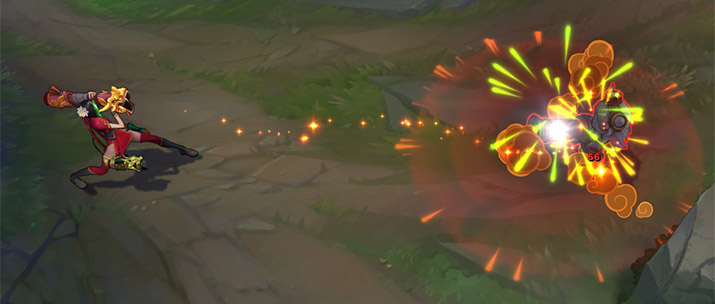
Legacy Champions With High DPS
Examples listed in the original guide included: Aatrox, Caitlyn, Vayne, Jinx, Kayle, Master Yi, Tryndamere, Jax, Rumble, Cassiopeia, Fiddlesticks, Swain and others – champions that can keep up steady damage for long fights.
Legacy Physical / Tanky / Magical DPS Item Combos
Physical DPS items (legacy example): Infinity Edge, Phantom Dancer and Last Whisper.
Tanky DPS items (legacy example): Trinity Force, Maw of Malmortius, Sunfire Cape and The Black Cleaver.
Magical DPS items (legacy example): Rabadon’s Deathcap, Liandry’s Torment and Void Staff.
Burst Damage Definition (Legacy)
Burst means huge damage over a very short amount of time. Great bursters in older metas were mostly AP carries. Burst was considered the most important damage type because it allowed you to remove an enemy champion from a teamfight at the very beginning. A champion can have high burst but low DPS and vice versa – for example, LeBlanc can do massive damage in one second but very little after her cooldowns, while Caitlyn has strong DPS but almost no burst.
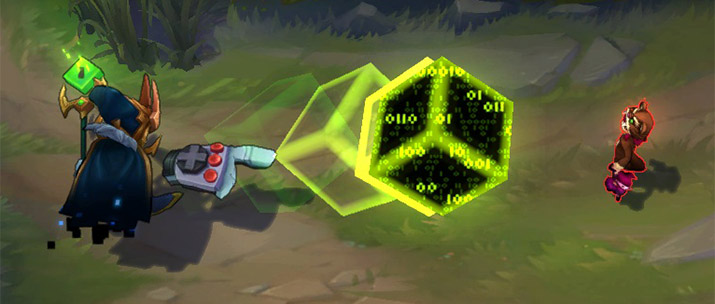
Legacy Burst Champions
Legacy examples of burst champions included Annie, Fizz, LeBlanc, Lux, Talon, Syndra, Veigar, Rengar and Zed – champions who could one-shot or heavily chunk squishies in one combo.
Legacy Burst Item Combos
Physical burst items (legacy example): Ravenous Hydra, The Black Cleaver and Last Whisper.
Magical burst items (legacy example): Rabadon’s Deathcap, Zhonya’s Hourglass, Lich Bane and Void Staff.
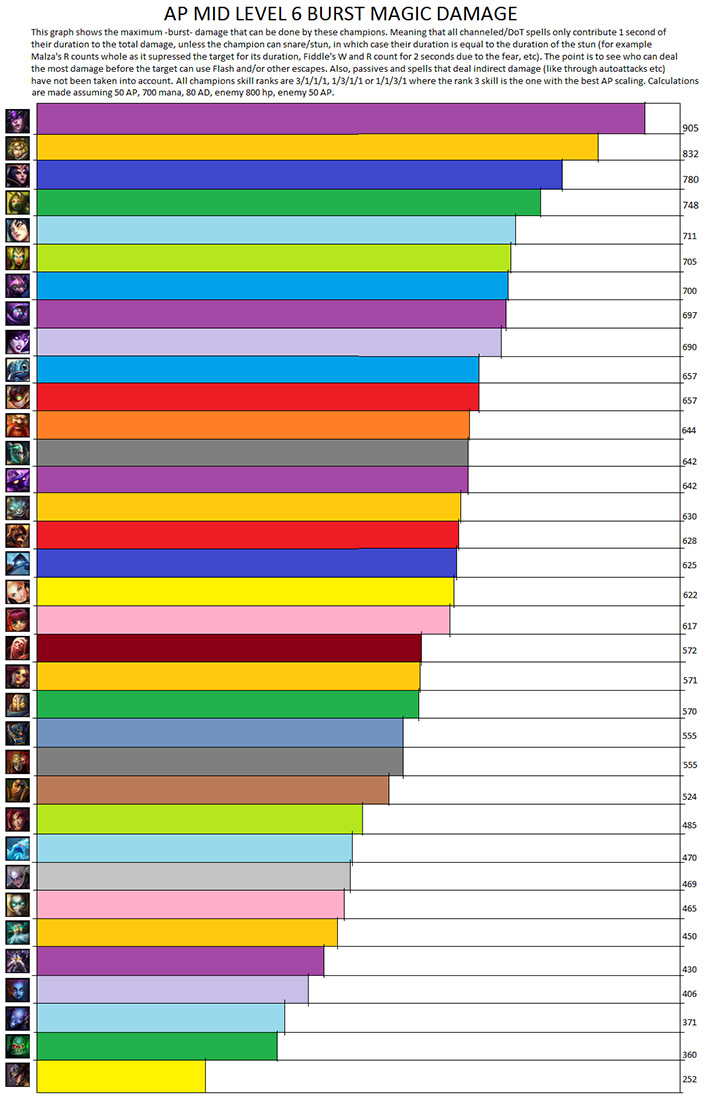
Old AP Caster Burst Chart
The original version of this guide included a 2012 chart that compared burst damage of many AP casters at the time. The exact numbers are no longer relevant to the current game (item and rune systems changed several times), but it’s still an interesting historical snapshot of how players analyzed burst.
Related Boosteria Guides (Still Useful)
- Why “Elo hell” doesn’t exist in LoL
- LoL ranked guide for beginners
- Meta champions in LoL
- LoL elo boosting and coaching service


