



LoL Support Guide 2026 – Best Supports, Runes, Items & Warding Tips
Support is the role in LoL that demands overall game understanding. Support champions are high-utility picks that create advantages and opportunities for their teammates to capitalize on. A skilled support gives their team the edge it needs to claim victory and can turn the tide of battle with just one well-timed play.
Supports must have good map awareness, must control the vision, protect their teammates and harass opponents while in the laning phase. In modern ranked games this also means tracking jungle pathing, pinging fog-of-war threats, and helping your team play around key objectives.
SUPPORT IN LoL IN 2025: QUICK OVERVIEW
In 2025, the Support role is more impactful than ever thanks to modern rune pages, revamped support items and the importance of early objective control in solo queue. Old systems like 0/9/21 masteries and standalone Sightstone builds are gone. Instead, you now play around:
- Runes Reforged – choosing between enchanter pages (e.g. Summon Aery or Guardian) and tank/engage pages (e.g. Aftershock in Resolve).
- Support quest items – starting with World Atlas, then upgrading into Runic Compass and finally Bounty of Worlds and one of five powerful upgrades like Bloodsong or Dream Maker.
- Vision as a team responsibility – your upgraded support item and trinket now provide ward charges, but denying enemy vision with Control Wards is just as important.
If you are completely new to roles, the official LoL how-to-play guide is a good starting point to understand lanes, objectives and basic role identities before diving deeper into support-specific concepts.
HOW TO PICK THE RIGHT SUPPORT IN LoL
In practice, every support you pick fits one (or more) of three big archetypes:
- Engage/Tank supports – start fights and soak damage (Leona, Nautilus, Braum, Thresh, Rell).
- Enchanter supports – shield, heal and buff carries (Janna, Lulu, Nami, Soraka, Milio, Sona).
- Mage/Poke supports – win lane with damage and pressure (Zyra, Brand, Xerath, Karma, Zyra, Zyra, Vel’Koz).
The most popular supports at the moment are  Janna,
  Thresh,
  Alistar,
  Annie,
  Braum,
  Lulu and
  Leona, with newer enchanter powerhouses like Milio, Sona, Nami and Soraka also sitting at the top of many tier lists. These champions are so popular because they have all the tools they need: reliable crowd control, ways to peel for their carries and strong fight initiation or disengage.
Picking the perfect support is always done by analyzing your team composition as well as the enemy team composition:
- If your team has strong teamfight damage but lacks a reliable way to start fights, or the enemy team has many immobile champions, then you should pick hard-engage supports like Alistar, Annie, Braum or Leona. These supports can start fights very easily with their AoE crowd control that allows their teammates to catch up and dish out the damage.
- If your team consists of immobile carries such as
 Kog’Maw,
  Jinx,
Jinx,  Orianna,
  Ryze or
  Ashe, or if the enemy team has many mobile champions that can reach your backline very quickly, then you should play champions such as Janna, Alistar, Thresh, Braum or Lulu. They can stop divers with powerful crowd control and peel tools, buying time for your carries to win fights.
In case you are new to the role and do not know how to play all these champions just yet, you should try easy champions with which you cannot do anything terribly wrong, such as Lulu,  Soraka or
  Morgana. Because these champions do not always have to be in danger to do well and all of their abilities can help the team from range, they are easy supports that can be played by anyone and even beginners can have impact in team fights.
TOP TIER SUPPORTS FOR RANKED SOLO QUEUE (2025)
Even though there are many supports in the game and most of them are good in certain matchups, there are always a few champions that work well in almost every matchup and every rank. These champions are “top tier”, and if played right they can snowball not only the bot lane, but the whole map.
In 2025, S-tier and highly reliable picks commonly include enchanters and tanks such as Lulu, Nami, Milio, Soraka, Zyra, Thresh, Janna, Sona and Braum. They consistently sit at the top of support tier lists and combine strong lane presence with game-winning teamfight utility.
Historically, champions like Leona, Thresh and Morgana have also been top tier because they provide great initiation tools as well as great peeling. They still appear regularly in higher elo, especially in aggressive bot lanes.
Because the meta changes patch by patch, it is worth checking live statistics alongside this guide. Two useful, trusted resources are the always-updated Mobalytics “Best supports to climb with” guide and the U.GG support tier list for current win rates and pick rates.
SUPPORTS FOR ADVANCED LoL PLAYERS
If you aren’t a new support player, you have enough experience to play champions with high risk–high reward kits. Two classic examples in this category are  Bard and
  Tahm Kench. These two are still powerful in 2025 if played correctly, but can just as easily lose the game if misplayed.
BARD AS ADVANCED SUPPORT: BASIC STRATEGY GUIDE
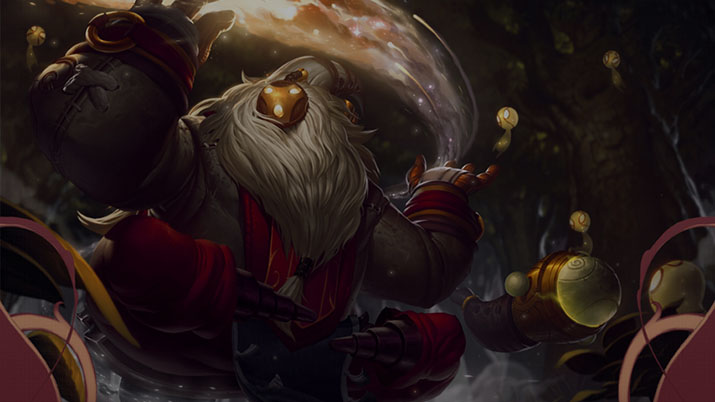
Bard is a champion for advanced players because his abilities require good timing and great placement. Everyone wants to get as many chimes as possible as fast as possible, but many players forget about the marksman they leave behind during lane phase. Leaving lane in a bad moment can get your marksman killed or put them very far behind, so you must always be careful when you roam to collect chimes.
The best time to collect chimes is when the enemy bot lane recalls to buy items, after you shove a wave, or when you know the enemy duo has no good way to start a fight. You can then safely tell your marksman to push the lane while you collect chimes and ward.
Another thing that makes Bard a hard support is his ultimate, Tempered Fate: “Bard sends magical energy arcing to a target location. On impact, all units — allied, enemy and neutral — in the target area are put in stasis for 2.5 seconds, becoming untargetable and invulnerable but also unable to perform any action.” Because everyone is affected, timing and positioning are extremely important: if it lands on your teammates at the wrong moment, you can lose the fight and maybe the game. The best time to use Bard’s ultimate is to start a fight (hitting only the enemies) or to catch key enemy targets out of position.
TAHM KENCH AS ADVANCED SUPPORT: BASIC STRATEGY GUIDE
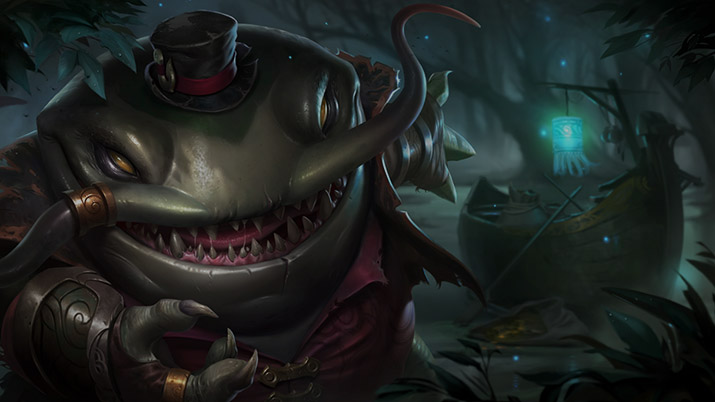
Tahm Kench remains one of the hardest supports because of his Devour and Abyssal Voyage (or its modern equivalent, depending on the patch). Devour is extremely versatile: you can save a teammate, remove an enemy carry from a fight, or reposition a target closer to your team.
The hardest part is knowing when to Devour. To eat an enemy champion you first have to stack An Acquired Taste three times; this is hard against long-range or very mobile enemies. Devouring your teammates can also be risky: if you eat them and fail to reach safety, you might actually get them killed by removing their ability to flash or dash away.
Abyssal Voyage lets you and an ally move quickly across the map, enabling proactive plays and collapses. Used well, you can create 2v1 or 3v2 situations out of nowhere and secure kills or objectives. Used badly, you may just deliver two free kills to the enemy team. In early and mid game, this spell is fantastic to both protect your marksman’s farm and still join fights around dragons or heralds.
RUNES & SUMMONER SPELLS FOR SUPPORTS IN LoL (2025)
Since the old mastery trees (0/9/21, 0/16/14 etc.) have been removed from the game, modern supports now rely entirely on the Runes Reforged system. Here are simple, reliable pages:
Rune pages for enchanter supports (Janna, Lulu, Nami, Soraka, Milio, Sona)
- Primary – Sorcery: Summon Aery or Guardian, then Manaflow Band, Transcendence and Scorch or Gathering Storm.
- Secondary – Inspiration: Biscuit Delivery + Cosmic Insight for sustain and more summoner spell uptime, or Hextech Flashtraption for creative engages from fog.
- Take double Adaptive Force + Armor or HP in minor runes depending on matchup.
Rune pages for engage & tank supports (Leona, Nautilus, Braum, Rell, Thresh, Alistar)
- Primary – Resolve: Aftershock (or Guardian on peel-heavy champs), plus Font of Life, Bone Plating and Unflinching or Overgrowth.
- Secondary – Inspiration or Domination:
- Inspiration: Hextech Flashtraption + Cosmic Insight for playmaking and lower cooldowns.
- Domination: Cheap Shot + Relentless Hunter for more damage and roaming speed.
These default pages work on most patches and are easy to adapt by swapping a single rune or two, rather than re-learning the entire page every update.
Summoner spells: Flash, Exhaust or Ignite?
Besides taking Flash, supports usually take Exhaust or Ignite alongside it for maximum impact.
When you should take Exhaust as support
Exhaust is very good against assassins such as Zed, Talon or Ahri and is strong versus bruisers who both tank and deal a lot of damage such as Jax and Irelia. Besides reducing their movement speed, attack speed and damage, it also reduces their armor and magic resist, making them easier to kill during their all-in. It’s an excellent pick when your team lacks crowd control or peel, or when you’re playing more defensive supports that want to neutralize the enemy diver.
When you should take Ignite as support
Ignite is best when you play against heal-heavy champions such as Soraka, Dr. Mundo or champions relying on strong self-healing and lifesteal. It reduces healing on the target and can be cast just before the enemy uses Heal or life-steal abilities so they get reduced value. Ignite shines on supports with high burst and strong crowd control such as Leona, Thresh, Nautilus or aggressive mage supports.
MODERN ITEMIZATION & BUILDS FOR SUPPORTS (2025)
Support item builds now revolve around the modern support quest system rather than separate gold income items like Relic Shield or Ancient Coin. The overall logic is similar though: generate gold without stealing farm from your ADC, gain ward charges and buy strong teamfight items.
Step 1: Start with World Atlas
Every support starts with World Atlas, which gives you health, mana regen and passive gold. As you use its charges near allies (damaging champions, helping kill minions, or hitting structures), you generate gold to complete your support quest.
After earning enough gold, World Atlas automatically upgrades into Runic Compass, and then into Bounty of Worlds. Once the quest is fully completed, Bounty of Worlds lets you choose one of several powerful upgrades, all tailored to different support styles:
- Bloodsong – extra damage and a debuff for poke/aggressive supports and some melee engage champs.
- Solstice Sleigh – mobility and chase tools for supports with built-in crowd control who want to dive and follow up.
- Celestial Opposition – extra damage reduction and tankiness for frontline supports that soak damage.
- Zaz’Zak’s Realmspike – additional poke and burst for mage supports like Zyra or Brand.
- Dream Maker – bonus shielding/healing power for classic enchanters such as Janna, Nami or Soraka.
Think of these as an extension of your champion’s identity: damage, utility, tankiness or mobility.
Step 2: Core legendary items
After you finish your support quest and upgrade, you transition into standard teamfight items. Exact builds change by patch, but strong evergreen options for supports include:
- Locket of the Iron Solari – a huge AoE shield for your team against burst and AoE damage; great versus wombo-combo comps.
- Mikael’s Blessing – cleanses crowd control and boosts healing/shielding; ideal when the enemy has critical single-target CC.
- Redemption, Ardent Censer, Staff of Flowing Water, Moonstone Renewer, Echoes of Helia – strong enchanter items that amplify your shields, heals and ally DPS.
- Knight’s Vow, Zeke’s Convergence, Thornmail – good on tank supports who front line and want to peel or apply anti-heal.
Boots for supports
Most of the time, the best Boots of Speed upgrades are:
- Mobility Boots – for roaming and fast ward setups.
- Boots of Swiftness – for enchanters that want consistent move speed in and out of combat.
- Plated Steelcaps or Mercury’s Treads – if the enemy team has heavy AD or AP/CC respectively and you’re often in the frontline.
Try to always balance team utility items with defensive stats so that you are tanky enough to survive the fights you are enabling.
WARDING AS SUPPORT (UPDATED FOR MODERN LoL)
Your upgraded support item now holds multiple Stealth Wards, and you can also buy Control Wards from the shop. Vision wins games; as support, you are the main vision manager for your team.
Early game: always keep the tribush warded, as well as the river bush near dragon and at least one bot-side pixel brush. Use Control Wards in river or the entrance to your jungle to prevent ganks and secure early objectives.
Mid game: move your wards deeper. If your team is ahead, ward aggressively in the enemy jungle around buffs, raptors and paths to Baron/dragon. Place Control Wards on objectives before starting them. If you are behind, pull your vision back to choke points around your jungle entrances and your side of the river, so you don’t get picked when leaving base.
Late game: every death is costly. Use your wards to cover flanks and common face-check spots. A single well-placed ward in the enemy jungle can win you a game-deciding pick.
Remember: it’s not enough to place wards. You should also use your trinket and pings to clear enemy vision, especially before objectives, with Control Wards and your Oracle-style trinket.
BOOSTERIA, LOYALTY REWARDS & CROSS-GAME CLIMBING
If you want to climb the ranked ladder faster while still learning, you can combine this guide with professional help. Boosteria offers LoL Elo boosting with hand-picked high-MMR players who know the support role inside out. Regular customers can also benefit from the Boosteria loyalty program, which rewards returning clients with additional value over time.
Many players who main support in LoL also queue up for Riot’s tactical shooter. If you are trying to climb in both games, you can check transparent Valorant boosting prices and compare them with your goals and available time. Whether you decide to grind solo or get a little help, understanding your role and fundamentals will always matter the most.
USEFUL EXTERNAL RESOURCES FOR SUPPORT PLAYERS
- Official LoL “How to Play” guide – beginner-friendly overview of roles and game flow.
- Mobalytics best supports to climb with – curated list plus runes and builds.
- U.GG support tier list – live win rate and pick rate stats updated each patch.
LEGACY SECTION: OLD MASTERIES, RUNES & ITEMIZATION (PRE-RUNES REFORGED)
The following section describes systems (masteries, old rune pages and older support items) that existed in earlier seasons of League. They are no longer used in current patches, but we keep them here for historical reference and players interested in how the role used to function.
MASTERIES FOR SUPPORTS IN LoL (LEGACY)
In older seasons, supports had to create two mastery pages because ranged and melee supports played differently.
Ranged supports usually went 0/9/21 and put one point into Fleet of Foot, three into Expanded Mind, three into Summoner’s Insight, one into Alchemist and Culinary Master, maxed out gold-gaining masteries as well as Intelligence and Inspiration and took Wanderer as the last tier. In the defense tree they took Block, Recovery, Unyielding, Veteran Scars and Juggernaut.
Melee supports often used 0/16/14 masteries because they were always in range of enemy attacks and needed to survive longer trades. In the utility tree they took Fleet of Foot, Expanded Mind, Summoner’s Insight, Alchemist, Culinary Master and maxed out gold-gaining masteries; in the defense tree they maxed Block, Recovery, Unyielding, Veteran Scars, Juggernaut, Hardiness, Reinforced Armor and Resistance.
OLD RUNES FOR SUPPORTS (LEGACY)
Before the Runes Reforged overhaul, supports used a different rune system with Marks, Seals, Glyphs and Quintessences:
- Ranged supports often ran Greater Marks of Hybrid Penetration to boost both auto attacks and spells, a mix of Greater Seals of Armor and Greater Seals of Health for survivability, and either Greater Glyphs of Mana Regen or Greater Glyphs of Magic Resist depending on whether they wanted more spell usage or durability. Quintessences were typically movement speed or ability power.
- Melee supports used more defensive pages: Greater Marks of Armor, Greater Seals of Health, Greater Glyphs of Magic Resist and Greater Quintessences of Health or movement speed to be tanky early on.
OLD ITEMIZATION AND BUILDS FOR SUPPORTS (LEGACY)
In those earlier seasons there were three main gold-income items for supports:
- Relic Shield – provided health and a passive that executed minions to generate extra gold and health for nearby allies; ideal for tank champions (except Alistar in some metas).
- Spellthief’s Edge – granted ability power, mana regen, gold generation and extra damage plus gold on hit; best on poke and harass-oriented ranged supports.
- Ancient Coin – gave mana regen and passive gold/health on nearby dying minions; used mostly on sustain supports like Soraka or Alistar.
Supports would usually start with one of these gold generators, a Sight Ward, two Health Potions and a Warding Totem. On the first recall, buying  Sightstone was mandatory to maintain vision, after which they would swap to to remove enemy wards.
After upgrading the gold item and completing Sightstone, supports bought utility items such as  Mikael’s Crucible,
  Locket of the Iron Solari,
  Frozen Heart and other aura items that protected their team.
These details are no longer relevant for actual builds, but they illustrate how much the support role has evolved over the years.
Support is one of the hardest roles in the game, not only because of the awareness the player must have, but because of some of the mechanics involved too. Played well, however, it is one of the most rewarding ways to carry games in LoL.
The following content we provide may also interest you:
- Best LoL teams in Europe
- LoL Elo boosting company
- Boosteria loyalty program
- Valorant boosting prices


