



LoL Role Synergy Guide 2026: Build Comps & Adapt in Ranked
LoL Role Synergy Guide 2026: Building Team Comps and Adapting to Allies in Ranked
In ranked, you rarely lose because a single player “played bad.” Most losses are comp-and-plan problems: no engage, no peel, mismatched tempo, overlapping jobs, or five champions trying to win the game in five different ways. The good news: you don’t need perfect meta picks to fix this. You need role synergy.
This guide is designed to stay useful over time. Instead of chasing patch-tier lists, you’ll learn a repeatable framework for (1) reading champion select, (2) building a coherent team comp from whatever your allies lock, and (3) adapting your runes, items, lane plan, and macro so the team functions like a unit. If you want patch context and cadence, Riot publishes official patch notes and schedules (useful for staying current without overfitting your playstyle): Patch Notes and Patch Schedule. For ranked fundamentals like MMR vs. visible rank, these official pages are worth knowing: MMR, Rank, and LP and Ranked Tiers and Queues.
Table of Contents
1) What Role Synergy Actually Means (and Why It Wins Ranked)
Role synergy is how well your team’s champions and decisions combine into a single executable game plan. It’s not “pick X with Y because a website says so.” It’s:
- Job coverage: Does the comp have engage or a way to start fights? Does it have peel? Does it have DPS for objectives? Does it have waveclear? Does it have vision control tools?
- Timing alignment: Are you all strong at the same time? Or is half the team early-game and half the team scaling, forcing awkward fights?
- Execution clarity: Can your comp win with simple rules (front-to-back, pick, poke)? Or does it require perfect coordination?
Ranked punishes complexity. The “best” comp on paper can lose to a simpler comp with a clearer win condition. Your goal is to draft and adapt into simple, repeatable win patterns that your random teammates can follow without a meeting.
Think in systems. Champions are tools that provide categories of value: engage, peel, burst, sustained DPS, zone control, waveclear, objective damage, side-lane threat, and information. Synergy is picking and playing so those tools stack instead of overlapping.
2) Win Conditions: The “One Sentence Plan”
If your team cannot describe its plan in one sentence, you will drift into random fights. A good one-sentence plan has who, how, and when:
- Who is the primary threat? (the carry, the diver, the pick maker)
- How do we win fights? (front-to-back, dive, pick, poke, split)
- When are we strongest? (early tempo, mid spikes, late scaling)
Examples you can type in chat (short, non-tilting):
- “Play front-to-back: let’s peel our carry and fight around dragons.”
- “We have picks: sweep vision and catch before objectives.”
- “We scale: avoid coinflip fights, trade sides, play for 2 items.”
- “We dive: set waves, flank, go together on their backline.”
Notice how none of these require perfect mechanics. They are macro-compatible with typical ranked behavior.
3) The Five Pillars of Any Good Comp
In champion select, stop thinking “roles.” Think pillars. A comp that covers these pillars is hard to break, even if the picks are off-meta.
3.1 Start Fights (Engage or Pick)
You need at least one reliable way to create an advantage on demand. This can be hard engage (a tank/initiator) or pick tools (hooks, long-range CC, invis threat). If you have neither, you become reactive and rely on enemy mistakes.
3.2 Survive the First 3 Seconds (Durability + Anti-Burst)
Most ranked fights are decided instantly: someone gets one-shot, then the team collapses. Your comp needs frontline, shields/heals, defensive items, or disengage to prevent instant collapse.
3.3 Finish Kills and Objectives (Sustained DPS)
Burst looks flashy; sustained DPS wins games. You need reliable damage to clean up fights and take towers, dragons, and Baron.
3.4 Control Space (Zone + Wave)
Zone control wins objectives before they spawn. Waveclear prevents being trapped under towers. Control mages, certain supports, and some junglers/top laners provide this.
3.5 Information (Vision + Threat Angles)
Good teams don’t “see better.” They create threat angles that force the enemy to facecheck. Flanks, sweeps, and side-lane pressure are information tools.
Draft rule: If your comp is missing a pillar, you must “patch” it with your pick, build, or macro. That is the core of adapting to allies.
4) Role Jobs: What Each Role Gives and What It Needs
4.1 Top: Structure, Side Pressure, and Teamfight Shape
Common jobs top provides:
- Frontline/engage: gives your team a “go button” and a durable first contact.
- Side-lane win condition: split push that forces responses and opens objectives.
- Anti-carry utility: point-and-click lockdown or disruption that removes a threat.
What top usually needs from allies: jungle attention when wave states are volatile, mid priority for river control, and a comp that doesn’t require top to do everything (engage + frontline + damage). If your team lacks engage and your top locks a side-laner, plan around pick or objective trades instead of forced 5v5s.
4.2 Jungle: Tempo, First Contact, and Map Decisions
Common jobs jungle provides:
- Tempo and routing: decides which lane gets to play aggressively.
- Engage or follow-up: either starts fights or arrives as the second wave.
- Objective control: sets vision, prio, and smite threats.
What jungle needs: lane priority (especially mid), wave setups for ganks, and teammates who understand when not to fight if the jungler is on the other side. If your lanes have weak early priority, your jungler should default to defensive pathing + cross-map trading rather than contesting every river skirmish.
4.3 Mid: Priority, Damage Type, and “Fight Permission”
Common jobs mid provides:
- Lane priority: unlocks jungle invades, objective setup, and side roams.
- Damage profile: often supplies magic damage or burst/zone control.
- Setup: mid CC enables jungle to play the map aggressively.
What mid needs: jungle protection when playing for priority, support roams for vision, and a coherent team plan (poke wants space, dive wants flanks, scaling wants time). If your comp is heavy physical damage, mid can stabilize draft by choosing a reliable magic DPS/zone identity.
4.4 Bot Carry: The Team’s “Converter”
Common jobs bot carry provides:
- Sustained DPS: converts won fights into objectives.
- Range threat: forces enemy frontline to respect spacing.
- Scaling insurance: gives your comp a late-game plan.
What bot carry needs: peel or space, stable waves, and a support whose identity matches the comp (engage for picks/dive, enchanter for front-to-back, mage for shove/poke). If your team has no peel, bot carry must adapt with positioning, defensive itemization, and disciplined wave timing.
4.5 Support: The Glue (Vision, Engage, Peel, and Tempo)
Common jobs support provides:
- Vision control: creates safe paths and enables picks.
- Engage or disengage: defines how fights start and end.
- Peel and buffing: upgrades your strongest champion into a win condition.
- Roam tempo: turns bot priority into mid/jungle advantage.
What support needs: wave coordination with bot carry, jungle coordination for roams, and a comp that understands its fight identity. If your team lacks engage, support is often the easiest role to patch it. If your team lacks peel, support can patch that too.
5) High-Impact Pair Synergies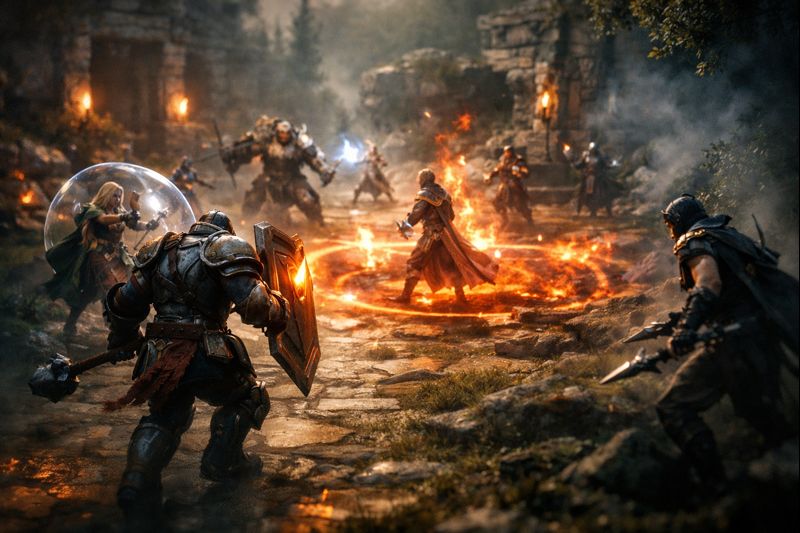
5.1 Mid–Jungle: The Engine Room
Most ranked games are decided by mid–jungle, even when players don’t realize it. Mid–jungle synergy is about priority + setup:
- Priority: mid can move first; jungle can invade or force objectives.
- Setup: mid CC turns jungle presence into guaranteed kills.
- Cover: jungle shadows mid when mid is pushing and vulnerable.
Timeless rule: If your mid has no setup (pure waveclear or poke), jungle should favor counterganks, objectives, and farming routes. If your mid has hard setup, jungle should favor repeat ganks and invade pressure.
5.2 Bot Lane: Engage vs. Sustain vs. Shove
Bot lane synergy is usually one of three identities:
- Engage lane: wants level spikes, wave control, and all-ins (good for pick/dive comps).
- Sustain lane: wants safe scaling, neutral waves, and peel (good for front-to-back comps).
- Shove lane: wants constant push, plates, and roams (good for tempo comps).
Adaptation tip: if your support locks an engage champion but you planned a scaling carry, you don’t have to fight every wave. You can take the threat posture (hold engage as a deterrent) and only commit when jungle is near or enemy cooldowns are down.
5.3 Support–Jungle: Vision Into Picks
Support–jungle synergy is the easiest way to win solo queue without perfect mechanics. The pattern:
- Crash a wave or create a safe window.
- Move together into fog with a sweeper and a control ward.
- Force the enemy to facecheck, then pick.
Even a “weak” comp becomes strong if it controls vision. This is why support is the glue role: you turn random champions into a coordinated threat by controlling information.
5.4 Top–Jungle: Side Stability and Herald Pressure
Top–jungle synergy matters because top lane is long and punishing. Your goal is not “gank top always.” Your goal is to decide early whether top is:
- A snowball lane: invest to create a side-lane win condition.
- A stabilize lane: cover dives, prevent plates, and scale.
- A weakside lane: accept pressure and trade cross-map.
When top is weakside, the entire team must adapt: don’t force early 5v5s without a top TP window; trade objectives; play bot/mid tempo.
6) Damage Profiles, CC Chains, and Range: The Hidden Draft Math
6.1 Damage Profile: Don’t Draft One-Dimensional
One-dimensional comps are easy to itemize against. You don’t need perfect balance, but you need enough threat diversity that the enemy can’t solve you with one defensive purchase path.
- All physical damage: enemy stacks armor and you stall out on objectives.
- All magic damage: enemy stacks MR and your burst stops converting.
- All burst, no DPS: you win one pick then cannot finish Baron/towers safely.
Practical fix: If your team already has heavy burst, you pick/build for sustained DPS. If your team has sustained DPS but no immediate threat, you add burst or hard engage.
6.2 CC Chains: Layer, Don’t Overlap
Synergy is not “everyone presses CC at once.” It’s layering: first CC forces a reaction, second CC secures the kill. In ranked, the simplest rule is:
- Short CC first (to force flash or dash).
- Long CC second (to punish after mobility is gone).
If your comp has little CC, you must win through range, wave, and objective tempo—not through repeated forced fights.
6.3 Range and Access
Ask one question: How do we touch their backline? There are only a few answers:
- Dive access: flank + engage + follow-up.
- Pick access: catch in fog before the fight.
- Poke access: chunk them out so they can’t stand near objectives.
- Front-to-back: kill the closest threat safely, then advance.
If your comp lacks access, stop starting fights. Win with objectives and map pressure. If your comp has access, stop stalling—set waves and force decisively.
7) Evergreen Comp Archetypes and How to Play Them
Most comps fit one primary archetype. Identify it, then play by its rules.
7.1 Front-to-Back Teamfight
Draft shape: frontline + backline DPS + peel/utility. Win condition: fight around objectives with stable positioning. Rules:
- Protect DPS. Don’t chase into fog.
- Start objectives on time and control space first.
- Trade cooldowns patiently; you win longer fights.
7.2 Dive
Draft shape: multiple champions that can reach backline plus follow-up. Win condition: coordinated collapse on one target. Rules:
- Set waves before you fight; diving without wave prep is a coinflip.
- Flanks matter more than front-door engages.
- Commit together, then exit together (don’t stagger).
7.3 Pick
Draft shape: vision control + catch tools + burst. Win condition: create numbers advantage before objectives. Rules:
- Sweep and control choke points 45–60 seconds before objectives.
- Don’t reveal in lanes when you can be in fog.
- After a pick, convert immediately (tower, dragon, Baron, or deep vision).
7.4 Poke / Siege
Draft shape: range, waveclear, zone. Win condition: deny approaches and chip towers/objectives. Rules:
- Never take close-range 5v5s without advantage.
- Play around cooldown windows and wave states.
- Ward flanks relentlessly; poke comps die to surprise engage.
7.5 Split Push
Draft shape: strong side-laner + 4-man wave/hold. Win condition: force responses, take uneven fights, trade objectives. Rules:
- Side-laner must track enemy threats and play with vision.
- 4-man group must not hard engage unless it’s guaranteed.
- Use pressure to start objectives when enemy answers side.
7.6 Protect-the-Carry
Draft shape: one hyper threat + multiple peel tools. Win condition: survive early, then win decisive objective fights. Rules:
- Don’t trade your peel tools for random skirmishes.
- Track enemy dive timers and maintain defensive vision.
- Positioning is the comp; one mistake can end the game.
8) Adapting to Allies: Runes, Items, Summoners, and Lane Plans
Adapting means you look at your allies’ locks and ask: What are we missing, and how do I patch it? Here are the highest-value adaptation levers.
8.1 Patch Missing Engage
If your comp lacks a clean way to start fights:
- Pick/build toward initiation: choose champions or items that create first contact.
- Shift the plan: become a pick/vision comp; don’t force 5v5 engages.
- Objective setup earlier: you need space control before the enemy arrives.
8.2 Patch Missing Peel
If your comp has a fragile backline and no protection:
- Summoners: defensive choices matter more than greed.
- Itemization: earlier defensive components can outperform raw damage when enemies have reliable dive.
- Macro: fight only in areas where you have vision and where your carry can kite.
8.3 Patch Missing Magic or Physical Damage
If your team is over-stacked in one damage type, your job is to add threat diversity. Sometimes this is a pick decision; sometimes it’s a build shift toward sustained DPS rather than pure burst, so the enemy can’t “solve” you with one purchase path.
8.4 Patch Missing Waveclear
If your comp can’t safely catch waves, you will bleed towers and lose map control. Fix it by:
- Playing lanes more conservatively until objectives are set.
- Assigning the safest waveclear champions to mid.
- Grouping earlier to protect tier towers and avoid being picked in side lanes.
8.5 Lane Plan Adaptation: Match Your Identity
Before minions spawn, decide your lane plan in one sentence:
- Tempo plan: “We push early, secure river vision, and play for first objective.”
- Stabilize plan: “We minimize risk, track jungle, and scale to item spikes.”
- Snowball plan: “We play around this lane with repeat pressure and convert plates.”
Even if teammates ignore you, your own decisions (wave control, resets, ward timings) will align you with the comp and create more “easy” fights.
9) Macro by Phase: Early, Mid, Late With Any Comp
9.1 Early Game (0–14 minutes): Build the Map You Want
- Protect your comp’s weak point: if you scale, prevent early snowball lanes from collapsing.
- Buy time with wave states: good recalls and controlled crashes reduce random deaths.
- Vision basics: ward for enemy route, not for comfort. If you don’t know where the enemy jungle is, assume they are coming to the lane that is pushing without vision.
Early synergy is about sequencing: waves first, then roams; vision first, then objective; cooldown tracking first, then fight. Ranked often flips this order and loses.
9.2 Mid Game (14–25 minutes): Convert Picks Into Structure
Mid game is where comps either become coherent or implode. Your guiding rules:
- Mid lane priority: whoever owns mid wave owns the map.
- Side pressure: push sides to force responses before major objectives.
- Numbers advantage: don’t start 5v5s in fog; start them after you see key threats.
If you are a pick comp, mid game is your peak: sweep, catch, convert. If you are a front-to-back comp, mid game is where you secure vision and force controlled objective fights.
9.3 Late Game (25+ minutes): One Fight Decides the Game
Late game synergy is about discipline:
- Don’t facecheck alone. Move as a unit through fog.
- Track the one thing that beats you: engage angle, flank timer, pick threat.
- Respect death timers: one lost fight can end the game.
Your comp’s identity should determine how you approach Baron: pick comps want vision traps; poke comps want zoning; front-to-back comps want controlled turn fights; split comps want timing with side pressure.
10) Simple Shotcalling That Works in Solo Queue
Shotcalling fails in ranked when it’s too detailed or too emotional. Effective calls are short, actionable, and comp-aligned:
- “Play for dragon—set vision now.”
- “We scale—no fight until items, just catch waves.”
- “Sweep top river—look for pick, then Baron.”
- “Front-to-back—peel carry, don’t dive.”
Use pings to support your sentence. If teammates ignore you, you still benefit because your own positioning becomes consistent with the win condition.
11) Common Draft Problems (and How to Patch Them)
11.1 “We Have No Engage”
Symptoms: enemies start every fight; you lose objectives by pressure. Fix: stop forcing front-door fights; become a pick/vision team; set objectives early; punish facechecks; trade sides instead of coinflips.
11.2 “We Have No Peel”
Symptoms: your carry dies instantly; fights feel unwinnable. Fix: change positioning rules (tight formation, play near vision); buy defensive earlier; avoid splitting; fight only when key enemy dive tools are seen or down.
11.3 “We’re All Burst”
Symptoms: you get one kill but can’t do Baron; tanks never die. Fix: prioritize sustained DPS in one role; play for picks then objectives with numbers; don’t 5v5 into durable comps without advantage.
11.4 “We Have Three Carries and No Frontline”
Symptoms: everyone wants farm; nobody can start; team collapses. Fix: choose one primary carry; others build utility/defense earlier; group around the strongest spike; play as a poke/pick comp with disciplined vision.
11.5 “Our Timings Don’t Match”
Symptoms: early champions force fights while scalers are weak; throws happen. Fix: align to the stronger side of your identity. Either slow down to scaling (safer) or create a strict tempo plan (risky but possible) where early pressure converts into towers and dragons before scaling matters.
12) Building a Synergy-Friendly Champion Pool
To climb consistently, build a pool that lets you patch missing pillars. A synergy-friendly pool usually contains:
- One “stable” pick: safe lane, reliable contribution even when behind.
- One “initiation” pick: gives engage or pick tools when your team lacks them.
- One “damage profile” pick: helps balance AD/AP or burst/DPS depending on teammates.
This approach stays evergreen because it’s not “meta chasing.” It’s drafting for functionality. You become the player who makes random comps work, which is exactly what ranked rewards.
13) Two Checklists: Champ Select + In-Game
13.1 Champ Select Checklist (60 Seconds)
- What is our likely archetype? (front-to-back, dive, pick, poke, split)
- Do we have a start-fight tool? If not, plan pick/vision or patch with your pick.
- Do we have peel for our main DPS? If not, adjust builds/positioning expectations.
- Is our damage profile too one-dimensional? If yes, add diversity.
- Who is the win condition? Decide the one-sentence plan.
13.2 In-Game Checklist (Every Recall)
- Are we playing our identity? If not, simplify: stop forcing the wrong fights.
- What objective is next? Start vision and wave prep early.
- Where can we be picked? Fix ward lines; move as 2+ through fog.
- What beats us? Engage angle, flank, or pick—play to deny it.
- What converts a win? After a kill, immediately take structure/objective or deep vision.
14) FAQ
How do I adapt when allies draft “random” champions?
Don’t judge the names—judge the functions. Identify what they actually provide (damage, CC, engage, peel, wave, side pressure). Then pick/build to cover what’s missing and choose the simplest archetype that fits.
Is synergy more important than comfort picks?
In ranked, comfort is usually king—unless your draft becomes non-functional (no way to start fights, no DPS, no waveclear). The best approach is a comfort pool designed to patch comps, so you never have to choose between “I can play it” and “it makes sense.”
What’s the fastest way to improve synergy without changing champions?
Fix sequencing: waves first, then roams; vision first, then objectives; information first, then fights. Most synergy problems are actually timing problems.
Apply These Synergy Principles Faster
If you want to implement these team comp and adaptation fundamentals with less trial-and-error, you can pair them with structured ranked support. See Boosteria’s LoL Elo Boost options here: https://boosteria.org/elo-boost/prices.
Key takeaway: You don’t need perfect drafts to climb. You need functional pillars, a clear win condition, and consistent adaptation. Do that, and ranked becomes far less random.