



Valorant Post-Plant Guide 2026: Hold Sites, Deny Defuse
Valorant Post-Plant Strategies Guide 2026: Holding Sites and Defuser Control Tips
Post-plant is where most rounds are actually won. Getting the spike down is only the midpoint of the job; the conversion happens after the plant, when defenders are forced into predictable routes, predictable timings, and predictable risk. Strong post-plant teams do not “hope” the spike wins the round. They engineer the round: they manage space, information, utility, and time so the defender’s best options still lose.
This guide is designed to be map-agnostic and patch-resilient. Instead of relying on one-off lineups or one specific site, you’ll learn repeatable concepts: how to plant for your team, how to build layered holds, how to deny defuse attempts on timing, and how to trade correctly when contact is unavoidable. You can apply these principles in any rank, with any agent pool, and on any map rotation.
If you want faster improvement with structured coaching and consistent execution, consider Boosteria’s Valorant services here: https://boosteria.org/valorant-boosting/prices
1) The Post-Plant Winning Model
Every post-plant can be reduced to four resources: time, space, information, and utility. Defenders must spend these resources to reach the spike, clear angles, and finish the defuse. Attackers win by forcing inefficient spending: making defenders waste time, take longer routes, face layered utility, and check too many angles at once.
Time
Time is the only resource that always decreases. Your job after planting is to make the defender’s timeline impossible: either they must rush (and run into crossfires), or they must clear methodically (and run out of time). Strong post-plant teams are not “aggressive” or “passive” by default. They are time-correct. They fight when the clock forces it, and they stall when the clock allows it.
Space
Space means ownership of lanes, chokepoints, and sightlines. Post-plant is easiest when you control the defender’s approach paths. You do not need to hold every inch of the site; you need to hold the routes that matter and angles that punish defuse contact. The best holds are built on space that is easy to defend and hard to clear without utility.
Information
Information is what converts “maybe” into “guaranteed.” If you know where defenders are coming from, you can choose the right fight, pre-aim the right swing, and save utility for the correct moment. If you do not know, you must either invest utility to gain info or play a safer structure that covers multiple possibilities.
Utility
Utility is your leverage. The simplest post-plant is: stall the approach, then punish the touch. Do not spend all utility during the entry and then wonder why the retake feels impossible. A good plant plan includes the question: “What do we still have for the defuse attempt?”
For official competitive context, meta shifts, and tournament VOD ecosystems, keep an eye on: https://playvalorant.com/, https://valorantesports.com/, and structured reference hubs like https://liquipedia.net/valorant/Main_Page. You are not copying pro lineups; you are copying pro concepts.
2) Plant Quality: The Most Underrated Skill
Most players treat the plant like a formality. In reality, plant quality determines how easy it is to play post-plant for your team’s strengths. A good plant makes the spike visible from safe positions, creates multiple deny angles, and forces defenders to expose themselves to defuse. A bad plant forces you onto the site, gives defenders safe cover while defusing, and turns the post-plant into a 50/50 brawl.
Plant for your team, not for “default”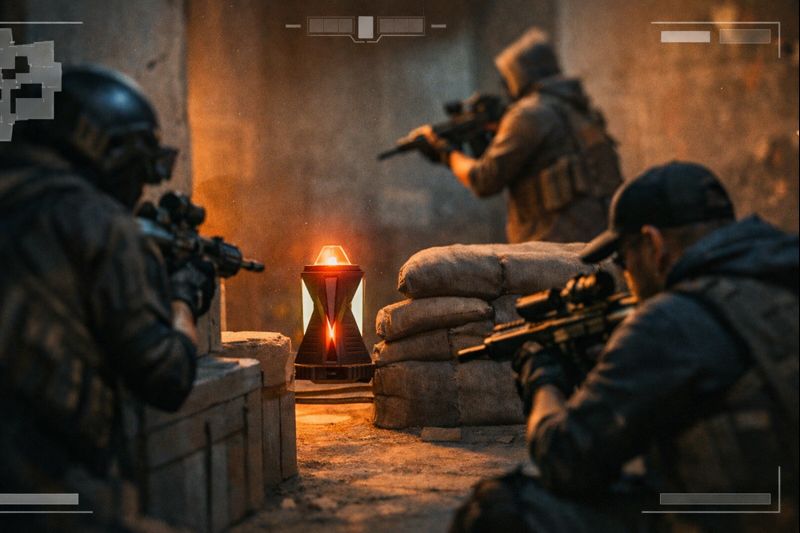
“Default plant” is only correct if it supports your current setup. Before planting, ask:
- Where is our safest post-plant space (site, off-site, long, high ground)?
- Do we want to play lineups, crossfire contact, or site anchor?
- What utility do we have left to deny defuse, and from where can we use it safely?
- Are we up numbers (play time) or down numbers (need pressure)?
Two plant goals you should always try to achieve
- Visibility: at least one safe teammate can see the spike from an off-site position.
- Defuse exposure: defenders must step into danger to touch or stick the defuse.
Safe plant vs. powerful plant
A safe plant (low risk) is correct when you are low utility, low numbers, or likely to be re-contested during planting. A powerful plant (higher risk) is correct when you have site control, cover, and time to choose a plant that enables long-range denial. The mistake is choosing a risky plant when you cannot protect the planter, or choosing a “safe” plant that ruins your win condition.
Planting discipline that wins rounds
- Assign the planter early: the planter should already be positioned when site is secured.
- Cover the planter with purpose: every teammate should cover a different lane, not stare at the spike.
- Don’t over-chase: if you have the site, planting is often stronger than hunting the last defender.
- Call the post-plant plan before the spike is down: “play off-site,” “two on site one flank,” “lineup + contact,” etc.
3) Roles and Structure After the Plant
Post-plant chaos is the most common reason low- and mid-rank teams throw rounds. Everyone wants to “make a play,” so everyone peeks independently, and the defenders win via isolated duels. Your solution is simple: structure. You need a plan that defines roles.
The four post-plant roles
- Anchor: holds the highest-value close angle that prevents defenders from walking onto spike for free.
- Crossfire partner: plays a complementary angle that trades the anchor or punishes a defuse touch.
- Information player: watches flank timing, gathers info, or holds a “bridge” angle that prevents silent reposition.
- Utility closer: saves stall/deny utility for the defuse window (may be the anchor, or may play off-site).
One player can cover multiple roles, but you must ensure every role is covered by someone. The most stable structure in ranked is a “triangle hold”: two players create a tradeable crossfire on the spike, and the third controls the most dangerous rotation/flank lane. In 4vX or 5vX, add a second layer: a deep player that punishes clears and resets.
Post-plant spacing rules
- Trade distance: your crossfire partner should be able to swing within a moment of contact.
- No double-commit: do not stack two players on the exact same angle unless you are about to double-swing on a tap.
- Angle diversity: your setup should force defenders to clear at least two different elevations or directions.
- Fallback path: every player should know where they retreat if pressured by utility.
4) Timing: How to Convert With the Clock
Post-plant is not a single moment. It’s a sequence of phases. If you treat every second the same, you will either over-peek early (giving defenders time) or hide too long (allowing defenders to clear and set up a comfortable defuse). The goal is to align your aggression with the defender’s time pressure.
Phase A: Stabilize (immediately after plant)
- Stop sprinting. Make defenders guess whether you are on site or off site.
- Reload, heal, reset crosshair placement.
- Replace risky positions with tradeable ones.
- Identify what utility remains for the defuse attempt.
Phase B: Build the hold (early post-plant)
- Establish crossfires and trade lines.
- Put your information player on flank/rotation timing.
- Decide whether you are playing for first contact or defuse contact.
Phase C: Deny the approach (mid post-plant)
This is where defenders start to clear space. Your aim is not to “win the round right now,” but to make their clear expensive. If you can force one defender to burn key utility or eat damage, the later defuse becomes much easier to deny.
Phase D: Punish the touch (late post-plant)
Eventually, defenders must touch spike. This is your highest-percentage fight window. Plan for it: have at least one player ready to swing on a tap, and have at least one piece of utility saved to stall or punish. If defenders never touch spike, you win by time. If they do touch, they must do it under your crossfire.
The biggest timing error in ranked
The most common throw is “peek one by one” in the early phase. Every death early gives defenders more time to clear angles and set up a defuse. If you are up numbers, your default should be: do not offer isolated duels. Make defenders walk into your structure.
5) Space and Angles: Crossfires, Trades, and “No Free Duels”
If you improve only one post-plant skill, improve this: creating duels the defender cannot win cleanly. Your job is to make every defender fight either: (1) two angles at once, (2) an angle plus utility, or (3) an angle with no ability to retreat.
Crossfire fundamentals
- Crossfire means non-overlapping lines: if both players aim the same choke, it is not a crossfire, it is stacking.
- One tight, one wide: one player holds the close swing; the other holds the wider exit path.
- Crossfires should punish defuse: wherever the spike is, at least one angle should see the defuse “touch point.”
- Crossfires must be tradeable: you are not setting a trap; you are setting a trade engine.
Trade discipline: the difference between “good aim” and winning rounds
Trading is not “we both peek.” Trading is “I can immediately punish the person who took my teammate.” This requires distance, timing, and restraint. If your teammate takes contact, your job is not to panic-peek. Your job is to peek when the defender is committed to the kill animation and cannot reset crosshair easily.
Angle economy
Defenders retaking must clear a large number of possible angles, but you do not want to hold all of them. You want to hold the few angles that matter: the angles that protect spike, protect your escape route, and protect the timing window. When you hold too many angles, you hold none of them well.
“No free duels” rule set
- If you are up numbers, do not swing first. Make defenders swing into you.
- If you are down numbers, you may need proactive pressure, but do it with a trade plan.
- Do not chase kills away from spike unless it is a guaranteed trade or ends the round.
- When in doubt: play the spike, not the scoreboard.
6) Utility Layering: Stall, Force, Punish
Utility wins post-plants because it changes the defender’s choices. The defender wants a clean clear: smoke the spike, flash into site, isolate fights, and defuse under cover. Your utility should do three things: stall the approach, force movement, and punish commitment.
A simple utility framework
| Goal | What it does | Examples (by category) |
|---|---|---|
| Stall | Buys time and delays clears | Smokes to cut lanes, slows, area denial zones |
| Force | Pushes defenders out of safe cover | Recon tools, pressure utility, displacement tools |
| Punish | Deals damage or creates a kill window | Mollies, frag zones, shock damage, stun + swing |
Save at least one “defuse denial” tool
If you spend every piece of utility to take the site, your post-plant becomes aim-only. Aim-only is volatile. In most rounds, you should preserve at least one tool that interacts directly with the defuse attempt: damage over time, a stun that makes sticking risky, a smoke that forces a reposition, or a recon piece that confirms the touch.
Layering beats dumping
Dumping utility means using multiple tools at once without forcing the defender to respond. Layering means using one tool to provoke a reaction, then using the next tool to punish the reaction. For example: a smoke forces defenders to walk through a choke, then a flash hits the choke, then a swing finishes the timing. Layering creates inevitability; dumping creates gambling.
Utility timing cues you should internalize
- Early: use utility to stabilize and prevent immediate flood retakes.
- Mid: use utility to deny clears and gather info on approach routes.
- Late: use utility to interact with the spike touch and force defenders off the defuse.
For broader tactical FPS reference and terminology, community hubs and match databases can help you review patterns and VODs efficiently, such as: https://www.vlr.gg/. The key is converting what you see into your own repeatable rules, not copying a single round in isolation.
7) Defuse Control: Taps, Sticks, Halves, and Resets
Defuse control is the heart of post-plant. Defenders use defuse pressure to force you into peeking. Attackers must recognize the defender’s intent and respond with the correct tool: swing, utility, or reposition.
Defuse behaviors you will see constantly
- Tap: a quick touch to bait swings and reveal positions.
- Stick: committing to the defuse because attackers are far, low utility, or poorly positioned.
- Tap-then-fight: touch to force movement, then swing the reposition.
- Smoke + stick: create visual denial, then commit under cover.
- Half pressure: reaching a major defuse checkpoint to force desperation and reduce attacker options.
How to counter taps without throwing
A tap is designed to make you panic. The correct response depends on your setup:
- If you have a clear angle on the spike touch point, hold discipline. Do not swing unless you must.
- If your angle is blocked (smokes, walls), use information or denial utility first.
- If you are close and have a trade partner, prepare a double-swing on the second touch.
- If you are solo and far, you must often reposition earlier so you are not forced into a low-odds sprint-peek later.
When to swing the defuse
Swinging is correct when:
- You have no denial utility available.
- The defender can finish if you wait.
- Your swing is tradeable (or it ends the round).
- You have information that the defender is committed (audio cues, teammate contact, recon confirmation).
Waiting is correct when:
- You have reliable denial utility still available.
- The defender is likely baiting a swing and you can punish their peek instead.
- You can win by time without exposing yourself.
The “reset” concept
Many post-plants are lost because attackers never reset after taking space. A reset means: re-anchoring angles, re-establishing crossfires, and re-centering your attention on the spike after a brief skirmish. If you get a kill, that does not mean “chase the last player.” It often means “reset and make the remaining defenders do the impossible.”
8) Map-Agnostic Site Archetypes and Best Holds
Instead of memorizing one setup per map, classify sites into archetypes. Once you recognize the archetype, you can choose the correct hold pattern and the correct plant style.
Archetype 1: Open site with long sightlines
Characteristics: large open plant zones, multiple long angles, defenders must cross open space to touch spike. Best plan: plant for visibility and play off-site crossfires. Use utility to cut lines and punish the touch.
- Prioritize plants that are visible from safer distance positions.
- Hold from two different directions so a smoke can’t block everything at once.
- Keep one player watching the fastest rotation path to prevent a silent pinch.
Archetype 2: Tight site with strong defender cover
Characteristics: many boxes, close corners, defenders can start defusing behind cover. Best plan: keep a site anchor plus a crossfire partner, and save utility to force defenders off cover.
- Don’t abandon the site entirely unless you have strong denial utility and guaranteed visibility.
- Crossfires should punish the “safe defuse” cover angles.
- Use flashes/stuns to make defenders uncomfortable staying on spike.
Archetype 3: Multi-level site
Characteristics: vertical angles, ramps, balconies, elevated cover. Best plan: one player holds high ground to control clears; another holds the spike touch; the third anchors the rotation lane.
- Create a vertical crossfire: one high, one low.
- Don’t let defenders clear high ground for free; it often determines the late fight.
- Use utility to deny “safe” climbs or drops.
Archetype 4: Two-choke retake (defenders must choose an entrance)
Characteristics: defenders commonly split two entrances. Best plan: hold one entrance with a light presence and stack punish the other with a trap crossfire and trade spacing.
- Don’t fight both entrances equally; pick the one you want to punish.
- Information player calls split timing and identifies the “real” hit.
- When the split arrives, let the first player commit, then swing together.
Archetype 5: Fast flank risk
Characteristics: defenders can reach flank quickly or lurk through mid routes. Best plan: assign a dedicated information player. Your post-plant collapses if you get backstabbed.
- One player’s job is to watch flank until information confirms it is safe.
- Do not rotate all players off-site without a flank solution.
- If you lack flank control, shorten your post-plant and be ready to fight sooner.
9) Agent-Class Playbooks (Controller, Sentinel, Initiator, Duelist)
Agent specifics change with balance, but classes retain stable post-plant identities. Build your plan around what your class is best at, and you will remain effective even as the meta shifts.
Controllers: isolate, deny sight, force awkward defuses
- Primary post-plant job: make defenders spend time and utility just to see the spike.
- Best patterns: smoke the defuse lane (not necessarily the spike), then punish the forced walk-through.
- Common mistake: smoking too early and giving defenders permanent cover to approach.
Controller best practice: save at least one smoke for the late window, when defenders are most desperate. A late smoke forces a rushed defuse decision: stick blind or swing into angles.
Sentinels: stabilize the site and punish contact
- Primary post-plant job: make retake entry expensive and predictable.
- Best patterns: use traps/utility to detect the clear, then trade off that information.
- Common mistake: placing all utility for the entry and leaving nothing to protect the post-plant.
Sentinel best practice: think in layers. One layer stops the flank. One layer punishes the site clear. One layer influences the spike touch.
Initiators: information, disruption, and “go” signals
- Primary post-plant job: confirm where defenders are clearing from and create a timing window for swings.
- Best patterns: recon to confirm touch, then flash/stun the touch and swing together.
- Common mistake: using information tools without converting them into an actionable swing or reposition.
Initiator best practice: every info tool should answer a question that changes your decision: “Are they on spike?” “Are they splitting?” “Did they cross into the kill zone?”
Duelists: take space, then stop taking unnecessary space
- Primary post-plant job: hold the most aggressive valuable space that prevents a comfortable clear.
- Best patterns: pressure one approach lane, then fall back into the crossfire before being traded.
- Common mistake: hunting kills far from spike and dying first.
Duelist best practice: your post-plant value is not “one more kill.” It is making the defender’s clear uncomfortable while staying tradeable. If you must fight, fight on your team’s timing, not the defender’s.
10) Playing Numbers: 5vX to 1v1 Post-Plant Rules
Post-plant decisions change dramatically based on numbers. A stable team adjusts automatically: more players means more patience and tighter trades; fewer players means more pressure and more reliance on utility timing.
5v4 / 4v3 / 3v2: protect the spike, deny variance
- Default to structure: crossfire + flank info.
- Do not peek separately. Make defenders clear into you.
- Use utility to stall, not to chase.
- If a teammate dies, resist the urge to “make it back.” Reset and keep the advantage.
3v3: play for the defuse touch window
- One player watches the fastest rotation/flank.
- Two players coordinate around the spike touch point.
- Identify your “must win” fight: usually the first defuse attempt.
2v2: simplify the round
- Avoid complex off-site spreads that can be isolated.
- Choose a crossfire that guarantees a trade.
- Save one denial tool if possible; if not, position so you can swing the touch.
2v1: do not throw
- Stack trades: hold the same space from different angles.
- One player watches the spike; the other watches the only route that can break the hold.
- If the defender taps, do not both swing immediately. Swing with intent, one to contact, one to trade.
1v1: convert by planning earlier
Most 1v1 post-plants are decided by earlier decisions: where you planted, what utility you saved, and whether you positioned to see the spike touch. In the moment, choose one win condition:
- Visibility win: play a safe angle where you can see the spike and swing the touch.
- Utility win: play a safe position where your denial tool can land on the spike without exposing you.
- Ambush win: hide close enough to punish the defuse, but only if you can avoid being cleared for free.
11) Communication That Wins Post-Plants
Post-plant comms should be short, predictive, and role-based. The point is not to narrate what you see; it’s to synchronize actions. Use comms to call intent and timing.
High-value call types
- Plan call: “Play off-site,” “Two on spike crossfire,” “Lineups + contact.”
- Utility call: “I have denial,” “I have flash for tap,” “Smoke in five.”
- Timing call: “Let them tap,” “Swing second touch,” “Hold, no peek.”
- Info call: “Flank not seen,” “Two coming main,” “Split possible.”
Simple comm templates
- “Don’t peek. Play the tap.”
- “I’ll swing first, trade me.”
- “Save utility for touch.”
- “One holds flank, two hold spike.”
- “Reset positions, we’re up.”
If your team struggles with consistency, consider establishing a default post-plant rule: after plant, everyone stops moving for one second, then assigns roles. That single second removes panic and prevents solo peeks.
12) Practice Routines and Drills
Post-plant skill improves quickly because it is highly repeatable. You can drill it in custom games with a friend, or you can focus on it in ranked by choosing one concept per session (for example: “no isolated peeks,” or “save one denial tool every round”).
Drill 1: The triangle hold repetition
- Plant the spike.
- Assign roles: anchor, crossfire partner, info player.
- Defender side walks into the site and tries different retake paths.
- Attackers win only if every kill is traded or the defender dies on spike.
Drill 2: Tap discipline
- Defender taps spike at random times.
- Attackers are not allowed to swing the first tap unless they have direct visibility.
- Attackers must respond with either denial utility or coordinated swing on second touch.
Drill 3: Utility layering
- Choose two utilities you commonly have post-plant (smoke + flash, stun + swing, recon + molly, etc.).
- Practice using the first tool to force a reaction, then the second to punish the reaction.
- Review: did you create an unavoidable decision for the defender, or did you just make noise?
Drill 4: “Play time” decision making
- Play a series of post-plants where attackers are up numbers.
- Attackers lose the drill if anyone takes an isolated duel away from spike.
- Goal: win by time or by defuse-touch punish, not by hunting.
Self-review questions after each post-plant
- Did we have a plan within two seconds of planting?
- Did we keep trade spacing, or did we split into isolated lanes?
- What utility did we have for the touch, and did we save it?
- Did we swing the tap correctly, or did we get baited?
- Did we play the spike, or chase kills?
13) Common Post-Plant Mistakes (and Fixes)
Mistake: Everyone leaves the site with no information
Fix: assign one info player to watch the fastest pinch lane, or maintain a safe trap/utility layer to detect a flank. If you cannot secure info, keep at least one player site-adjacent to prevent a silent walk-up.
Mistake: Swinging every tap instantly
Fix: treat the first tap as a question. Answer it with discipline (hold), information (recon), or denial (utility). Swinging is for when the defender is committed or when time forces it.
Mistake: Utility dumped during entry
Fix: plan your execute around leaving at least one post-plant tool. This might mean a simpler entry, slower clear, or different role assignment. Post-plant utility is not “extra.” It is often the win condition.
Mistake: Over-peeking because you want to end the round
Fix: stop thinking in “kills.” Think in “defuse attempts.” The defender must come to the spike. Let them. Your best fight is usually the fight that happens because the defender has no time.
Mistake: No reset after first kill
Fix: after a kill, quickly re-anchor angles and re-establish crossfire lines. If you chase, you give defenders new routes and new timing. Reset keeps the round predictable.
14) The 20-Second Post-Plant Checklist
- Stop. One second of calm.
- Plan. Off-site, on-site, or hybrid?
- Roles. Anchor, crossfire, info, utility closer.
- Trade spacing. Can we trade the first contact?
- Defuse denial. What tool do we have for the touch?
- Flank. Who owns the fastest pinch route?
- Win condition. “Play time” or “force fight”?
If you execute this checklist consistently, you will feel something change immediately: defenders will look rushed, their clears will look hesitant, and your post-plants will become predictable in the best way.
15) FAQ
Should we always play off-site after planting?
No. Off-site post-plant is powerful when your plant is visible from safety and you have denial utility or strong crossfires. If the site offers strong defender cover or your plant is not visible, you often need at least one site-adjacent anchor.
How many players should watch flank?
Usually one. Your flank solution can be a player, a trap layer, or a timing read. The mistake is having zero solution. If you dedicate two players permanently to flank, you often weaken your spike control unnecessarily.
What if defenders smoke the spike every time?
Build your hold so a single smoke cannot block every deny angle. Hold from two directions, use utility to force them off the defuse, and consider delaying your denial tools until the defender is committed rather than reacting instantly.
Are lineups required to win post-plants?
No. Lineups are one tool. The core of post-plant is structure, trades, and timing. If you rely only on lineups, good defenders will hunt the lineup player, fake defuses, or create pressure that forces you into panic mistakes. Use lineups as an advantage, not as a crutch.
What is the single best improvement for ranked post-plants?
Stop giving isolated duels when you are up numbers. Build tradeable crossfires and make defenders touch the spike under pressure. That one adjustment converts a surprising number of rounds immediately.
Closing: Make Post-Plants Your Competitive Edge
Many players grind mechanics and forget that Valorant is a timing and structure game. Post-plant rounds are the most teachable, repeatable situations you’ll see. If you consistently plant for your plan, establish tradeable crossfires, and keep one denial tool for the defuse touch, you will convert more spikes without needing perfect aim every round.
If you want a structured improvement path (from post-plant fundamentals to role-specific execution and VOD review), you can explore Boosteria’s Valorant options here: https://boosteria.org/valorant-boosting/prices