



Ultimate LoL Support Guide 2026 – How to Carry Games as Support in Ranked
INTRODUCTION TO LoL SUPPORT GUIDE
The path of the support is a hard one – and in 2025 it’s more important than ever. Autofill, snowballing early games, fast drakes and brutal mid-game skirmishes mean that one smart support can completely decide whether a ranked game is winnable or doomed.
Luckily, Houdini, the elusive teacher that works magic with LoL, is here again to provide you with an updated, modern support guide with a focus on match-ups, decision making, vision control and the current support meta. Kick back, relax, and enjoy another gem from Houdini’s Cornucopia of Extremely Helpful Guides.
This guide is written for solo queue ranked, from Iron to high elo. It will help you if:
- You’re a main support trying to climb more consistently.
- You’re autofilled support and don’t want to run it down.
- You’re a carry player who wants to understand what your support should actually be doing.
And if you ever feel stuck at a certain division, remember you can always combine learning with some external help – coaching and rank services from Boosteria can show you how high-elo supports think and move on the map in real time.
UNDERSTANDING SUPPORT’S ROLE IN LoL (2025 VIEW)
To really delve deep into the role of support, you have to accept one core truth:
Support is the role that controls information and fights. You decide where your team fights, when your team fights, and how safe your carries are when they farm and push. Damage numbers matter, but as support you are the one pulling the invisible strings.
In modern LoL, supports can be roughly grouped into three big families (with some champions blending two):
- Tank / Engage Supports
- Mage / Poke Supports
- Savior / Enchanter / Healing Supports
We’ll keep using these three categories, but now with a 2025 mindset: runes, items and macro have changed a lot since the old mastery-tree days. Later in this article you’ll find a long Legacy section that preserves the original Season 6/7 vision and mastery discussion for historical interest; the main body below is updated for the current game.
WHAT SUPPORTS ACTUALLY DO IN A RANKED GAME
Every support, regardless of class, has to juggle the same core responsibilities:
- Lane management – controlling trades, minion waves and all-in opportunities in bot lane.
- Vision control – placing and clearing wards around river, objectives and later jungle entrances.
- Engage and peel – starting good fights, preventing bad ones, and keeping key carries alive.
- Roaming and tempo – knowing when to leave lane to help mid/jungle and when to stay.
- Shotcalling – pings, timers, rotations; often the support sees most of the map.
The way you use these responsibilities changes depending on if you’re a tank, a mage, or an enchanter — so we’ll break them down by type.
TANK SUPPORTS IN LoL: UPDATED BASIC GUIDE
Champions that fall under Tank / Engage Support include  Alistar,
  Braum,
  Leona,
  Taric,
  Thresh,
  Trundle,
  Nunu,
Nunu,  Blitzcrank and many more modern additions like Rell or Nautilus.
Your job as a tank support is simple to describe and hard to execute:
- Find high-value engages your team can follow.
- Soak damage and crowd control so your carries don’t have to.
- Be brave enough to walk into fog first… but not so reckless you int vision checks.
TANK SUPPORT RUNES & ITEMS (MODERN)
The old mastery trees are gone. In modern LoL, the most common tank support rune pages are:
- Resolve primary with Aftershock or Guardian for hard engage or peel.
- Inspiration secondary for Biscuit Delivery + Cosmic Insight, or Domination secondary for cheap shot + ultimate hunter on heavy CC champs.
Your starting item will almost always be one of the support quest items (for example, the Relic Shield / Steel Shoulderguards line). They give health, income and eventually your built-in warding item – classic Sightstone no longer exists as a separate purchase.
Core items on tank supports tend to be:
- HP + resistances – think big armor/magic resist items depending on enemy threats.
- Active utility items – items with active slows, shields or movement speed to help engage or peel.
- Aura effects – items that help your whole team survive bursts and AoE damage.
Exact item names and stats change every few seasons, so your best bet is to combine this guide with live data tools such as League of Graphs or OP.GG and then adapt based on your lobby and comp.
TANK SUPPORT LANE GAMEPLAN
As a tank support your lane pattern revolves around all-ins and threat:
- Level 1–2: You’re usually weaker unless you have a broken level 2 engage. Play around your cooldowns and bushes.
- Level 2 spike: Champions like Leona, Nautilus or Alistar want to hit level 2 first and instantly engage.
- Health trading: You want both you and the enemy support to be low enough that if they mis-step into your CC, they die.
- Wave state: Good all-ins happen when the wave is pushing towards the enemy tower, so if you win, they lose a huge wave and plates.
You don’t have to constantly go in. Simply standing in fog and threatening hook / stun can be enough to deny CS and relieve pressure from your ADC.
MAGE SUPPORTS IN LoL: UPDATED BASIC GUIDE
The next support type is the Mage / Poke Support. This style thrives on doing damage from range, setting up picks and zoning areas of the map. These supports typically sit in the back-line or on the flank and burn enemies down before they even reach your carries.
Champions such as  Bard,
Bard,  Karma,
  Morgana,
  Zyra,
Zyra,  Fiddlesticks, and modern additions like Vel’Koz or Brand support fit this role.
MAGE SUPPORT RUNES & ITEMS (MODERN)
Typical rune setups:
- Sorcery primary with Summon Aery or Arcane Comet for poke and shields.
- Domination secondary for extra burst and vision (Cheap Shot + Zombie Ward / Ghost Poro), or Inspiration for biscuits and free boots.
For items, you start with the AP support quest line (for example, the Spellthief/Spectral line). Your core later tends to be some mix of:
- Flat AP damage – to one-shot waves and chunk squishies.
- Utility AP items – slows, shields, movement speed for your team, or extra CC.
- Defensive AP – stasis, HP or resistances so you don’t die in the first second of a fight.
Your mindset is: zone first, then follow up. You soften enemies with poke so that when a tank goes in, the fight is already almost won.
MAGE SUPPORT LANE GAMEPLAN
Mage supports want to create slow, suffocating pressure:
- Use your range advantage to hit champions while hitting the wave.
- Track enemy hard engage cooldowns – when Blitzcrank hook or Leona E is down, you can walk up aggressively.
- Aim to chunk the enemy duo to 50–60% HP so that any gank or jungle presence converts into free kills or plates.
- Play around choke points: pixel brush, tri-brush, and lane bushes are your best friends.
Remember: poke doesn’t matter if you never convert it into plates, dragons or towers. As a mage support, constantly think, “Can we push this advantage into something on the map?”
SAVIOR / ENCHANTER SUPPORTS IN LoL: UPDATED BASIC GUIDE
Last but not least is the savior / enchanter support. This style focuses on keeping teammates alive through shielding, healing, movement speed, and protective crowd control.
Champions that fit this style are obvious:  Sona,
Sona,  Soraka,
  Janna,
  Lulu, and newer faces like Renata Glasc or Milio.
ENCHANTER RUNES & ITEMS (MODERN)
Most enchanters run:
- Sorcery primary with Summon Aery for shields/heals, or Guardian in Resolve if you want extra safety.
- Inspiration secondary for early sustain and item CDR, or Domination secondary for more vision / poke.
Your support quest item will be the “mana + poke or shield” line. After that, enchanters usually stack:
- Shield/heal amplifiers – items that increase your defensive numbers.
- Cooldown reduction – more spells = more shields and peels = more time alive for carries.
- Team aura effects – movement speed, damage reduction, resistance buffs.
Because enchanters generally stay at the back, movement speed and positioning are your true stats. The more precisely you step in and out of danger, the more impossible it feels for the enemy to ever finish off your hyper-carry.
ENCHANTER LANE GAMEPLAN
Enchanters are all about trading HP bars in your favor:
- Use your shields and heals to let your ADC play on the limit without actually dying.
- Don’t spam heal/shield on cooldown; use them to win important trades, not to fix random poke.
- Position diagonally behind your ADC, so if an engage lands, you are still in range to shield, peel or exhaust.
- Once you hit key ultimates (Sona R, Janna R, Lulu R), think of them as “teamfight spells,” not “panic buttons.”
Enchanters are monsters in mid-late game. If you get to 2–3 completed items without being too far behind, most fights become nearly unwinnable for the enemy unless they one-shot your carries instantly.
FACTORS IN THE LoL SUPPORT MATCHUP
All supports scale differently in terms of laning, roaming, team-fighting, sustaining, sieging, and crowd control. Knowing these differences – effectively the strengths and weaknesses of each support – is vital.
The original guide included a matchup table rating supports from 1 to 5 in different categories. That idea is still extremely useful in 2025. Before each game, ask yourself:
- Who wins short trades in lane?
- Who wins all-ins?
- Who roams better at level 3–4?
- Who has more impact in 5v5 fights at two completed items?
- Who has easier, more reliable engage?
If you can answer those five questions honestly, you’ll immediately understand whether the lane is about survive and scale, hard punish early or leave lane and help the rest of the map.
HOW TO READ A SUPPORT MATCHUP LIKE A PRO
Take a few iconic examples:
- Leona vs Soraka – Leona wins all-ins, Soraka wins sustain. If Leona ever lands full combo with her ADC nearby, Soraka dies. If she doesn’t, Soraka heals everything back. So Leona’s win condition is: get level lead, engage during slow-push waves, and sync with your jungler.
- Morgana vs Blitzcrank – Blitz threatens all-ins, Morgana threatens anti-engage and counter CC. Morgana’s goal is to constantly stand between Blitz and her ADC, forcing hooks to hit her Black Shield and waste cooldowns.
- Lulu vs Thresh – Thresh wins if he lands a hook on a squishy target with backup; Lulu wins if she can shield and polymorph the diver, buying enough time for her carries to kill him.
Notice how in every case, understanding the matchup is really about understanding each side’s win condition. This will be a recurring concept throughout the guide.
LANING FUNDAMENTALS FOR SUPPORTS
Regardless of champion class, the best supports in solo queue all share the same core laning habits.
1. WAVE & HP MANAGEMENT
- Level 1–2 race: Help push the wave if your champion spikes at level 2 (Leona, Nautilus, Lucian bot lanes). If you’re weaker early (like Soraka), focus on not losing too much HP instead.
- Never trade for free: Any time you trade HP, you should get something: enemy HP, wave control, or time for your jungler to invade.
- Play around big minion waves: Fighting in a big enemy wave is suicide; fighting with a big allied wave amplifies your damage massively.
2. BUSH CONTROL & ZONES
As support, you control vision in lane bushes. Simple rules:
- If you’re playing engage (Leona, Rell, Alistar), you want to sit in the side bushes and threaten all-ins whenever the enemy steps up.
- If you’re playing poke (Zyra, Karma, Brand), you want vision in bushes so that enemy engage supports can’t surprise you.
- Buying an early Control Ward for river bush is non-negotiable. It protects against level 3 jungle ganks and gives you room to trade.
3. RESET TIMING
Bad recalls lose more games than bad fights. Great supports:
- Ping when they want to crash a big wave and recall together with their ADC.
- Look to base on completed item or key component, especially boots + support item upgrade.
- Avoid recalling alone when drake is spawning or when your jungler wants to fight bot side.
ROAMING AS A SUPPORT
One of the biggest differences between low-elo and high-elo supports is how and when they roam.
WHEN YOU SHOULD ROAM
Look for these windows:
- You and your ADC crash a big wave into enemy tower.
- Your ADC wants to recall and you have nothing to defend bot tower yet.
- Enemy mid is pushed up without vision and your jungler is nearby.
If you can move from bot to mid, drop a couple of wards, help your mid push or secure a kill, then be back bot for the next wave, you’re playing support correctly. If roaming feels confusing, you can study how high-elo supports move by watching pro VODs or analytical sites like Mobalytics role breakdowns.
WHEN YOU SHOULD NOT ROAM
- Your ADC is low HP, no summoners, and the wave is frozen against them.
- Drake is spawning in 30–40 seconds and you have no vision control yet.
- Enemy bot lane has strong dive potential and you’d leave your ADC under tower vs double kill threat.
A good rule: if your ADC can’t farm safely without you, you probably shouldn’t roam for long. Short, efficient roams win games; 30-second disappearances that lose plates and kills on bot lose games.
VISION CONTROL & THE MODERN META
Vision has changed a lot since the old Sightstone era. Today, your support quest item eventually turns into your warding item, and trinkets handle the rest.
EARLY GAME VISION PLAN
- Buy a Control Ward on your first base (earlier if possible).
- Keep one Control Ward in or near river on the side your jungler wants to play.
- Use your ward charges mostly on:
- River bushes
- Enemy tri-bush / lane bushes if you’re pushing
- Defensive jungle entrances if you’re under pressure
MID GAME VISION PLAN
Once outer towers fall, your job is to control the areas around objectives:
- Before drake, move with your jungler/mid and ward first, then start the objective.
- Always pair Control Wards with sweeper – you deny vision and create darkness the enemy has to facecheck.
- Don’t waste all wards on one side if Baron/Herald is spawning on the opposite side soon.
Think of every ward as a small investment in future safety or future kills. A single deep ward behind enemy red buff can set up an ambush that wins a game 3 minutes later.
COMPOSITION & WHAT SUPPORTS CAN PROVIDE
Picking a support is not just about lane; it’s also about team composition. Ask:
- Does our team already have engage?
- Does our team already have frontline?
- Do we have enough damage, or do we need more setup for our carries?
Examples:
- If your top and jungle are already tanks with strong engage (e.g. Malphite + Vi), you can afford to pick an enchanter like Janna or Lulu and turn your ADC into a late-game raid boss.
- If your team is full of squishy champs with no reliable CC, picking a hard engage support like Leona, Nautilus or Rell is often mandatory.
- If the enemy team has multiple assassins, a support like Morgana, Janna, Tahm Kench or Lulu can single-handedly deny their win condition.
Modern ranked is fast. If your team can’t start fights on its terms or protect its carries from obvious threats, the game usually falls apart around the third drake or second Baron attempt.
CARRYING AS SUPPORT: WIN CONDITIONS
The qualities often attributed to support mesh differently compared to other roles. ADC might be known for mechanical ability; support is more about game knowledge, decision making, warding and map awareness.
It’s nice to know that Thresh has a good lane into Soraka, but it’s not enough. You must explicitly know the win condition for each fight:
- If Thresh lands hook + flay on Soraka while his ADC follows, they probably kill her.
- If he misses hook and keeps chasing, Soraka sustains through, and Thresh runs out of HP and cooldowns.
The entire duel boils down to a simple “hook win condition.” High-elo supports constantly think in these simple, brutally honest terms:
- “We win this 2v2 only if my hook lands first.”
- “We win this dragon fight only if my engage hits their carry while Flash is down.”
- “We survive this dive only if my exhaust plus shield come out at the right time.”
Learn to phrase every fight as a list of if-conditions. That’s how you plan your cooldowns, flashes and item actives correctly.
KEEPING A LEAD AS SUPPORT: AVOIDING LOSE CONDITIONS
Identifying lose conditions is even more important than identifying win conditions. A single bad engage can throw a 5k gold lead.
Common support lose conditions:
- Facechecking alone into fog when objectives are spawning.
- Engaging 4v5 when your top is pushing bot and has no teleport.
- Chasing kills deeper than your vision and wave states allow.
- Letting your ADC walk first into jungle while you farm a side wave or ward mid.
Make it a habit to ask yourself every minute: “What is the fastest way we lose this game from here?” Then avoid doing that thing, even if it looks tempting for a montage.
SNOWBALLING LEADS & STEMMING THE BLEEDING
When you are ahead as support, your job is to:
- Convert that lead into vision control and objectives, not just more kills.
- Ping your team to reset together, buy control wards, and then suffocate the enemy jungle.
- Force fights when your carries are strong and the enemy’s item spikes are delayed.
When you are behind, your job becomes:
- Stop taking coin-flip fights in fog with no vision.
- Protect your fed teammate (mid, jungle or top) with peel, wards and body blocking.
- Trade objectives when you can’t contest: give drake to take plates or Herald on the other side.
In both situations, defensive and offensive warding are your biggest tools. A simple line of vision from mid lane to your jungle entrance can prevent the “one catch” that often throws a game.
SUPPORT IN THE 2025 LoL META & OTHER TEAM GAMES
Since the days of mastery trees and Ruby Sightstone, the game has changed a lot. Mythic items came and went, support quest items now handle warding, and many support champions have been added or reworked to fit faster, bloodier games.
However, the core fundamentals haven’t changed at all:
- Supports that understand win conditions and track cooldowns climb.
- Supports that control vision and move with their jungler climb.
- Supports that tilt less and communicate more climb.
These fundamentals don’t just apply to LoL. If you also grind other team battlers like Marvel Rivals, you’ll notice the same logic applies: vision, cooldown tracking and teamfight positioning win games there too. On Boosteria you can even climb in both games at once – check out Marvel Rivals boosting prices and compare them with your usual LoL services to see what fits your grind path best.
For patch-by-patch changes, it’s always worth reading or at least skimming the official patch notes on the LoL website. Combine those with this evergreen support framework and you’ll stay ahead of most of your ladder.
CONCLUSION
With proper preparation and know-how, a plan of action can be made even before a game begins. Among the best tacticians, one skill is always present: the ability to prepare for the intricacies of any instance.
The support player must first learn to help themselves before they can fully help others. Understand matchups, track win and lose conditions, control vision, and be the calm voice that guides your team toward the right fights instead of the fun ones.
After all, if you can’t carry yourself from the support role, how can you expect to carry your team?
Houdini Out
The following content we provide may interest you:
- LoL ranked boosting & coaching – Boosteria main page
- LoL Coaching by pros – learn the support role faster
- Detailed LoL MMR guide
- Easter eggs and Quests in LoL
- Ultimate Skarner ranked guide
LEGACY SECTION – SEASON 6–7 SUPPORT META (ARCHIVED)
The following part preserves the original discussion of runes, masteries and vision items from older seasons. The systems it refers to (0/18/12 masteries, classic Sightstone, Eye items) are no longer present in the modern game, but the ideas can still be interesting if you enjoy seeing how support theory evolved over time.
TANK SUPPORTS – LEGACY RUNES & MASTERIES
A tank support should have something similar to this mastery page, and this rune page, as shown below. This is a general standard, because it provides you with the most “tankability” you can possibly get. That’s your purpose, that’s what you want as a tank support. The most effective builds on these champions include Armor and Magic Resist in the form of  Frozen Heart,
  Randuin’s Omen, and
  Locket of the Iron Solari. Boot choice generally tends to enhance the tankiness of the champion in the form of
  Boots of Swiftness or in some cases against heavy crowd control
  Mercury Treads can be built.
RUNE PAGE FOR TANK SUPPORT (LEGACY)
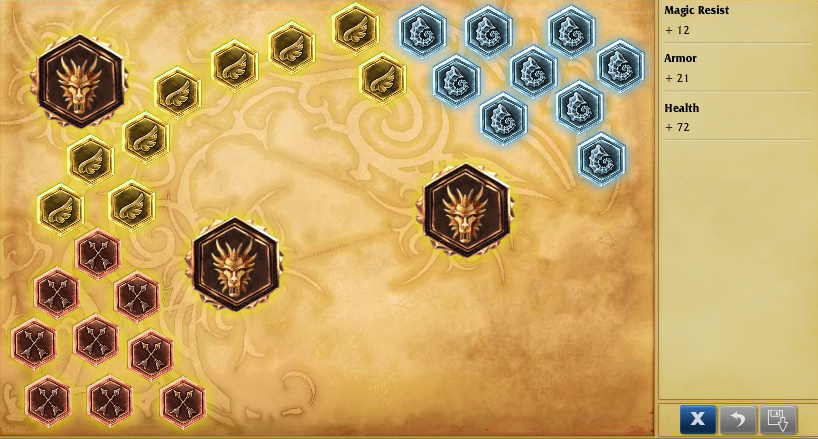
9x Armor Reds, 9x Health Seals, 9x MR Blues, 3x Armor Quints
MASTERY PAGE FOR TANK SUPPORT (LEGACY)
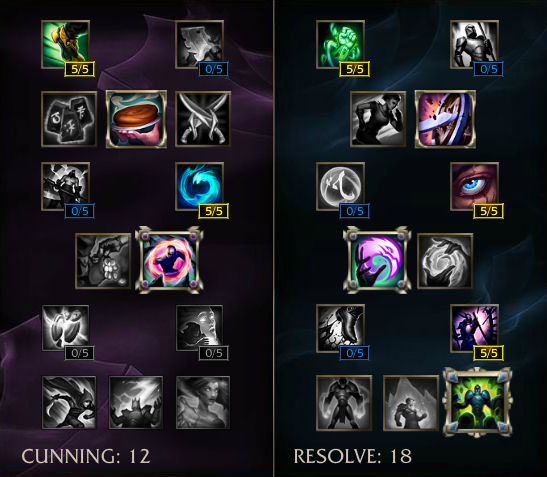
TANK SUPPORT MASTERY PAGE: (0/12/18)
MAGE SUPPORTS – LEGACY RUNES & MASTERIES
The original guide used a standard rune and mastery page for mage supports, relying heavily on AP, armor and magic resist runes combined with a (0/18/12) mastery setup that focused on damage and some survivability.
RUNE PAGE FOR MAGE SUPPORT (LEGACY)
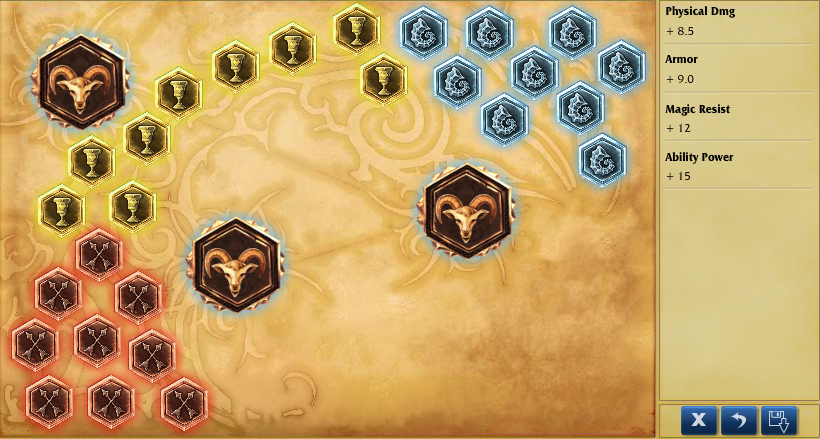
9x AD Reds, 9x Armor Yellows, 9x MR Blues, 3x AP Quints
MASTERY PAGE FOR MAGE SUPPORT (LEGACY)
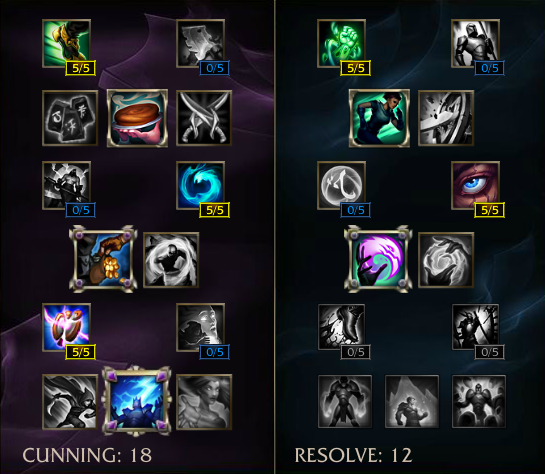
SUPPORT MAGE MASTERY PAGE: (0/18/12)
SAVIOR / HEALING SUPPORTS – LEGACY RUNES & MASTERIES
For savior supports like Sona, Soraka, Janna and Lulu, the legacy setup used similar AD/armor/MR/AP rune spreads and a (0/18/12) mastery page heavily invested into healing and shielding bonuses.
RUNE PAGE FOR HEALING SUPPORT (LEGACY)
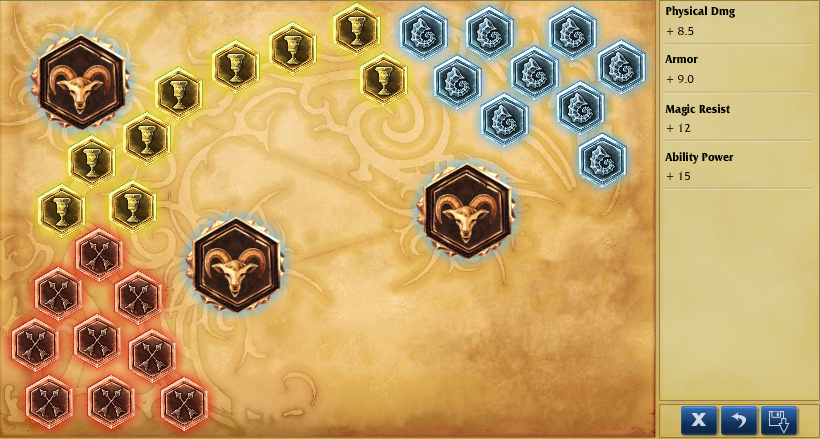
9x Attack Damage Reds, 9x Armor Yellows, 9x Magic Resist Blues, 3x Ability Power
MASTERY PAGE FOR HEALING SUPPORT (LEGACY)
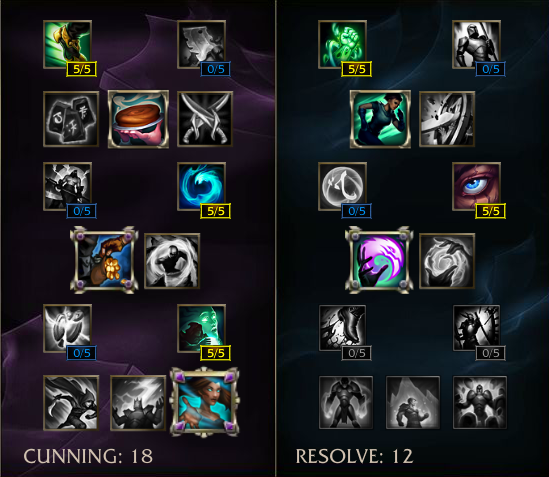
SAVIOR/HEALING SUPPORT MASTERY PAGE: (0/18/12)
VISION AND THE META IN LoL – LEGACY SIGHTSTONE ERA
The legacy version of this guide discussed the era of  Sightstone,
  Ruby Sightstone and the release of items such as
  Eye of Oasis,
  Eye of the Watchers and
  Eye of Equinox.
The concept was simple: combining your gold-income support item with Sightstone into one “Eye” item gave you four wards and freed up an item slot. Ruby Sightstone then reduced the cooldown of item actives such as  Mikael’s Crucible, Locket of the Iron Solari and
  Frost Queen’s Claim, encouraging extremely item-active heavy supports in late game.
While these exact items are gone, the underlying thinking – maximising vision uptime and getting value from item actives – is still directly relevant to support gameplay in 2025.


