



Wild Rift Rank System Explained: Marks, MMR & Climb Tips
Wild Rift Rank System Explained: Marks, MMR, and How to Climb Consistently
Climbing in Wild Rift feels simple on the surface: win games, gain Marks, rank up. But anyone who has spent real time in Ranked knows the truth is more complicated. Some players climb quickly with average mechanics. Others dominate lane, post flashy KDA lines, and still feel hard stuck for weeks. That gap exists because Wild Rift ranked progress is not only about what you can see on your profile. It is also about what Riot’s matchmaking system sees behind the scenes, how consistently you convert leads into wins, and whether your habits are actually strong enough to survive over dozens or hundreds of games.
This guide breaks down the Wild Rift rank system in a timeless way. Instead of chasing patch-specific tricks, we will focus on the parts of climbing that stay relevant across metas: how Ranked Marks work, what hidden MMR likely means for your climb, why visible rank and real skill do not always line up, and how to build a reliable system for ranking up over time. You will also find practical solo queue advice, role-specific priorities, a replay review checklist, and a simple improvement routine you can repeat every season.
If you want to double-check the live rules at any point, Riot’s official resources are still the best place to start, including the Ranked Overview, Ranked Fortitude, Legendary Queue, the Riot MMR explainer for LoL, and Riot’s broader matchmaking article. For the game itself, the official Wild Rift site is the best long-term reference point.
Table of Contents
- Why Wild Rift Ranked Feels Confusing
- Visible Rank: Tiers, Divisions, and Marks
- Hidden MMR: The Number You Cannot See
- Marks vs MMR: Why Your Rank Does Not Always Tell the Full Story
- Fortitude, Loss Shields, and Streak Momentum
- Why Players Get Stuck Even When They Think They Play Well
- How to Climb Consistently: The Framework That Actually Works
- Role-by-Role Climbing Priorities
- A Simple Replay Review Checklist
- Common Ranked Myths That Slow Down Your Progress
- Wild Rift Rank System FAQ
- Final Thoughts
Why Wild Rift Ranked Feels Confusing
Most players think rank should be a direct mirror of skill. In theory, that sounds reasonable. If you are better than the players in your lobby, you should keep winning and move up. In practice, however, ranked systems have two jobs at once. First, they must create fair games. Second, they must create a progression experience that feels motivating. Those two goals do not always move at the same speed.
That is why Wild Rift can feel strange. Your visible rank shows progress in a format that is easy to understand. Marks go up, Marks go down, tiers change, and the ladder gives you a clean goal. But matchmaking is rarely built on visible rank alone. Competitive systems usually rely on a hidden skill estimate to assemble fair lobbies. That hidden layer is why two players in the same visible tier can feel very different in quality, especially after resets, long breaks, fast climbs, or winstreaks.
This is also why emotional players often misunderstand their own climb. They focus on individual matches instead of large samples. They remember the bad jungler, the feeding duo lane, or the one impossible draft. But the ladder does not care about your last three games. It cares about what you are over time. Ranked is less like a single exam and more like a long data set. The more games you play, the more your habits matter, and the less random variance can hide your real level.
If you want to climb consistently, you need to stop asking, “Why did I lose this one game?” and start asking, “What would make me win more often across the next fifty?” That mindset shift is where real progress begins.
Visible Rank: Tiers, Divisions, and Marks
Wild Rift’s visible ladder is designed to make progression feel clear. You are placed into recognizable tiers, and each win or loss changes your position through Ranked Marks rather than a visible LP number in standard Ranked. That system is easy to read, which is one reason it works so well on mobile.
At a high level, your visible rank is the answer to a simple question: how far have you advanced through the current structure of the ladder? Riot can adjust exact thresholds over time, especially at the top end, but the core idea remains stable. You earn progress by winning, you lose progress by losing, and the amount of progress required tends to increase as you climb.
| Concept | What It Means | What You Should Care About |
|---|---|---|
| Tier | Your broad place on the ladder | Shows your current competitive level at a glance |
| Division | A smaller step inside a tier | Helps break the climb into manageable milestones |
| Ranked Marks | Your visible progress currency in standard Ranked | The immediate result of your wins and losses |
| Promotion or advancement | Moving upward after filling the required progress | Rewards consistency more than short-term spikes |
| Demotion | Dropping after losses when protection is gone | Punishes instability, tilt, and poor adaptation |
One of the most important things to understand about Marks is that they make climbing feel straightforward, but they do not remove the need for consistency. If each win gives one step forward and each loss removes one, then short-term streaks matter less than long-term win rate. A player with a 52% win rate over a large sample will climb. A player with a 48% win rate will eventually drift downward or stall. A player with a 50% win rate will often feel stuck because they basically are.
That is why the best ranked advice is often boring. The ladder does not care whether your best game looked amazing. It cares whether your average game is stable enough to beat the average player in your current bracket more often than not. If your average game is volatile, your climb will be volatile. If your average game is clean, your climb becomes predictable.
Another crucial point: visible rank is a result, not an identity. Too many players protect their ego instead of improving. They say, “I’m an Emerald player,” or “I deserve Master.” But the only question that matters is this: can your decisions reliably generate more wins than losses in your current environment? If the answer is yes, your rank will eventually catch up. If the answer is no, your current ceiling is telling you something useful.
Think of Marks as a scoreboard for consistency. They do not tell you everything about your skill, but they do tell you whether your habits are turning into wins often enough to move you upward.
Hidden MMR: The Number You Cannot See
MMR stands for Matchmaking Rating. In Riot’s own competitive explanations, MMR is the hidden skill estimate the system uses to place players into fair matches. It is not there to flatter you. It is there to predict how strong you are relative to others and to build lobbies that feel reasonably balanced.
This is the part of Ranked many players underestimate. Your visible rank is public and emotional. Your MMR is hidden and functional. One is how the ladder presents your progress to you. The other is how the game estimates where you belong when it tries to create a fair contest.
Why hide it? Because hidden rating works better as a matchmaker than as a public status number. If players see every internal fluctuation, they obsess over noise, tilt over small dips, and misread temporary swings as permanent truths. A visible progression layer like Marks is easier to understand, easier to celebrate, and more motivating over a season. But hidden MMR still matters because it influences the quality of your lobbies and how hard the climb feels.
So what should you know about MMR even if you cannot see it directly?
1. MMR moves with results, not feelings
You may feel like you played well in a loss. Sometimes you really did. But matchmaking systems mostly care about outcomes over time. One “deserved win” means nothing on its own. Repeated strong play that converts into better results over many games is what pushes your underlying skill estimate upward.
2. MMR is about probability
Riot has described fair matches as games where both teams are built around roughly equal chances to win. That does not mean every lane will feel fair or every player will look equal in skill. It means the system believes the overall teams are close enough that the game is competitive on paper. Some matches still feel one-sided because humans are inconsistent, drafts interact unevenly, and snowball mechanics can make close games look lopsided after one bad early sequence.
3. MMR and visible rank can drift apart
This is the key insight. Your public rank can lag behind your real level. It can also sit slightly above your current level for a while if you have been boosted by favorable streaks, comfort metas, or Fortitude protection. That mismatch is why some players feel their games are harder or easier than their rank suggests.
4. The system cares about the long run
One lucky streak can push your visible rank quickly. One ugly weekend can drag it down. But MMR becomes more accurate as more data comes in. That is why long-term climbers are calm. They understand that the system becomes clearer over time, not less clear.
The biggest practical takeaway is simple: if you want to beat the ladder, stop chasing short-term emotional proof and start building repeatable advantages. Hidden MMR cannot be argued with, only influenced.
Marks vs MMR: Why Your Rank Does Not Always Tell the Full Story
The easiest way to understand Wild Rift Ranked is to treat Marks and MMR as two different lenses looking at the same player. Marks show visible progress. MMR estimates competitive strength. They are related, but they are not identical.
Here is what that means in practice.
When your MMR is probably ahead of your visible rank
If your decision-making has improved faster than your profile has climbed, your games may start to feel harder before your rank catches up. You might notice stronger opponents, tighter lobbies, or teammates whose decisions look more disciplined than your current badge would suggest. This is not always a bad sign. It can mean the system already sees that your skill is moving upward.
Players in this situation often climb well if they stay patient. Their visible progress may look average at first, but the quality of their play is improving underneath. The mistake here is impatience. They start swapping roles, chasing counterpicks they cannot play, or grinding on tilt because the badge has not changed fast enough. Do not sabotage a good trajectory just because it is not dramatic.
When your visible rank and MMR are probably close
This is where many players live most of the time. Your games feel normal for your rank. Some are easy, some are difficult, some are unwinnable, and some are gifted. You climb a little, then fall back, then recover, then stall. When this happens, the truth is usually simple: your current habits are roughly equal to your current rank.
This is not a reason to get discouraged. It is a reason to get specific. Generic effort does not move you here. More games alone do not move you here. Only better habits move you. If you want a higher rank, you must become a player who wins from that position more efficiently than the average person already there.
When your visible rank is probably ahead of your current level
This feels awful, but it is also useful. Maybe you rode a great duo streak. Maybe your best champions were overpowered for a patch. Maybe Fortitude softened a bad run. Maybe you were playing well for weeks and then stopped practicing seriously. Whatever the reason, your rank can temporarily sit above the level your current play supports.
What happens then? Games feel harder. Mistakes get punished faster. You start blaming teams because your older habits no longer produce the same results. If you respond with denial, you drop. If you respond with humility, you improve.
The healthiest mindset is to stop treating rank as a permanent label. It is better to think in questions:
- What does my current rank demand from me?
- Which three mistakes cost me the most games at this level?
- What would a stronger player do differently in the same situations?
Those questions turn frustration into progress. Marks tell you where you are. MMR quietly tests whether you belong there. Your job is to make the answer obvious.
Fortitude, Loss Shields, and Streak Momentum
Fortitude is one of the most misunderstood parts of Wild Rift Ranked. Some players treat it as proof they are climbing well. Others dismiss it as irrelevant. Both views miss the point.
Fortitude is a buffer system. It rewards steady, impactful, and clean play by giving you protection against some losses and, in certain cases, extra upward momentum. That means Fortitude can help stabilize a climb, but it is not a replacement for strong fundamentals. If your core win rate is weak, Fortitude may delay the truth, but it will not erase it.
The right way to think about Fortitude is this: it reduces friction for good habits. If you play consistently, avoid disruptive behavior, and survive bad circumstances without collapsing mentally, the system gives you a little cushion. That cushion matters because Ranked is noisy. Not every loss reflects your true performance. A protection layer helps good players avoid getting dragged down too hard by unlucky matches or narrow defeats.
But Fortitude becomes harmful in your mindset if you start building your climb around it. You should never think, “I can afford to play badly because I have shields.” The better approach is, “My game is stable enough that this extra protection will help my consistency show up more clearly.”
What Fortitude should change in your behavior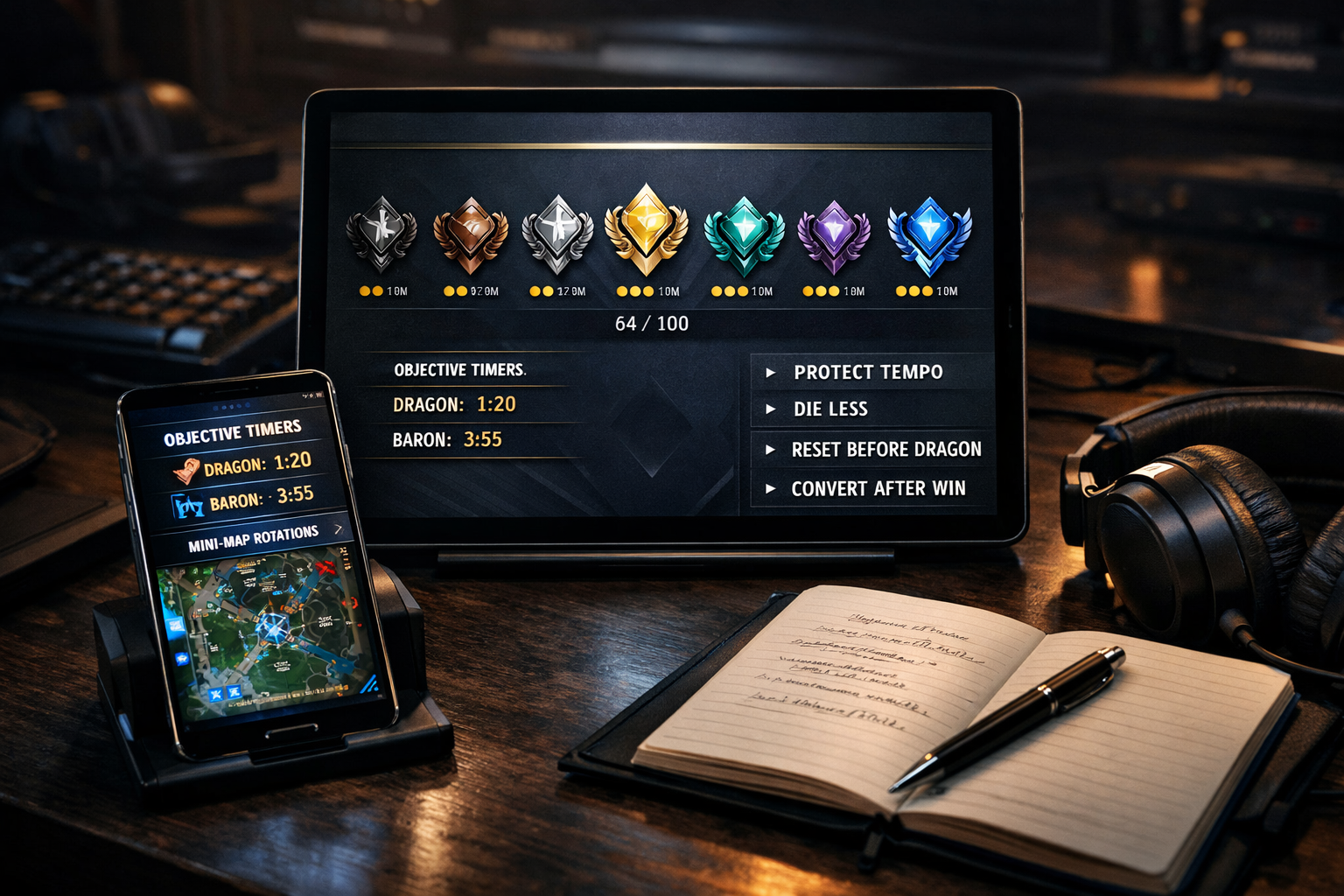
- It should encourage discipline, not gambling.
- It should help you value low-death, high-impact play.
- It should remind you that clean conduct matters over time.
- It should make you more patient during rough stretches, not sloppier.
What Fortitude should not change
- It should not make you spam queue while tilted.
- It should not convince you that your fundamentals are better than they are.
- It should not become the main reason you expect to climb.
Strong players use protection systems as margin, not identity. They still focus on wave control, objective timing, rotations, death reduction, champion mastery, and review habits. Fortitude is helpful, but it is still secondary to the core truth of competitive games: if you reliably create more winning states than losing states, you rise.
Why Players Get Stuck Even When They Think They Play Well
Most hard-stuck players are not completely clueless. Many of them do several things well. The problem is that they judge themselves by strengths they enjoy, not by weaknesses that actually cost games.
A Baron laner may be mechanically clean in isolated trades but never rotate correctly for Herald. A jungler may secure kills early but waste tempo by hovering dead lanes. A mid player may farm well yet arrive late to every dragon setup. A support may land skillshots but never control vision windows or lane state. These players all feel like they are performing, but the ladder does not reward impressive fragments. It rewards full-game conversion.
Here are the most common reasons players get stuck.
They confuse comfort with mastery
Playing a champion a lot does not automatically mean you play it well. True mastery means you understand lane goals, damage thresholds, reset timings, build logic, matchup conditions, teamfight role, and what your champion should do when behind. Many players only know the fun part of a champion, not the complete job description.
They overvalue kills and undervalue map flow
Kills feel rewarding, so players chase them. But climbing is driven more by tempo than ego. Did you convert the kill into a plate, objective setup, ward line, wave crash, invade, or tower pressure? If not, the kill may have been flashy but strategically weak. Gold without structure often evaporates.
They play too many champions
A wide pool feels flexible, but it usually destroys consistency. In solo queue, depth matters more than breadth for most players. Two or three well-practiced picks with a clear identity will almost always outperform a giant pool of half-learned options.
They do not review losses correctly
Some players never review. Others review emotionally. They watch the clip where the support missed a stun and decide the game was doomed. That is useless. Real review asks different questions: Where did my lane become unstable? Which death changed the game state? Did I reset at the wrong time? Did I move without wave priority? Did I take a fight that had no objective value?
They queue in bad mental states
Tilt is not always loud. Sometimes it looks like autopilot. You say you are calm, but your decisions get lazy. You stop tracking summoners. You skip ward timers. You take low-value fights. You lock comfort picks without thinking about win conditions. This kind of mental drift destroys climb quality.
They have no system
The biggest difference between random grinders and consistent climbers is that climbers have a process. They know which champions they trust, what they want from lane, which objective sequence matters, when to stop queueing, and what they review after games. The ladder loves systems because systems turn emotion into repeatable value.
How to Climb Consistently: The Framework That Actually Works
If you want a reliable way to rank up in Wild Rift, stop looking for miracle tricks. Build a structure that works whether the meta feels good or bad. The following framework is what most strong climbers do, even if they describe it differently.
1. Narrow your role identity
Choose one primary role and one backup role. Your main role should be the role where you best understand game flow, not just the role where you occasionally pop off. The best climbing role for you is the one where your average game is strongest.
If you constantly rotate roles because of boredom, frustration, or influencer hype, your learning resets all the time. The goal is not to experience every position equally. The goal is to become reliably better than your bracket in one main environment.
2. Build a small champion pool with clear jobs
Your pool should usually contain:
- One comfort blind pick
- One situational counter or stylistic alternative
- One backup pick for difficult drafts or bans
That is enough for most players. Your pool should not just be “champions I like.” It should be “champions whose job I understand under pressure.” If you cannot explain your champion’s win condition in one sentence before loading screen, you do not know the pick well enough for a serious climb.
3. Enter every lane with one practical objective
Do not load into lane thinking vaguely. Choose one concrete focus based on matchup. Examples:
- “I only need stable farm until first objective.”
- “I must hold wave near tower because enemy jungle pathing threatens me.”
- “I have push advantage, so I want first move into river.”
- “I lose extended trades, so I need short burst windows only.”
Players who climb consistently are rarely improvising from zero. They begin with a plan and adjust from information.
4. Respect tempo more than highlights
Tempo is one of the most underrated ranked concepts. It means using your time and map position efficiently so you arrive first, reset first, pressure first, or convert first. Tempo wins games quietly. It is the reason a disciplined player with an average KDA can outclimb a mechanical coin-flipper.
Examples of good tempo:
- Crashing wave before roaming
- Resetting before dragon instead of after it spawns
- Clearing camps in an order that lines up with objective timers
- Taking plates only when the next map state still belongs to you
- Backing off from a chase so you can hold tower or start Baron vision
5. Convert every lead into something durable
A lead that exists only in your head is not a lead. A kill matters when it becomes something that lasts: tower damage, dragon control, deeper vision, jungle denial, a forced reset, a better wave state, or Baron setup. The longer your advantage survives beyond the fight itself, the more often it turns into a win.
Ask yourself after every successful play: “What stays ours now?” If the answer is nothing, your conversion is weak.
6. Lower your death count before you chase higher carry numbers
This advice is especially powerful for players below high rank. Many people do not need more aggression. They need fewer useless deaths. Every unnecessary death gives away gold, tempo, map space, pressure, and often objective access. Even a mechanically strong player becomes unreliable if they donate shutdowns or disappear from the map at the wrong moments.
A great improvement target is not “I need to hard carry more.” It is “I need to eliminate two bad deaths per game.” That alone can swing your win rate dramatically.
7. Play sessions, not endless marathons
Quality collapses after too many games, especially on mobile where queueing again is effortless. Set a structure. For example:
- Play in blocks of 3 to 5 serious ranked games
- Take a short break after two frustrating games
- End the session after a heavy tilt signal, even if you feel tempted to “win it back”
Disciplined session control is one of the easiest ways to protect MMR quality over time.
8. Track one improvement metric per week
Do not try to fix everything at once. Pick one measurable focus:
- Die fewer than four times on average
- Arrive to first objective on time every game
- Miss fewer side waves after minute eight
- Place or contest vision before every major neutral
- Review first three deaths after every loss
Climbing becomes much easier when improvement is narrow, deliberate, and trackable.
Role-by-Role Climbing Priorities
Every role can climb, but not every role climbs the same way. The players who improve fastest understand the central responsibility of their position.
Baron Lane
Baron lane climbers must understand isolation and timing. This role often feels disconnected from the map, which is why many players either overstay in side lane or abandon side lane too early. Your biggest priorities are matchup control, wave state, teleport-style map timing when applicable through rotations or movement, and knowing when your job is pressure versus front line.
To climb from Baron lane, ask:
- Am I winning lane without ruining my wave?
- Do I know when to hold side pressure and when to group?
- Am I arriving to Herald, dragon, or Baron setups too late?
- Am I creating pressure that forces answers, or just farming mindlessly?
Jungle
Jungle is the role most likely to inflate ego and hide mistakes. Because junglers touch every lane, they often feel responsible for everything. The best climbing junglers are not the ones who force the most action. They are the ones who path with purpose, identify the easiest lane to play around, respect objective timing, and avoid wasting time on doomed situations.
Your climb improves when you stop asking, “Where can I fight?” and start asking, “Where is the highest-value tempo?” That might mean countergank positioning, a fast objective trade, a clean invade after lane priority, or simply refusing a bad play and full-clearing efficiently.
Mid Lane
Mid is the role of influence. You control waves, river access, and often first movement to skirmishes. Many mid players get stuck because they either over-roam and lose their own lane economy, or they tunnel on lane and arrive late everywhere important.
The core mid-lane climbing skill is selective movement. Push when movement matters. Stay when plate gold, wave denial, or punish windows matter more. Strong mid players do not roam randomly; they move with reason, timing, and pressure behind them.
Duo Lane ADC
ADC climbing is built on survival, spacing, and objective damage. You do not need to be the hero in every lane. You need to leave the early game with stable gold, avoid giving shutdowns, and position well enough to deal sustained damage when the map opens up.
Most ADC losses come from greed. One extra wave, one unsafe rotate, one lazy facecheck, one overconfident chase after winning lane. If you want to rank up as an ADC, become boring in the best possible way. Farm cleanly, die late, and show up on time to the fights that matter.
Support
Support is one of the most underrated climbing roles because its best plays often look invisible on the scoreboard. Good supports win lane states, unlock safe recalls, protect wave timing, secure vision windows, control engage angles, and make their carries’ jobs easier before the fight even starts.
If you are serious about climbing on support, stop measuring yourself mainly by assists. Measure your impact by these questions:
- Did I help create a playable lane?
- Did I move first for objective setup?
- Did I track enemy engage threats?
- Did my wards and positioning reduce chaos for my team?
A support who stabilizes the map consistently can climb extremely hard, especially when others are still obsessed with personal highlight plays.
A Simple Replay Review Checklist
You do not need a coach or a massive spreadsheet to improve. You need a consistent review loop. After each loss, spend a few minutes reviewing the game with structure. Do not watch the full replay every time. Review the moments that swing outcomes.
Step 1: Review the first eight minutes
Ask:
- Did I understand the lane matchup correctly?
- Where did wave control break?
- Did I ward or move too late for jungle pressure?
- Was my first reset timed well?
- Did I arrive to the first neutral objective in a playable state?
Step 2: Review every death
Not all deaths matter equally. Label each one:
- Forced: hard to avoid without bigger team change
- Risky but understandable: defendable attempt with tradeoff
- Unnecessary: pure impatience, greed, autopilot, or bad read
Your climb accelerates when unnecessary deaths start disappearing.
Step 3: Review every lead you touched
Whenever your team won a fight, got a pick, or forced a reset, ask what happened next. Did you secure vision? Did you push the correct lane? Did you start the correct objective? Did you recall too late and lose timing? Many games are decided not by who wins fights, but by who converts them.
Step 4: Write one sentence only
End each review with a single sentence:
“This game was mostly lost because I ______.”
Examples:
- I gave away side-lane tempo before second dragon
- I roamed without pushing mid first
- I fought after using summoners poorly in lane
- I kept chasing kills instead of resetting for Baron setup
This one-sentence summary forces clarity. Over time, patterns appear. That pattern is the real reason you are stuck.
Consistency Habits That Matter More Than Meta Picks
Meta matters, but it matters far less than most players think. Unless you are playing at the very top of the ladder, consistency habits overpower most patch differences. A comfort champion played correctly will usually do more for your climb than a top-tier pick you barely understand.
These habits stay valuable almost every season:
- Enter lane with a matchup plan
- Respect first objective setup more than random skirmishes
- Reset before timers, not after they start
- Protect shutdown gold
- Trade something when you cannot contest directly
- Keep side waves from bleeding for free
- Review losses before queuing mindlessly again
Meta picks can raise your ceiling. Habits raise your floor. For climbing, your floor is usually more important.
How to Use Duo Queue Without Hurting Your Long-Term Climb
Duo queue can be powerful, but it creates a trap. Some players climb well with a trusted partner and then collapse solo because the duo covered their weakest habits. That does not mean duo queue is bad. It means you should use it intelligently.
A good duo does three things:
- Improves communication around one side of the map
- Creates more reliable objective planning
- Stabilizes mental state
A bad duo does three different things:
- Encourages forced plays for each other
- Creates emotional tunnel vision around “our lane”
- Makes you dependent on coordination you do not have in solo queue
If you play duo, occasionally test yourself solo. If your solo results are dramatically worse, do not panic. Study the gap. Maybe your duo partner gave you better wave timing, more information, cleaner objective calls, or emotional stability. Once you see that, you can learn to replicate more of it yourself.
Common Ranked Myths That Slow Down Your Progress
“I have good mechanics, so I deserve a higher rank.”
Mechanics help, but ranked is an economy and timing game. If your positioning, tempo, and conversions are weak, flashy mechanics are not enough.
“My teammates are the only reason I can’t climb.”
Bad teammates exist. So do free wins from enemy mistakes. Over a large sample, your own repeatable habits matter more than any single teammate story.
“I need to carry every game myself.”
No. You need to maximize win probability. Some games are won by hard carrying. Others are won by refusing to int, preserving tempo, and enabling the strongest player on your team.
“A bigger champion pool makes me more adaptable.”
Usually it makes you less consistent. Adaptation is good, but not if it destroys execution.
“If I’m stuck, I should just play more games.”
More games can help only if the games contain learning. Grinding without correction often locks your bad habits deeper.
“If I lose lane, the game is over.”
Many games are still winnable from behind if you stabilize, trade the map smartly, and wait for better objective conditions. Some of the best ranked players are excellent at losing gracefully.
Wild Rift Rank System FAQ
What is more important in Wild Rift: Marks or MMR?
For visible progression, Marks matter because they are what move your rank. For understanding how the system evaluates your competitive level, hidden MMR matters more. In practice, both matter, because your long-term results push both systems toward alignment.
Why do my games feel harder even when I rank up slowly?
Your visible rank and your hidden matchmaking level do not always move at the same speed. If your overall play is improving, your lobbies can feel stronger before your profile fully reflects it.
Does Fortitude mean I am climbing well?
It means the system is giving you some helpful protection or momentum. That is positive, but it should support your climb, not define it. Real climbing still depends on win rate and consistency.
How many champions should I play for the best climb?
For most players, two or three serious champions in a main role is ideal. Add one backup role and one emergency comfort pick there if needed, but keep your core small.
What is the fastest way to improve my rank?
The fastest sustainable method is to reduce unnecessary deaths, narrow your pool, improve first objective timing, and review the same recurring mistake until it disappears.
Should I focus on KDA to judge improvement?
No. KDA can be useful, but it is incomplete. Your real indicators are win rate over time, death quality, objective conversion, lane stability, and how often you are in the right place at the right time.
Is Legendary Queue the same as standard Ranked?
No. It is a separate competitive environment with its own progression structure and its own MMR logic. Standard Ranked and Legendary Queue should be treated as related but distinct ladders.
How do I know I am ready for a higher tier?
You are ready when your average game looks calm and repeatable at your current tier. Stronger players do not just win harder. They make fewer unstable decisions.
Final Thoughts
The Wild Rift rank system becomes much easier to understand once you stop treating it like a mystery and start treating it like a process. Marks are your visible progress. Hidden MMR is the system’s internal estimate of your strength. Fortitude smooths out some of the noise. Your rank, over time, becomes the meeting point between your habits and your results.
If you want to climb consistently, focus less on emotional explanations and more on repeatable value. Narrow your pool. Enter lane with a plan. Respect tempo. Convert leads. Die less. Review losses honestly. Build sessions instead of spamming games. These habits are not flashy, but they are exactly why disciplined players keep moving while frustrated players keep circling the same rank.
And if you want to save time, recover from a plateau, or compare options for a faster push, you can also review Wild Rift boosting prices at Boosteria. Whether you prefer to grind the climb yourself or use outside help, understanding how the rank system actually works will always make you smarter about the journey.
The best mindset is simple: do not try to look like a higher-rank player for one game. Build the habits of a higher-rank player so thoroughly that the system has no choice but to move you there.