



How to Win Pistol Rounds in Valorant Consistently (2026)
How to Win Pistol Rounds Consistently in Valorant 2026
Pistol rounds are small in budget but huge in impact. In Valorant, they set the tone for the half, shape your team’s economy, influence confidence, and often decide whether you start strong or spend the next few rounds trying to recover. If you want to climb consistently, improving your pistol-round win rate is one of the highest-value habits you can build.
This guide is designed to stay useful over time. Instead of chasing short-lived trends, it focuses on principles that remain strong across patches: efficient credit usage, smart utility planning, clean spacing, disciplined crosshair placement, controlled aggression, and decision-making that works whether you are solo queuing or playing with a coordinated stack.
Riot has repeatedly shown how early-round momentum matters in Valorant, and pistol rounds sit at the center of that momentum. If you want to follow official updates as the game evolves, Riot’s VALORANT game updates hub and the official beginner’s guide are useful references. Riot’s own article on the so-called 9-3 curse also highlights how valuable the opening rounds of a half can be in shaping comeback odds and economic flow. For an external strategy perspective, this Red Bull pistol round article is also worth reading.
If your goal is faster improvement in ranked, you can also check Valorant boosting prices for additional help while you sharpen your fundamentals.
Table of Contents
- Why Pistol Rounds Matter So Much
- The Core Principles of Winning Pistol Rounds
- Best Pistol Round Buys and Credit Logic
- How to Win Attacking Pistol Rounds
- How to Win Defending Pistol Rounds
- Utility Usage That Actually Wins Pistols
- Spacing, Trading, and Entry Discipline
- Mechanical Skills That Matter Most on Pistols
- Post-Plant and Retake Fundamentals
- How to Carry More Pistol Rounds in Solo Queue
- Common Pistol Round Mistakes
- Practice Routine to Improve Pistol Rounds Fast
- How to Adapt Your Pistols to Any Map
- Simple Call Structure for Better Team Play
- Final Pistol Round Checklist
Why Pistol Rounds Matter So Much
A lot of players treat pistol rounds like chaotic coin flips. That mindset is one of the biggest reasons they lose them. Pistol rounds are not random. They are compressed tactical rounds where every small edge matters more than usual. Because nobody has rifles, heavy armor, or full utility packages, positioning, timing, and coordinated contact become even more important.
Winning pistol does four things at once. First, it gives your team immediate scoreboard pressure. Second, it gives you a stronger economic path into round two. Third, it lets you dictate tempo early, which is especially important in ranked where momentum changes confidence and communication. Fourth, it forces the enemy into weaker choices: force, save, gamble stack, or low-utility hero buys.
Even when the second round is not guaranteed, winning pistol dramatically improves the shape of the half. It gives you room to make one mistake later. It makes your bonus round more threatening. It also gives your team emotional control. People communicate better after an early win, trust the plan more, and hesitate less.
On the other side, losing pistol does not mean the half is over, but it increases pressure instantly. Players start forcing bad fights, overcalling hero plays, or blaming teammates for buys. That is why pistol rounds matter far beyond one point on the scoreboard. They influence the flow of the next several rounds.
If you want a timeless way to think about pistol rounds, use this rule: pistol rounds are economy rounds disguised as aim rounds. Yes, you need to hit your shots. But the teams that win consistently usually win because they spend better, path better, trade better, and use utility with more intention.
The Core Principles of Winning Pistol Rounds
Before specific buys or site plans, you need the right framework. Every strong pistol round in Valorant is built on a few recurring principles.
1. Spend with purpose
Do not enter pistol with random leftover credits because nobody made a plan. Your buy should support your role and the team’s idea for the round. If your plan is a fast hit, utility matters. If your plan is long-range contact, maybe a cleaner sidearm matters more. If your agent creates space, invest in what helps you survive or enable entry. If your job is to anchor or delay, value utility that stalls or isolates.
2. Make one clear plan before barriers drop
Most lost pistols happen because five players have five different ideas. One lurks too early, one dry peeks mid, two walk into site with no trade distance, and one is still deciding what to buy. You do not need a complex strat. You need one clear sentence: “Five A, default until util, then explode,” or “Three hold B, two retake fast from mid,” or “Fight short with stun, then flood.”
3. Use utility to create unfair fights
Pistol rounds punish lazy utility more than rifle rounds. A single flash that blinds two defenders, one smoke that cuts the only crossfire, or one stall ability that delays a rush for three seconds can decide the round. The goal is not to dump every ability instantly. The goal is to turn equal duels into advantaged ones.
4. Trade everything
Mechanical aim matters, but in pistols, two players swinging together beat isolated hero peeks over and over. Trade distance should be tight enough that the second player can punish immediately, but not so tight that both die to the same spray or ability. Good pistol teams make every first death expensive.
5. Fight for close-to-medium range on purpose
Unless your buy is built for longer lines, pistol rounds often reward closing distance. This is especially true when using Classics, Shorties in niche setups, or utility-heavy buys. Many ranked players lose pistol because they take long duels they never needed to take.
6. Planting matters more than highlight plays
If you are attacking, the spike is not a side objective. Planting can stabilize the round, change post-plant positions, and generate economic value even if the round goes wrong. Especially in solo queue, many teams win entry but lose the round because they chase kills before securing the most important objective.
7. The round is rarely over after first blood
In rifle rounds, a first kill often snowballs because firepower is high. In pistol rounds, recovery is more common because time-to-kill can be less consistent, players need more bullets, and utility can still flip the fight. Stay composed after losing the opener. Plenty of pistol rounds are won through calm 4v5 structure.
Best Pistol Round Buys and Credit Logic
There is no single correct pistol buy for every player, agent, or map. The right buy depends on your role, your plan, and where you expect the fight to happen. What matters is whether your credits create round-winning value.
The three main pistol buying philosophies
1. Utility-first buy
This is often the most consistent style in coordinated play. You keep the default sidearm or a modest upgrade and spend heavily on abilities that help entry, delay, isolate angles, reveal info, or secure post-plant. This style is strongest when your agent’s utility directly creates the opening or protects a key area.
2. Gun-first buy
This is common on players who expect to take the first duel or hold a precise angle. A Ghost or Frenzy can be powerful if you understand exactly how you will use it. Gun-first buys are best when you are confident you will be the one taking the fight, not following behind somebody else.
3. Shield-balanced buy
Light shields can be excellent if your role requires staying alive through first contact. They are especially useful when your entry path is dangerous, when the enemy is likely to spam chokepoints, or when your job is simply to win an honest duel and remain healthy enough for the next one.
How to think about common pistol options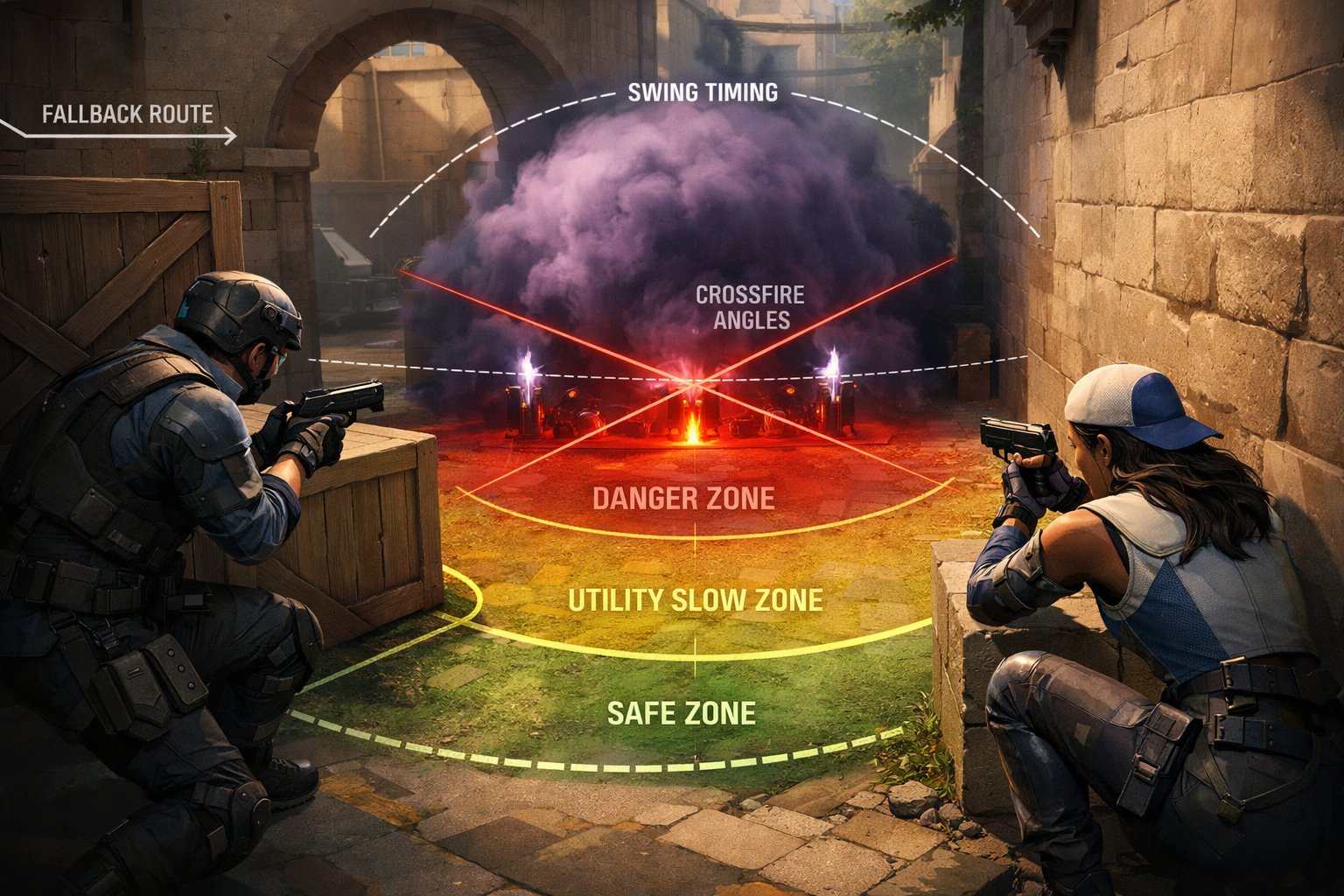
Classic
The Classic is underrated because players misuse it. It is not just a “free gun.” It becomes strong when you combine it with utility, close range, and confident burst timing. The right-click is deadly in very tight fights, but many players overforce it at bad distances. The Classic is best when your plan revolves around utility value or when you want to preserve credits for stronger ability setups.
Ghost
The Ghost is often the cleanest choice for players who trust their aim and want accurate taps at medium range. It rewards calm mechanics, patient peeks, and smart angle discipline. It is strongest when you expect a measured duel, not a chaotic body-shot brawl through utility.
Frenzy
The Frenzy shines in fast entries, tight site hits, close corners, and retake crashes through smoke or stall utility. It is not a universal answer, but it can be terrifying when paired with explosive movement and a teammate trading beside you. If your team is rushing into close-range fights, the Frenzy can outperform more “standard” buys.
Shorty
The Shorty is a niche option, not a default plan. It can be excellent in tight choke holds, trap-heavy anchor positions, or gamble stacks where you expect point-blank contact. It becomes bad quickly when your position is cleared by utility or the fight happens at any real distance. Use it with intent, not because it seems funny.
Sheriff
The Sheriff is the high-risk, high-reward option. On pistol, it is usually best for confident players taking selective long-range fights or holding a specific line. The problem is opportunity cost: a Sheriff with little or no utility can leave your team short on structure. It can win rounds, but it also creates many selfish losses when the first shot misses and the user has no fallback impact.
Armor versus utility
One of the oldest pistol debates is whether to buy armor or utility. The answer is simple: buy the thing that lets you perform your job. If your role is to create the fight, utility often has higher value. If your role is to survive first contact or duel through spam, armor can be superior. If your plan relies on site execute timing, utility tends to win. If your plan is a raw aim contest with limited ability interaction, armor or a stronger gun can be better.
Never decide this by habit alone. Ask: where is the fight, what is my role, and what helps me do it twice instead of once?
Role-based pistol buying guide
Duelists
Duelists often benefit from buys that let them either burst into space or survive just long enough to be traded. Depending on the agent and site plan, that can mean light shield plus entry utility, or a Frenzy/Ghost if the route favors aggressive first contact. The worst duelist pistol habit is buying for isolated ego peeks instead of team entry structure.
Initiators
Initiators are often strongest with utility-first buys. A good flash, stun, recon, dog, or information tool can win more rounds than a prettier sidearm. If you are on an initiator, ask how your buy helps your team get the first two kills, not just your own first duel.
Controllers
Controllers usually get enormous value from utility on pistol. A well-placed smoke can cut the only dangerous angle, allow a safe plant, or turn a retake into a meat grinder. On defense, controller utility can also delay long enough for rotations to arrive. Because pistol rounds are fragile, one good smoke matters more than people think.
Sentinels
Sentinels can go in multiple directions. On defense, anchor utility can completely stop a rush or force attackers into awkward spacing. On attack, some sentinel players can justify more weapon-heavy buys if their utility needs are lower in the first contact. Still, strong post-plant sentinel value often makes at least some utility worth prioritizing.
How to Win Attacking Pistol Rounds
Attacking pistols are often easier to throw than to lose. Teams get excited, run into crossfires, forget the spike, or win the first duel and then turn a structured hit into five disconnected 1v1s. The best attacking pistols are simple, layered, and fast once commitment happens.
Choose one of three attacking structures
1. Fast committed hit
This works when your team has the utility to break one choke decisively and overwhelm the first defender before rotations settle. The key is timing. Do not fake speed. If the call is fast, then smoke, flash, reveal, dash, swing, trade, plant. Hesitation kills this style.
2. Contact into burst
This is often the most reliable pistol structure in ranked. You walk quietly to gain position, bait out early defender info, and only explode once you are close enough that utility and body presence arrive together. Contact into burst is strong because defenders often overrotate, waste stall tools, or hold passive angles too long.
3. Default for info, then group and end
This works best on maps where defenders can overstack sites or where mid pressure changes rotations. The goal is not to take five isolated duels across the map. The goal is to force the defenders to reveal habits, then end with numbers and a cleaner path.
How to enter site properly on pistol
Entering on pistol is not just “run in first.” Good entries do five things:
- They clear the most dangerous angle first.
- They force the defender to fight while blind, displaced, or distracted.
- They arrive with a second player close enough to trade.
- They communicate what is clear and what is not.
- They stop after winning space instead of overchasing alone.
A great pistol entry often looks controlled rather than flashy. The entry player takes first contact, the second player punishes the trade attempt, the third protects the plant path, and the last two cut the retake route. That shape wins far more than random sprinting.
Plant quickly, then reposition
One of the biggest attacking mistakes is delaying the plant to hunt another kill. In pistol rounds, health pools are fragile, ammo matters, and retakes can become messy fast. Once you have site control, plant unless there is a very clear reason not to.
After planting, your job is not to stand on site in a cluster. Spread into crossfires, protect each other’s contact, and make the defenders clear multiple angles under time pressure. Post-plant pistol rounds are often decided by patience. Let the defenders make the desperate move.
Good attacking pistol habits
- Have one player responsible for the spike before the barriers drop.
- Pair every first swing with an instant trade partner.
- Keep one piece of utility for post-plant when possible.
- Do not turn a 5v4 into five solo chase peeks.
- Call health, ammo, and remaining utility right after plant.
How to Win Defending Pistol Rounds
Defensive pistol rounds reward discipline even more than attack. Many defenders lose pistol because they either panic-stack too hard and give up free map control, or ego-peek into five attackers before utility makes contact unfair.
Defensive pistol round priorities
- Identify the likely pressure point early.
- Use utility to stall, not just damage.
- Survive long enough for the second defender to fight with you.
- Retake together if the site is lost.
- Avoid isolated re-peeks after first contact.
Anchor versus contest
Not every site should be fought the same way. Sometimes the best pistol defense is a proactive contest with two players and early utility. Sometimes the best defense is to give a little space, gather info, and spring the trap when attackers commit too deep. The key is recognizing whether your setup is built to hold the choke or punish the plant.
If your site anchor has stall utility, let that utility do its job. Too many defenders throw their delaying tool and then swing alone before it generates value. The correct sequence is often: stall, listen, call numbers, wait for the second layer, then swing when the attackers are forced into a bad path.
Do not donate opening duels
Dry-peeking attacker defaults on pistol is one of the easiest ways to throw the round. Unless your setup is specifically designed for early contest, make the attackers use time and utility to earn the duel. Your life has extra value on defense because every second alive increases rotation odds and reduces plant freedom.
Retake properly on pistol
A lot of defenders assume pistol retakes are hopeless. They are not. In fact, pistol retakes can be excellent if you have numbers, utility, and synchronized swings. The big mistake is trickling in one by one. If you lose site, pause for one second, regroup, call the priority angle, and hit together.
Defenders often have an advantage in retakes because attackers overplant, overpeek, or hold predictable positions. One clean flash or swing timing can crack the whole site. But it only works if the retake is coordinated.
Utility Usage That Actually Wins Pistols
The best pistol utility is not always the flashiest. It is the piece of utility that changes the geometry of the round.
Flash utility
Flashes are strongest when they create immediate, trusted movement. A flash with no follow-up is often wasted. Decide before the round who swings first, who trades second, and whether the goal is a kill, site space, or stall. On pistol, a good flash can decide the round instantly because players do not have rifles to recover with brute force.
Recon and information tools
Information is extremely valuable on pistol because teams have fewer recovery tools. If you know where two defenders are, you can avoid a stacked crossfire. If you know attackers are grouped, defenders can rotate early or save utility for the real hit. Use recon to make better decisions, not just for the satisfaction of detection.
Smokes
Smokes on pistol are amazing because there are fewer spam-capable weapons and less utility available to force people out. A single smoke can isolate a site anchor, protect a plant, cut off a retake lane, or force an uncomfortable close-range push. On defense, a smoke can buy enough time for rotations to arrive and ruin the attackers’ timing.
Mollies, slows, walls, traps, and stall tools
Stall utility often wins defensive pistols because it punishes impatience. Attackers under time pressure make worse decisions, bunch together, and expose themselves to trade collapses. On attack, these tools can also deny defuse or hold critical post-plant space. The secret is timing. If you use them too early, the enemy simply waits. If you use them too late, the fight has already happened.
Save one piece if the round structure demands it
Many players unload every ability during the first six seconds. That can work on a committed rush, but in many pistols, saving one tool for the plant or retake is stronger. Ask yourself whether your utility is for entry, denial, information, or conversion. Use it where it changes the round the most.
Spacing, Trading, and Entry Discipline
Spacing is one of the biggest separators between average and strong pistol teams. You can have the right buy and still lose if your teammates are too far to trade or too close to survive area damage and crosshair transfer.
Good spacing means:
- The second player can punish the defender who kills the first.
- The first two players do not get blocked in the choke.
- The third player can either support the site fight or protect the flank.
- No one swings so early that the rest of the team is still behind a wall.
On attack, your first two players should function like a pair, not strangers. On defense, crossfires should be layered so attackers cannot clear both with one easy movement pattern. Tight duo play wins pistol rounds more consistently than solo mechanics.
If you want a simple rule, use this: nobody should be taking the first fight alone unless the entire plan is built around baiting that contact.
Mechanical Skills That Matter Most on Pistols
Pistol mechanics are different from rifle mechanics. Players who dominate with rifles can still be average on pistols because they rely too much on spray habits or lazy movement. To improve consistency, focus on the mechanics that pistols reward most.
1. First-bullet composure
Pistols punish panic. Calm taps and short bursts beat rushed spam more often than people realize. Especially with the Ghost or Classic left-click, your first bullet discipline matters enormously.
2. Crosshair placement at head level
This sounds basic, but pistol rounds expose bad crosshair placement brutally. Because pistols reward precision and many duels are decided in one clean headshot or two fast bullets, your crosshair must already be where the opponent appears. Do not rely on flicks to save you.
3. Strafe timing
Players often overmove with pistols. Learn to stop cleanly, fire accurately, then move again. The cleaner your movement rhythm, the more reliable your shots become. Bad pistol players either stand still too long or spam while moving.
4. Range management
Mechanical skill is not just aim. It is choosing the range where your weapon is favored. A Frenzy player taking a long dry duel is making a mechanical mistake before the fight even starts. A Classic player forcing right-click from too far away is doing the same.
5. Multi-kill discipline
After the first kill, do not instantly flick for the montage second kill while exposed. Recenter, reset, and use cover. Pistol rounds reward players who take one clean duel at a time.
Simple pistol aim drills
- 50 calm headshots with Ghost only
- Classic left-click only at medium range
- Classic right-click only at tight range
- Frenzy burst tracking at close range
- Strafe-stop-tap routine for two minutes before queue
You do not need a one-hour aim session to improve pistol rounds. Ten focused minutes on pistol-specific mechanics can make a visible difference.
Post-Plant and Retake Fundamentals
Pistol rounds do not end when the spike goes down. In many games, the round is effectively won or lost in the 15 seconds after plant because teams stop thinking clearly.
For attackers after plant
- Do not all play on site.
- Set one close contact and one wider trade angle.
- Protect the spike from two different directions.
- Use utility on the defuse, not randomly in open space.
- Force defenders to clear layers, not one clump.
The strongest post-plants feel calm. Everyone knows who is playing first contact, who is playing anti-defuse, and who is watching the fastest retake path. Attackers lose many pistols by peeking before the defenders are forced to act.
For defenders on retake
- Wait half a second to sync the hit.
- Clear the highest-conversion angle first.
- Trade every swing.
- Stick only when your teammate protects.
- Use utility to break one layer at a time.
A good pistol retake is not fast because people sprint. It is fast because the call is clear and all players act at the same moment.
How to Carry More Pistol Rounds in Solo Queue
Solo queue pistol rounds are messy because teammates often do not buy together, explain plans, or react to utility properly. The solution is not to give up. The solution is to simplify what you can control.
What to do in solo queue
- Make one short call before the barrier drops.
- Ping the site and state the buy idea clearly.
- Choose a buy that can create value without perfect teamwork.
- Play near the teammate most likely to trade you.
- Do not take isolated ego peeks unless your buy demands it.
Good solo queue calls are short: “Let’s contact B, then burst.” “I’ll flash you out A.” “Play retake, don’t die early.” “Plant and don’t peek after.” Long speeches do not work in ranked. One good sentence does.
If your teammates are clearly disorganized, favor reliable value. That usually means utility that works even with imperfect follow-up, or buys that let you hold your own in the first duel without sacrificing all team structure.
In solo queue, your biggest edge is often emotional control. Many players mentally check out after one missed shot. If you stay composed, trade correctly, and keep comms clean, you will win pistol rounds other teams throw away.
Common Pistol Round Mistakes
If you want to improve quickly, stop making these mistakes first.
1. Saving credits for no reason
Pistol is one of the worst times to be greedy without a plan. Unspent credits that do not improve the next round meaningfully are often just lost round equity.
2. Five different buys with no structure
Mixed buying can work, but random buying does not. Your buys should complement the plan. If half the team wants fast close-range fights and the other half buys for passive medium-range aim duels, the round becomes incoherent.
3. Dry-peeking before utility
Why take a fair duel if your agent or teammate can make it unfair? One of the most common ranked errors is using utility after someone already died taking an unnecessary first peek.
4. Bunching in chokepoints
Attackers often trap themselves by stacking too tightly at the entrance. This kills trade potential and makes every stall tool twice as effective.
5. Overchasing after getting entry
Winning the first duel does not mean the round is now a deathmatch. Secure the site, plant, and play percentage Valorant.
6. Re-peeking after doing your job
On defense, if you stalled, got one, or called numbers, you may have already done enough. Unnecessary re-peeks lose countless pistols.
7. Retaking one by one
This is one of the worst habits in all ranks. If the site is lost, regroup and hit together.
8. Ignoring the spike
Teams lose attacking pistols because nobody knows who has the spike or where it is. That should never happen.
Practice Routine to Improve Pistol Rounds Fast
You do not need a complicated training plan. Use a short routine that targets the actual skills pistols demand.
10-minute pistol improvement routine
- 2 minutes Classic left-click headshots
- 2 minutes Ghost tap discipline
- 2 minutes Frenzy close-range strafe shooting
- 2 minutes movement stop-and-shoot timing
- 2 minutes visualizing one attack pistol and one defense pistol on your main maps
Then, in your next matches, track only three things:
- Did I buy with a clear purpose?
- Did I fight with a trade partner?
- Did I use utility before or after the duel?
If you improve those three metrics, your pistol win rate will rise even before your raw aim does.
How to Adapt Your Pistols to Any Map
You do not need separate memorized pistols for every map, but you do need to adapt to map shape.
On tight, choke-heavy maps
Close-range weapons, entry utility, stall tools, and fast bursts gain value. Contact into burst is especially strong. Defenders should value layered anchor utility and crossfires.
On maps with important mid control
Information, patience, and flexible grouping matter more. A default into late collapse can outperform an instant site hit. Defenders should avoid overrotating too early unless the info is clear.
On open sites with long sightlines
Gun-first buys become more attractive for players taking precise opening duels. Smokes also gain value because cutting one long angle can transform the site hit.
On maps with difficult retakes
Attackers should prioritize plant security and anti-retake positions. Defenders should contest earlier or commit to a cleaner grouped retake rather than trickling through multiple exposed paths.
If you want to stay current on broader map and meta evolution, Riot’s official update pages remain the best source, while third-party strategy articles can help you compare perspectives. Just avoid blindly copying pro setups into solo queue if your team cannot execute the same timing.
Simple Call Structure for Better Team Play
Most players overcomplicate comms. Great pistol communication is short, concrete, and tied to action.
Attacking pistol sample calls
- “Five A fast, smoke heaven, flash out, plant default.”
- “Contact B, no noise, burst on my util.”
- “Default for info, group mid to A after scan.”
- “I have flank, plant first, don’t chase.”
Defending pistol sample calls
- “Play retake, don’t fight alone.”
- “Two here, I’m stalling, rotate now.”
- “Let them in, swing together after wall breaks.”
- “Wait for flash, retake in three, two, one.”
The best comms answer three questions: where, when, and how. Anything beyond that should be minimal unless the round slows down.
Final Pistol Round Checklist
Before every pistol round, run through this fast checklist:
- Do we have one clear plan?
- Does my buy match my role?
- Who has the spike?
- Who is first contact and who is trading?
- Which utility starts the fight?
- What happens after entry or after stall?
If you can answer those six questions, you are already ahead of a huge percentage of ranked players.
To win pistol rounds consistently in Valorant, stop treating them like random chaos. They are highly structured rounds where fundamentals shine brighter because budgets are lower and mistakes are harder to hide. The players who improve most are not always the players with the flashiest aim. They are the ones who buy with intention, take favorable ranges, use utility before contact, trade properly, and understand when the objective matters more than the duel.
Master those habits and pistol rounds will stop feeling volatile. They will start feeling winnable, repeatable, and controllable. And once that happens, your halves get easier, your economy becomes smoother, and your ranked climb gets much more stable.