



Lancer Blitzcrank Origins (LoL): Paragon vs Rogue Paired Skins, Concept Art, VFX/SFX Review (Updated for 2026)
LANCER BLITZCRANK | ORIGIN OF THE PAIRED SKINS
The imagination of League (LoL) developers has always been one of the reasons the game stays culturally relevant year after year.
Even players who take long breaks often come back because they want to see what Riot created next—new champions, new mechanics, and, of course,
new skin lines that can completely reframe a character’s identity.
Riot has built entire universes out of cosmetics, and sometimes skins do more than add a costume:
they transform a champion into a totally different fantasy archetype—magical girl, cosmic entity, cyber soldier, or gothic spirit.
If you want examples of how far Riot can push champion identity through visuals, the Star Guardian
line is a classic reference point.
LoL also loves “special interactions” and thematic rivalries: sworn enemies, blood feuds, and narrative hooks that add flavor to a match.
There’s a great overview of those hidden interactions and easter eggs in this guide:
easter eggs & hidden passives.
But this time, Riot made a move that felt unusual even for a game famous for ambitious cosmetics:
they prepared to release two new skins for one champion at the same time—
two versions that mirror each other like a “light vs dark” myth.
The result was a paired set:
Lancer Paragon Blitzcrank and Lancer Rogue Blitzcrank.
This article is refreshed for 2026 to keep it current for search engines, but it’s written to remain useful in 2027 and beyond.
Instead of focusing on temporary store windows, the main guide explains what actually matters long-term:
why Riot creates paired skins, how concepts evolve into final models,
what makes a skin feel premium, and how to choose between Paragon and Rogue.
Store-specific dates and time-locked details are preserved in a Legacy section at the end.
QUICK NAVIGATION
- Why Riot made two skins for one champion
- How LoL skins are designed (from theme to VFX)
- Why Rocket Grab defines Blitzcrank skins
- Hook concept art: the 4 finalists and what they mean
- Paragon vs Rogue: what actually changes (model, VFX, SFX, mood)
- Lancer Paragon Blitzcrank review
- Lancer Rogue Blitzcrank review
- Which one should you buy? (player-type checklist)
- Collector tips: how to buy skins without regret
- Related: Hearthstone boosting prices (cross-game link)
- Legacy: archived time-specific details
WHY RIOT MADE TWO SKINS FOR ONE CHAMPION
The simplest explanation is: Riot couldn’t decide which direction was stronger, so they kept both.
But the deeper explanation is more interesting, because it reveals how skins are used as “experiments” in player preference.
A champion like Blitzcrank is iconic. He’s instantly recognizable in silhouette,
and his gameplay identity is dominated by one moment: Rocket Grab.
That means any skin that changes the feel of the hook can feel like a totally different champion,
even if the rest of the model stays “roughly Blitzcrank-shaped.”
When Riot works on a high-visibility champion skin, internal teams often explore multiple tonal directions:
heroic, villainous, mystic, technological, comedic, elegant.
Sometimes one wins clearly. Sometimes two directions are both strong—but mutually exclusive.
That’s where paired skins can happen.
The “paired skin” idea also taps into something players naturally enjoy: choosing sides.
Players like identity. They like declaring, “I’m the Paragon type,” or “I’m the Rogue type,”
even if the differences are primarily aesthetic.
It’s the same reason “light vs dark” themes work across gaming—because it’s an easy emotional decision.
In other words: Riot didn’t just release two skins. They released a choice.
And choice is sticky—it keeps people talking, comparing, and collecting.
HOW LOL SKINS ARE DESIGNED (FROM THEME TO FINAL EFFECTS)
Most players only see the finished splash art and in-game model.
But the reason some skins feel unforgettable is because they’re designed like a product pipeline, not like a single artwork.
Even if you never plan to design skins, understanding the process helps you judge why certain skins feel “premium”
and others feel like recolors.
The skin creation workflow usually includes these stages (simplified):
- 1) Theme selection: what fantasy does the skin deliver?
- 2) Champion kit analysis: which abilities define the champion’s identity?
- 3) Key ability ideation: concept art for signature spells (often multiple directions).
- 4) Shape language & silhouette: how the model reads in motion.
- 5) Materials & color script: the palette, metal vs cloth, glow vs matte, etc.
- 6) VFX pass: particles, trails, impacts, spell clarity.
- 7) SFX pass: sound identity (heavy, sharp, holy, corrupted, mechanical, etc.).
- 8) Polish & readability: does it look good in real fights, not just in screenshots?
Paired skins like Paragon/Rogue often share stages 1–4 heavily (same base concept),
while stages 5–7 (palette, VFX, SFX) attempt to differentiate mood.
That is why some paired skins can feel “like chromas” if the differentiation isn’t strong enough.
Keep that in mind when you evaluate Lancer Blitzcrank:
the real question isn’t “Do I like red more than white?”
It’s “Do the differences change the emotional experience enough to justify two separate skins?”
WHY ROCKET GRAB DEFINES BLITZCRANK SKINS
Blitzcrank has a lot of personality, but in gameplay terms, he is a champion built around one “signature moment.”
Landing a hook is the dopamine spike. Missing a hook is the shame moment.
The hook is the highlight reel.
That’s why Blitzcrank skins live or die by:
- Hook shape (does it look satisfying?)
- Hook trail (does it feel fast, heavy, clean, or brutal?)
- Hook impact (does the hit feel like a punch or a gentle tug?)
- Sound identity (does the grab sound scary, heroic, or mechanical?)
If a Blitzcrank skin nails Rocket Grab, players often forgive everything else.
If it doesn’t, the skin can look great but feel disappointing.
HOOK CONCEPT ART: THE 4 FINALISTS (AND WHY THEY MATTER)
The original development notes and concept art show a classic Riot behavior: they explore multiple “hook fantasies,”
then choose the one that best matches the final theme.
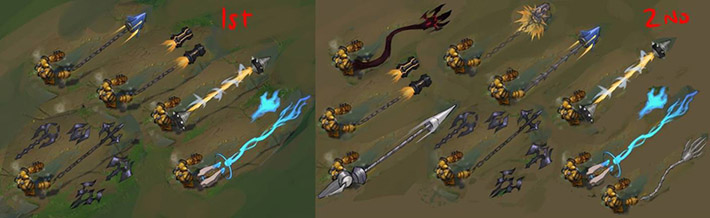
The four shortlisted hook directions:
- Shadow hook
- Ivory lance
- Lion/wolf jaw grab
- Dark claws/lance
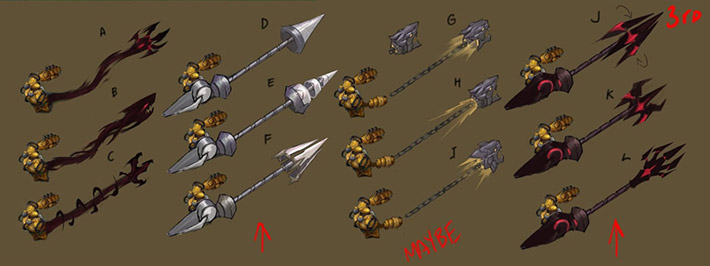
What’s interesting is not just which one Riot picked, but what these options represent:
-
Shadow hook: leans into corruption and menace. This is “predator in darkness.”
It makes Rocket Grab feel like being dragged into the unknown. -
Ivory lance: clean, heroic, knightly. This is “guardian spear.”
It makes Rocket Grab feel like a precise joust. -
Jaw grab: animal brutality. This is “being bitten and pulled.”
It makes Rocket Grab feel primal rather than mechanical. -
Claws/lance: violent capture tool. This is “execution device.”
It makes Rocket Grab feel like a trap snapping shut.
Riot ultimately anchored the final skins around the “lancer” identity and chose a hook direction that could be adapted
into both Paragon (clean) and Rogue (aggressive) moods.
That design compromise is exactly what created the internal split—and the paired skins were the solution.
PARAGON VS ROGUE: WHAT ACTUALLY CHANGES?
Because these skins are paired, you should evaluate them like a product comparison, not two random cosmetics.
Use this timeless checklist:
- Model mood: does the silhouette feel heroic or threatening?
- Palette: does the color make you want to play aggressive or protective?
- VFX identity: do particles feel different, or mostly recolored?
- SFX identity: does sound tell the “light vs dark” story?
- Recall story: does recall reinforce fantasy, or feel generic?
- Long-term comfort: will this skin still feel good after 100 games?
The most common criticism of paired skins is: “It’s basically a chroma.”
The most common defense is: “The sound and vibe make it feel different.”
In this guide, we’ll evaluate both Paragon and Rogue through that lens.
LANCER PARAGON BLITZCRANK | CHAMPION SKIN REVIEW
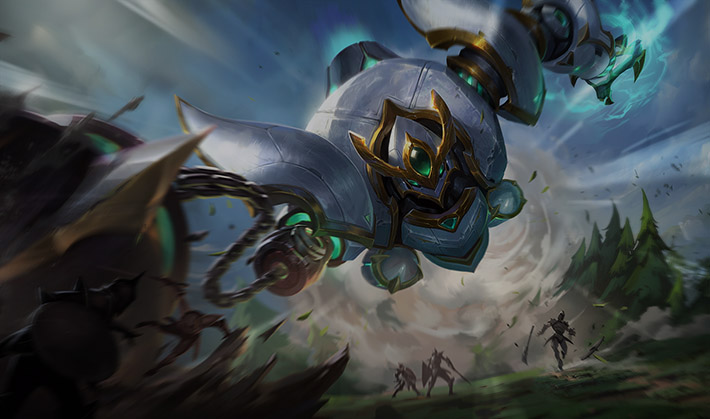
Lancer Paragon Blitzcrank – Splash art
Lancer Paragon Blitzcrank is the “heroic machine” fantasy:
polished armor, noble palette, clean energy lines, and a vibe that suggests protection rather than destruction.
If Rogue is the villain knight, Paragon is the sacred guardian.
Model & color identity
The white armor, green energy lines, and gold ornamentation create a high-contrast, “premium mech” look.
The overall design reads like a combat unit built to protect life forms—massive, but reassuring.
The helmet shape nods to a samurai silhouette, and the gemstone detail reinforces the “powered core” feeling.
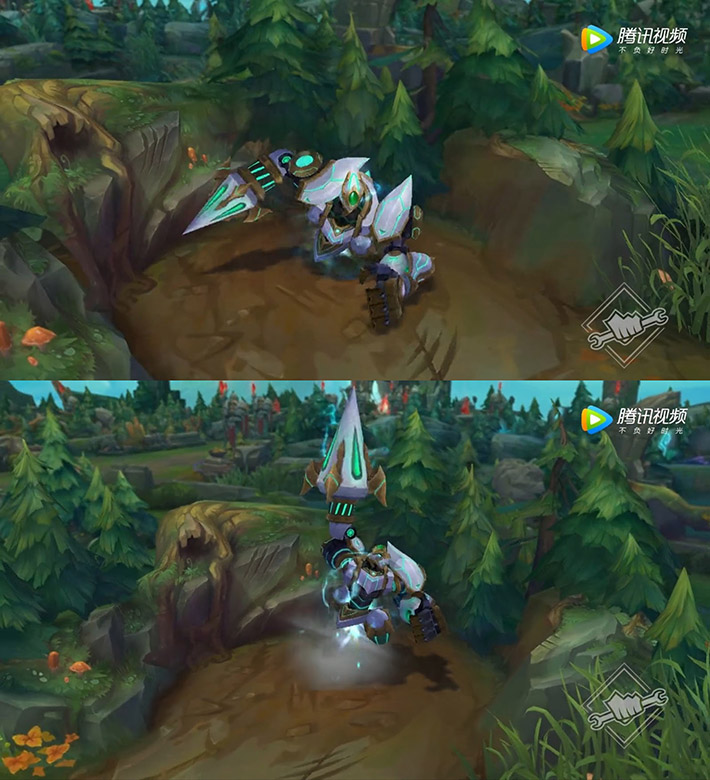
VFX: clean machine energy
Paragon’s VFX emphasize clean blue glow and controlled power.
The hook resembles a balanced lance-like mechanism, and ability particles lean toward “engineered energy,”
which fits Blitzcrank as a machine.
The key long-term question: does the VFX remain readable and satisfying?
For Paragon, the answer tends to be yes, because the palette is bright enough to feel crisp without becoming messy.
Recall animation
Paragon’s recall—throwing the lance upward and soaring—leans into “ascension” imagery.
It’s heroic and clean, though it can remind players of other recalls that use similar lift-off ideas.
Still, it fits the fantasy well and looks good in motion.
SFX: tuned, premium machinery
Paragon’s sound is one of its strongest points: it’s “perfectly tuned machine” audio—
less distortion, more precision.
This creates a satisfying experience in long play sessions because harsh audio gets tiring fast.

Lancer Paragon Blitzcrank – New visual effects
Verdict
Paragon is the better choice if you want a clean, noble Blitzcrank that feels like a protective combat unit.
It’s visually readable, sonically pleasant, and thematically consistent.
LANCER ROGUE BLITZCRANK | CHAMPION SKIN REVIEW
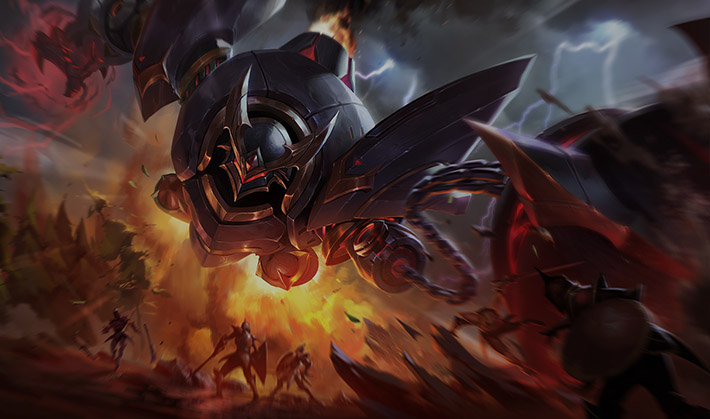
Lancer Rogue Blitzcrank – Splash art
Lancer Rogue Blitzcrank is the “villain knight” fantasy:
darker palette, aggressive presence, and audio distortion that implies unstable programming.
It’s designed to feel like an unstoppable war machine that enjoys the hunt.
Model & palette
The dark red + gold combination is a classic villain aesthetic.
It’s not subtle. It’s designed to be memorable.
On a champion like Blitzcrank—who already has a big silhouette—this palette makes Rogue feel like a walking warning sign.
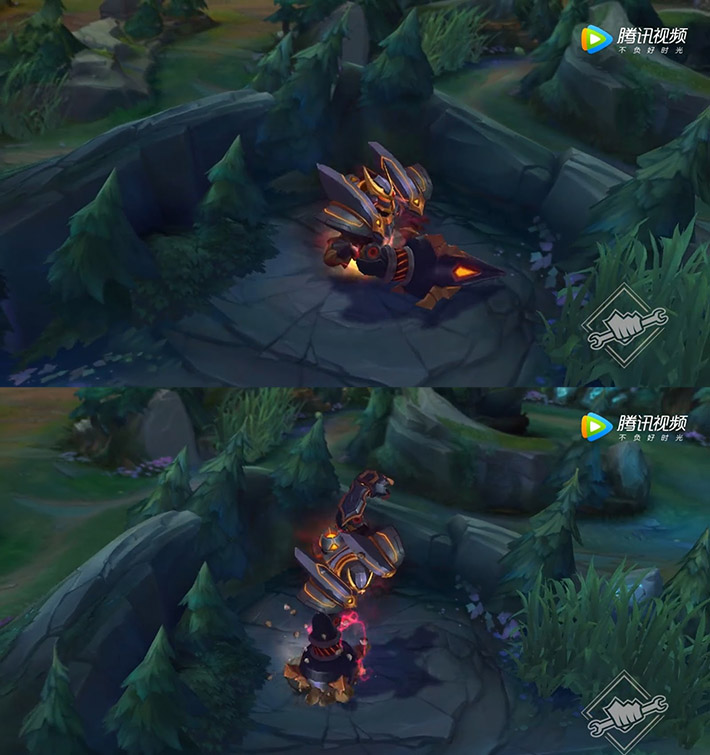
VFX: mostly shared, recolor-heavy
The biggest debate around Rogue is whether it differentiates enough from Paragon.
Many of the VFX beats are the same, with color changes carrying the mood shift.
That’s the reason some players describe the set as “basically chromas.”
However, the reality is more nuanced:
in action, color matters. Red VFX can feel more aggressive, more dangerous, more “damage-coded.”
Even if shapes are similar, the emotional effect can be different.
Recall: descent instead of ascension
Rogue’s recall flips the Paragon fantasy: instead of rising to the heavens, Rogue sinks into darkness.
This is a smart design choice because it’s the easiest “storytelling” way to differentiate paired skins without rebuilding the entire kit.
SFX: distortion and menace
Rogue’s audio identity is the most distinct element.
Noises and distortions imply malfunction or corruption—like the machine’s moral compass is broken,
or its code has been rewritten for destruction.
If you value sound identity highly, Rogue will feel more unique than it looks on a static screenshot.
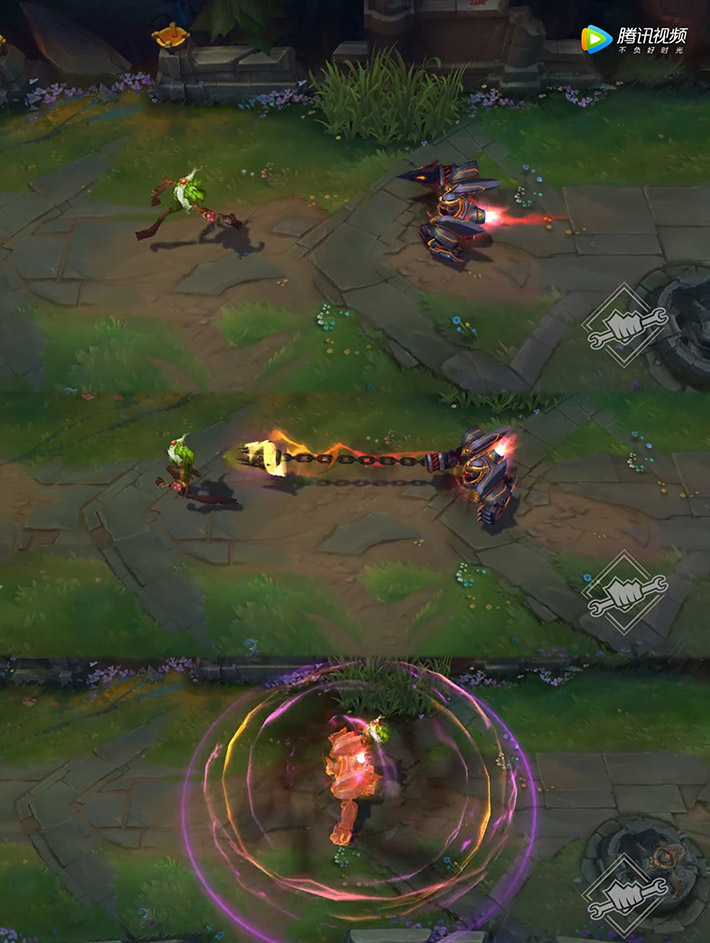
Lancer Rogue Blitzcrank – New visual effects
Verdict
Rogue is the better choice if you want Blitzcrank to feel like a brutal antagonist—
especially if you care about SFX and mood more than pure model uniqueness.
The main weakness is that VFX differentiation is limited beyond palette.
WHICH ONE SHOULD YOU BUY? (PLAYER-TYPE CHECKLIST)
Here’s a timeless decision guide:
Buy Paragon if…
- You prefer clean, heroic aesthetics.
- You want a skin that stays visually comfortable over long sessions.
- You value “premium machine” sound more than villain distortion.
- You like bright palettes that pop on Summoner’s Rift.
Buy Rogue if…
- You prefer dark, aggressive aesthetics.
- You want Blitzcrank to feel like a menace (especially in SFX).
- You like red/gold villain palettes.
- You enjoy “corrupted machine” vibes more than “guardian mech” vibes.
Buy both if…
- You main Blitzcrank and want a “light mood” and “dark mood” option.
- You’re building a complete thematic collection.
- You genuinely enjoy comparing SFX/VFX variations in-game.
Buy neither if…
- You only play Blitzcrank occasionally and already own a skin you love.
- You dislike skins that share VFX shapes across variants.
- You want a completely different thematic universe (comedic, cosmic, etc.).
COLLECTOR TIPS: HOW TO BUY SKINS WITHOUT REGRET
Paired skins are designed to create collector temptation.
If you want to stay smart (and still enjoy the cosmetics), follow these evergreen rules:
- Rule 1: buy skins for champions you play at least monthly.
- Rule 2: prioritize “feel” (hook VFX/SFX) over splash art hype.
- Rule 3: if two skins look similar, only buy both if you truly love the champion.
- Rule 4: watch a gameplay preview and listen to Rocket Grab audio before deciding.
If you want to browse more LoL-related content, check the main hub:
Boosteria.
RELATED: HEARTHSTONE PRICES LINK (CROSS-GAME)
Many competitive players rotate between games depending on seasons and mood.
If you also play Hearthstone and you’re comparing ranked climbs across games, here’s the related page:
Hearthstone boosting prices.
(Included as a relevant cross-game resource for players who grind multiple ladders.)
HIGH-TRUST EXTERNAL REFERENCES (FOR FURTHER READING)
For official and authoritative LoL information, updates, and support documentation, these sources are consistently reliable:
LEGACY (ARCHIVE): TIME-SPECIFIC NOTES
This section preserves the original time-bound framing for historical context.
Store availability, pricing, and release timing may vary by region and year.
The original description framed the paired skins as the result of internal disagreement:
some developers preferred a merciful “light” knight fantasy, others preferred a destructive “dark” warrior fantasy.
Rather than discard one direction, Riot used the conflict as creative fuel and delivered two skins that mirror each other.
It was also noted that both skins would have separate splash arts upon release,
reinforcing that they were intended as distinct products rather than simple chromas.


