



LoL Order vs Chaos (VS Event) Guide: Missions, Tokens, Skins & Rewards Explained
Chaos vs Order in League (LoL): The VS Event, Missions, Tokens, Skins & Rewards
In League (LoL), few themed moments have stuck in players’ memories like the Chaos vs Order confrontation—also known as the
VS Event. It mixed a “choose your side” identity with mission chains, token rewards, and two legendary skins that felt like the
perfect embodiment of each faction: Nightbringer Yasuo (Chaos) and Dawnbringer Riven (Order).
Evergreen note (for search freshness): this guide is maintained with 2026 in mind, but the main sections are written to be
timeless—focused on how missions, passes, tokens, and event psychology work in League (LoL). Because LoL’s event systems evolve, the most
time-sensitive details (exact mission names, older pass contents, retired currencies, or removed items) are collected in a
Legacy section at the end.
Table of Contents
- 1) What the Chaos vs Order (VS) Event Was
- 2) How Choosing a Side Worked (Icons, Tokens, Switching)
- 3) Missions in LoL: How They Usually Work (Timeless Breakdown)
- 4) Tokens, Passes, and Reward Tracks: The Practical Economy
- 5) How to Finish Missions Faster (Without Griefing Your Team)
- 6) Why Yasuo vs Riven Was the Perfect Rivalry
- 7) Nightbringer Yasuo Review: Theme, VFX/SFX, Feel, Value
- 8) Dawnbringer Riven Review: Theme, VFX/SFX, Feel, Value
- 9) Buying Tips: Legendary Skins, Sales, and “Worth It?”
- 10) How Modern LoL Events Compare (Timeless Pattern Recognition)
- 11) FAQ
- 12) Reliable Links & Extra Reading
- Legacy: Original VS Missions, Pass Rewards, and Older Systems
WHAT THE CHAOS VS ORDER (VS) EVENT WAS
The VS Event was built around a simple but powerful idea: players don’t just want rewards—players want a
team identity. The event asked the community to pick a side (Order or Chaos) and contribute to the
global result through play. That result then “declared” a winner and gave the rivalry a story ending.
Under the hood, it also introduced (or popularized) a structure that became familiar in many LoL events afterward:
- Equip a themed icon or show your allegiance visually.
- Complete missions to earn tokens and rewards.
- Optional pass that unlocks additional missions and value.
- Cosmetic showcase (skins, wards, icons, etc.) that make the event feel collectible.
It’s easy to forget how important this was: once missions became normal, LoL events felt more like a “season within the season.”
Even if you didn’t care who won, the structure gave you a reason to log in, play a few games, and feel like you were building toward
something.
Today, even when the theme changes (a major skin line, a cinematic, an in-client narrative), you can still recognize the DNA of the VS concept:
identity + missions + a reward track.
HOW CHOOSING A SIDE WORKED (ICONS, TOKENS, SWITCHING)
In the Chaos vs Order confrontation, your “side” was primarily expressed through icons. You equipped either an
Order icon or a Chaos icon, then played matchmade games while that icon was active. The event tracked community
participation and used that to declare a winner.
The key design choices (and why they mattered) were:
- Low friction: you didn’t need to change your role, main champion, or playstyle just to participate.
- Switching allowed: players could swap sides during the event, reducing regret and increasing engagement.
- Global meter: even if you didn’t understand the exact math, the client presentation made it feel like your games mattered.
That switching option is more important than it looks. Events feel bad when a single click locks you in. The VS structure kept
participation casual, which is exactly what made it huge.
Below you’ll find the original icon lists and pass mission names in the Legacy section, because those
exact assets can change across time. The big lesson is timeless: your “side” is a cosmetic choice that drives engagement.
MISSIONS IN LoL: A TIMELESS BREAKDOWN
Missions sound simple—“do X, get reward”—but the best way to understand them is to see them as
behavior shaping. Riot uses missions to gently guide what players do without forcing them:
play more games, try a mode, engage with a skin line, or express a theme (like Order vs Chaos).
What Missions Usually Ask You To Do
- Win games (or simply complete games)
- Earn takedowns (kills + assists)
- Farm objectives (CS, gold earned, damage dealt, towers, dragons, etc.)
- Play specific champions (or have them on either team)
- Play specific queues (Summoner’s Rift, ARAM, event modes)
Why “Accessible Missions” Matter
The VS event was praised because the missions were designed so you didn’t need to abandon your identity as a player.
That’s a big deal: if you’re a support main, a mission that demands solo kills can feel like punishment.
The best events include multiple completion paths:
- Win path (faster, but higher pressure)
- Play path (slower, but consistent)
- Team path (your contribution counts even if you aren’t the carry)
When you understand this design, you stop tilting at missions. Instead, you optimize them like a checklist:
choose the queue and champion that naturally generate the stats the mission wants—without turning the game into a chore.
TOKENS, PASSES, AND REWARD TRACKS
Events like Chaos vs Order usually have a “free layer” and an “upgraded layer.”
Free missions give you a taste of the event, while a paid pass offers extra missions, boosted progress, or an expanded reward track.
Even if names change over time, the economy pattern stays the same.
The Real Question: What Are You Buying?
When you buy an event pass, you are typically buying some combination of:
- More missions (more total rewards)
- Better token rate (faster unlocks)
- Exclusive cosmetics (icons, borders, wards, chromas)
- Convenience (less grind for the same outcome)
If you’re evaluating a pass in any LoL event, ask yourself:
- How many games will I realistically play during the event window?
- Do I care about the exclusive cosmetics (or just the currency)?
- Do I want one premium item (skin/chroma) or many small rewards?
- Is my goal “collecting” or “value per game”?
The VS event’s pass structure (and its exact rewards) is preserved in the Legacy section.
The timeless insight is: a pass is worth it only if you will actually play enough games to convert the value.
HOW TO FINISH MISSIONS FASTER (WITHOUT RUINING GAMES)
A mission should never make you grief your team. The fastest way to get rewards is to win games consistently,
not to chase a stat line while losing.
1) Pick Champions That “Accidentally” Complete Missions
If a mission wants takedowns, you don’t need to become an assassin. Pick champions that naturally collect assists:
- Engage supports with reliable CC (your team converts your engages into assists)
- Teamfight junglers (you’re present in every skirmish)
- Utility mids (you participate in kills without needing to last-hit)
2) Build for Completion, Not Ego
Missions often tempt players into greedy builds. A safer approach:
- Prioritize survivability early so you’re alive for more fights (more assists, more gold, more objective presence).
- Play around your team’s strongest member. “Follow the fed player” completes missions faster than solo hero attempts.
3) Use Queue Choice as a Multiplier
Different queues generate different stats:
- ARAM: constant teamfights → easier takedowns
- Summoner’s Rift: higher gold totals, more objectives, more structured wins
- Event modes: often tuned for faster pace → mission progress spikes
If the mission is “earn gold” or “farm minions,” Summoner’s Rift is usually best.
If it’s “get takedowns,” ARAM or fast modes often complete it faster.
4) Stack Missions Efficiently
The best mission grinds overlap objectives. Example mindset:
- Play a champion who farms well (CS/gold missions).
- Make sure you’re always present for dragon/herald fights (takedown missions).
- Choose a build that keeps you alive in fights (more minutes alive = more progress).
If you’re grinding with friends, coordinate roles so nobody competes for the same resource.
A duo lane can farm takedowns together and finish faster than two solo players both trying to “be the carry.”
WHY YASUO VS RIVEN WAS THE PERFECT RIVALRY
Rivalries feel real when both sides can honestly say: “We’re the main character.”
Yasuo and Riven fit that perfectly. Both are:
- High-skill champions with iconic mechanics
- Popular across multiple regions and ranks
- Emotionally charged in lore (guilt, exile, conflict)
- Recognizable silhouettes and weapons (katana vs broken blade)
The VS event didn’t need complex narrative to work. It just needed two champions that already lived in the community’s imagination.
Even players who never touched either champion knew what the matchup “meant.”
That’s also why the skins landed so well:
Nightbringer Yasuo amplified the “dangerous, unstoppable” fantasy, while
Dawnbringer Riven amplified the “disciplined, celestial warrior” fantasy.
NIGHTBRINGER YASUO | CHAOS SKIN REVIEW
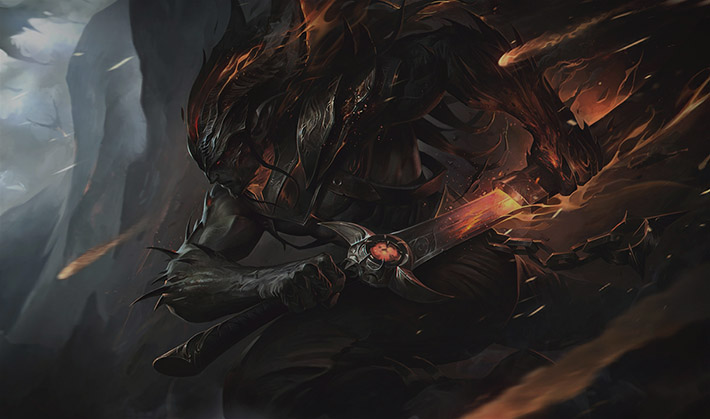
Let’s start with the “Chaos champion” that many players remember as the headline reward:
Nightbringer Yasuo. The skin succeeds because it doesn’t just recolor Yasuo—it reframes him.
It pushes him from “wandering swordsman” into a mythic figure: a storm made flesh, a demon-knight, a walking catastrophe.
Theme & Model: The Demon Samurai Fantasy
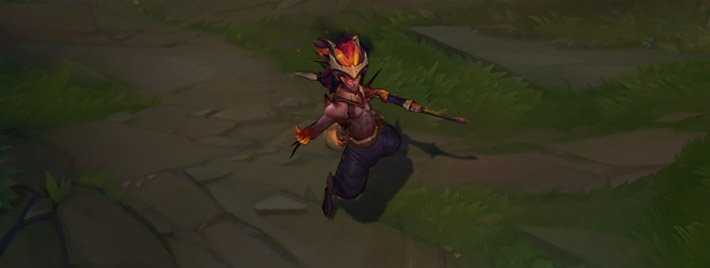
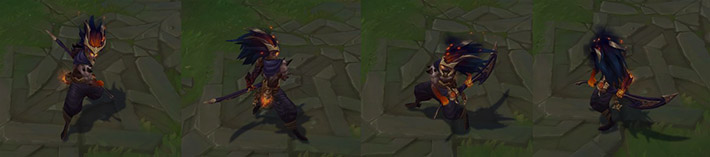
Nightbringer Yasuo delivers a bold silhouette: flaming hair, a crown-like shape, internal glow, and demonic growths.
The sword looks alive—like it burns from within rather than simply being “painted red.”
The strongest part of the model is that it keeps Yasuo recognizable while making him feel transformed.
Many legendary skins fail by doing “too much” and losing the base champion identity.
Nightbringer Yasuo avoids that: the posture, the weapon handling, and the stance still read as Yasuo—even when the aura screams Chaos.
Here are additional in-game visuals:
VFX: Fire as a Language
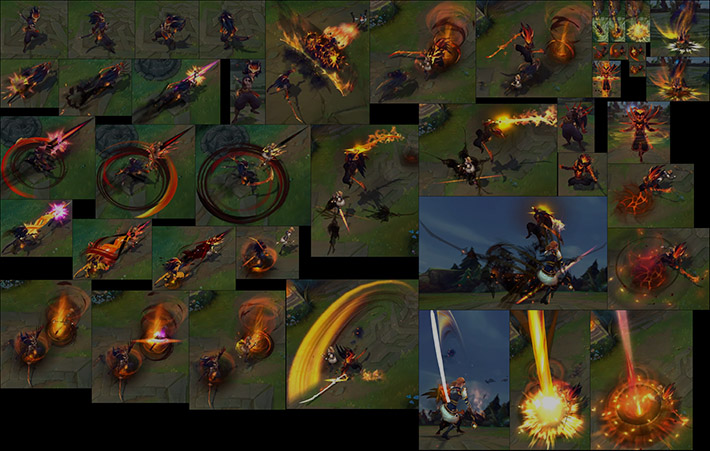
The skin’s VFX concept is simple and consistent: wind becomes fire.
That might sound “basic,” but it’s also why the skin feels coherent in real matches.
Clarity matters in LoL—especially for a champion like Yasuo whose kit is already visually busy.
Good legendary skins balance two goals:
- Fantasy: you want to feel like a new character
- Readability: enemies must still recognize what’s happening
Nightbringer Yasuo keeps the kit readable because the shapes stay familiar, but the energy becomes molten.
Even if you don’t notice every detail, you feel the theme every time you cast.
SFX & Voice: The “Legendary” Difference
If you’ve bought legendary skins before, you know the truth: the SFX and voice are what make them feel “worth it.”
Nightbringer Yasuo’s soundscape leans into heat, impact, and threat. Auto attacks feel sharper and heavier.
Ability sounds carry that “eruption” energy without turning into noise.
The voice work is a highlight because it changes the emotional temperature of the champion. It’s not just a filter.
The delivery supports the fantasy: this isn’t a calm wanderer—this is a force.
Gameplay Feel: Does It Make Yasuo Feel Better?
Players often ask: “Does the skin make the champion feel smoother?”
That’s subjective, but there are a few common reasons legendary skins feel better:
- Clearer audio feedback on hits
- More satisfying cast cues (especially ultimates)
- Improved emotional rhythm (the champion “feels” powerful)
Nightbringer Yasuo often scores highly here because the skin makes your ability windows feel dramatic.
When you hit the moment—stack ready, knockup found, ultimate triggered—the skin sells the fantasy.
Should You Buy Nightbringer Yasuo?
If you love dark themes, fire aesthetics, and legendary-tier production, Nightbringer Yasuo is an easy recommendation.
If you only play Yasuo occasionally, the smarter choice is to wait for a discount rotation or a bundle deal when available.
You can check a skin spotlight here:
Nightbringer Yasuo spotlight.
Legendary skins are typically priced at the legendary tier (often 1820 RP) in the LoL store.
DAWNBRINGER RIVEN | ORDER SKIN REVIEW
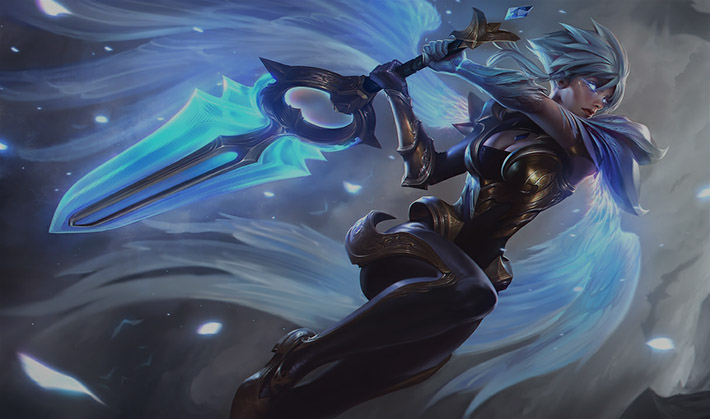
Dawnbringer Riven is the Order counterpart: celestial, clean, luminous, and dramatic in a different way.
Where Nightbringer Yasuo is heat and rage, Dawnbringer Riven is light and discipline—a warrior framed as an angelic force.
Theme & Model: Angelic Power Without Losing the Blade
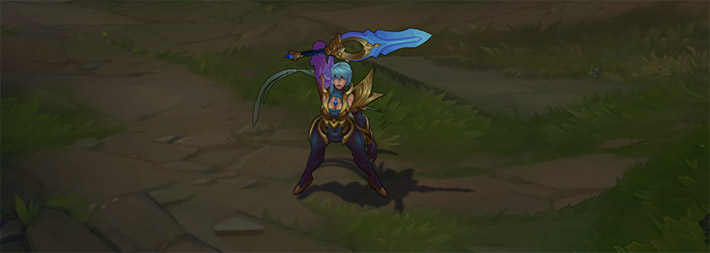
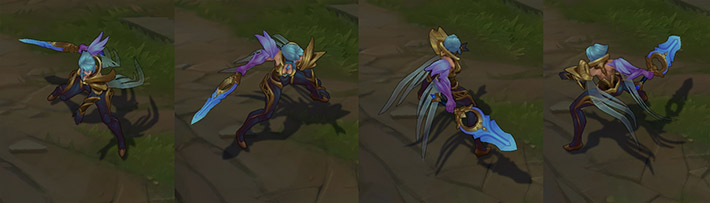
The model is packed with “Order language”: light-blue palette, ethereal glow, wing motifs, crystal-like energy, and a sword that looks like it’s
forged from a heavenly mineral. The best designs in LoL skins don’t just add wings—they integrate them into movement and silhouette.
Dawnbringer Riven does that well: she looks like she belongs to a higher plane, yet she still reads as Riven in combat.
In-game visuals:
VFX: Clean Light, Strong Readability
Riven is a champion where animation and readability matter a lot. Her kit is fast, and her combos are muscle memory.
A good skin must preserve the “snap” of her spells while adding beauty.
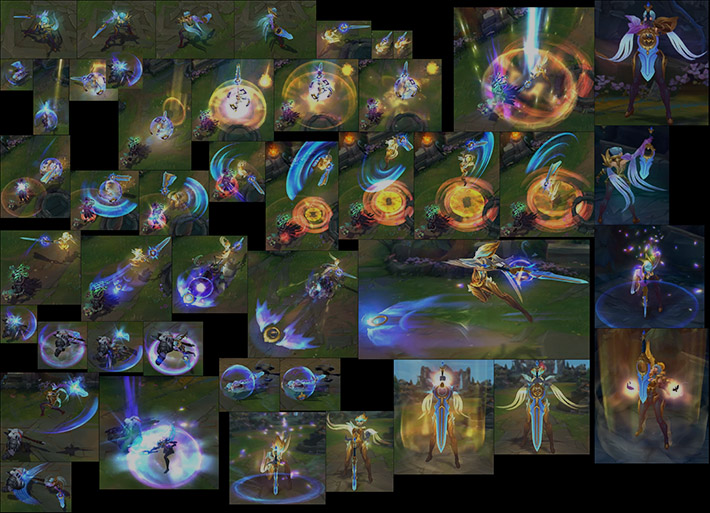
Dawnbringer Riven’s VFX are bright and polished: blue glows, wing-like trails, crystalline flashes.
The standout for many players is how her effects reinforce the fantasy of “holy force” without muddying her spell timings.
SFX & Voice: The Calmer, Higher-Tier Tone
The sound profile leans toward crystal impacts and bell-like accents. That matters because it changes how the champion feels:
her power becomes “clean” rather than “violent.” Some players love that. Others prefer rougher skins.
Voice work and added polish are part of what makes this skin legendary-tier. Even when the raw combo is the same,
the presentation makes it feel like a new character.
Animations: Familiar Combos, Elevated Presentation
Riven mains often judge skins by one question:
Does it keep my combos feeling clean?
Dawnbringer Riven generally keeps the classic rhythm while smoothing the presentation.
It isn’t “a different champion,” but it’s a high-production version of the champion you already love.
If you want radical innovation, you might feel it’s close to classic patterns.
If you want a premium-feeling Riven that still plays like Riven, this is exactly the point.
Should You Buy Dawnbringer Riven?
If you love light/celestial themes and you main Riven, it’s a strong pick. If you’re a casual Riven player,
the best value move is to wait for a sale window or pick it up as part of a bundle.
Spotlight link:
Dawnbringer Riven spotlight.
Legendary skins are typically priced at the legendary tier (often 1820 RP).
BUYING TIPS: LEGENDARY SKINS, SALES, AND “WORTH IT?”
Here’s a practical way to decide whether a legendary skin is worth it—without getting trapped in hype.
A Simple “Worth It” Checklist
- You play the champion often (at least weekly) → higher value
- You care about presentation (voice, recall, SFX) → legendary tier shines
- You tilt less when you feel confident → cosmetics can genuinely improve your experience
- You want a theme you won’t get bored of → “timeless” themes last longer
When Waiting Is Smarter
- You only play the champion occasionally
- You already own a skin you love for that champion
- You’re only buying because the event made you emotional (post-event impulse)
The best purchases in LoL are the ones you still enjoy months later.
Nightbringer and Dawnbringer tend to age well because their themes are strong and clear.
HOW MODERN LoL EVENTS COMPARE (TIMELESS PATTERNS)
Even if the exact VS format isn’t active all the time, modern LoL events often follow similar patterns:
- Identity choice (a theme, a faction, a narrative lens)
- Missions with overlapping progress paths
- Tokens or event currency tied to play volume
- Pass that rewards consistent play
- Cosmetics that anchor the event in memory
If you want to get better at “event efficiency” (and stop feeling like you’re always behind),
the real skill is planning:
- Decide your target reward early (one big unlock vs many small unlocks)
- Pick the queue that generates your mission stats fastest
- Play champions that naturally fit the mission goals
- Don’t sabotage win rate chasing one mission line in one game
Events are meant to feel fun. The moment they feel like homework, you’ll burn out.
Efficient planning keeps the fun while still letting you collect what you want.
FAQ
Is Chaos vs Order still playable as an event?
The original VS format is best treated as a classic event moment. LoL rotates themes and structures over time, but the underlying “missions + rewards”
pattern is common. If you’re searching because you want the skins, the important point is that the skins themselves can remain available through the
store or reruns depending on current rotations.
Do I need to play Yasuo or Riven to enjoy the event rewards?
The best events are designed to be accessible. Even when an event highlights specific champions, you should be able to progress through play
without swapping your whole identity. When events over-focus on one champion, they usually include alternative completion paths for other roles.
What’s the fastest way to complete takedown missions?
Play modes


